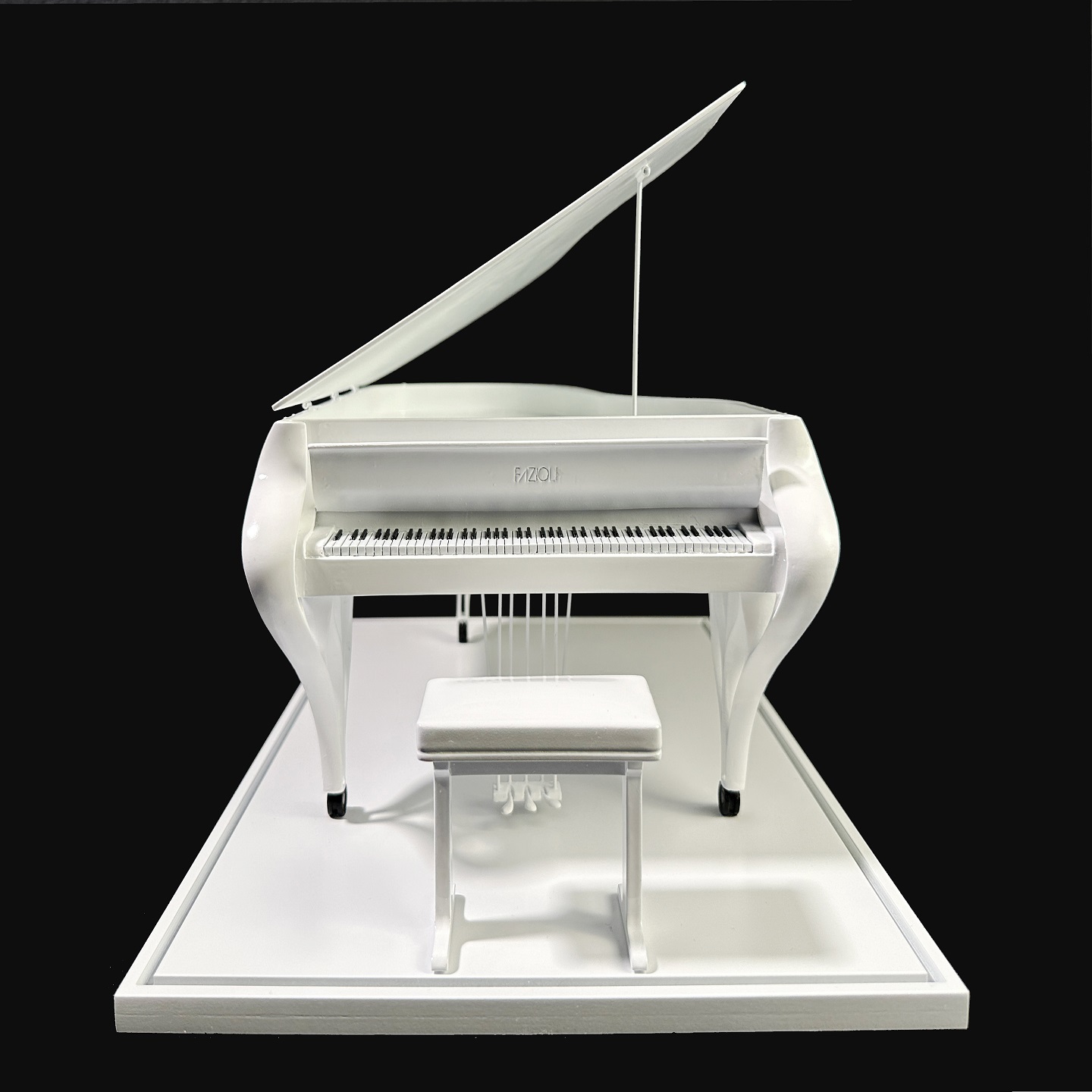
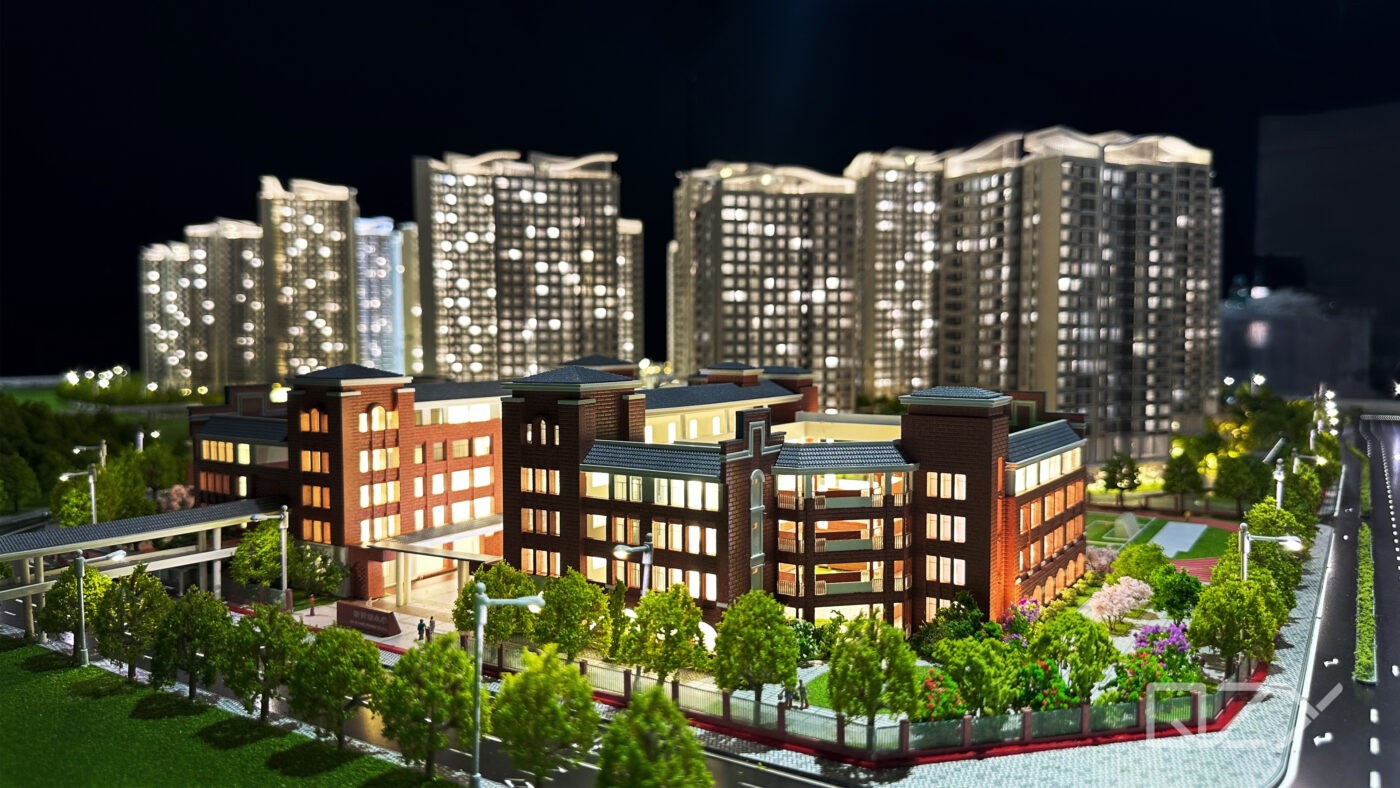
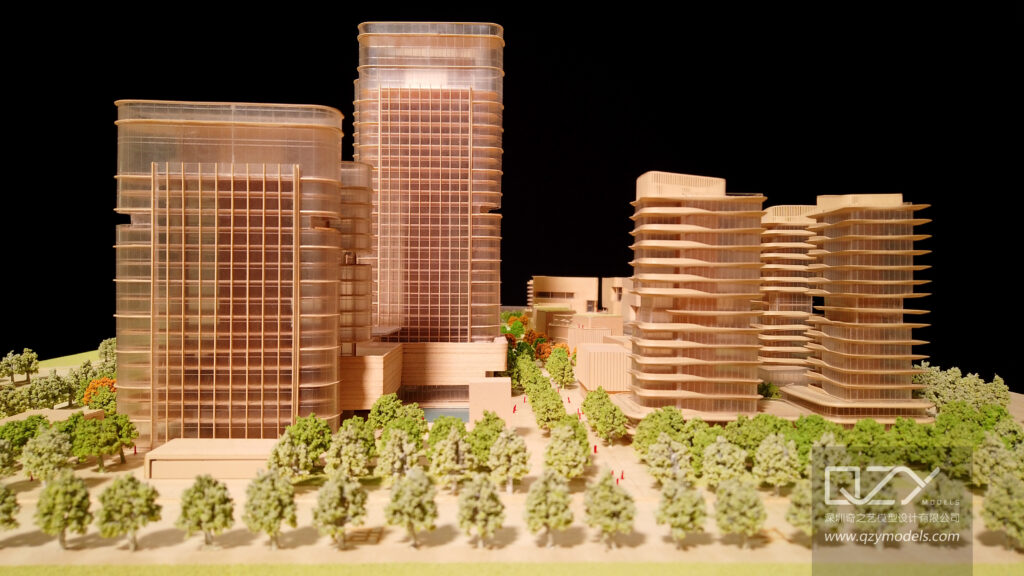
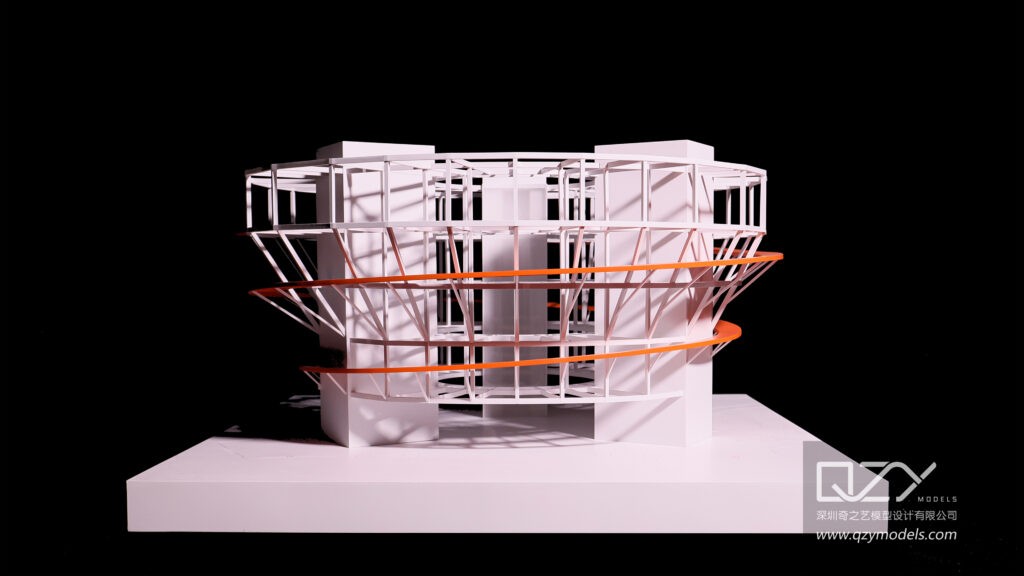
3D printer architecture defines the design, components, and functional layout of 3D printers used in architectural modeling. It allows layer-by-layer fabrication of precise scale models, complex facades, and structural details. QZY Models applies advanced 3D printer architectures to create high-fidelity physical models, enabling architects and developers worldwide to visualize designs with accuracy, realism, and efficiency.
What Does 3D Printer Architecture Include?
3D printer architecture consists of mechanical frameworks, motion systems, print heads, build platforms, and control software that translate digital models into physical structures. Common configurations include Cartesian, Delta, CoreXY, and robotic arm setups, each offering distinct advantages for stability, speed, and accessibility. QZY Models integrates multi-material printing and precise slicing techniques to achieve highly detailed architectural replicas efficiently.
Key components include:
| Component | Function | Architectural Advantage |
|---|---|---|
| Print Head/Nozzle | Deposits material | Fine façade details |
| Build Platform | Supports the model | Stability for large models |
| Motion System | Moves print head or bed | Accurate scaling and alignment |
| Control Unit | Processes G-code | Smooth, error-free operation |
By combining these elements, QZY Models ensures consistent quality in both small-scale models and large architectural sections.
How Does 3D Printer Architecture Operate?
3D printer architecture operates by depositing materials layer by layer from a digital file. Slicer software converts CAD models into precise instructions (G-code), directing the print head along X, Y, and Z axes. Materials such as PLA, ABS, or resin are extruded, cured, or fused according to the printer type.
In practice, QZY Models uses hybrid systems blending FDM for structural components and SLA for fine details. Sensors and automated controls monitor temperature, alignment, and layer integrity. This enables the production of skyscraper facades, urban masterplans, and interior mockups with exceptional accuracy and consistency.
Which 3D Printer Architectures Are Most Common?
Common architectures include:
-
Cartesian: Fixed axes, ideal for stability in detailed models.
-
Delta: Parallel arms, suitable for tall or curved structures.
-
CoreXY: Belt-driven, optimized for speed and efficiency.
-
Robotic Arm: Flexible positioning for complex geometries.
Architectural projects often mix these systems for versatility. QZY Models customizes printer setups to support multiple materials, achieving realistic textures for glass, wood, or concrete, enhancing visual impact in client presentations and exhibitions.
What Materials Work Best in 3D Printer Architecture?
The choice of material depends on model purpose, size, and required detail:
-
PLA: Fast, reliable prototypes.
-
ABS: Durable, suitable for structural models.
-
PETG: Flexible and resilient.
-
Resin: Fine surface detail for small-scale models.
-
Composites (Woodfill, Metalfill): Realistic textures for high-end presentation models.
QZY Models often recommends UV-resistant filaments for exhibition models. Heated chambers, controlled extrusion, and optimized slicing prevent warping and ensure consistent adhesion for complex structures.
Why Use 3D Printers for Architectural Modeling?
3D printers dramatically reduce production time, enabling intricate geometries impossible by hand. They lower costs, allow rapid iterations, and produce models with precision down to 0.1mm.
Architects benefit from faster visualization, improved client engagement, and sustainable production through minimal material waste. QZY Models has produced thousands of such models for firms like Foster + Partners, demonstrating how 3D printer architecture supports design validation, marketing, and competitive bids.
How to Select a 3D Printer for Architectural Applications?
Selection criteria include:
-
Build Volume: Larger for multi-story models.
-
Resolution: 0.05–0.2mm layer height depending on detail.
-
Multi-Material Capability: For realistic textures and colors.
-
Enclosed Chambers: For ABS or warping-sensitive materials.
-
Firmware & Slicer Compatibility: Reliable systems like Marlin with Cura or Simplify3D.
QZY Models advises industrial-grade printers with dual or multi-extruders to produce high-quality, textured architectural models for developers and exhibitions.
What Are Future Trends in 3D Printer Architecture?
Emerging trends include:
-
Multi-material printing for realistic textures.
-
Expanded build volumes for large-scale architectural models.
-
AI-assisted slicing for optimized efficiency.
-
Hybrid FDM/SLA systems for precision and speed.
-
Sustainable, bio-based filaments.
QZY Models invests in scalable and hybrid architectures to stay at the forefront of architectural model innovation, delivering models that meet evolving client expectations.
QZY Models Expert Views
“At QZY Models, we harness advanced 3D printer architectures to transform architectural visualization. Our founder, Richie Ren, leads a team delivering models across 20+ countries, combining FDM precision with SLA detail. This approach captures everything from urban masterplans to intricate interiors. Our global branches, including the UAE and Saudi Arabia, ensure innovation, quality, and timely delivery for developers and architectural firms.”
— Richie Ren, Founder, QZY Models
How Does 3D Printer Architecture Compare to Traditional Modeling?
3D printing outperforms manual methods in speed, accuracy, and complexity handling. Traditional foam, clay, or hand-cut models are labor-intensive and limited in detail, whereas 3D architectures provide repeatable, scalable solutions. QZY Models integrates traditional techniques with 3D printing for hybrid models, optimizing both aesthetics and efficiency.
| Aspect | 3D Printing | Traditional Methods |
|---|---|---|
| Time | 1–3 days | 2–4 weeks |
| Cost | Lower material waste | High labor costs |
| Precision | Up to 0.1mm | Variable |
| Complexity | Unlimited geometries | Limited |
Conclusion
3D printer architecture is revolutionizing architectural modeling by combining speed, precision, and versatility. Selecting the right printer configuration, using appropriate materials, and partnering with experts like QZY Models ensures high-quality, detailed physical models. Actionable advice: begin with CAD design, prototype at small scale, and expand to full-scale models using professional services to impress clients and accelerate project approvals.
FAQs
What resolution is ideal for architectural 3D prints?
A 0.1mm layer height balances speed and detail; use 0.05mm for intricate facades and 0.2mm for concept models.
Can 3D printers reproduce textures like brick or glass?
Yes, with specialty filaments and post-processing techniques like painting or surface treatments.
How large can 3D printed architectural models be?
Models over 1 meter are possible with industrial printers. QZY Models handles modular assemblies for large-scale displays.
Is 3D printing cost-effective for single models?
Yes, it eliminates tooling costs and allows highly customized designs efficiently.
Which software is recommended for 3D architectural printing?
Fusion 360, Rhino, or SketchUp for design; Cura, PrusaSlicer, or Simplify3D for slicing and printer control.