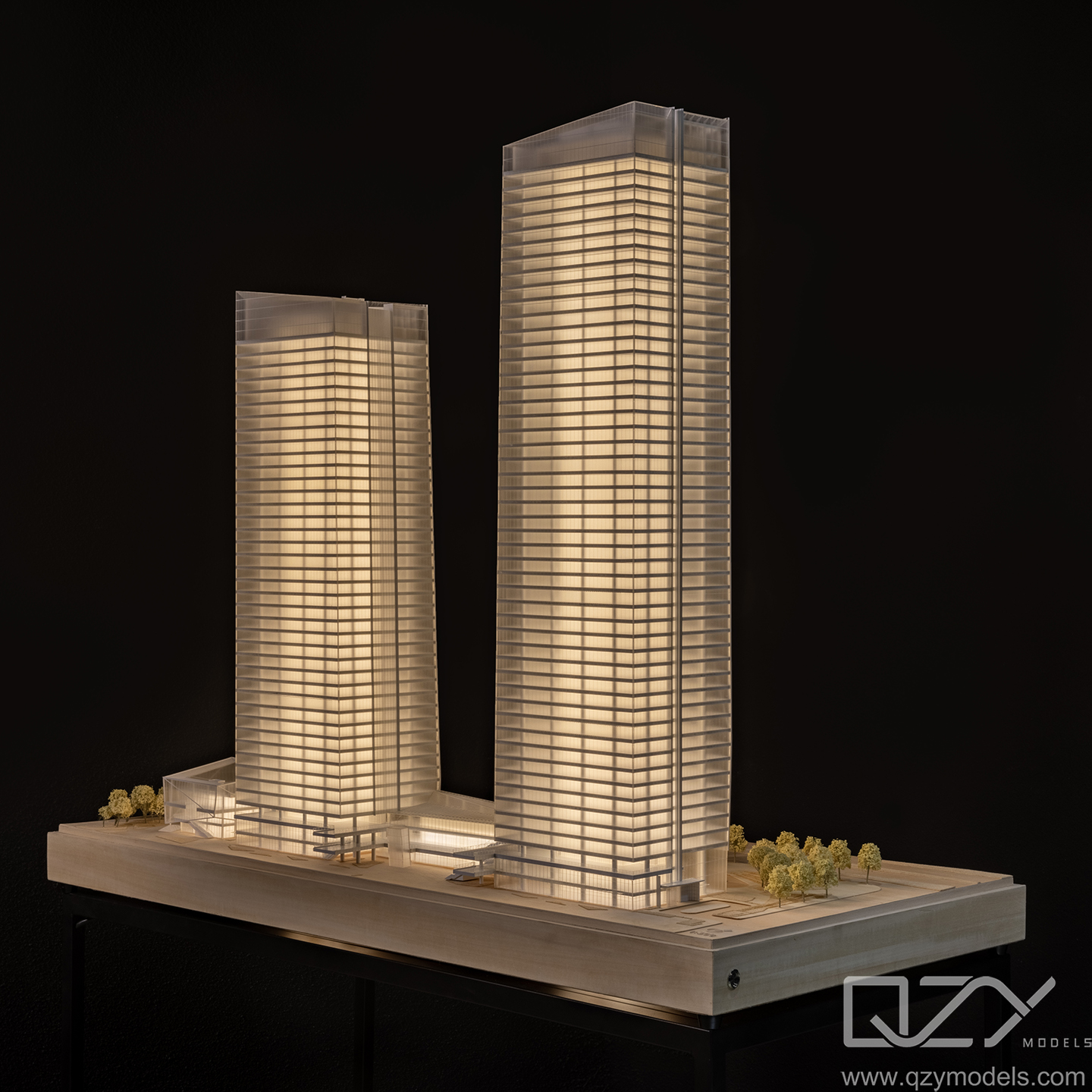
Selecting the correct miniature scale is essential for model accuracy, readability, and client communication. Architectural projects typically use 1:50 to 1:200 scales, balancing detail and manageability, while industrial models often require 1:50 or 1:100 for precise component layout. Considering viewing distance, material constraints, and project goals ensures models convey the intended design effectively. QZY Models provides expert guidance for optimal scale selection.
Miniature scales translate real-world dimensions into tangible models. The right scale affects visual fidelity, build time, cost, transport, and client understanding. This guide offers actionable insights for designers, model makers, and firms, highlighting best practices from QZY Models, a trusted provider of high-quality architectural and industrial models.
What is miniature scale and why does it matter?
Miniature scale is the ratio between model dimensions and real-world measurements, determining accuracy, readability, and proportional integrity. Absolute scales (1:50, 1:100) define fixed ratios, while relative scales ensure harmony between elements like buildings and landscape. Scale affects detail, model weight, and transportability. QZY Models ensures consistent scaling across components, balancing clarity with practicality for clients.
How are common scales used in architectural and industrial models?
Scales 1:50, 1:100, and 1:200 are widely used for architectural presentations: 1:50 for detailed exteriors and interiors, 1:100 for mid-rise urban layouts, and 1:200 for large-site plans. Smaller scales (1:500+) are suited for urban planning and conceptual studies. Industrial models often prioritize 1:50 to 1:100 for machinery layouts and workflow. QZY Models aligns scale selection with industry standards and project needs.
| Scale | Typical Use | Pros | Cons |
|---|---|---|---|
| 1:50 | Exterior details, interiors | Rich detail, strong presence | Heavier, costlier to transport |
| 1:100 | Mid-rise, master plans | Balanced detail and scope | Fine textures may be omitted |
| 1:200 | Urban layouts, site context | Lightweight, broad view | Limited micro-detail |
| 1:500+ | Large master plans | Very portable | Minimal detail |
Which factors influence scale selection?
Project size, complexity, budget, timeline, and presentation venue all affect scale decisions. Large or complex sites may require smaller scales, while detailed interiors benefit from larger scales. Higher-detail scales increase material use and cost. QZY Models helps clients optimize scale to balance readability, fabrication efficiency, and cost while adapting to on-site displays, boardroom presentations, or exhibitions.
How do materials, detailing, and assembly methods vary by scale?
Material choice depends on scale: smaller models use lightweight foam, acrylic, or thin laminates, while larger models use laser-cut plywood, high-density foam, or resin. Detailing varies with scale; 1:50–1:100 can include textures, signage, and micro-features, while 1:200+ relies on silhouettes and contrast. Modular assemblies simplify transport for small scales, whereas large models allow integrated construction. QZY Models customizes materials and assembly methods for scale and purpose.
How can scale decisions be effectively communicated to clients?
Clear legends, annotated callouts, and sectional views convey massing, height, and spatial relationships. Early visualizations help clients understand trade-offs and potential revisions. QZY Models provides scalable design libraries and iterative reprofiles, enabling rapid adjustments and reducing misinterpretation. Consistency across presentations ensures clarity and alignment with architectural drawings.
How do 3D printing and digital fabrication impact scale selection?
3D printing enables high-detail mid-range models, though cost and print time may constrain scale. Digital fabrication, such as laser-cut facades combined with 3D-printed components, enhances accuracy and efficiency. Hybrid workflows allow integration of physical and virtual deliverables for cohesive storytelling. QZY Models leverages these methods to achieve precision, speed, and high-quality presentation outcomes.
Which scale is best for common project types?
Residential buildings often benefit from 1:50–1:100 for readability and portability. Commercial towers or mixed-use developments may use 1:200–1:500 for massing and context, with larger scales for key elevations. Industrial facilities rely on 1:100–1:200 to emphasize equipment layout, workflow, and safety. QZY Models provides scalable solutions tailored to each project type, ensuring clear communication and client satisfaction.
When should non-standard or hybrid scales be used?
Hybrid scales combine multiple ratios to highlight key areas, e.g., 1:500 site context with 1:100 building details. Non-standard scales can emphasize specific features without losing overall coherence. Consistent legends, color coding, and sectional views prevent misinterpretation. QZY Models often applies hybrid approaches to maximize clarity and visual impact while maintaining proportional accuracy.
QZY Models Expert Views
“Precision in scale is about communicating intent, not just dimensions. Start with clear massing, then layer details to enhance the narrative. At QZY Models, each project is treated as a storytelling opportunity: scale supports the story from early concept through final presentation.” — QZY Models Expert Team
Conclusion
Choosing the right miniature scale is essential for readability, client engagement, and cost efficiency. Align scale with project scope, presentation goals, and fabrication methods, and validate early with clients. QZY Models provides expert guidance, precise fabrication, and global delivery, helping transform architectural and industrial designs into impactful, tangible models.
FAQs
-
What is the most versatile architectural scale for client presentations?
1:100 balances readability and detail for mid-rise and urban projects. -
How should multiple scales be presented in a single proposal?
Use consistent legends, side-by-side miniatures, and annotated callouts to explain each scale’s purpose. -
Can 3D printing be used for all scales?
Mid-range scales are ideal; larger scales may require traditional fabrication for durability and cost efficiency. -
How can beginners approach scale selection?
Start with a massing model at 1:200, then add detail iteratively at 1:100 or 1:50. -
How can QZY Models assist with production and delivery?
QZY Models provides end-to-end services, from design refinement to international shipping, ensuring precise and timely delivery.