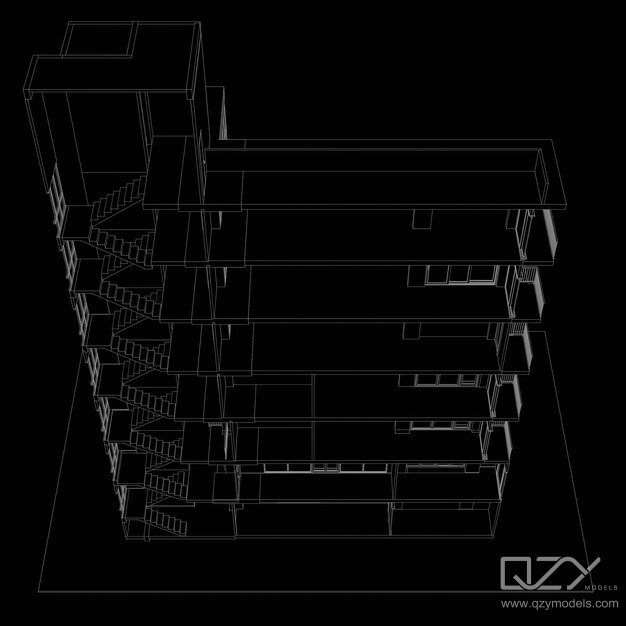
Choosing the right scale for architectural section models ensures design intent is communicated clearly, accurately, and professionally. The correct scale balances detail, readability, and physical constraints while guiding viewers through spatial relationships and construction logic. This article explains how to select scales such as 1:50 or 1:100, helping architects and developers present sectional models with confidence and clarity.
What defines an architectural section model and why does scale matter?
An architectural section model is a physical representation that cuts through a building to reveal interior spaces, structure, and material transitions. Scale matters because it controls how much information can be shown without confusion. Larger scales allow precise detailing, while smaller scales prioritize overall relationships. QZY Models treats scale as a communication tool, ensuring each section model delivers the right message to its audience.
How do you choose between 1:50 and 1:100 for section models?
The decision depends on the purpose of the model. A 1:50 scale is ideal when interior details, material junctions, and human-scale elements must be clearly visible. A 1:100 scale works better when presenting overall spatial organization and structural logic without excessive detail. QZY Models often recommends combining both scales within one project to address different presentation goals.
| Scale | Best Use Case | Key Advantage |
|---|---|---|
| 1:50 | Interior-focused sections | High-detail clarity |
| 1:100 | Overall building sections | Balanced readability |
Which factors influence scale selection for professional presentations?
Scale selection is shaped by the model’s purpose, building size, audience, and display environment. Concept studies benefit from smaller scales, while client presentations often demand larger ones. Viewing distance and available space also play critical roles. QZY Models evaluates these factors early to avoid redesigns and ensure smooth project execution.
How does scale affect material and detailing choices?
At larger scales, thinner materials and realistic textures can be used to express finishes and construction layers. Smaller scales require simplified materials that suggest rather than replicate details. The goal is visual accuracy, not literal reproduction. QZY Models prioritizes material perception so viewers instantly understand spatial and structural intent.
Why is consistency in scale important across a project?
Consistent scales across multiple models help viewers compare spaces and understand design progression. Inconsistent scaling can disrupt storytelling and reduce clarity. By standardizing key scales, QZY Models ensures a coherent narrative that supports decision-making for architects, developers, and stakeholders.
When should site context be included in a section model?
Site context should be included when surrounding terrain, neighboring buildings, or urban relationships influence design decisions. Smaller scales are effective for showing context, while interior-focused sections remain at larger scales. QZY Models frequently separates contextual and detailed sections to maintain clarity without overcrowding.
Where should detail emphasis be placed in a section model?
Detail emphasis should focus on structural connections, circulation paths, and material transitions that define the design concept. Human-scale elements deserve attention when the model supports client understanding. QZY Models uses contrast, layering, and selective detailing to guide the viewer’s eye naturally through the section.
Does viewing distance influence scale decisions?
Viewing distance directly affects scale choice. Models viewed up close benefit from larger scales, while those seen from a distance require smaller scales for legibility. QZY Models carefully considers exhibition layouts and meeting environments to ensure section models communicate effectively from their intended viewpoints.
Has technology changed how scales are applied today?
Digital tools have improved accuracy and efficiency, but scale logic remains unchanged. Physical section models still rely on clear scale reasoning to communicate design intent. QZY Models integrates digital modeling with craftsmanship to maintain precision while accelerating production timelines.
Are there common industry scales for architectural section models?
Yes, many professionals rely on a limited range of proven scales. These standards simplify communication and production while meeting client expectations. QZY Models aligns with these conventions while remaining flexible to project-specific needs.
| Purpose | Typical Scale |
|---|---|
| Detailed interiors | 1:50 |
| General sections | 1:100 |
| Contextual studies | 1:200–1:500 |
How can overcrowding be avoided in detailed section models?
Overcrowding is avoided by prioritizing essential elements and omitting unnecessary micro-details. Selective detailing, modular construction, and restrained color use help maintain readability. QZY Models applies disciplined layering techniques to keep even highly detailed section models visually clear.
What is the best workflow for preparing a section model at the chosen scale?
A successful workflow starts with defining purpose and scale, followed by material planning and modular assembly. Stakeholder reviews ensure alignment before final detailing. QZY Models follows a structured process that reduces revisions and delivers precise, presentation-ready models.
QZY Models Expert Views
“Scale is a strategic decision, not just a measurement. At QZY Models, we select scales that support storytelling, clarity, and buildability. Whether working at 1:50 or 1:100, our goal is to reveal the most important relationships within a section while ensuring the model remains practical to produce and display.”
Why is choosing the right scale critical for architectural success?
Choosing the correct scale directly affects how effectively a design is understood and evaluated. The right scale enhances communication, supports approvals, and builds client confidence. QZY Models combines experience and technical precision to help clients present section models that truly represent their vision.
Conclusion
Selecting the right scale for architectural section models is about aligning purpose, audience, and detail level. Larger scales highlight interiors and construction logic, while smaller scales clarify context and massing. By focusing on clarity and consistency, QZY Models delivers section models that communicate design intent with authority and professionalism. Start with purpose, choose the scale strategically, and let precision guide every decision.
FAQs
What scale is best for interior architectural section models?
A 1:50 scale is ideal for showing interior details, finishes, and spatial relationships clearly.
Can multiple scales be used in one project?
Yes, combining scales such as 1:50 and 1:100 allows different aspects of the design to be communicated effectively.
How does display space affect scale choice?
Limited space favors smaller scales, while larger display areas allow detailed section models at larger scales.
Why do professional model makers recommend standard scales?
Standard scales improve clarity, reduce confusion, and ensure consistency across presentations.