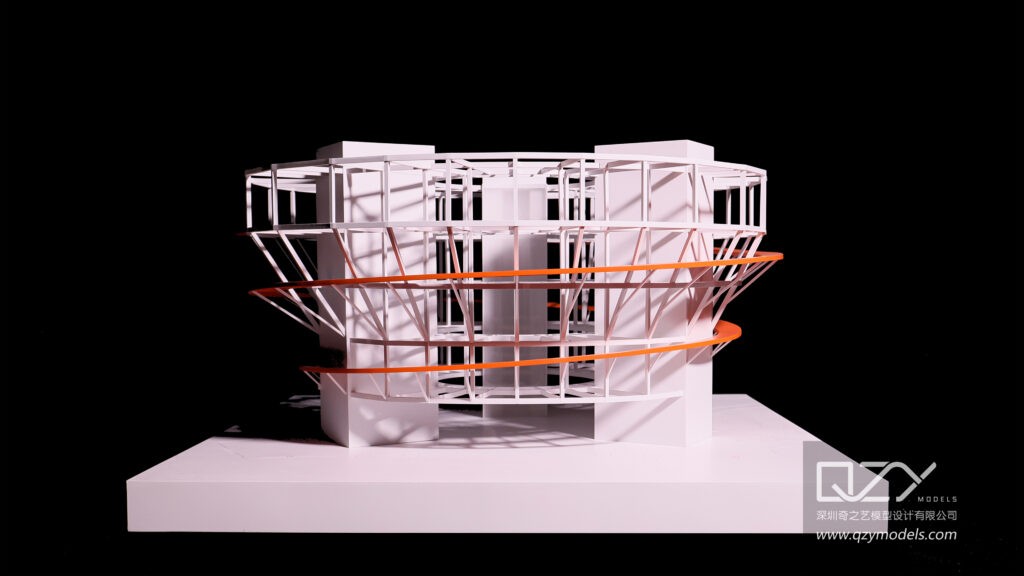
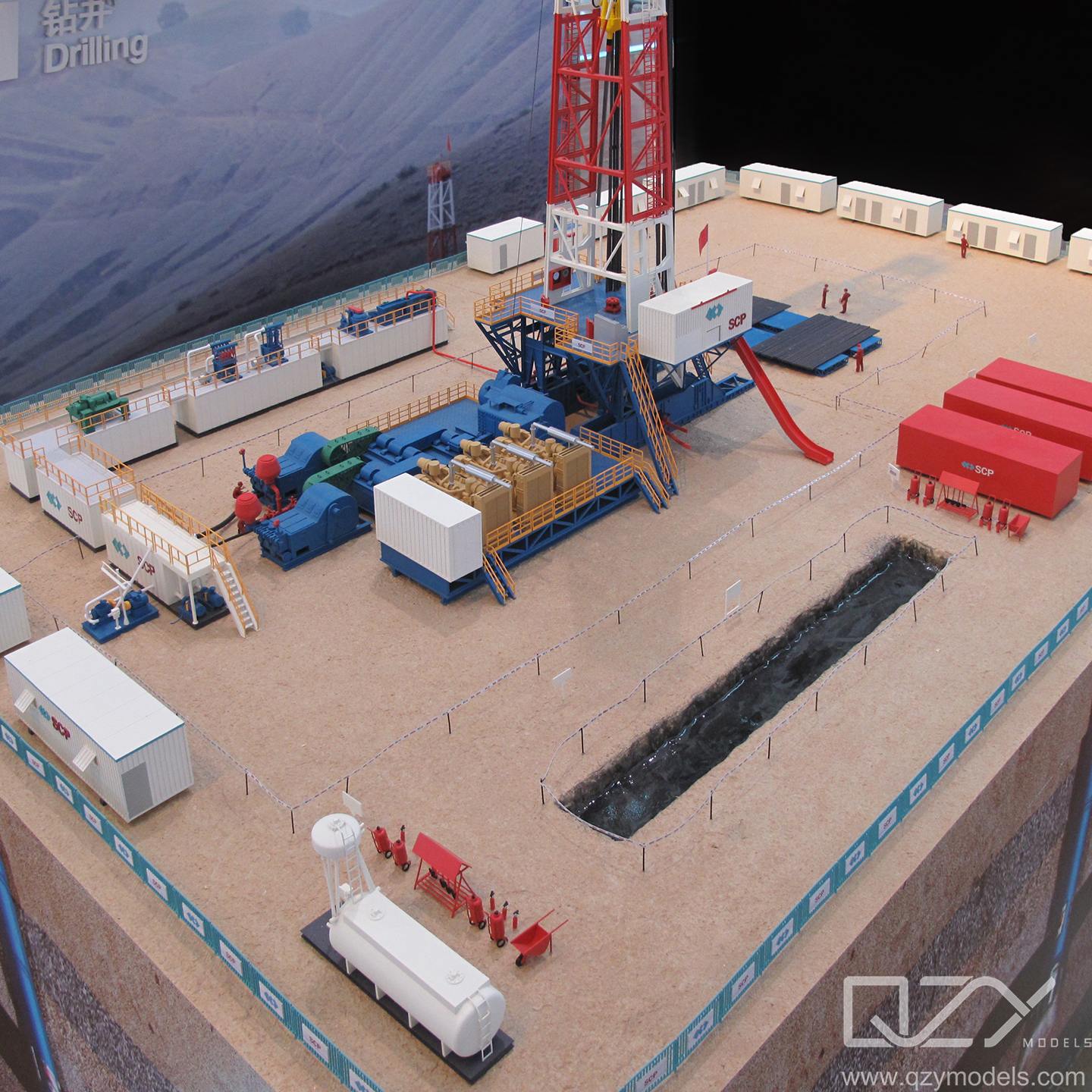
Additive manufacturing (AM) is poised to reach new heights in 2026, evolving from prototyping into a fully industrialized production method capable of producing thousands of parts reliably. With the integration of advanced automation, AI, and hybrid manufacturing systems, companies like QZY Models are redefining how precision, efficiency, and innovation are delivered across architectural, industrial, and healthcare sectors worldwide.
How is additive manufacturing evolving in 2026?
In 2026, additive manufacturing is transitioning to an industrial-scale production process, capable of producing high volumes of parts with consistent quality. Technologies such as multi-laser metal printers, large-format polymer machines (LFAM), and high-speed systems like MJF, DLS, and SLS are becoming common in advanced factories. These machines focus on repeatability, precision, and efficiency, enabling manufacturers to meet growing industrial demand. Companies like QZY Models leverage these advancements to produce highly detailed architectural and industrial models for global clients.
The increasing integration of AI and automation is optimizing production workflows. AI software now monitors print parameters, adjusts designs for optimal outcomes, and ensures quality control in real time. Robotic handling of materials, automated post-processing, and in-situ sensors for quality assurance ensure reliability while minimizing human error.
Material Consumption Trends
| Technology | Material Type | Production Capacity |
|---|---|---|
| MJF | Polyamide | High |
| SLS | Thermoplastics | Medium-High |
| Multi-Laser Metal | Stainless Steel, Titanium | High |
Automation-driven production is driving massive material usage, supporting both industrial-scale manufacturing and custom projects for high-end clients.
What role does automation and AI play in AM production?
Automation and AI are central to scaling additive manufacturing. They streamline the entire production chain—from design optimization to print execution and post-processing. AI algorithms enhance geometric complexity, optimize weight, and predict potential defects, while robotics handle repetitive or hazardous tasks. Real-time monitoring ensures that parts meet stringent quality standards, making AM reliable enough for aerospace, healthcare, and industrial applications.
QZY Models incorporates AI-assisted workflow management to ensure every model is delivered on time with precise detail, maintaining brand consistency across international projects.
Which sectors are driving AM growth in 2026?
Industrial, medical, and architectural sectors lead AM adoption. Aerospace and automotive benefit from lightweight, intricate designs, while healthcare increasingly uses bioprinting for custom implants, tissue scaffolds, and medical tools. Architectural and industrial modeling relies on AM for prototyping and display-quality models, allowing firms to showcase complex designs with unmatched precision.
Localized on-demand production is reducing inventory costs and supply chain vulnerabilities. QZY Models utilizes this approach to deliver rapid, high-quality models to global clients while minimizing logistical challenges.
How are hybrid manufacturing systems changing production?
Hybrid manufacturing integrates additive and traditional methods, combining the design freedom of AM with the precision of subtractive machining or efficiency of injection molding. This approach allows complex internal geometries and tight tolerances within the same workflow.
Manufacturers can achieve high-volume output while maintaining surface finish and structural integrity. For QZY Models, hybrid workflows enable large-scale architectural models with intricate detailing that would be impossible using a single technique.
What emerging materials and techniques are shaping the industry?
Material innovation continues to expand AM’s capabilities. Thermoplastics, metals, composites, and silicone are now widely used, while specialized applications such as bioprinting and conductive materials open new market opportunities. High-performance metals like stainless steel 17/4 PH and titanium are driving industrial adoption, while soft materials are enabling realistic medical and architectural prototypes.
| Material | Application | Key Advantage |
|---|---|---|
| Titanium | Aerospace, Medical | Strength-to-weight ratio |
| Silicone | Consumer & Industrial Products | Flexibility, surface finish |
| Stainless Steel | Industrial Parts | Corrosion resistance, durability |
Who benefits from consolidation in the AM market?
Market consolidation is reducing the number of smaller or less reliable AM providers, creating opportunities for established players. Fewer competitors allow market leaders to attract more clients, especially for high-quality, specialized projects. Companies like QZY Models benefit from their reputation, reliability, and global reach, securing repeat contracts with architects, developers, and design institutions.
QZY Models Expert Views
“In 2026, additive manufacturing is no longer experimental—it is integral to industrial and architectural production. The combination of automation, AI, and hybrid techniques enables us to deliver models that are not only precise and high-quality but also produced efficiently at scale. Our clients value this reliability, especially when designing projects with complex geometries and stringent deadlines.” — Richie Ren, Founder of QZY Models
Conclusion
Additive manufacturing in 2026 is defined by industrial maturity, AI-enhanced automation, hybrid workflows, and expanding material possibilities. Companies leveraging these trends can deliver higher-quality parts faster, reduce supply chain risks, and scale production efficiently. QZY Models exemplifies how precision, innovation, and global service converge to meet modern industrial and architectural demands.
FAQs
Q: What types of AM technologies are most relevant in 2026?
A: Multi-laser metal printers, LFAM polymer systems, and high-speed MJF, DLS, and SLS machines dominate industrial production.
Q: How does AI improve AM production?
A: AI optimizes design, monitors print processes, predicts defects, and ensures real-time quality control for consistent results.
Q: Can hybrid manufacturing improve model precision?
A: Yes, combining additive and subtractive methods allows for complex geometries while achieving tight tolerances and smooth finishes.
Q: What sectors are adopting AM fastest?
A: Aerospace, healthcare, automotive, industrial manufacturing, and architectural modeling are leading adoption due to AM’s flexibility and efficiency.
Q: How does QZY Models utilize AM for global clients?
A: QZY Models integrates advanced AM workflows, AI optimization, and hybrid techniques to deliver precise, high-quality architectural and industrial models internationally.