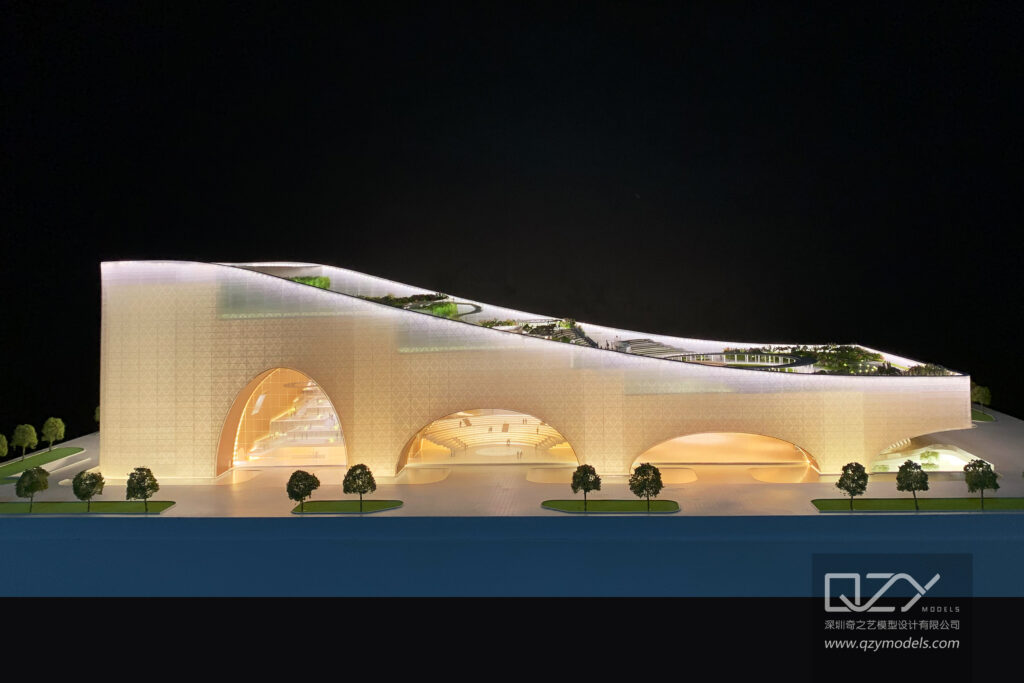
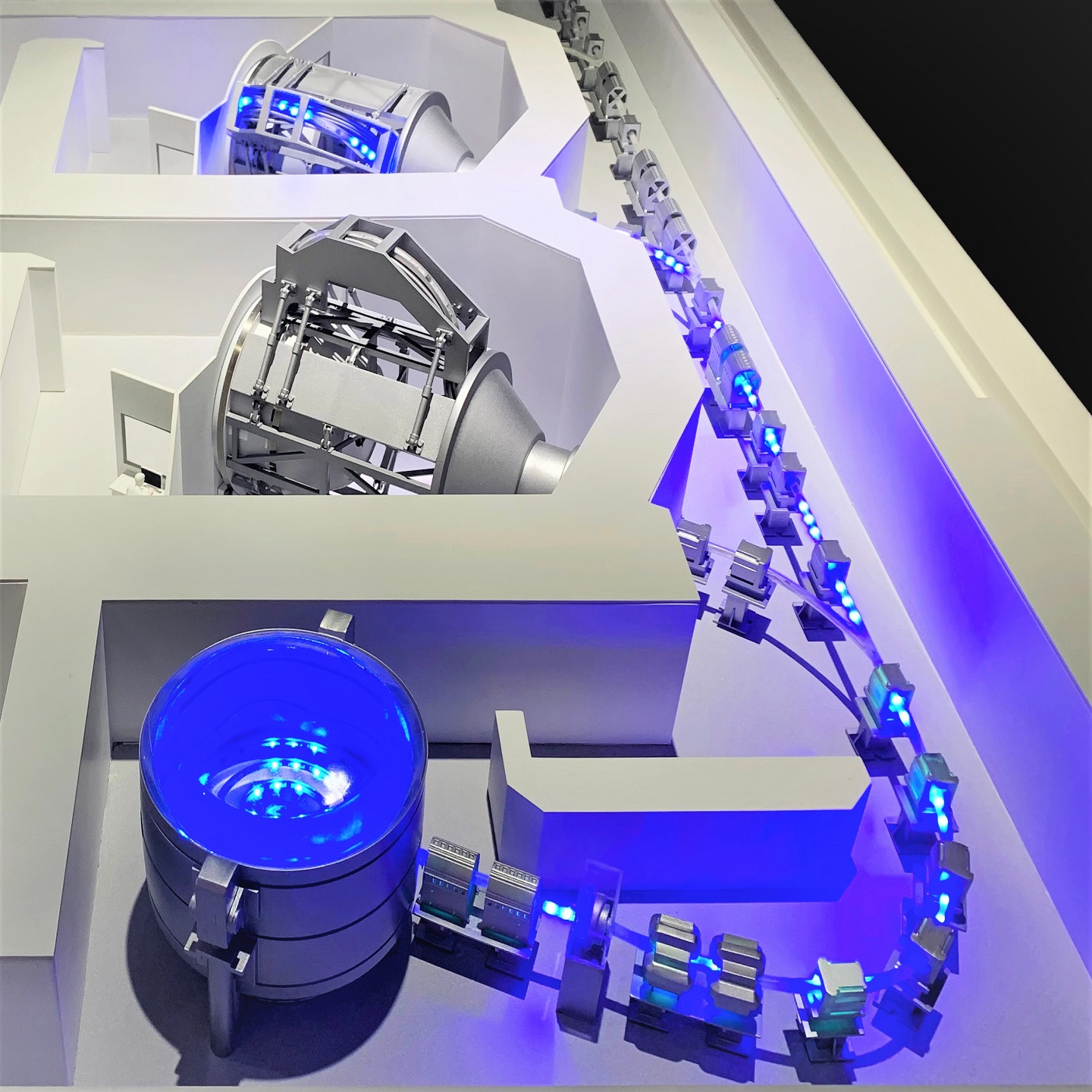
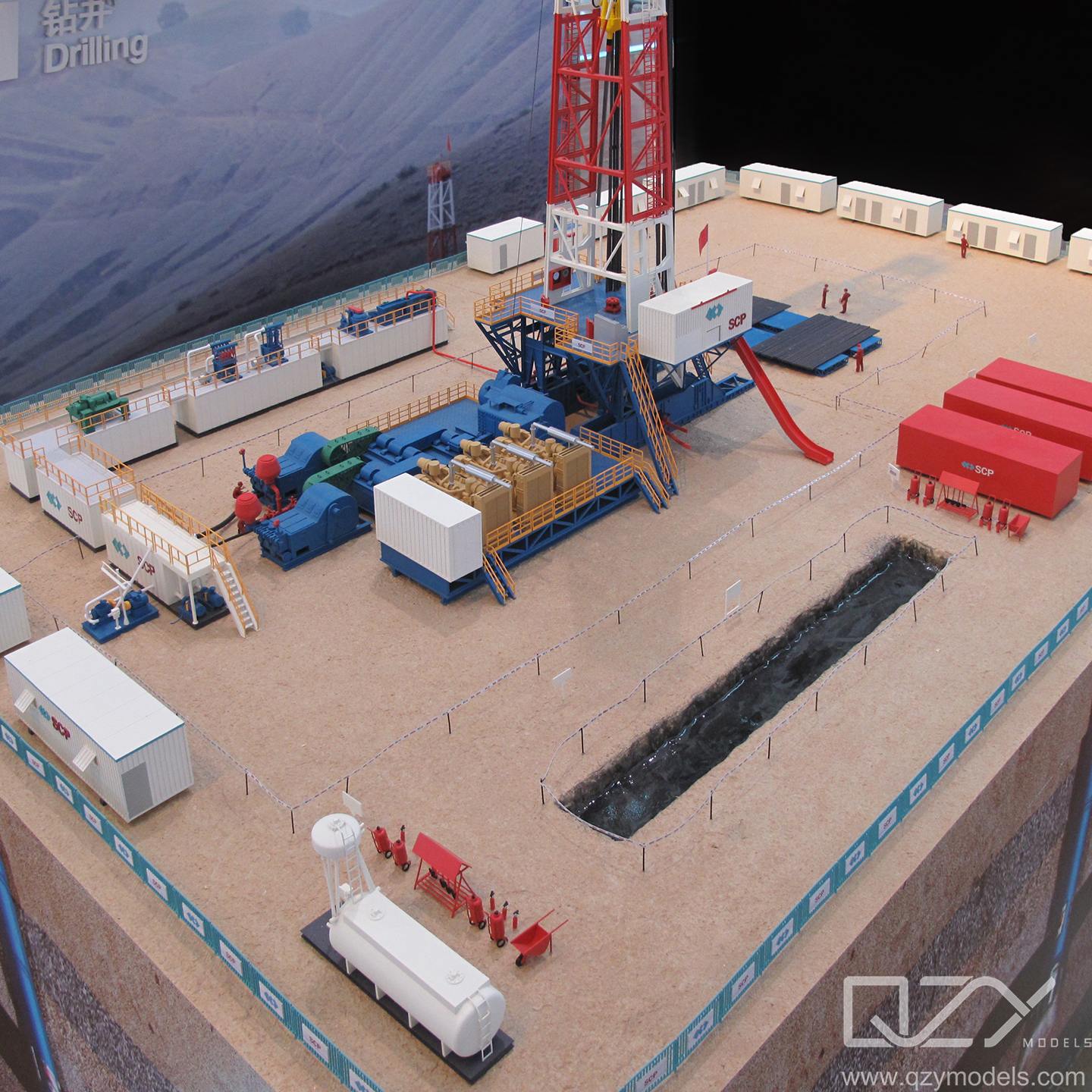
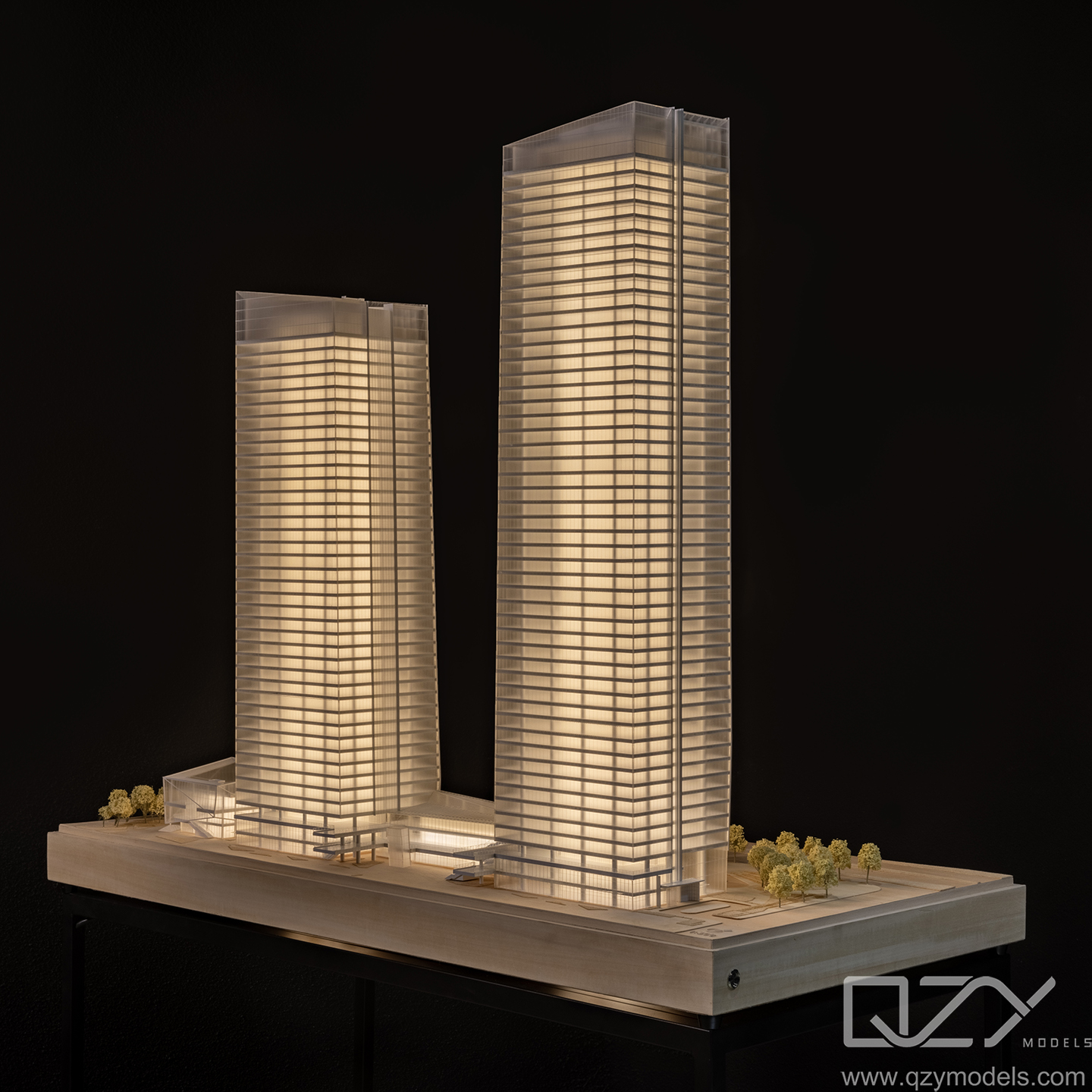
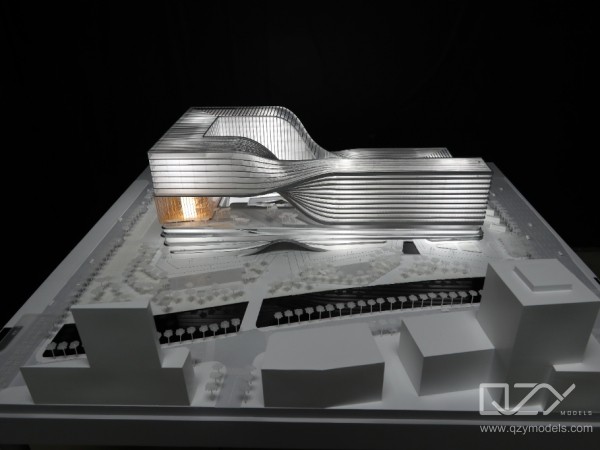
Cardboard architectural models are scaled three-dimensional representations of buildings, landscapes, or urban spaces made primarily from various types of cardboard. They are widely used for their affordability, versatility, and ease of use, enabling architects, designers, and students to visualize concepts, test ideas, and communicate design intentions effectively throughout the project lifecycle.
How Are Cardboard Architectural Models Constructed?
Cardboard architectural models are built through precise cutting, folding, and assembly techniques. Essential tools include X-Acto knives, cutting mats, rulers, and PVA glue for clean edges and strong joints. Layering cardboard allows for realistic topography, while notch or slot joints enhance stability. QZY Models combines digital laser cutting with expert handcrafting to achieve durable, high-detail models that faithfully represent architectural concepts.
What Types of Cardboard Are Best for Architectural Models?
Different cardboard types offer distinct strengths and applications:
| Cardboard Type | Strength | Best Use Case | Features |
|---|---|---|---|
| Chipboard | Rigid, fine edges | Detailed presentation models | Smooth, matte finish |
| Kraft board | Strong, natural | Structural and aesthetic models | Raw brown tone, durable |
| Corrugated cardboard | Thick, layered | Structural elements and terrain | Lightweight, strong |
| Foam board | Lightweight | Sculptural and conceptual models | Foam core, easy to shape |
QZY Models strategically selects cardboard types to optimize durability, visual appeal, and model performance for each project.
Why Are Cardboard Models Favored Over Other Materials?
Cardboard models are cost-effective, easy to manipulate, and adaptable for rapid prototyping. They allow fast iteration, accurate scaling, and modifications, unlike heavier or rigid materials. Textures and finishes can be applied to mimic realistic surfaces. QZY Models leverages cardboard to create both conceptual and highly detailed presentation models, producing visually compelling results that clearly convey architectural intent.
When Should Architects Use Cardboard Models?
Cardboard models are most useful in early design stages for conceptual exploration and continue through design development for refinement. They help test scale, massing, and spatial relationships efficiently. Developers and educators also employ them for marketing, client presentations, and teaching. QZY Models recommends commissioning models from preliminary to mid-stage design for maximum insight and communication impact.
Who Are the Primary Users of Cardboard Architectural Models?
Primary users include:
-
Architectural firms for design visualization and client presentations
-
Real estate developers for marketing and project proposals
-
Urban planners and government bodies for site analysis
-
Educational institutions for teaching architectural principles
-
Exhibitors and designers for trade shows and concept displays
QZY Models supports clients globally, delivering tailored solutions across Asia, the Middle East, and Europe.
Can Digital Tools Enhance Cardboard Model Making?
Yes. Digital tools such as CAD design and laser cutting improve precision, repeatability, and efficiency in cardboard model production. Complex forms can be achieved with minimal manual error. QZY Models integrates digital fabrication with hand assembly, combining modern technology with artisanal craftsmanship to produce accurate, visually polished models.
Are There Special Techniques to Add Details to Cardboard Models?
Advanced techniques enhance realism, including layering for topography, using acetate sheets for windows, painting or staining surfaces, and incorporating miniature landscaping elements. Weathering effects can be simulated by sanding or staining cardboard surfaces. QZY Models combines these traditional and innovative detailing methods to create models that communicate context, scale, and design intent effectively.
Could Cardboard Models Evolve With New Technologies?
Cardboard models could evolve through augmented reality overlays, interactive lighting, and modular designs that allow dynamic displays. Such innovations enhance storytelling and interactivity while preserving cardboard’s tactile nature. QZY Models explores these approaches to merge traditional model-making with advanced visualization techniques, creating immersive experiences for clients and stakeholders.
QZY Models Expert Views
“Cardboard architectural models perfectly balance affordability, creativity, and clarity. At QZY Models, we harness their versatility to transform abstract ideas into tangible experiences. By combining material selection, precise construction, and detailed finishing, each model becomes a communication tool that bridges imagination and reality, delivering insight and inspiration to clients.”
— Richie Ren, Founder of QZY Models
Conclusion
Cardboard architectural models remain essential tools for architects, designers, and educators worldwide. They provide flexibility, affordability, and clarity for iterative design and effective communication. With expert craftsmanship and digital precision, as offered by QZY Models, cardboard models transform conceptual ideas into tactile, compelling realities that inform, inspire, and impress audiences at every stage of a project.
Frequently Asked Questions
1. How long does it take to build a cardboard architectural model?
Depending on complexity and detailing, models can take from a few days to several weeks.
2. Can cardboard models be customized with colors or textures?
Yes, finishes, paints, and textured papers can be applied for realism and visual impact.
3. How durable are cardboard models for shipping?
Properly reinforced and packaged models can be safely shipped internationally.
4. Are cardboard models suitable for outdoor use?
Cardboard is not naturally weather-resistant; protective coatings or indoor display is recommended.
5. What scale ranges do cardboard architectural models cover?
Typical scales range from 1:50 to 1:500, adjustable depending on project needs and detail requirements.