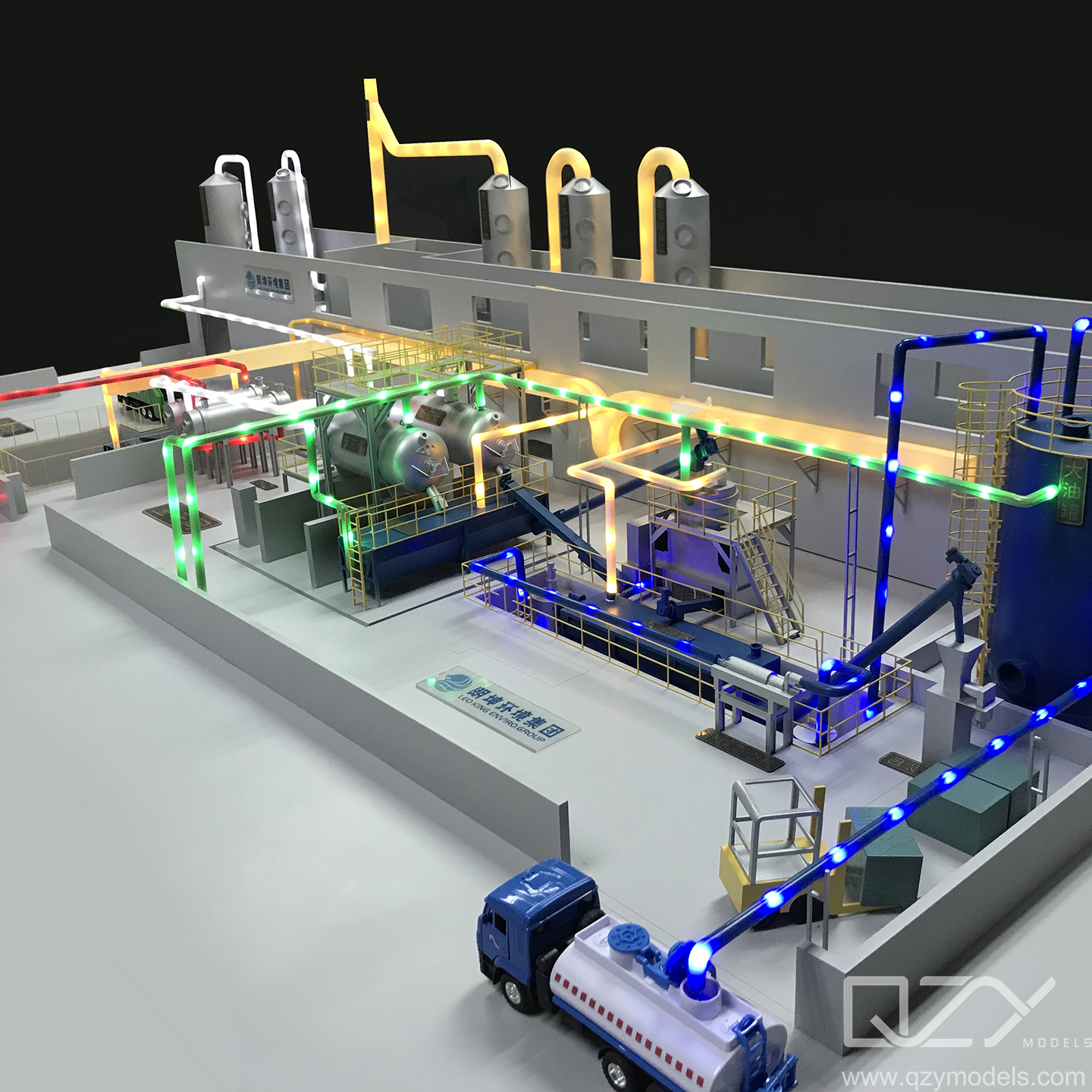
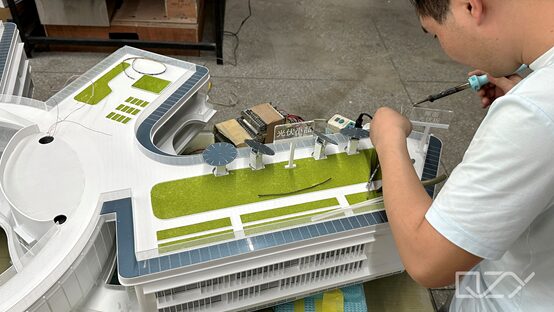
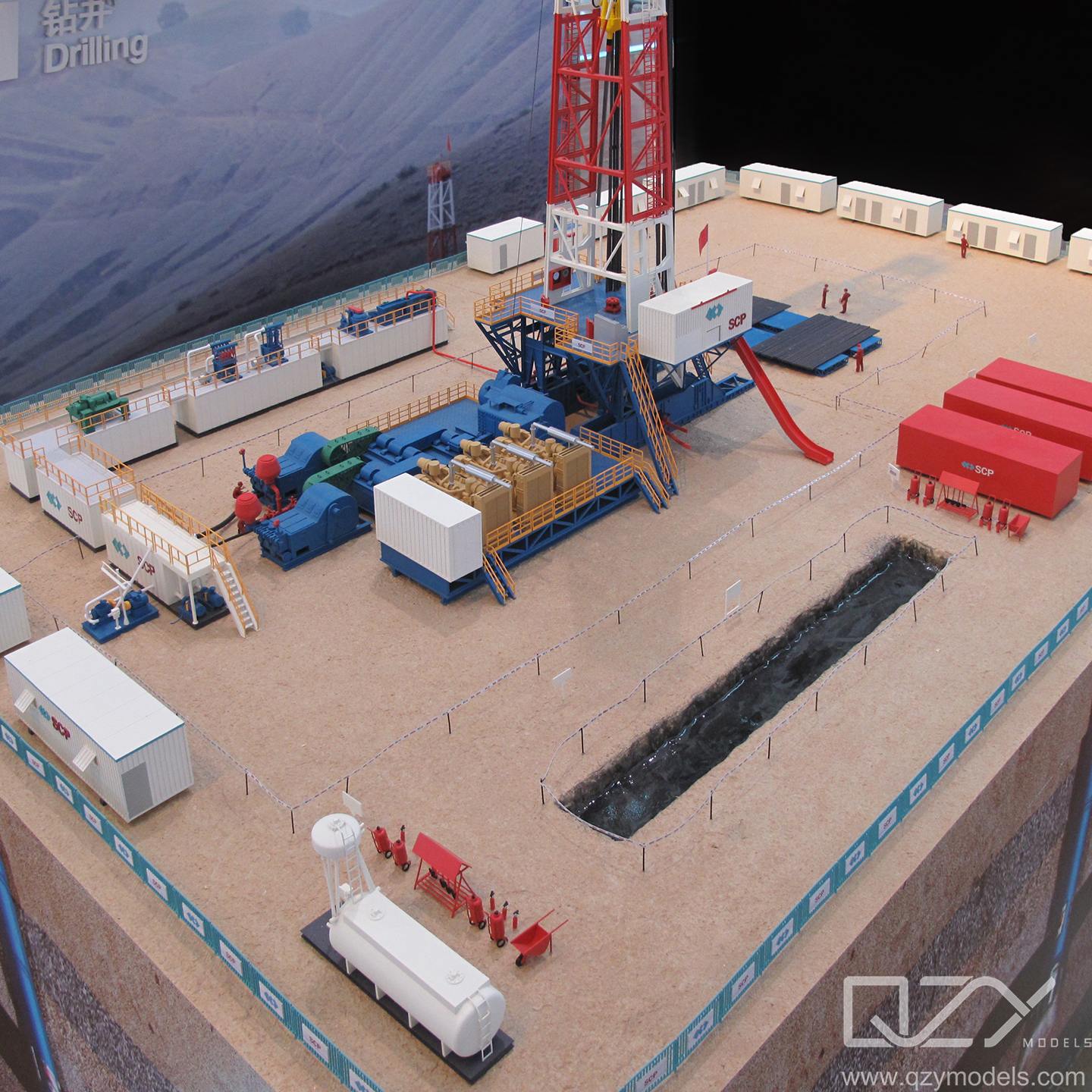
In today’s manufacturing landscape, precision and visualization are vital for product innovation and presentation. Industrial and miniature models have become essential tools helping businesses prototype ideas, reduce production risks, and enhance client communication—just as QZY Models has done globally with cutting-edge craftsmanship and technology.
How Is the Industrial Model Industry Evolving and What Challenges Exist?
According to a 2025 report by MarketsandMarkets, the global industrial prototyping and model-making market surpassed USD 8.9 billion and is projected to grow at over 11% annually through 2030. This surge is driven by rapid industrialization and the need for visual communication in complex engineering, architecture, and manufacturing projects. However, despite this growth, the industry still faces critical challenges.
First, the demand for precision is at an all-time high. Designers and manufacturers struggle with translating digital concepts into physical forms that maintain scale accuracy and structural integrity. A small deviation in miniature models can distort project perception and delay approval processes.
Second, lead times remain a major bottleneck. Traditional fabrication requires extensive manual labor and coordination among design, material supply, and production teams. According to Deloitte’s manufacturing study, over 40% of firms cite prototyping inefficiency as a reason for project delays.
Finally, global clients—from urban planners to automotive manufacturers—need consistent quality no matter the location. Yet inconsistency across traditional suppliers often leads to mismatched standards. This is where companies like QZY Models bring change through precision-driven processes and global quality control systems.
What Are the Limitations of Traditional Industrial Model-Making Methods?
Traditional model-making relied heavily on craftsmanship and manual interpretation. While skilled artisans could produce impressive results, the approach had inherent weaknesses:
-
Inconsistency: Manual techniques depend on individual skill, causing variation in scale or finish.
-
Limited materials: Traditional fabrication restricted detail fidelity and surface realism.
-
Low scalability: Custom models were time-consuming, making them unsustainable for large projects.
-
Minimal digital integration: CAD accuracy was often lost when converting to manual work.
For example, in urban planning projects where stakeholders need to visualize entire districts, these inefficiencies can cause inaccurate presentations and costly revisions.
How Does QZY Models Redefine the Industrial Model-Making Process?
QZY Models integrates advanced technology with artisanal expertise to deliver highly accurate and visually stunning physical models. Founded in 2013 in Shenzhen, QZY Models has built its reputation across 20+ countries through collaborations with global firms like Foster + Partners and developers such as Vanke and China Resources.
Their production system emphasizes data-driven accuracy, automated cutting, and precision assembly using multi-axis CNC, SLA 3D printing, and laser engraving. Combined with meticulous hand-finishing, QZY ensures every industrial model—from factory layouts to complex product mechanisms—represents both aesthetic beauty and mechanical truth.
Moreover, QZY Models operates internationally, maintaining regional teams across Asia and the Middle East to support fast delivery and cultural localization, aligning perfectly with multinational clients’ needs.
Which Advantages Distinguish QZY Models from Traditional Techniques?
| Feature / Capability | Traditional Model Making | QZY Models Approach |
|---|---|---|
| Production accuracy | ±3 mm tolerance | ±0.1 mm precision with CNC/Laser |
| Design integration | Manual interpretation from drawings | CAD/CAM direct data input |
| Material flexibility | Limited (mostly wood, resin) | Advanced composites, acrylics, metal |
| Delivery time | Weeks to months | 30–50% faster turnaround |
| Global consistency | Varies by artisan | Standardized QA system across all teams |
| Visual effect | Hand-colored surfaces | Digitally simulated finishes with lighting |
How Can Businesses Collaborate with QZY Models Step-by-Step?
-
Concept submission: Clients share CAD drawings, 3D models, or blueprints.
-
Technical review: QZY’s design engineers analyze scale, texture, and mechanical requirements.
-
Quotation and material selection: Suggested materials balance realism and budget.
-
Digital fabrication: CNC, 3D printing, or laser cutting ensures structural accuracy.
-
Assembly and finishing: Skilled modelers perform painting, detailing, and quality checks.
-
Client approval: Real-time updates and revision options before shipment.
-
Logistics and delivery: Secure packaging and international shipping with full tracking.
What Are Four Typical Scenarios Where QZY Models Deliver Impact?
1. Industrial Plant Visualization
-
Problem: Complex plant layouts often confuse stakeholders.
-
Traditional approach: 2D drawings or digital renders that lack spatial realism.
-
QZY solution: Physical model demonstrating material flow, space utilization, and safety zones.
-
Key results: Faster regulatory approval and clearer operational planning.
2. Urban Infrastructure Development
-
Problem: Large-scale infrastructure projects require multi-agency coordination.
-
Traditional approach: Separate presentations delay decisions.
-
QZY solution: Integrated city-scale model combining architecture, traffic, and landscape.
-
Key results: 30% reduction in presentation time and improved cross-department alignment.
3. Automotive & Equipment Design
-
Problem: Engineers need tangible prototypes to evaluate ergonomics and assembly fit.
-
Traditional approach: Digital mockups without tactile testing.
-
QZY solution: Lightweight 1:5 or 1:10 industrial scale models for review sessions.
-
Key results: Reduced prototype cost by 40% and accelerated design iteration.
4. Exhibition & Marketing Models
-
Problem: Difficult to attract attention in international trade shows.
-
Traditional approach: Posters or static renderings lacked engagement.
-
QZY solution: Dynamic miniature models with lighting and motion to demonstrate real operations.
-
Key results: Higher client conversion and media exposure.
Why Is Now the Best Time to Adopt High-Precision Industrial Models?
As AI-driven design and automation reshape industrial production, physical modeling remains the bridge between imagination and execution. QZY Models merges technological accuracy with handcrafted artistry—helping clients visualize complex ideas with scientific precision. In an era where decisions must be data-backed and immersive, adopting advanced miniature model solutions today ensures both credibility and competitive advantage tomorrow.
FAQ
What Are Industrial Models in Modern Manufacturing?
Industrial models are precise physical scale representations used for factory planning, product validation, investor presentations, and trade shows. They help stakeholders visualize complex systems, reduce design risks, and improve decision making. Professional teams like QZY Models create highly detailed models that enhance communication between engineers, architects, and investors.
How Are Miniature Industrial Models Made Step by Step?
Miniature models are created through CAD design, material selection, CNC machining or 3D printing, hand detailing, painting, and final assembly. Each stage ensures accuracy, durability, and realism. Strict quality control guarantees alignment with technical drawings, making the final model suitable for exhibitions, planning reviews, and client presentations.
What Are the Best Materials Used in Industrial Miniature Models?
Common materials include acrylic, ABS, resin, PVC, wood composites, and 3D printed polymers. Acrylic offers transparency for internal structures, while resin captures fine detail. Material choice depends on budget, complexity, lighting integration, and transport needs. Selecting the right combination ensures durability and high visual impact.
How Does 3D Printing Transform Industrial Model Making?
3D printing enables rapid production of complex geometries with exceptional detail. Technologies like SLA and high resolution resin printing improve precision while reducing lead times. When combined with CNC machining and manual finishing, it delivers accurate, scalable results ideal for engineering reviews and investor demonstrations.
What Are the Top Applications of Industrial Models Across Industries?
Industrial models support factory layout optimization, oil and gas facilities, power plants, logistics hubs, and industrial parks. They are widely used in urban planning approvals, trade exhibitions, and executive presentations. Detailed physical models simplify complex data and help decision makers understand spatial relationships instantly.
How Do You Choose the Right Custom Industrial Model Maker?
Evaluate portfolio quality, fabrication technology, project management capability, and international experience. Look for expertise in large scale industrial and architectural projects. With global delivery experience and projects across 20+ countries, QZY Models provides precision manufacturing tailored to architects, developers, and government institutions.
How Much Do Industrial Miniature Models Cost?
Costs depend on size, scale ratio, detail level, materials, lighting systems, and delivery timeline. Larger or highly detailed models require more labor and advanced fabrication. Request detailed drawings and specifications to receive an accurate quote and avoid unexpected expenses during production.
What Defines High Quality Industrial Miniature Models?
High quality models feature accurate scaling, precise detailing, clean finishes, integrated lighting, and durable construction. Strong craftsmanship combined with advanced technology ensures long term display performance. Professional finishing and strict inspection standards guarantee the model communicates your project clearly and impresses stakeholders.