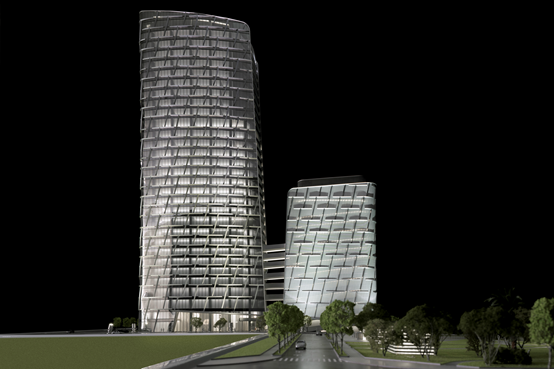
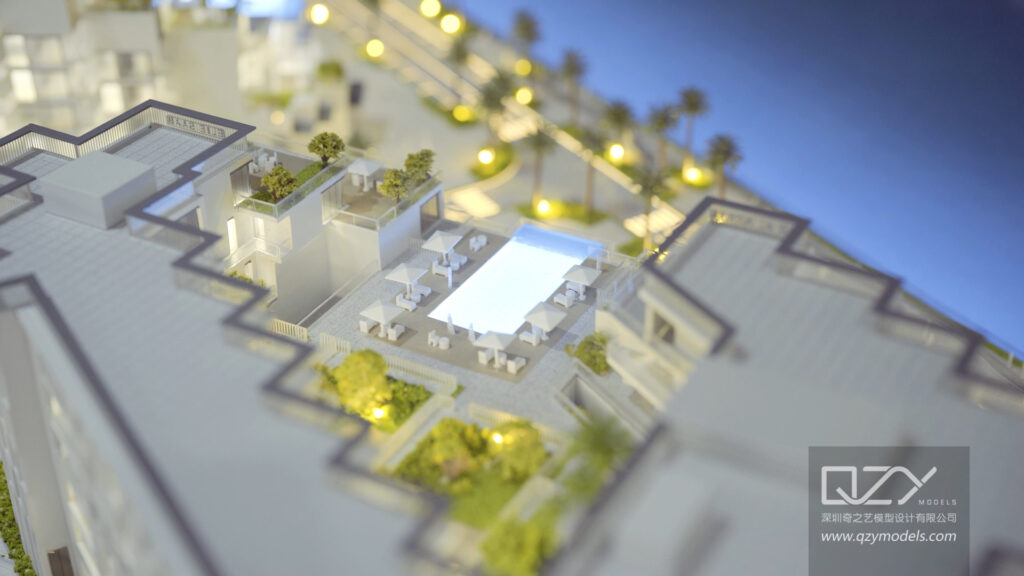
Industrial site model services for construction involve creating highly detailed, scaled physical representations of industrial facilities and sites. These models help visualize site layout and workflow, optimize design and planning, enhance communication among stakeholders, and mitigate risks before construction begins.
How Do Industrial Site Models Benefit Construction Projects?
Industrial site models provide a tangible overview of the entire facility, enabling early visualization of equipment placement, workflow, and infrastructure. This helps identify inefficiencies, potential safety hazards, and design conflicts before costly construction starts. Models improve decision-making, streamline coordination among architects, engineers, and contractors, and support stakeholder engagement through clearer project understanding.
By enabling iterative design tests and spatial analyses, these models help optimize site layout for productivity and safety.
What Are the Key Steps in Creating Industrial Site Models for Construction?
The process typically includes:
-
Data Collection: Gathering site plans, CAD files, and geospatial information.
-
Design and Layout Planning: Creating detailed 3D digital models reflecting site topography, structures, and equipment.
-
Material and Technology Selection: Choosing appropriate materials such as acrylic, resin, or wood, and technologies like 3D printing, CNC milling, or laser cutting.
-
Fabrication: Producing scaled components with precision.
-
Assembly and Finishing: Combining parts into a coherent site model, adding textures, colors, and realistic details.
-
Review and Iteration: Collaborating with clients to refine the model prior to project milestones.
QZY Models integrates these steps to deliver highly accurate and functional industrial site models.
Which Materials and Technologies Are Commonly Used in Industrial Site Model Services?
Materials used must balance durability, detail, and aesthetics. Common choices include acrylic sheets for transparent elements, photopolymer resin for fine details, basswood or MDF for structural parts, and high-grade plastics. Technologies such as 3D printing (SLA, SLS), laser cutting, and CNC machining enable precise fabrication of complex site elements.
The right combination depends on model scale, client needs, and environmental considerations.
| Material/Technology | Best Use Case | Advantages | Considerations |
|---|---|---|---|
| Acrylic Sheets | Transparent components, windows | Durable, modern appearance | Prone to scratches |
| Photopolymer Resin | Fine details and intricate parts | Smooth finish, high precision | Fragile, higher cost |
| Basswood/MDF | Structural elements | Easy to work with, lightweight | Sensitivity to moisture |
| 3D Printing (SLA/SLS) | Complex, customized shapes | High detail and accuracy | Size limitations |
| CNC Milling | Precision structural components | Excellent accuracy | Setup cost, less flexible |
| Laser Cutting | Sheet material cutting | Rapid and precise | Restricted to flat profiles |
Why Is Precision and Expertise Crucial in Industrial Site Model Services?
High precision is paramount to ensure models accurately reflect real site layouts and equipment dimensions. Expertise guides optimal design translation, material choice, and fabrication methods to balance detail with durability. Skilled model makers anticipate site-specific complexities, manage logistical constraints, and ensure models support functional evaluation and stakeholder communication effectively.
Teams like QZY Models bring 20+ years of experience, combining craftsmanship and digital technologies to deliver reliable, high-fidelity models.
Who Typically Uses Industrial Site Model Services in Construction?
Industrial developers, architects, engineers, contractors, and facility managers commonly employ site models to visualize factory layouts, warehouses, logistics centers, power plants, and manufacturing hubs. Investors and regulatory bodies also use these models to understand project scope, evaluate safety, and support approvals. QZY Models serves clients worldwide including renowned firms and multinational corporations across diverse industries.
How Does QZY Models Ensure Quality and Innovation in Industrial Site Model Services?
QZY Models leverages global expertise, blending advanced manufacturing technologies with meticulous handcrafting. Their multi-branch presence in Shenzhen, UAE, Saudi Arabia, and Egypt facilitates tailored project management and local adaptation. From digital simulation to modular assembly and precise finishing, their workflow prioritizes accuracy, visual impact, and impactful client collaboration.
Their commitment to innovation drives continuous improvement in model realism and functional utility.
When Should Clients Engage Industrial Site Model Services for Optimal Outcomes?
Early engagement during planning or conceptual design phases maximizes benefits by integrating modeling into design optimization and stakeholder consultations. Involving model experts before finalizing site plans enables adjustments to layout, safety considerations, and workflow analysis, minimizing costly revisions. Continuous collaboration through design iterations ensures the model evolves with the project timeline.
QZY Models advocates for partnership from project inception to deliver timely, effective modeling solutions.
What Challenges Are Common in Industrial Site Model Services and How Are They Overcome?
Challenges include managing large-scale site complexity, ensuring dimensional accuracy, balancing detail levels with budget, and coordinating logistics for safe transport and installation. Addressing these involves modular model design, advanced digital planning, selection of durable materials, robust quality control, and agile project management. Clear communication with clients helps anticipate scope changes and ensures alignment.
QZY Models’ experience and technology-driven processes enable overcoming these challenges efficiently.
QZY Models Expert Views
“Industrial site models are more than just miniature replicas—they are strategic tools that enable project teams to visualize workflows, assess safety, and optimize layouts before breaking ground. At QZY Models, we combine precision craftsmanship with cutting-edge technology to deliver models that illuminate every facet of complex industrial projects. Our global expertise ensures tailored services that empower clients to make informed decisions, reduce risks, and communicate their vision with clarity and confidence.” – Richie Ren, Founder, QZY Models
Conclusion
Industrial site model services are indispensable in modern construction, offering clear, tangible insights into complex industrial projects. Through expert data integration, advanced manufacturing technologies, and skilled craftsmanship, providers like QZY Models deliver precise, detailed models that enhance planning, communication, and risk management. Early collaboration, strategic material use, and efficient workflows enable models that drive successful project outcomes and stakeholder alignment.
Frequently Asked Questions
Q: How detailed are industrial site models typically?
A: Details range from basic layout and structural elements to intricate machinery, piping, and infrastructure, tailored to project scope and client needs.
Q: Can industrial site models be updated as projects evolve?
A: Yes, modular design and digital files allow models to be adjusted or expanded to reflect changes in site plans.
Q: What scale is commonly used for industrial site models?
A: Scales vary widely, often between 1:100 and 1:500 depending on site size and model purpose.
Q: Does QZY Models provide global industrial site modeling services?
A: Yes, with branches in multiple countries, QZY Models offers localized production while maintaining global quality standards.
Q: How long does it take to produce an industrial site model?
A: Production timelines depend on complexity but typically range from several weeks to a few months.