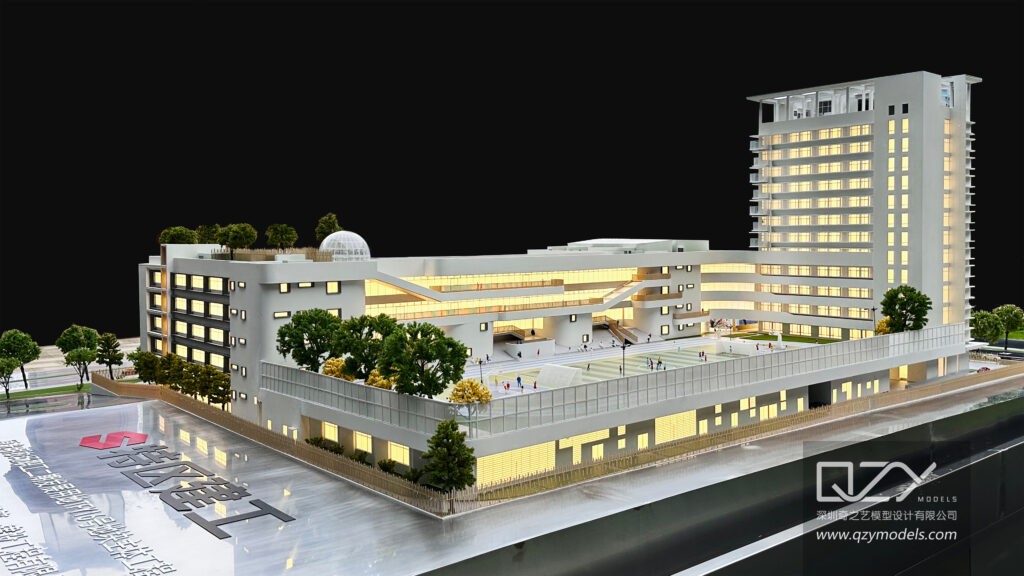
Miniature architectural models are physical, scale representations of buildings or spaces that help architects, developers, and designers communicate design concepts. By offering tangible insight into proportions, materials, and spatial relationships, these models make abstract plans understandable, enabling informed decision-making and enhanced client engagement throughout the design and development process.
How Are Miniature Architectural Models Made?
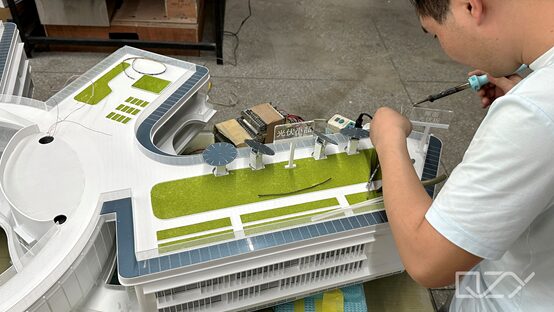
Miniature architectural models combine advanced technology with traditional craftsmanship. Using 3D printing, laser cutting, CNC milling, and hand-finishing, artisans create precise models from materials such as acrylic, wood, resin, and plastic.
The process typically involves:
-
Concept and CAD Design: CAD or BIM files are used to plan the model.
-
Scaling and Material Selection: Professionals determine the appropriate scale, materials, and lighting.
-
Fabrication: Machines cut, print, or mill the components.
-
Assembly and Detailing: Skilled artisans assemble, paint, and integrate landscaping or lighting.
-
Quality Assurance: Models are checked for scale accuracy, alignment, and material consistency before delivery.
QZY Models emphasizes craftsmanship in every stage to ensure accuracy, durability, and aesthetic fidelity.
What Are the Different Types of Miniature Architectural Models?
Miniature architectural models are categorized by purpose, scale, and detail:
| Type | Purpose | Typical Scale | Common Application |
|---|---|---|---|
| Concept Model | Explore early design ideas | 1:500 – 1:1000 | Design competitions, initial reviews |
| Presentation Model | Showcase finalized design | 1:100 – 1:200 | Client presentations, exhibitions |
| Urban Planning Model | Represent large districts | 1:500 – 1:1000 | Municipal planning, real estate projects |
| Interior Model | Focus on spatial layouts | 1:50 – 1:100 | Interior design visualization |
| Industrial Model | Demonstrate facility layouts | Variable | Factories, prototypes, energy plants |
QZY Models produces all these types, providing tailored solutions for specific project requirements.
Why Are Miniature Architectural Models Important in Modern Design?
Physical models bridge the gap between digital plans and real-world perception. They allow clients, investors, and planners to understand scale, proportions, and material textures, reducing miscommunication in complex projects.
Even in a digital era, tactile evaluation remains crucial for design approval, while models complement virtual renderings by illustrating realistic light, depth, and spatial relationships. QZY Models emphasizes that combining traditional modeling with digital integration enhances both clarity and emotional engagement.
Which Materials Are Best for Miniature Architectural Models?
Material choice depends on scale, budget, and visual effect:
| Material | Advantages | Typical Use |
|---|---|---|
| Acrylic | Transparent, sharp details | Modern architecture |
| Wood | Natural, warm | Residential and landscape models |
| Resin | Smooth, high-detail finish | Façade work and intricate components |
| Metal | Durable, premium appearance | Industrial or high-end models |
| Foam Board | Lightweight, economical | Concept models |
QZY Models carefully balances aesthetic impact and fabrication feasibility to select the optimal materials for each project.
Who Uses Miniature Architectural Models Professionally?
Miniature models are widely used by architects, developers, urban planners, interior designers, and educational institutions.
Key client groups include:
-
Architectural and urban design firms
-
Real estate and mixed-use developers
-
Municipal planning departments and exhibition organizers
-
Interior and landscape design companies
-
Educational institutions and design schools
QZY Models has collaborated with clients such as Foster + Partners, Vanke, and China Resources, providing solutions for both domestic and international projects.
Where Can Miniature Architectural Models Be Displayed?
Models are typically displayed in design studios, property showrooms, exhibitions, trade shows, and academic spaces. Permanent installations appear in sales centers or museums, while modular or lightweight models are used for traveling exhibitions and competitions. These placements enhance client engagement, provide interactive evaluation, and support marketing strategies.
How Has Technology Transformed Architectural Model Making?
Advances in 3D printing, laser cutting, CNC milling, and BIM integration have transformed model fabrication. These technologies allow precise, reproducible, and complex designs that were previously challenging to create by hand.
QZY Models leverages these innovations alongside artisanal skills to combine technical precision with visual artistry, ensuring models are both accurate and visually compelling.
What Are the Costs and Timelines for Model Production?
Costs vary based on scale, complexity, and materials, ranging from $1,000 to $100,000. Timelines extend from 5 days for basic concept models to 8 weeks for detailed presentation models.
Key cost factors include:
-
Model scale and footprint
-
Interior or exterior detailing
-
Lighting, motorization, or moving elements
-
Shipping, installation, and handling requirements
Clear communication with professional teams like QZY Models ensures accurate project scoping, budgeting, and timely delivery.
QZY Models Expert Views
“Each architectural model is not just a visual representation but a storytelling tool. At QZY Models, we combine precision engineering with artistic craftsmanship, producing models that communicate both technical accuracy and emotional impact. Our models help clients experience architecture in a tangible way, translating vision into a fully realized spatial experience.”
Could Miniature Models Help Sustainable or Smart City Development?
Miniature models assist in planning sustainable and smart urban spaces by simulating energy efficiency, green spaces, and transportation networks. Paired with digital visualization tools, models allow stakeholders to balance functionality, aesthetics, and eco-conscious design, supporting informed decisions before construction begins.
Conclusion
Miniature architectural models remain indispensable tools for designers, clients, and planners. They clarify complex concepts, accelerate approvals, and elevate presentations through precision and creativity. Partnering with expert manufacturers such as QZY Models ensures projects are represented with accuracy, elegance, and global standards.
FAQs
1. What scale is most effective for different types of models?
Common scales range from 1:50 to 1:500, selected based on detail, project size, and visualization needs.
2. Can models include lighting or motion features?
Yes. LEDs or motorized components can simulate day-night cycles, traffic flow, or mechanical operations.
3. Are 3D printing and laser cutting reliable for accurate model making?
Yes. Both technologies are industry standards, enhancing precision and reducing production time.
4. How should large-scale models be transported safely?
Modular design with protective casing ensures secure logistics for exhibitions or client delivery.
5. Does QZY Models provide international shipping and installation?
Yes. QZY Models serves clients globally, offering delivery, on-site installation, and maintenance across Asia, the Middle East, and Europe.