Sustainable wood materials for architectural modeling include FSC-certified balsa, basswood, bamboo plywood, and reclaimed wood scraps. These options combine workability, durability, and low environmental impact while maintaining precision. QZY Models prioritizes responsibly sourced woods and recycled materials, creating eco-friendly models that meet global sustainability standards and deliver professional-quality results for architects and developers worldwide.
What Makes Wood Sustainable for Modeling?
Wood is considered sustainable when it originates from responsibly managed forests (FSC or PEFC certified), incorporates recycled or reclaimed sources, and minimizes processing emissions. Rapidly renewable species sequester carbon effectively and ensure long-term availability. QZY Models selects FSC-certified balsa and basswood for their balance of fine grain, ease of cutting, and sustainability.
Modelers also verify chain-of-custody documentation. Balsa from South America regenerates quickly, while European basswood grows in managed forests. Reclaimed wood from furniture or construction waste reduces landfill contributions. QZY Models integrates these materials across high-profile projects, pairing them with water-based finishes to minimize VOC emissions and maintain environmental responsibility.
Sustainable Wood Selection Table
| Material | Source | Key Benefits | Best Uses |
|---|---|---|---|
| FSC Balsa | Certified plantations | Ultra-light, easy to carve | Frames, fine details |
| Basswood | Managed European forests | Smooth grain, sandable | Façades, interiors |
| Bamboo Plywood | Fast-growing grass | Strong, lightweight | Panels, structural bases |
| Reclaimed Scraps | Recycled construction | Low environmental impact | Conceptual massing |
QZY Models employs these woods for scalable, eco-conscious projects.
Which Sustainable Woods Work Best for Architectural Models?
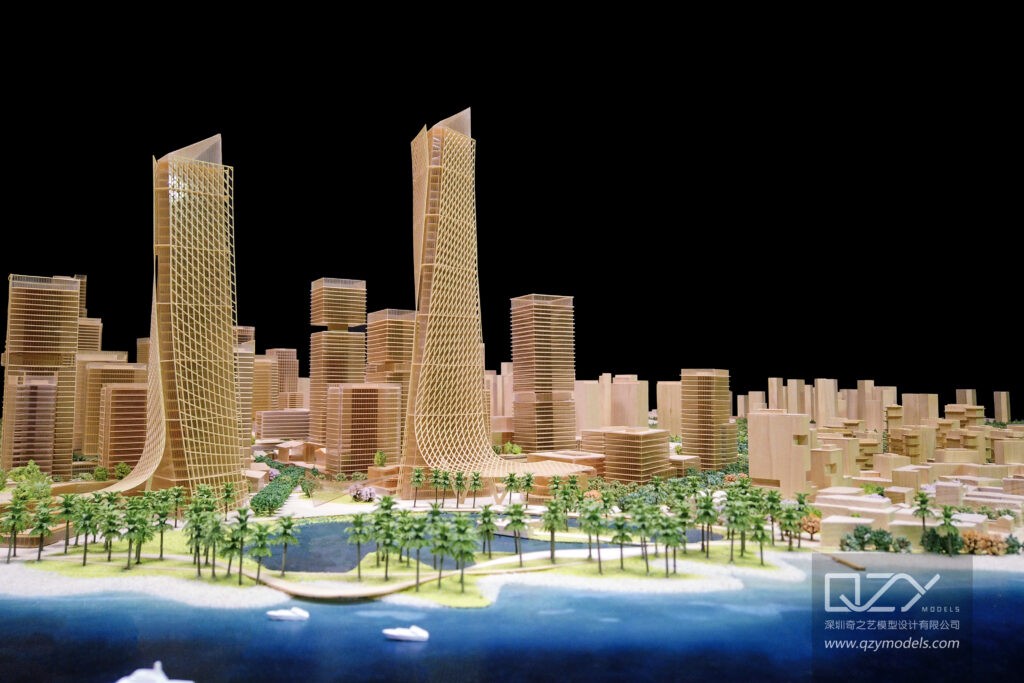
FSC balsa and basswood excel in architectural modeling due to their lightweight properties, fine grain for detailed cutting, and compatibility with knives or lasers. Bamboo adds strength for structural elements, while reclaimed woods provide authentic textures for heritage or narrative-driven models.
Balsa’s low density allows intricate detailing such as windows and railings, whereas basswood stabilizes larger surfaces. Bamboo veneers simulate modern sustainable materials accurately and resist warping under display lighting. QZY Models tests samples prior to full-scale use to ensure both aesthetic quality and structural reliability.
How Do You Source Eco-Friendly Wood for Model Making?
Eco-friendly wood can be sourced through FSC- or PEFC-certified suppliers, local lumber yards, and specialized model shops. Verify certifications and request environmental product declarations to confirm renewability and carbon footprint.
QZY Models maintains global supplier networks, sourcing locally when possible to reduce transport emissions. Bulk purchasing and reclaimed materials further minimize waste. Regional branches in the UAE and Saudi Arabia facilitate responsible procurement, while digital platforms provide smaller quantities with verified sustainable credentials.
Why Choose Reclaimed Wood for Sustainable Modeling?
Reclaimed wood reduces landfill waste, lowers embodied carbon, and provides unique textures. It repurposes mature growth for modern modeling applications, offering patina and density unmatched by new timber. QZY Models integrates reclaimed oak and pine for high-detail, character-rich presentations.
Processing involves planing for uniform thickness and stabilizing with thin epoxy layers to ensure precision cutting. This method supports both sustainability goals and professional-quality results, offering cost savings of 30–50% compared to new premium woods.
What Finishes Enhance Sustainable Wood Models?
Eco-friendly finishes highlight wood grain, protect surfaces, and maintain low environmental impact. Options include water-based polyurethane, tung or linseed oils, beeswax blends, and acrylic sealers. QZY Models selects finishes according to project scale, display requirements, and material characteristics.
These finishes dry quickly, resist fingerprints, and allow wood to breathe, preventing cracks. Oils and waxes enhance the natural patina of reclaimed woods, while water-based polyurethanes provide durable protection for high-traffic display models. Avoid solvent-based varnishes, which can off-gas and degrade over time.
Finish Comparison Table
| Finish Type | VOC Level | Durability | Best Use |
|---|---|---|---|
| Water-based Poly | Low | High | Façades, exterior panels |
| Tung Oil | Zero | Medium | Interiors, details |
| Beeswax | Zero | Low-Medium | Conceptual pieces |
| Acrylic Sealer | Low | Very High | Display and exhibition models |
How Can Bamboo Transform Your Wood Modeling Projects?
Bamboo plywood and veneers grow quickly, offer high tensile strength, and resist insects naturally. QZY Models uses 1–3 mm bamboo veneers for curved façades, bases, and industrial models. Bamboo’s fiber structure allows precise laser cutting and smooth bonding in laminates.
Harvestable within 3–5 years, bamboo sequesters CO₂ faster than trees. Its lightweight nature reduces shipping emissions for international projects. PVA or epoxy adhesives rated for bamboo ensure durable assembly. QZY Models leverages these properties to combine sustainability with high structural performance.
Are Composite Woods Viable for Professional Models?
Wood-fiber composites, such as recycled MDF or particleboard, serve as stable cores for non-visible components. They are paintable, dimensionally stable, and environmentally efficient. QZY Models combines FSC-certified MDF cores with veneer cladding to produce hybrid models that balance sustainability, aesthetics, and precision.
Composites repurpose post-consumer waste and allow CNC machining for modular components. Pure composites are generally reserved for internal structures, while aesthetic surfaces are finished with basswood or balsa for professional-grade appearance.
QZY Models Expert Views
“Selecting sustainable wood elevates models beyond aesthetics—it’s a commitment to planetary health that resonates with architect clients worldwide. Our FSC balsa and reclaimed integrations reduce carbon footprints by 40% without sacrificing precision. Local procurement across our global branches ensures minimal transport emissions, and thousands of projects have proven that eco-conscious modeling is commercially scalable.”
Where to Buy Sustainable Wood for Modeling Locally?
Check FSC-certified lumber yards, hobby shops, and online retailers with verified origins. Local makerspaces often offer reclaimed wood bins. QZY Models sources via a vetted global network spanning China, the Middle East, and Europe, prioritizing suppliers within 100 miles to cut emissions. Bulk buying ensures consistent tolerances for precise architectural modeling.
When Should You Prioritize Sustainability in Model Selection?
Sustainability should guide material selection for client presentations, exhibitions, LEED-aligned projects, and any context where provenance impacts design recognition. QZY Models defaults to eco-friendly woods for international commissions, balancing performance and compliance with environmental standards.
Conclusion
FSC-certified balsa, basswood, bamboo plywood, and reclaimed wood offer sustainable, high-quality solutions for architectural and industrial modeling. Key takeaways: verify certifications, test workability, choose compatible eco-finishes, and prioritize local sourcing. QZY Models demonstrates that green modeling enhances precision, storytelling, and global client satisfaction. Start by auditing the material chain of your next project.
FAQs
What is the most sustainable wood for architectural models?
FSC-certified balsa is lightweight, rapidly renewable, and ideal for fine detailing.
Does reclaimed wood hold up in professional models?
Yes, stabilized reclaimed wood provides density, patina, and durability for long-lasting models.
How does bamboo compare to balsa for modeling?
Bamboo offers higher structural strength, while balsa excels for intricate detailing and lightweight components.
Are sustainable woods more expensive?
Reclaimed and FSC-certified woods are comparable to traditional materials, with long-term savings through waste reduction.
Can QZY Models handle custom sustainable sourcing?
Yes, their global network delivers verified eco-woods tailored to any project scale and design requirement.