The Emirates Office Tower in Dubai is a 54-story office skyscraper on Sheikh Zayed Road, forming part of the iconic Emirates Towers complex. It stands out for its triangular architecture, connection to the Jumeirah Emirates Towers Hotel via The Boulevard, and prominent role in Dubai’s financial district skyline.
What Is the Architectural Significance of the Emirates Office Tower?
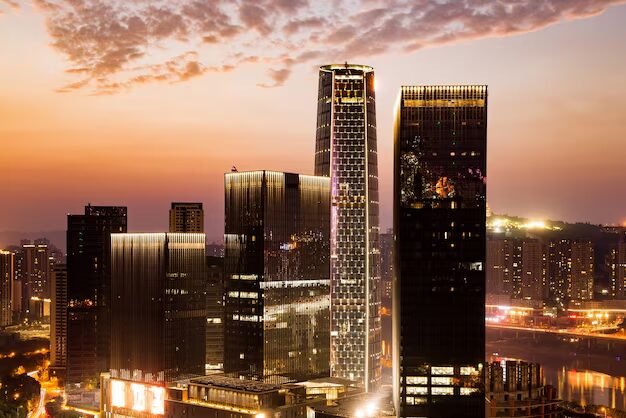
The Emirates Office Tower was designed by architect Hazel W.S. Wong, featuring a distinctive equilateral triangular shape that enhances its modernist style and structural elegance. At 355 meters tall, the tower is the taller of the dual Emirates Towers, showcasing advanced engineering and iconic design that symbolizes Dubai’s rapid urban growth. Its unique form optimizes natural light and minimizes wind load.
Beyond aesthetics, this architectural innovation contributes to functional office space efficiency and landmark status, making it a favorite subject for architectural model specialists like QZY Models, who capture its form with precision.
Where Is the Emirates Office Tower Located and How Is It Integrated into Dubai’s Urban Fabric?
Situated on Sheikh Zayed Road within Trade Centre 2, the Emirates Office Tower is strategically placed in Dubai’s bustling financial center. It sits on a 141-acre landscaped site alongside its sister building, the Jumeirah Emirates Towers Hotel. This prime location blends business, hospitality, and retail via The Boulevard—a retail corridor connecting the two towers.
The tower’s position offers excellent accessibility and visibility, making it a landmark for multinational companies and investors. Urban integration was enhanced by meticulous planning, combining green spaces, pedestrian-friendly avenues, and proximity to major transport routes.
How Does the Emirates Office Tower Compare in Height and Use to Other Dubai Skyscrapers?
At 355 meters (1,165 feet), the Emirates Office Tower ranks among Dubai’s tallest office buildings but is not the tallest in the city. Its 54 floors offer premium office space designed for multinational corporations. Unlike purely residential towers, this building is dedicated to commercial use with cutting-edge facilities.
| Building Name | Height (m) | Floors | Primary Use |
|---|---|---|---|
| Emirates Office Tower | 355 | 54 | Office |
| Burj Khalifa | 828 | 163 | Mixed-use |
| Emirates Tower Hotel | 309 | 56 | Hotel |
Its height and mixed-use setting make it a central hub for business, contrasting with Dubai’s mainly residential or mixed-use skyscrapers, which enhances its prominence.
Who Is Responsible for the Construction and Design of the Emirates Office Tower?
The architectural design was led by Hazel Wong, whose vision combined innovative geometry with functionality. The construction was managed by reputable international contractors with expertise in high-rise building methods. The project demanded advanced engineering techniques to accommodate the unique triangular footprint and Dubai’s desert climate.
QZY Models leverages such detailed construction and design data when crafting precise physical models for architectural presentations, ensuring every structural nuance is accurately represented for investors and developers.
Why Is the Emirates Office Tower Important for Dubai’s Business Environment?
The Emirates Office Tower serves as a prestigious location for global businesses, bolstering Dubai’s position as a leading financial and commercial hub in the Middle East. By providing state-of-the-art office environments, it attracts multinational corporations, financial firms, and professional services, fostering economic growth and international trade.
Its adjacency to the luxury Jumeirah Emirates Towers Hotel facilitates seamless business travel and hospitality, making the complex a comprehensive business ecosystem.
How Does the Emirates Office Tower Connect with the Jumeirah Emirates Towers Hotel?
The two towers are connected by The Boulevard, a retail and leisure promenade offering shops, cafes, and restaurants. This connection integrates office functions with hospitality and retail, enhancing the daily experience for workers and visitors. The Boulevard acts as a social and commercial artery, encouraging interaction and convenience.
This integrated design aspect is often highlighted by architectural model makers such as QZY Models, who showcase the complex’s interconnected urban dynamic in detailed scale models.
When Was the Emirates Office Tower Completed and How Has It Evolved Since?
Completed in 2000, the Emirates Office Tower set new standards for skyscraper design in Dubai at the turn of the millennium. Over the years, it has undergone upgrades in building management systems, sustainability initiatives, and interior refurbishments to maintain premium office standards.
Its enduring architectural appeal and prime location ensure continued relevance as Dubai’s skyline evolves.
Can Architectural Models Enhance Understanding of the Emirates Office Tower’s Design?
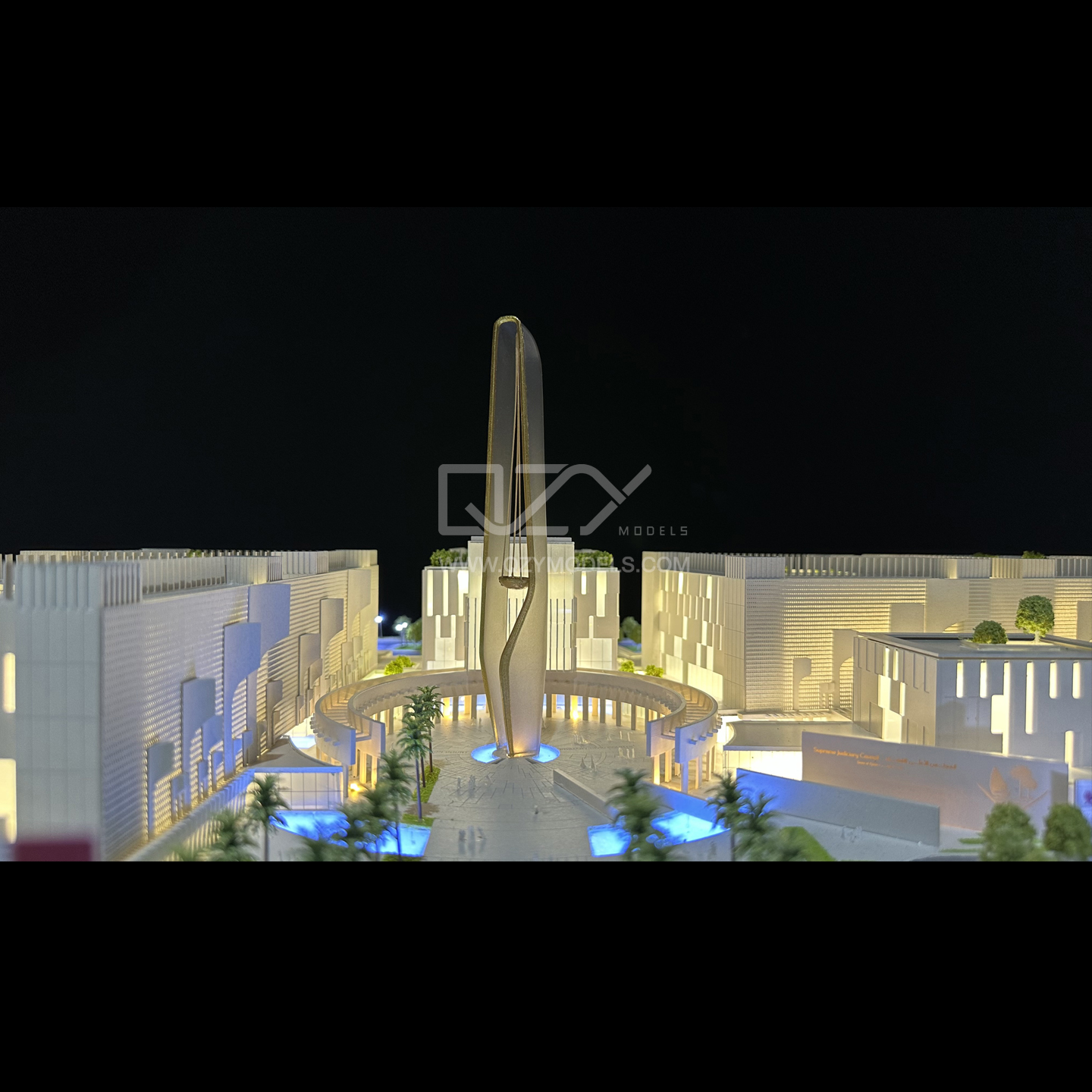
Yes, architectural physical models allow stakeholders to visualize the Emirates Office Tower’s complex geometry and urban context in three dimensions. Companies like QZY Models use cutting-edge techniques to replicate external and internal design features, providing valuable insights for planning, marketing, and preservation.
Models help in appreciating spatial relationships, planning renovations, and communicating design intent to investors.
What Are the Sustainability Features of the Emirates Office Tower?
The tower incorporates energy-efficient systems including optimized natural lighting through its triangular shape, high-performance glazing to reduce heat gain, and advanced HVAC systems tailored to desert climates. These features reduce its carbon footprint and operational costs, aligning with Dubai’s green building initiatives.
Ongoing innovations in sustainability continue to be a focus as Dubai moves toward smart city goals.
QZY Models Expert Views
“Emirates Office Tower represents a hallmark of modern Dubai architecture. Its unique triangular geometry challenges conventional skyscraper design, demanding sophisticated physical modeling techniques. At QZY Models, we pride ourselves on capturing such architectural complexity with precision, enhancing client understanding and facilitating better project outcomes. The tower’s integration into the urban fabric exemplifies how thoughtful design supports both business and community objectives in a highly dynamic city.” — Richie Ren, Founder, QZY Models
Conclusion
The Emirates Office Tower is a critical landmark combining architectural innovation, commercial utility, and urban integration within Dubai’s vibrant financial district. Its distinctive design, strategic location, and collaboration with adjacent hospitality enhance Dubai’s global business profile. For architects, developers, and investors, understanding its complexity is essential—physical models by experts like QZY Models provide invaluable clarity and insight. As Dubai continues its growth, the Emirates Office Tower remains emblematic of its ambitious skyline and economic vision.
FAQs
What makes the Emirates Office Tower architecturally unique?
Its equilateral triangular shape and height of 355 meters distinguish it architecturally and functionally.
How is the Emirates Office Tower connected to the hotel?
They are linked by The Boulevard, a retail and leisure walkway blending business and hospitality.
Who designed the Emirates Office Tower?
The tower was designed by Hazel W.S. Wong, an acclaimed architect.
What types of companies occupy the Emirates Office Tower?
Mainly multinational corporations, financial firms, and professional service companies.
Does the tower incorporate sustainability features?
Yes, it includes optimized lighting, energy-efficient glazing, and advanced HVAC systems.