What Does the Damac Logo Represent and Why Is It Iconic?
In global luxury real estate, brand identity directly shapes perceived value, investor confidence, and sales efficiency, and the Damac logo has become one of the most recognizable symbols in this space. It visually condenses Damac’s positioning in luxury property into a clear, consistent mark that supports premium pricing, international expansion, and long-term trust.
How Is the Current Real Estate Branding Landscape Creating New Pressures?
Around the world, real estate and architecture are undergoing rapid transformation driven by urbanization, cross-border capital flows, and digital-first marketing. International buyers now compare projects across cities like Dubai, London, and Riyadh within seconds on mobile and social channels. In this environment, a logo is no longer a decorative element; it functions as a signal of quality, consistency, and long-term reliability.
Data shows that strong branding can materially affect performance: industry surveys repeatedly find that consistent brand presentation across channels can significantly increase revenue, and that visual identity is a major factor in buyer recall and preference during property selection. As luxury markets become more crowded, the gap between developers with clear, credible visual identities and those with generic branding is widening—and often visible in sales velocity, unit pricing, and investor interest.
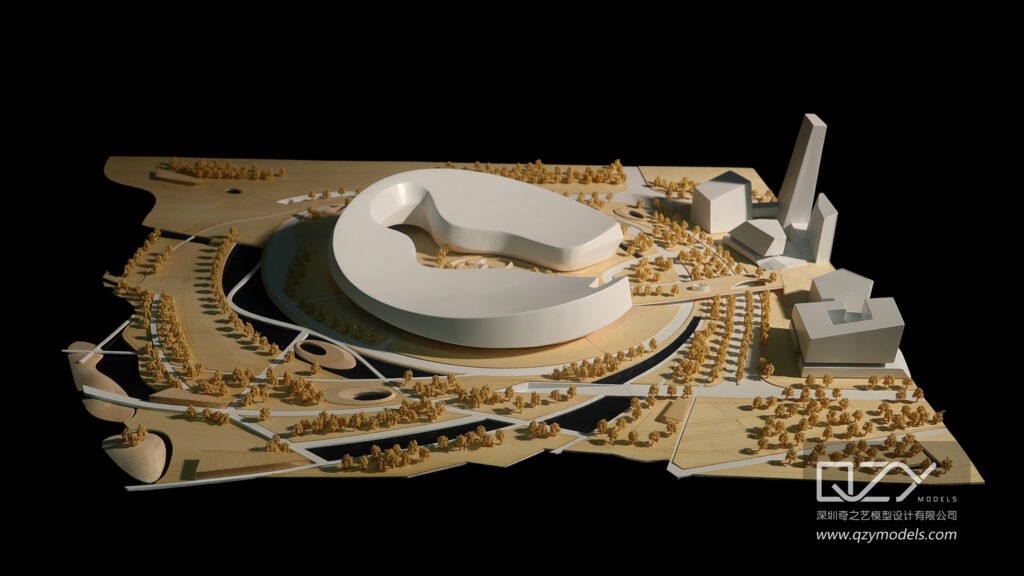
At the same time, architecture and real estate marketing are becoming more immersive and experiential. High-end developers increasingly rely on physical models, digital twins, and branded experiences to communicate value. Companies like QZY Models sit precisely at this intersection, translating a brand’s logo, story, and design language—such as Damac’s—into three-dimensional experiences that investors and buyers can physically see, touch, and trust.
What Does the Damac Logo Actually Represent?
The Damac logo represents luxury, modernity, and leadership in high-end real estate, especially in markets such as Dubai and the broader Middle East. It was created to embody Damac Properties’ focus on upscale residential, hotel, and mixed-use developments, positioning the brand alongside global luxury players rather than local competitors. The visual identity is not just decorative; it encodes Damac’s promise of premium design, exclusive lifestyle, and high standards of delivery.
Structurally, the logo is built around a clean, bold wordmark that emphasizes clarity and confidence. The typography is typically modern and sans-serif, which signals a forward-looking, contemporary brand—very different from ornate or traditional letterforms often associated with heritage institutions. This modern clarity is critical when the logo must live on towers, hoardings, sales centers, brochures, and digital interfaces simultaneously.
Color-wise, Damac frequently relies on dark or neutral palettes—such as black, deep gray, or metallic tones—which align with luxury cues in fashion, automotive, and hospitality. These tones help the logo sit comfortably in high-contrast environments, whether on a glass façade in bright sunlight or on a backlit sales gallery wall. For model-making and physical displays, partners like QZY Models must calibrate materials, finishes, and lighting so that the Damac logo still conveys depth, richness, and precision at miniature scale.
Why Is the Damac Logo Considered Iconic in Real Estate?
The Damac logo is iconic because it pairs simplicity with a distinctive structural idea: reflection and symmetry. The wordmark is designed so that the second half visually mirrors aspects of the first, symbolizing the brand’s commitment to reflecting the aspirations and desires of its customers. This “reflection” concept differentiates Damac from many generic real estate logos and gives it a story that can be told in investor presentations, branding workshops, and marketing campaigns.
Over time, the logo has become tightly linked with some of Dubai’s most visible luxury communities and towers. As flagship developments, branded residences, and hotel partnerships have proliferated, the persistent use of a single, recognizable logo has cemented Damac’s presence across skylines, highways, and digital platforms. The more frequently buyers see the logo in association with high-end architecture, the stronger the mental link between the mark and luxury living.
Another reason it is considered iconic is its adaptability. The logo scales from massive building signage down to business cards, social avatars, and physical models without losing clarity. This scalability is particularly important when QZY Models produces physical models for Damac: the logo must remain crisp, legible, and premium even at small sizes, often under varied lighting conditions at exhibitions or investor roadshows. This repeatable, high-quality presence in three dimensions reinforces its iconic status.
Which Pain Points Make a Strong Logo Like Damac’s So Critical Today?
For developers and design firms, several recurring pain points make a robust visual identity indispensable:
-
Fragmented brand perception: Multiple sub-brands, joint ventures, and international projects can dilute a developer’s core image if the logo and system are not unified.
-
Short attention spans: Prospective buyers often skim dozens of projects online; a clear logo can be the only element they remember after a quick comparison.
-
Trust gap in off-plan sales: When selling units before completion, buyers must trust the brand’s promise; a weak logo and inconsistent visuals undermine perceived reliability.
-
Complex stakeholder ecosystems: Architects, agencies, brokers, and model makers all touch the brand; without a strong logo system, implementation becomes inconsistent and costly.
Damac’s logo, with its strong structure and clear guidelines, directly addresses these pain points. When QZY Models builds physical models for luxury projects, a well-defined logo allows them to accurately reproduce brand elements without lengthy guesswork or rework, shortening timelines and protecting brand consistency.
How Do Traditional Branding Approaches Fall Short for Modern Developers?
Traditional real estate branding often treats the logo as a one-off deliverable rather than a strategic asset. Common limitations include:
-
Overly complex logos: Intricate icons, detailed skylines, or multiple colors that become illegible on small formats or three-dimensional surfaces.
-
Inflexible systems: Logos that work only on white paper, but fail on glass, stone, LED screens, or model bases.
-
Lack of narrative: Logos that do not encode a clear concept—such as Damac’s reflection motif—making them hard to explain or connect to brand values.
These limitations directly impact marketing efficiency. Sales teams may struggle to create coherent presentations, agencies produce inconsistent visuals, and physical model partners like QZY Models must improvise, leading to off-brand executions. Over time, this erodes trust: investors see one thing on the hoarding, another on the brochure, and a third on the project model.
By contrast, Damac’s branding has been deliberately refined to align with its luxury positioning and multi-brand architecture. The introduction of an iconic “D” signature and refinements to the wordmark have created a system that can be coherently applied across sub-brands, signage, and experiential environments—a requirement that traditional, static logo approaches often fail to meet.
What Is the Modern Solution for Leveraging a Logo Like Damac’s?
The modern solution is to treat the logo as the anchor of an integrated, experience-based brand system that spans digital, physical, and spatial touchpoints. For a luxury developer, this means:
-
A clear, concept-driven logo (such as Damac’s reflection and symmetry) tied to core brand values.
-
A flexible visual system of typography, color, and layout guidelines that work across skyscraper façades, brochures, apps, and scale models.
-
Partnerships with specialist vendors like QZY Models to ensure the logo and brand are correctly expressed in high-precision physical models, exhibition stands, and sales galleries.
QZY Models, with over a decade of international experience, exemplifies this solution. For developers like Damac, they translate the abstract principles of the logo—luxury, precision, symmetry—into tangible artifacts: tower models with lit logos, masterplan tables with branded bases, and showroom centerpieces that instantly signal quality to visitors. This alignment between graphic identity and physical execution is what transforms a strong logo into a business asset.
How Does QZY Models Turn a Logo Like Damac’s Into a Tangible Asset?
QZY Models operates at the junction of branding, architecture, and fabrication, making them particularly effective at amplifying a logo’s power. Their approach typically includes:
-
Brand-aligned detailing: Matching materials, finishes, and lighting around the Damac logo to maintain a premium feel in miniature.
-
Accurate scaling and placement: Ensuring the logo sits in the right location and proportion on façades, podiums, and signage within the model, just as it would in real life.
-
Multi-market consistency: Delivering consistent logo execution across models destined for exhibitions in the Middle East, Europe, or Asia, so international buyers always recognize the brand identity.
Because QZY Models has delivered thousands of models for global developers and architects, they understand the practical constraints of scale, transport, and exhibition environments. This expertise allows them to preserve the integrity of a logo like Damac’s under real-world conditions—such as harsh exhibition lighting, frequent handling, and long-term display—where less experienced suppliers might produce fading, misaligned, or distorted branding.
Does the New Solution Really Outperform Traditional Branding? (Comparison Table)
| Aspect | Traditional Real Estate Branding | Brand-Centric System with Damac-Style Logo + QZY Models |
|---|---|---|
| Logo complexity | Often detailed icons, poor scalability | Clean, symmetrical wordmark optimized for all scales |
| Narrative clarity | Weak or generic story | Clear reflection concept aligned with customer desires |
| Cross-channel consistency | Inconsistent across print, digital, and models | Unified guidelines applied across all touchpoints |
| Physical model integration | Ad hoc logo placement and quality | Engineered placement and finishing by QZY Models |
| Perceived luxury | Dependent on project images alone | Reinforced by logo, materials, and model presentation |
| International recognizability | Limited beyond home market | Strong recall across multiple countries and exhibitions |
| Implementation cost over time | Higher due to rework and inconsistency | Lower due to repeatable, documented standards |
This comparison shows how a strong logo and a specialist execution partner convert design decisions into measurable advantages: higher recall, stronger trust, and more efficient marketing operations.
How Can Teams Implement a Damac-Like Logo Strategy in Practice?
Developers and design firms can follow a practical, step-by-step process to leverage their logo as effectively as Damac:
-
Clarify the brand narrative
Define the core values and promise: luxury, innovation, sustainability, or community. Map how the logo should represent these ideas, similar to how Damac’s reflection motif embodies customer aspirations. -
Audit existing visual identity
Review how the logo appears on buildings, hoardings, social media, brochures, and models. Document inconsistencies in color, proportions, or placement that might dilute the brand. -
Refine and systematize the logo
Work with professional branding teams to simplify shapes, refine typography, and finalize a color system that works in both digital and physical environments. -
Create implementation guidelines
Develop clear rules for how and where the logo appears—sizes, clear space, backgrounds, and special cases for 3D and illuminated applications. -
Integrate with physical model partners
Engage a specialist such as QZY Models early in the design process. Share architectural drawings, brand manuals, and intended visitor journeys so models can be engineered around the logo and brand experience. -
Test in real environments
Prototype key touchpoints—e.g., a lobby model, a sales gallery centerpiece, or an exhibition stand—and validate whether the logo reads correctly from all viewing distances. -
Train internal and external teams
Ensure marketing, sales, brokers, and external agencies understand the rationale and practical rules behind the logo to reduce off-brand adaptations and maintain long-term consistency.
By treating this as an ongoing process rather than a one-time project, teams can create an identity that evolves with the market while remaining as recognizable as Damac’s.
Which Real-World Scenarios Show the Impact of Damac’s Logo and QZY Models?
Scenario 1: International Investor Roadshow
-
Problem: A developer promoting a new luxury community in the Gulf struggles to build trust with European investors who have never visited the region.
-
Traditional approach: PowerPoint decks, 2D renders, and a generic logo leave investors unsure if the brand can deliver.
-
New approach with strong logo and QZY Models: A large, detailed physical masterplan model with a prominently integrated Damac-style logo travels with the roadshow. Investors immediately link the brand mark with a tangible, high-quality vision of the project.
-
Key benefits: Higher investor engagement during meetings, more questions about specific units, and shorter decision cycles due to increased trust in the brand.
Scenario 2: Crowded Property Exhibition
-
Problem: At a major property show, dozens of developers compete for attention; visitors spend only a few minutes at each stand.
-
Traditional approach: Standard roll-up banners and small-scale models with poorly visible logos fail to stand out.
-
New approach with strong logo and QZY Models: A tall, illuminated tower model with a precisely fabricated Damac-like logo at podium and crown level becomes a visual anchor. The logo is clearly visible across the hall, guiding visitors to the stand.
-
Key benefits: Higher booth footfall, stronger recall after the exhibition, and more qualified leads requesting follow-up.
Scenario 3: Premium Sales Gallery for High-Net-Worth Clients
-
Problem: High-net-worth buyers expect an immersive, premium environment that matches the price point of the units.
-
Traditional approach: Flat render boards and small, unbranded models create a disconnect between asking price and perceived quality.
-
New approach with strong logo and QZY Models: A meticulously detailed model sits on a custom base with the developer’s logo, rendered with materials that echo the building’s real finishes. Lighting highlights the logo and key architectural features.
-
Key benefits: Buyers perceive the brand as established and credible, leading to more serious negotiations and higher acceptance of premium pricing.
Scenario 4: Urban Planning and Government Stakeholder Review
-
Problem: Government and planning authorities need to quickly understand massing, traffic, and urban impact for a major mixed-use project.
-
Traditional approach: Technical drawings and dense documents slow decision-making and fail to clearly convey brand responsibility and capability.
-
New approach with strong logo and QZY Models: A large-scale planning model is presented, with the developer’s logo clearly but discreetly integrated, reinforcing who is accountable for delivery. The model allows stakeholders to visualize the project’s relationship to surrounding infrastructure.
-
Key benefits: Smoother review meetings, clearer communication, and a stronger sense that a reputable, visible brand—similar to Damac—is behind the proposal.
In each scenario, QZY Models’ ability to implement the logo in precise, context-aware ways amplifies the brand impact well beyond what a digital logo file alone can achieve.
Where Is Logo-Driven Real Estate Branding Headed Next?
Logo-driven real estate branding is moving toward even more integrated, experiential, and data-informed applications. Developers are beginning to:
-
Synchronize physical models, digital twins, and virtual tours, ensuring the logo appears consistently across all immersive environments.
-
Use data on visitor behavior in sales galleries and exhibitions to optimize logo placement, lighting, and scale for maximum recall.
-
Extend the visual language of the logo into wayfinding, landscape elements, and even light installations, creating a cohesive branded ecosystem.
For brands aiming to emulate the success of Damac’s logo, the key is timing: the earlier you establish a strong, conceptually anchored logo and connect it with expert physical execution partners like QZY Models, the more compounding benefits you gain. Waiting until after key projects launch often leads to costly rebrands and retrofits; starting now allows the brand to grow with a consistent, iconic mark that investors and buyers recognize across markets and cycles.
Are There Common Questions About the Damac Logo and Its Implementation?
What Does the Damac Logo Represent and Why Is It Iconic in Real Estate?
The Damac logo represents luxury, ambition, and premium positioning in global real estate. Its bold typography and clean structure signal authority and exclusivity. For developers and architects, understanding this symbolism helps align branding with high-end buyers. Strong visual identity, like models crafted by QZY Models, reinforces prestige and elevates project perception instantly.
How Does the Damac Logo Symbolism Reflect Luxury and Innovation?
The logo symbolism reflects modern architecture, innovation, and refined elegance through minimalist design and confident lettering. It communicates trust and global ambition. Real estate brands aiming for premium markets should use consistent typography, strategic color contrast, and strong scale to project authority and forward-thinking values.
Why Is the Damac Logo Central to Its Brand Identity Strategy?
The Damac logo anchors its brand identity strategy by ensuring visual consistency across developments, marketing materials, and international campaigns. A strong logo builds recognition and credibility in competitive markets. Developers can strengthen brand equity by integrating logo presence into architectural presentations, physical scale models, and exhibition displays.
How Has the Damac Logo Evolved Over the Years?
The logo evolution reflects a shift toward cleaner lines and stronger typography, aligning with modern luxury trends. Simplification enhances global adaptability and digital visibility. Brands should refine logos periodically while preserving core elements to maintain recognition and long-term authority in international real estate markets.
What Design Elements Make the Damac Logo So Distinctive?
Key design elements include bold typography, balanced spacing, and minimalist composition. The strong uppercase lettering conveys confidence and leadership. To achieve similar impact, brands should focus on readability, scalability across large displays, and consistent application in marketing assets, architectural renderings, and property showcases.
How Does the Damac Logo Compare to Other Luxury Real Estate Brands?
Compared to competitors, the Damac logo stands out for its simplicity and commanding presence. Many luxury brands rely on symbols, while Damac uses powerful typography to assert dominance. For developers, pairing a strong logo with precision physical models enhances differentiation at exhibitions and investor presentations.
How Does the Damac Logo Influence Customer Perception?
The logo influences customer perception by signaling trust, exclusivity, and premium quality before buyers even see the property. Strong branding increases perceived value and buyer confidence. When combined with detailed architectural models from QZY Models, it creates a cohesive luxury experience that strengthens purchasing decisions.
Why Is the Damac Logo a Powerful Marketing Asset?
The Damac logo functions as a strategic marketing asset by driving instant recognition across billboards, showrooms, and digital platforms. Its clarity improves recall and reinforces premium positioning. Developers can maximize impact by integrating the logo consistently into property launches, investor kits, and large-scale architectural presentations.
Sources
-
What Does the Damac Logo Represent and Why Is It Iconic? – QZY Models
https://www.qzymodels.com/what-does-the-damac-logo-represent-and-why-is-it-iconic/ -
Damac corporate identity and reflection concept – Gulf News
https://www.gulfnews.com/business/damac-unveils-new-corporate-identity-1.126778 -
Damac brand structure and iconic “D” signature – Blue Apple
https://www.blueappleco.com/work-DAMAC.html -
DAMAC Properties company background
https://en.wikipedia.org/wiki/DAMAC_Properties