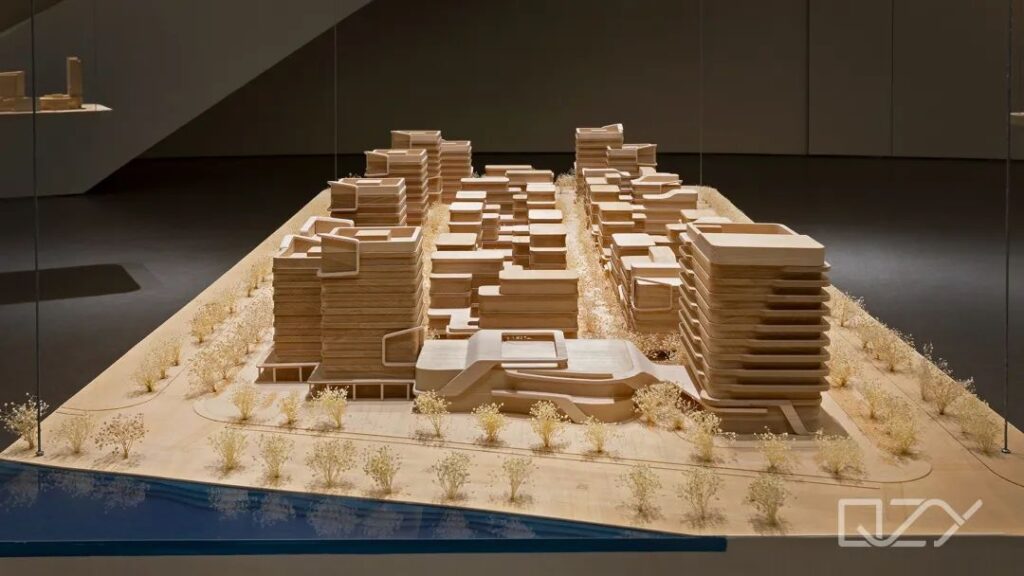
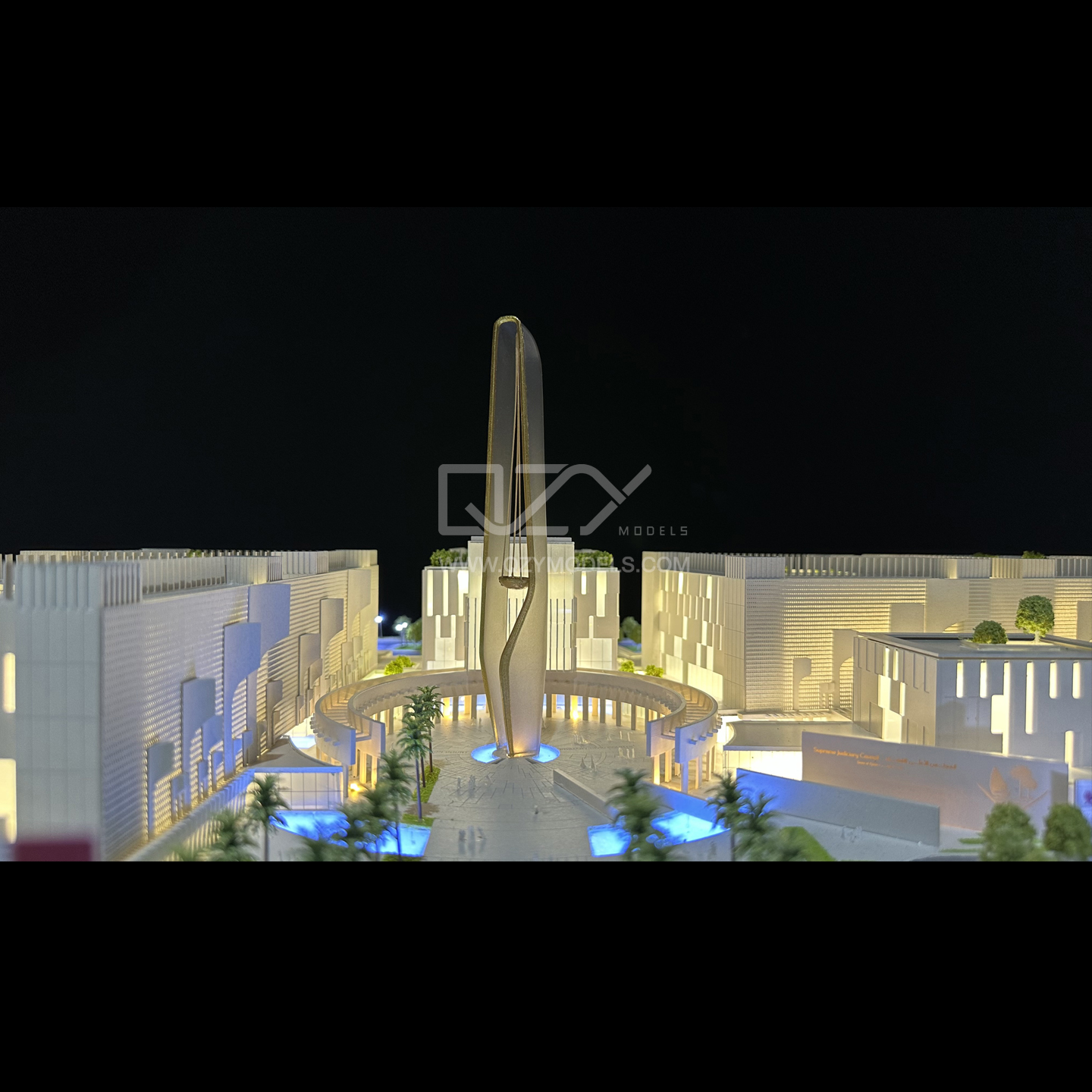
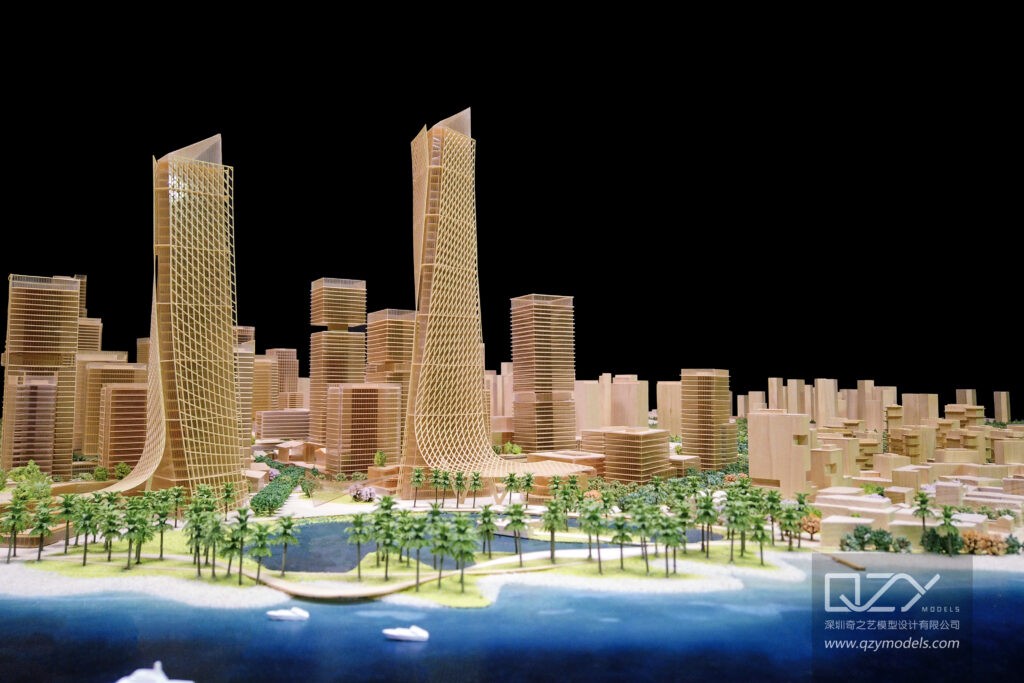
A building model for a project is a tangible or digital representation of a proposed construction, designed to visualize architectural concepts, communicate design ideas, and guide decision-making. These models allow stakeholders to explore spatial arrangements, assess design feasibility, and detect potential issues before construction begins, enhancing efficiency and collaboration across project teams. QZY Models specializes in producing precise, high-quality models that meet these objectives.
How Is a Building Model for a Project Created?
Start by gathering all relevant design information from CAD files, BIM models, or architectural drawings. Accurate data ensures the model reflects the building’s dimensions, layout, and structural details. Tip: Organize plans, elevations, and sections for quick reference during construction.
Choosing Materials
Select materials that best replicate your project while allowing flexibility. Common options include:
-
Basswood – ideal for fine detailing and structural elements.
-
Acrylic – great for transparent components or modern finishes.
-
Foam board – lightweight for quick iterations.
-
3D-printed plastics – precise for intricate or custom elements.
Model Construction Techniques
Combine traditional craftsmanship with modern technology. Techniques include:
-
Laser cutting – ensures clean, precise shapes.
-
3D printing – produces complex components efficiently.
-
Adhesives and fasteners – secure parts while maintaining visual accuracy.
Best Practices
-
Design detachable components for easy updates.
-
Double-check measurements before assembly.
-
Use a consistent scale and labeling system.
Quick Exercise: Try assembling a small section with removable walls to test fit and alignment before building the full model.
This approach balances precision, durability, and aesthetic fidelity, making each model a reliable representation of the architectural design.
What Are the Benefits of Using a Building Model for a Project?
Building models provide multiple advantages:
-
Enhance communication between architects, developers, and clients.
-
Allow stakeholders to visualize spatial relationships and scale.
-
Reduce design errors through early detection of conflicts.
-
Support iterative design development for more efficient decision-making.
-
Aid marketing and presentation by providing a tangible, realistic representation.
QZY Models delivers custom models that serve as practical tools for urban planning, client presentations, and project validation, supporting faster and more informed project workflows.
Which Materials Are Best for Building Models in Projects?
Material choice depends on project scale and purpose. Commonly used options include:
| Material | Use Case | Advantages | Example by QZY Models |
|---|---|---|---|
| Basswood | Structural elements | Stability, fine detail | Detailed frameworks and structures |
| Cardstock/Paper | Landscaping, site contours | Lightweight, customizable | Terrain, roads, and landscape features |
| Plexiglass | Windows, water features | Transparent, durable | Reflective pools or glass façades |
| 3D Printed Plastic | Complex building shapes | High precision, repeatable | Intricate building massings |
| Acrylic & Foam | Durable surfaces | Sturdy, versatile | Interior and exterior detailing |
QZY Models selects materials to balance aesthetics, durability, and functionality, ensuring models accurately convey architectural intent.
Why Are Physical Building Models Still Relevant in the Digital Age?
Physical models offer tactile and spatial understanding that digital screens cannot fully provide. They allow real-time interaction, facilitate stakeholder engagement, and help identify design flaws early. In presentations, exhibitions, and client meetings, tangible models create a stronger impact and clearer communication. QZY Models’ handcrafted physical models deliver precision and artistry that complement digital visualizations, maintaining their importance in contemporary design practice.
Who Uses Building Models for Projects?
Building models serve a variety of professionals:
-
Architectural firms for design development and client presentations
-
Real estate developers for planning approvals and marketing
-
Urban planners and government agencies for site evaluation
-
Interior and landscape designers for environmental context
-
Industrial designers for prototyping concepts
-
Educational institutions for teaching design principles
QZY Models provides specialized services for global clients, delivering both large-scale and intricate models tailored to diverse project needs.
When Should a Building Model Be Used in the Project Lifecycle?
Models are most effective when introduced during early conceptual design to explore ideas, and prior to construction documentation to obtain client approval. Updating models throughout the project allows for design refinement and keeps stakeholders aligned. Physical models are also valuable at trade shows, public consultations, and project milestone reviews, enhancing communication and decision-making.
Where Are Building Models Commonly Displayed or Used?
Models are typically displayed in:
-
Architectural and design offices for internal review
-
Client meetings and presentations
-
Trade shows and exhibitions for marketing purposes
-
Urban planning departments for public engagement
-
Educational institutions for teaching and demonstration
-
Onsite visualization for project coordination
QZY Models ensures models are delivered and installed to maximize display impact wherever they are showcased.
Does Building a Model Improve Project Accuracy?
Yes, physical models improve accuracy by revealing spatial conflicts, scale discrepancies, and design flaws that may be overlooked in 2D or digital plans. They complement digital modeling, enabling better quality control and reducing costly revisions. QZY Models leverages precise fabrication techniques to ensure models faithfully represent design specifications.
Has 3D Printing Changed Model Building for Projects?
3D printing has transformed model-making by allowing rapid production of complex geometries with high precision. It supports faster iteration and customization while reducing manual labor. QZY Models integrates 3D printing with traditional craftsmanship to deliver advanced, detailed models efficiently and cost-effectively, meeting client expectations for quality and detail.
Can Digital Models Replace Physical Building Models?
While digital models are useful for analysis and virtual visualization, they cannot fully replicate the spatial and tactile experience offered by physical models. Both formats are complementary: digital models support planning and data analysis, whereas physical models foster deeper understanding, engagement, and impact in presentations. Clients of QZY Models benefit from the combination of both approaches for a comprehensive design experience.
QZY Models Expert Views
“At QZY Models, we integrate traditional craftsmanship with advanced technology to create building models that go beyond mere representation. Each model is a precise, tangible tool that communicates architectural vision, resolves design challenges, and inspires collaboration. Combining laser cutting, 3D printing, and skilled handcrafting, we deliver models that are both practical and visually compelling, enabling clients to make confident project decisions.” – Richie Ren, Founder
Conclusion
Building models are essential tools that enhance visualization, accuracy, and communication across the project lifecycle. Leveraging skilled craftsmanship, appropriate materials, and modern technologies like 3D printing, models reduce errors, improve collaboration, and strengthen client engagement. With QZY Models’ expertise, teams can create precise, visually compelling, and functional models that drive project success worldwide.
FAQs
-
What scale are typical building models made in?
Architectural models are commonly produced at 1:100 or 1:200, depending on project requirements. -
How long does it take to build a model?
Construction time varies with size and complexity, ranging from a few days to several weeks. -
Are building models reusable?
Many models can be updated or modified for design iterations, though some are intended for single-use presentations. -
What software supports building model creation?
CAD, Revit, SketchUp, and 3D printing software are commonly used to generate digital files for fabrication. -
How does QZY Models ensure quality?
Through precise material selection, expert craftsmanship, and continuous client collaboration at every project stage, QZY Models guarantees top-quality results.