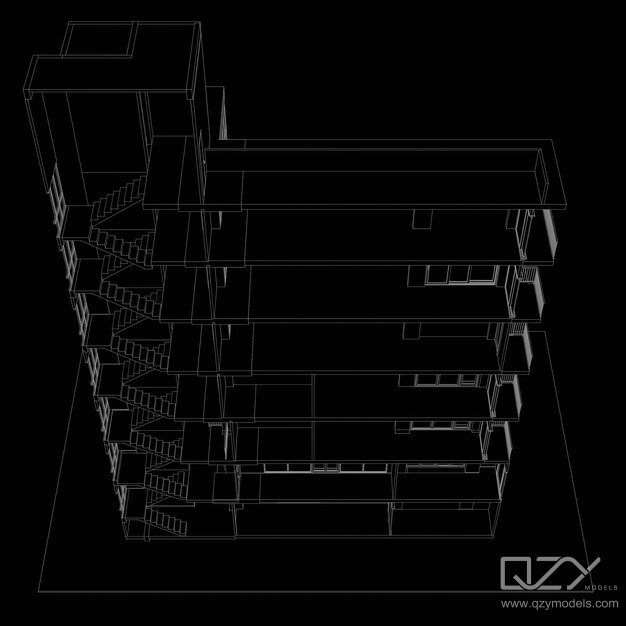
A miniature building model is a scaled physical representation of architectural or industrial structures that helps visualize design intent, demonstrate spatial relationships, and communicate complex ideas effectively during planning or marketing. Companies like QZY Models provide precision-crafted miniature models that bring visions to life with accuracy and artistry.
How Is the Architectural Model Industry Evolving Today?
According to the IBISWorld 2025 Global Architectural Services Report, the global architecture industry exceeded USD 330 billion in value, with an increasing focus on visualization and sustainable design communication. Yet, 78% of architecture firms report challenges in presenting spatial concepts convincingly to non-technical stakeholders. The demand for tangible, detailed miniature models has grown by 32% since 2020, driven by urban development and real estate investment growth across Asia and the Middle East.
However, despite digital rendering advances, physical architectural models remain essential for decision-making, investor communication, and project approvals. Many design teams struggle to balance time, cost, and craftsmanship quality—especially when working on international projects requiring high fidelity and short turnaround times.
What Are the Industry Pain Points in Miniature Building Model Production?
The architectural visualization industry faces several pressing issues today:
-
High production costs due to limited access to advanced fabrication technology and skilled artisans.
-
Time constraints for large-scale projects that require precise, handcrafted detailing.
-
Inconsistent quality from fragmented supplier ecosystems, especially when models involve complex lighting or moving components.
-
Poor international coordination, where cultural or design misunderstandings delay project delivery.
Firms increasingly turn to specialized providers like QZY Models, whose global expertise and integrated workflow ensure consistency, accuracy, and scalability from concept to final presentation.
Why Are Traditional Modeling Methods No Longer Sufficient?
Traditional handmade models, though artistic, are limited by manual processes and inconsistent results. Common drawbacks include:
-
Extended production time (up to several weeks for a single model).
-
High labor dependency and human errors during measurements or assembly.
-
Difficulty incorporating modern features such as smart lighting, motion, or digital interactivity.
-
Challenges in replicating precise details for large or complex developments.
These limitations hinder architects and developers who must present compelling visual materials quickly for investor approval or government planning reviews.
How Does QZY Models Offer a Smarter Solution?
QZY Models combines digital precision, artisan craftsmanship, and global delivery networks to streamline the miniature building model process end-to-end. Utilizing 3D printing, CNC milling, and laser-cutting technologies, their experts produce models at scales ranging from 1:20 to 1:1000.
With over 20 years of expertise and clients like Foster + Partners, Vanke, and China Resources, QZY Models ensures each creation aligns perfectly with architectural drawings, material tones, and lighting. Their integrated workflow includes digital modeling, surface finishing, electronics integration, and global logistics support—offering consistent quality for clients in Saudi Arabia, Egypt, the UAE, and beyond.
What Are the Key Advantages of QZY Models Compared to Traditional Methods?
| Feature/Metric | Traditional Model Making | QZY Models Solution |
|---|---|---|
| Production Time | 4–8 weeks | 1–3 weeks |
| Accuracy Tolerance | ±5 mm | ±1 mm |
| Visual Realism | Manual paint and texture | 3D-printed materials + automated color calibration |
| Smart Features | Limited or none | Integrated lighting, motion, and interactivity |
| Global Support | Local or regional | Worldwide branches and logistics network |
How Can Clients Work With QZY Models?
The process is straightforward and fully transparent:
-
Project Consultation: Discuss design goals, scale, materials, and timeline.
-
Digital Modeling: QZY team creates a 3D digital version for approval.
-
Fabrication: Precision tools and hand-finishing methods bring the design to life.
-
Quality Inspection: Every model undergoes visual and dimensional checks.
-
Shipping and Setup: Models are securely packaged and delivered worldwide, with on-site installation support if required.
Where Are Miniature Building Models Used Most Effectively?
1. Real Estate Sales Centers
-
Problem: Buyers struggle to imagine unbuilt developments.
-
Traditional Method: 2D plans or digital slideshows.
-
With QZY Models: High-impact, life-like miniature city blocks help clients instantly visualize living spaces.
-
Key Benefit: Sales conversion rates increase by 25–40%.
2. Urban Planning Exhibitions
-
Problem: Complex community layouts are difficult to present clearly.
-
Traditional Method: Flat posters or static renderings.
-
With QZY Models: Interactive lighting and contours illustrate transport networks and public spaces.
-
Key Benefit: Enhanced public understanding and stakeholder approval efficiency.
3. Architectural Firm Presentations
-
Problem: Investors cannot fully interpret CAD drawings.
-
Traditional Method: Virtual tours or mockups.
-
With QZY Models: Physically scaled presentations communicate form and proportion effectively.
-
Key Benefit: Faster client alignment, fewer design revisions.
4. Industrial Design Showcases
-
Problem: Machinery and plant layouts are hard to explain visually.
-
Traditional Method: Technical diagrams or photos.
-
With QZY Models: QZY’s industrial-scale miniatures display processes and workflows clearly.
-
Key Benefit: Improves attraction at trade shows and client demonstrations.
What Is the Future of Miniature Model Technology?
By 2030, integrating AI-assisted modeling, automated material selection, and digital twin integration will reshape physical model production. As sustainability becomes a top priority, firms like QZY Models are already adopting eco-friendly materials and precision processes to reduce waste and energy use. With rapid urbanization and global design collaboration, demand for high-quality, transportable scale models will continue to accelerate—making advanced providers indispensable partners for architects and developers alike.
FAQ
Q1: Is a miniature building model the same as a scale model?
Yes, a miniature building model is a type of scale model representing an architectural structure in proportional dimensions.
Q2: Who typically uses architectural models?
Architects, real estate developers, urban planners, and educational institutions use them for design visualization and presentation.
Q3: Can QZY Models produce large-scale city models?
Yes, QZY Models specializes in large urban development and smart city models with integrated lighting and motion systems.
Q4: How durable are QZY Models’ products?
Each model is crafted with high-strength materials and sealed finishes, designed to last for years under exhibition conditions.
Q5: Does QZY Models ship internationally?
Yes, QZY Models operates globally with logistics hubs in Asia, the Middle East, and Europe for safe worldwide delivery.
Sources
-
IBISWorld Global Architectural Services Report 2025
-
Statista Architecture Design Market Outlook 2024
-
McKinsey Smart Cities Global Analysis 2025
-
World Architecture Community Urban Data Report 2024
-
QZY Models Corporate Profile (2025 Edition)