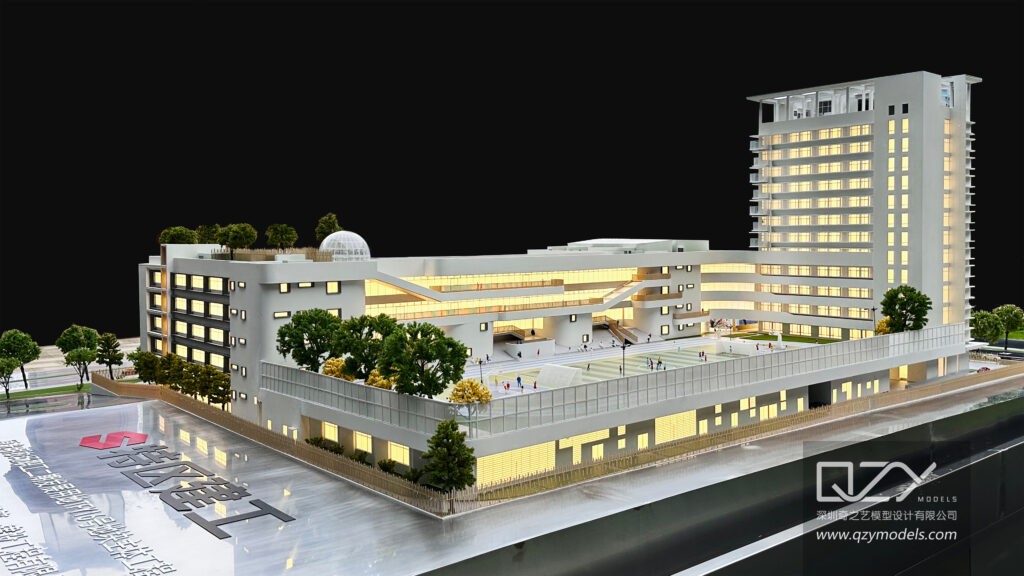
A photovoltaic park model is a detailed scale replica of a solar farm, showcasing panel arrays, inverters, terrain, and infrastructure. These models help developers visualize layouts, secure funding, and engage stakeholders effectively. Companies like QZY Models craft precise versions using 3D printing combined with expert craftsmanship, producing professional models for presentations, planning, and exhibitions.
What Is a Photovoltaic Park?
A photovoltaic park is a large-scale solar farm with ground-mounted panels converting sunlight into electricity, typically spanning 10–500 acres for utility-scale power generation.
These parks represent renewable energy infrastructure where thousands of solar panels are aligned for optimal sunlight capture. Supporting elements such as transformers, fencing, and access roads ensure functionality and safety. Photovoltaic parks reduce emissions, support grid power, and drive sustainable energy adoption for communities and industries globally.
Why Use Physical Models for Photovoltaic Parks?
Physical models help visualize complex layouts, demonstrate energy yield, and persuade investors by turning abstract plans into tangible representations.
Scale models bridge digital designs and real-world execution, enabling assessment of spacing, shading, and aesthetics. They are invaluable during permitting, exhibitions, and funding pitches. QZY Models produces interactive photovoltaic park models with removable panels and LED simulations to showcase operational efficiency and site integration.
How Are Photovoltaic Park Models Constructed?
Photovoltaic park models are built using 3D printing for panels, laser-cut terrain, and hand-applied finishes to replicate real solar farms accurately.
Construction begins with digital terrain modeling from GIS data. Panels are produced with additive manufacturing, while lighting and wiring simulate energy flow. QZY Models combines CNC-milled bases with detailed painting and finishing to create durable models suitable for display while preserving technical accuracy.
Which Materials Work Best for Photovoltaic Park Models?
Optimal materials balance realism, durability, and display requirements. Common choices include acrylic for panels, foam board for terrain, metals for structures, and LEDs for functional effects.
| Material | Use Case | Key Advantage |
|---|---|---|
| Clear Acrylic | Solar Panels | Light transmission and durability |
| EVA Foam | Terrain/Soil | Lightweight and easy shaping |
| Aluminum | Racks/Inverters | Strength and realistic finish |
| Fiber Optics/LEDs | Energy Flow | Interactive illumination |
| Matte Varnish | Finishes | Adds authenticity |
QZY Models selects material combinations tailored to client needs, ranging from tabletop displays to large exhibition models.
What Benefits Do Photovoltaic Park Models Offer Developers?
Photovoltaic park models help developers secure financing, gain regulatory approval, and market projects through clear, tangible visualizations.
These models facilitate stakeholder understanding by illustrating capacity, land use, and integration with the environment. QZY Models delivers customized models suitable for regional standards across the Middle East, Europe, and Asia, enhancing success in pitches and planning presentations.
How Do Photovoltaic Parks Impact the Environment?
Photovoltaic parks reduce carbon emissions, provide habitats for wildlife, and enable land restoration through agrivoltaic practices.
Solar farms offset fossil fuel usage, reduce grid load, and can incorporate pollinator-friendly plantings. Model makers like QZY Models integrate ecological features in their replicas, educating viewers on sustainable land use alongside energy production.
When Should You Commission a Photovoltaic Park Model?
Models are most impactful during feasibility studies, funding rounds, permitting, or marketing campaigns.
Early models refine layouts, while later versions impress investors and authorities. QZY Models offers streamlined production to meet tight deadlines, supporting urgent tenders from developers and government clients worldwide.
Who Needs Photovoltaic Park Scale Models Most?
Solar developers, energy companies, governments, architects, and exhibition organizers rely on photovoltaic park models for planning, promotion, and education.
Users range from EPC contractors to urban planners, while educational institutions use them for hands-on learning. QZY Models produces exhibition-grade replicas for trade shows and client presentations across more than 20 countries.
QZY Models Expert Views
“Photovoltaic park models transform complex renewable projects into clear, compelling narratives. At QZY Models, we integrate 3D printing with artisanal detailing to capture panel arrays, terrain nuances, and energy dynamics realistically. These models help secure investments and promote sustainable innovation, supporting global energy transitions.” — Richie Ren, Founder of QZY Models
Can Photovoltaic Park Models Include Interactive Features?
Yes, photovoltaic park models can incorporate panel tracking mechanisms, LEDs for power simulation, and modular sections for reconfiguration.
Interactivity engages audiences and demonstrates operational concepts such as tilt adjustment or output visualization. QZY Models engineers these features, producing dynamic models suitable for exhibitions and client demonstrations.
How Do Photovoltaic Park Models Support Global Projects?
Photovoltaic park models support international projects through accurate scaling, adaptation to local standards, and logistics for exhibitions or regulatory presentations.
Models are tailored for regional conditions, such as desert climates or urban integration. QZY Models ships worldwide from Shenzhen, with branches in the UAE and Saudi Arabia ensuring timely service for projects across the Middle East and beyond.
What Future Trends Shape Photovoltaic Park Modeling?
Future trends include bifacial panel replication, floating solar array models, and AI-optimized layouts for realistic prototypes.
Industry advancements emphasize efficiency, sustainability, and integration with emerging technologies. QZY Models leads in prototyping next-generation features, preparing clients for the evolving solar energy landscape.
Conclusion
Photovoltaic park models provide renewable energy professionals with visualization tools that facilitate funding, approvals, and innovation. By translating plans into tangible, interactive representations, they highlight efficiency and sustainability. Partnering with specialists like QZY Models ensures custom replicas that make solar projects precise, persuasive, and actionable.
FAQs
1. How accurate are photovoltaic park scale models?
Models typically achieve 1:500 to 1:1000 precision, faithfully replicating panel spacing and terrain elevations.
2. What scales are common for solar farm models?
Common scales range from 1:200 for detailed site views to 1:5000 for regional masterplans, balancing detail and display size.
3. Can models simulate energy output?
Yes, integrated LEDs and meters allow visualization of real-time generation based on site-specific solar data.
4. How long does production take?
Standard models are produced in 2–4 weeks; rush orders from QZY Models can be delivered in 10 days for urgent projects.
5. Are photovoltaic models suitable for outdoor displays?
Yes, weatherproof models with UV-resistant materials can be used for exhibitions, ensuring durability in various conditions.