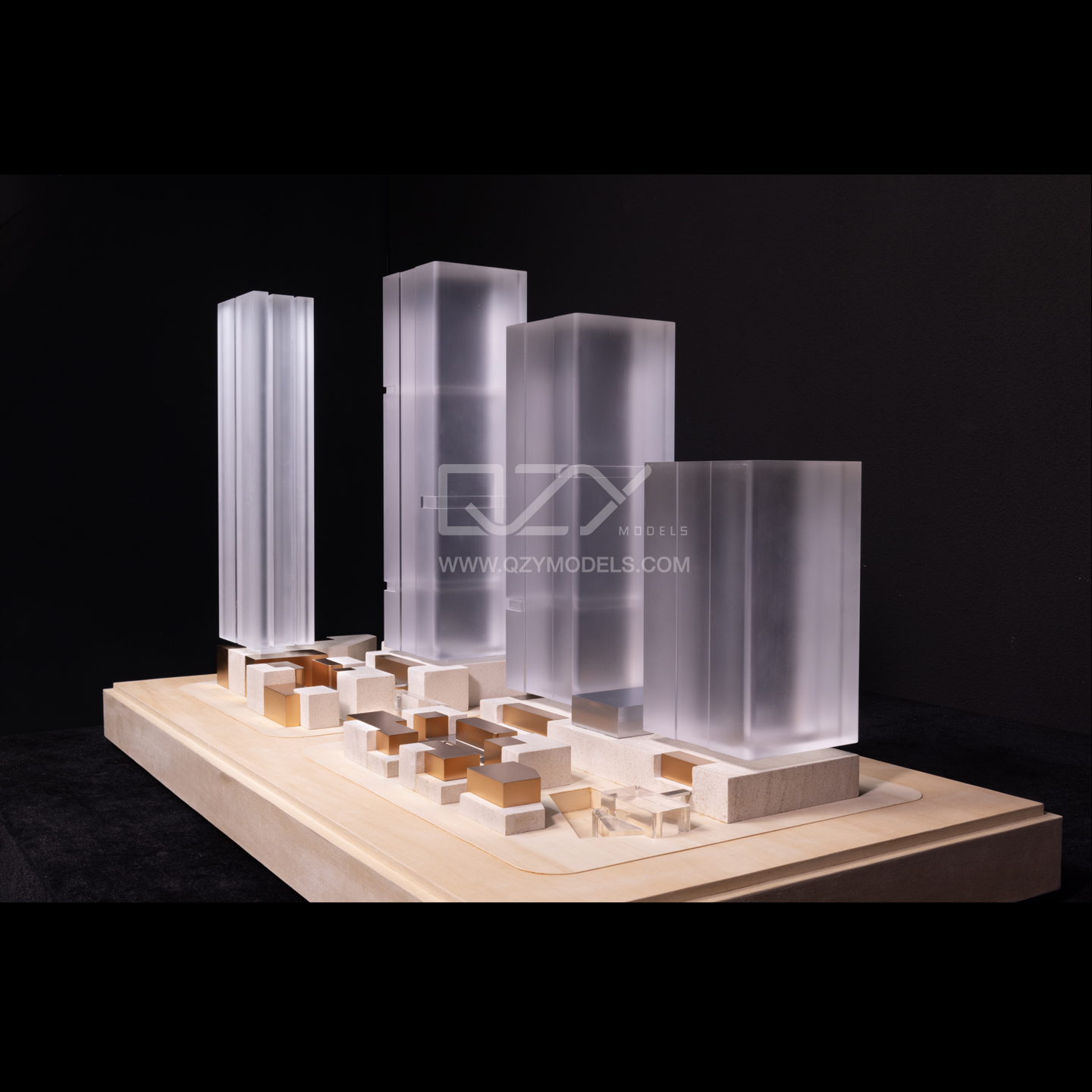
A wall section model is a detailed physical representation showing a vertical slice of a building wall, revealing structure, insulation, finishes, and systems. Architects, engineers, and developers use it to evaluate construction, detect conflicts, and communicate design intent. QZY Models produces high-precision wall section models that allow stakeholders to interact with complex assemblies, improving decision-making and design validation.
What Defines a Wall Section Model?
A wall section model illustrates the layered composition of a wall, from exterior cladding to interior finishes, including structural framing, insulation, and mechanical, electrical, and plumbing (MEP) integrations. By cutting vertically through a wall, it exposes hidden details like waterproofing, joint connections, and support interfaces.
These models serve as a tangible bridge between 2D drawings and full-scale construction. QZY Models specializes in creating these with realistic textures and precise detailing, helping clients such as architectural firms and real estate developers visualize assemblies accurately.
Key advantages include:
-
Enhanced visualization: Simplifies understanding of complex wall layers.
-
Improved communication: Aligns architects, engineers, and developers.
-
Compliance verification: Helps evaluate fire ratings, energy efficiency, and structural code adherence.
Typical models scale at 1:20 for overviews or 1:10 for intricate details, using acrylic, wood, or resin for realism.
| Wall Section Layer | Purpose | Common Materials |
|---|---|---|
| Exterior Cladding | Weather protection | Brick, stucco, metal panels |
| Insulation | Thermal and sound barrier | Foam board, mineral wool |
| Structural Framing | Load-bearing | Steel, timber |
| Interior Finish | Durability & aesthetics | Plaster, drywall |
| MEP Integration | System routing | Pipes, ducts, conduits |
Why Use Wall Section Models in Architecture?
Wall section models enable clear demonstration of construction sequences, early detection of conflicts, and better coordination among stakeholders. They reduce errors on-site and accelerate approvals by allowing teams to interact with physical representations.
These models are especially valuable for complex projects such as high-rises or sustainable buildings. Architects can evaluate insulation placement, vapor barriers, or seismic bracing options. QZY Models leverages over a decade of experience to deliver custom models tailored to client requirements, including international firms like Foster + Partners.
Applications include:
-
BIM verification: Comparing digital models to tangible outputs.
-
Client presentations: Enhancing understanding through interactive showcases.
-
Educational purposes: Teaching construction assemblies in design schools.
Physical wall section models have been shown to reduce misinterpretation by up to 40% compared to drawings alone. Removable layers in QZY Models’ versions enable in-depth exploration.
How to Build a Wall Section Model?
Building a wall section model involves layering materials from exterior to interior, accurately cutting framing, adding insulation, installing finishes, and detailing joints. Precision tools like lasers, CNC machines, and 3D printers improve fidelity, while paints and textures enhance realism.
Typical steps include:
-
Draw the section: Import CAD or BIM data for accuracy.
-
Fabricate the base: Use laser-cut plywood or foam.
-
Assemble layers: Add insulation, sheathing, and embedded conduits.
-
Detail features: Include windowsills, flashing, and textures.
-
Finalize and inspect: Ensure proper alignment and realistic representation.
QZY Models also designs modular industrial wall systems to mimic real panels, ensuring both durability and realism.
What Materials Work Best for Wall Section Models?
The best materials combine durability, accuracy, and visual fidelity: laser-cut acrylic for windows, balsa wood for framing, foam core for insulation, and metal sheets for cladding. QZY Models also uses translucent resin for moisture barriers and hybrid materials for realistic finishes.
| Material | Pros | Cons | Ideal Use |
|---|---|---|---|
| Acrylic | Transparent, precise | Brittle | Glazing/windows |
| Balsa Wood | Lightweight, easy to cut | Fragile | Structural framing |
| Foam Core | Affordable, easy to layer | Less durable | Insulation |
| Brass | Realistic metallic finish | Expensive | Cladding accents |
| Resin | Custom textures | Heavier | Finishes & detailing |
QZY Models tests materials for fire safety and light transmission, meeting standards across Europe, Middle East, and Asia.
How Do Wall Section Models Differ from Building Sections?
Wall section models focus exclusively on wall assemblies, detailing layers, joints, and connections. Building section models, by contrast, present full vertical slices of structures including floors, roofs, and spaces. Wall models zoom in on construction intricacies, making them ideal for evaluating thermal performance, waterproofing, or mechanical routing.
Key differences:
-
Scale: Wall section models often 1:10 for micro-details.
-
Scope: Walls only versus entire building slice.
-
Application: Material detailing vs. spatial planning.
QZY Models often pairs wall section models with full building sections for comprehensive client presentations.
Which Tools Enhance Wall Section Model Accuracy?
Accuracy is achieved by combining digital and physical tools. CAD software like Revit or Rhino produces precise sections; CNC and laser cutters fabricate parts; 3D printers create complex geometries; airbrushes and UV printers refine textures.
QZY Models integrates BIM data directly into model production, minimizing errors for projects by Vanke and other global clients.
| Tool | Purpose |
|---|---|
| Revit | Parametric section creation |
| Laser Cutter | Accurate edges and cuts |
| 3D Printer | Complex geometry fabrication |
| UV Printer | Texturing and finishes |
This workflow reduces construction errors and production time by nearly 50%.
QZY Models Expert Views
“Wall section models turn abstract drawings into tangible insights, revealing hidden construction details invisible in 2D. At QZY Models, we meticulously layer each element—from rainscreen gaps to MEP penetrations—ensuring every joint aligns with BIM data. Our global branches deliver models that simulate real-world conditions, saving weeks of revisions for high-profile projects. Physical models remain indispensable for design validation, stakeholder engagement, and exhibition showcases.”
— Richie Ren, Founder, QZY Models
When Should You Commission a Wall Section Model?
Models are most effective during schematic design, pre-construction approvals, or client presentations. Early commissioning ensures that design conflicts are identified before shop drawings and construction. For trade shows or fast-track projects, QZY Models can produce prototypes in as little as two weeks.
What Are Emerging Trends in Wall Section Modeling?
Current trends include sustainable bio-based materials, modular prefabricated panels, AR overlays on physical models, and hybrid physical-digital workflows. QZY Models experiments with LED lighting for MEP paths and recycled resins for eco-conscious projects, combining traditional craftsmanship with modern technology.
Wall section models unlock precise construction understanding, reduce errors, and improve communication. Engage QZY Models to develop tailored prototypes, integrate BIM early, and pair wall models with building sections for a complete perspective.
FAQs
What scale is ideal for wall section models?
1:20 for general overviews, 1:10 for detailed inspections like insulation or joint overlaps.
Can QZY Models produce custom industrial wall sections?
Yes, they handle factory and specialized cladding systems for global industrial clients.
How long does a wall section model take to build?
Typically 2–4 weeks; expedited delivery is possible for exhibitions or urgent presentations.
Are digital wall sections replacing physical models?
No, physical models remain critical for tactile inspection, stakeholder approvals, and immersive presentations.
What factors influence wall section model costs?
Costs range from $500 to $5,000, depending on size, materials, and complexity. QZY Models provides quotes tailored to project requirements.
What is a wall section model?
A wall section model is a detailed physical or digital representation showing a vertical slice through a building wall. It reveals layers such as framing, insulation, finishes, and structural connections, helping architects, builders, and clients understand the wall’s construction, integration of systems, and overall performance.
Why is a wall section model important in architecture?
Wall section models ensure accurate communication between design and construction teams. They help verify structural integrity, energy efficiency, fire safety, and soundproofing. By visualizing complex details, they prevent errors, support quality control, and allow clients to understand the building’s anatomy before construction begins.
What details are typically shown in a wall section model?
A wall section model displays internal components like studs, beams, insulation, vapor barriers, sheathing, cladding, floor and roof connections, and finishes. It illustrates how structural, thermal, and waterproof systems integrate, providing a comprehensive view of the wall’s functionality and performance.
How does a wall section model aid builders?
By showing exact construction layers and connections, wall section models guide builders on proper assembly. They reduce misinterpretation of plans, ensure compliance with building codes, and allow teams to resolve potential issues before construction, saving time and reducing costly errors.
What role does scale play in wall section models?
Wall section models are often drawn or built at a larger scale than general building plans to show precise details. Enlarged scales allow clear visualization of complex layers, structural connections, and system interactions, making construction instructions more readable and actionable.
How do wall section models improve building performance?
These models help ensure walls meet energy, fire, and sound standards. By revealing insulation placement, air gaps, and material layering, they allow designers to optimize thermal efficiency, moisture control, and overall durability, supporting sustainable and resilient construction practices.
Can wall section models help clients understand design intent?
Yes, wall section models provide a “cutaway” view of a building, showing how materials and systems work together. This makes it easier for clients to visualize the structure, see functional elements, and appreciate design choices, improving communication and satisfaction.
What materials are commonly represented in wall section models?
Wall section models typically represent drywall, sheathing, insulation, vapor barriers, structural framing (wood or metal), floor and roof connections, and exterior cladding. QZY Models often incorporates these layers in their architectural and industrial prototypes to demonstrate construction techniques and material interactions.