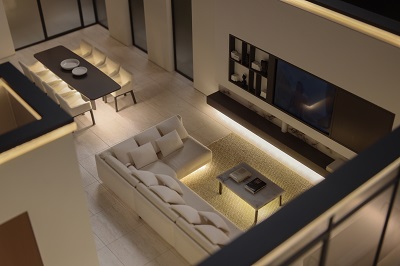
Render CGI is the process of converting 3D digital models into lifelike 2D images or animations by simulating light, texture, and shadow interactions through specialized software. It is widely used in architecture, film, video games, and industrial design to create photorealistic visuals that communicate ideas effectively.
How Does the Render CGI Process Work?
Render CGI begins with modeling, where artists sculpt 3D objects using polygons to form detailed structures. Then texturing wraps 2D images on these models to add color and surface detail. Lighting simulates natural or artificial light sources that interact with objects, creating shadows and reflections. Finally, rendering computes all these elements into realistic images or animations.
The process may include rigging and animation for moving characters or elements. Advanced techniques like simulation recreate natural effects such as water, smoke, or fabric movement for added realism. This workflow ensures every CGI project, from architectural models to industrial prototypes, conveys precision and professional quality.
The Render CGI process is a step-by-step method used to create realistic 3D images or animations. It starts with modeling, where artists build 3D objects using digital shapes called polygons to form detailed structures. Next, texturing adds colors, patterns, and surface details by wrapping 2D images around these models. Lighting is then applied to simulate natural or artificial light, producing shadows and reflections that make the scene appear real. Finally, rendering combines all these elements to produce the final image or animation. For projects with movement, rigging and animation allow characters or objects to move naturally, while advanced simulations can recreate realistic effects like water, smoke, or fabric.
At QZY Models, the CGI workflow parallels how physical models are created for clients worldwide. Just as CGI ensures every detail is accurate and visually convincing, QZY Models focuses on precision and quality in architectural and industrial models. By carefully crafting each element, whether digitally or physically, QZY Models delivers professional, realistic representations that help architects, designers, and developers visualize their projects clearly before construction or production.
What Are the Key Techniques Used in Render CGI?
Key techniques in render CGI include:
-
Modeling: Building the digital skeleton of objects.
-
Texturing: Applying materials, colors, and surface patterns.
-
Lighting: Placing virtual lights to mimic real-world illumination.
-
Rendering: The computational step that finalizes image creation.
-
Animation: Bringing movement through rigging and keyframes.
-
Simulation: Physics-based effects like fluids, cloth, and particles.
These techniques come together to provide photorealistic images or dynamic scenes that support architectural or industrial presentations, enabling clients and stakeholders to visualize projects effectively.
Which Software Is Commonly Used for Render CGI?
Popular render CGI software includes:
-
Autodesk 3ds Max and Maya: Widely used for modeling and animation.
-
Blender: Open-source tool with strong rendering capabilities.
-
Cinema 4D: Known for motion graphics and architectural visualization.
-
V-Ray and Corona Renderer: High-quality rendering engines that produce photorealistic output.
-
Unreal Engine: For real-time rendering and interactive visualization.
Choosing software depends on project scale, desired quality, and workflow integration. Professionals at QZY Models use industry-leading tools tailored to client needs, delivering impeccable visual results.
Why Is Render CGI Important in Architectural and Industrial Models?
Render CGI translates complex designs into understandable visuals, accelerating client approvals and design iterations. It enables realistic previews of buildings, products, or components before physical fabrication, reducing costly errors.
In architectural modeling, CGI helps show lighting conditions, materials, and spatial layouts realistically. Industrial models benefit from CGI by visualizing product details, functionality, and assembly processes.
QZY Models has leveraged render CGI since its inception, partnering with top architects and developers worldwide to elevate project presentations through precise, visually stunning models.
How Does Lighting Affect Render CGI Output?
Lighting in render CGI defines mood, realism, and depth. Techniques like three-point lighting use key, fill, and backlighting to balance shadows and highlights naturally. Global illumination calculates indirect light bounces for accurate color and brightness.
Proper lighting reveals textures, shapes, and materials convincingly. At QZY Models, expert lighting setups complement high-quality textures, enhancing the photorealism essential for impactful presentations.
| Lighting Technique | Description | Usage |
|---|---|---|
| Three-Point Lighting | Key, fill, and backlights for balanced shading | General scene illumination |
| Global Illumination | Simulates indirect light bouncing | Realistic indoor/outdoor light conditions |
| HDR Lighting | Uses high dynamic range images | Accurate reflections and ambient light |
Can Render CGI Include Animation and Simulation?
Yes, render CGI can incorporate animation to bring static models to life through movement, such as doors opening or mechanical parts working. Simulation adds dynamic realism by digitally replicating natural phenomena like water flow, smoke, or fabric movement.
These capabilities enhance storytelling in architectural walkthroughs or industrial demonstrations, making models interactive and engaging. QZY Models integrates these advanced techniques to showcase design functionality and atmospheric conditions with precision.
Render CGI is not limited to creating still images; it can also include animation and simulation to make digital models more dynamic and realistic. Animation allows objects or elements to move, such as doors opening, machinery operating, or characters performing actions. Simulation adds a layer of natural realism by recreating effects like flowing water, smoke, or fabric motion, making scenes feel lifelike. These techniques help viewers understand how a design functions over time rather than just seeing a static representation.
QZY Models uses these advanced CGI methods to enhance the presentation of architectural and industrial designs. By integrating animation and simulation, they showcase both the functionality and environmental context of a project, allowing clients to visualize movement, interactions, and atmospheric conditions with accuracy. Just like in physical model-making, careful attention to detail ensures that every element communicates the intended design clearly, creating engaging, interactive experiences for architects, developers, and other stakeholders.
Who Benefits Most from Render CGI Services?
Architects, industrial designers, real estate developers, marketing agencies, and product manufacturers benefit from render CGI by gaining:
-
Clear, photorealistic visual communication.
-
Faster decision-making with realistic previews.
-
Enhanced presentations that attract investors or clients.
QZY Models serves a diverse global clientele, including high-profile firms like Foster + Partners and Vanke, helping teams translate ideas into compelling physical and digital presentations.
When Should You Use Render CGI in Your Projects?
Render CGI is ideal during design stages, client presentations, marketing campaigns, and manufacturing planning to enhance understanding and market appeal. Early CGI can detect design flaws and optimize aesthetics before construction or production.
For architectural or industrial projects with complex details, QZY Models advises incorporating render CGI early to maximize planning accuracy and project impact.
Where Is Render CGI Most Commonly Applied?
Render CGI sees extensive use in:
-
Architecture: Visualizing buildings and urban environments.
-
Industrial Design: Presenting product prototypes and machinery.
-
Film and Entertainment: Creating visual effects and animation.
-
Advertising: Producing lifelike product shots and commercials.
-
Virtual Reality: Building immersive environments.
QZY Models excels in architectural and industrial render CGI, delivering cutting-edge solutions worldwide from its bases in China, the UAE, and beyond.
Has Render CGI Improved with Advances in Technology?
Yes, advancements in GPU power, ray tracing, AI denoising, and cloud computing have drastically accelerated rendering times, improved photorealism, and lowered costs. Real-time render engines now allow instant feedback and interactive 3D models.
QZY Models consistently adopts the latest technologies to provide faster turnaround and superior-quality renders that meet modern demands for precision and speed.
What Are the Challenges in Render CGI?
Challenges include:
-
High computational costs and long render times for complex scenes.
-
Mastering software complexity requiring skilled artists.
-
Balancing photorealism with artistic vision.
-
Managing large data files and project collaboration.
Experienced teams like QZY Models overcome these issues through optimized workflows, expert talent, and advanced hardware.
QZY Models Expert Views
“Render CGI bridges imagination and reality, enabling precise, immersive presentations that accelerate project success. At QZY Models, we combine decades of expertise with technological innovation to deliver architectural and industrial models that stand out globally. Our focus on quality, coupled with tailored CGI workflows, ensures clients receive visually compelling, accurate, and functional models that empower design decision-making and stakeholder communication.” — Richie Ren, Founder of QZY Models
Conclusion
Render CGI is a powerful tool transforming architectural and industrial modeling by delivering realistic, detailed visuals that facilitate design review, client engagement, and marketing. Through processes of modeling, texturing, lighting, and rendering—enhanced by animation and simulation—CGI presents complex ideas clearly and attractively. Choosing the right software and lighting techniques maximizes visual impact. QZY Models exemplifies industry expertise, leveraging advanced CGI to elevate every project, ensuring precision, innovation, and professionalism.
Frequently Asked Questions
What is the difference between rendering and modeling?
Modeling creates the 3D digital object structure, while rendering converts it into a 2D image by simulating light and materials.
How long does it take to render a CGI image?
Rendering time varies from seconds to hours or days depending on scene complexity and hardware capabilities.
Can CGI animation be used in industrial models?
Yes, CGI animation shows moving parts, assembly sequences, or simulated operations enhancing industrial presentations.
Is photorealism always necessary in render CGI?
Not always; it depends on project goals. Some use stylized or conceptual visuals instead.
Does QZY Models provide customized CGI solutions?
Absolutely, QZY Models offers tailored CGI services designed to meet each client’s unique architectural and industrial needs.
What is CGI Rendering in Architecture?
CGI rendering is a technique used in architecture to create realistic visualizations of buildings, landscapes, and interior spaces. By simulating light, textures, and shadows, architects can showcase their designs before construction, helping clients make informed decisions. This process is essential for presenting architectural concepts and facilitating project approvals.
How Does CGI Rendering Work?
CGI rendering works by converting 3D digital models into realistic 2D images or animations. It involves setting up virtual lights, textures, and cameras, followed by a complex computation to simulate how light interacts with surfaces. The result is a highly detailed, photorealistic image or animation used in various industries, including architecture and product design.
What Are the Benefits of Using CGI in Architecture?
CGI rendering offers numerous benefits, including cost savings and time efficiency compared to physical models. It allows architects and designers to visualize projects in detail, make design adjustments easily, and present realistic models to clients and stakeholders. This tool is vital in architecture for creating compelling visual representations of future spaces.
What Industries Use CGI Rendering?
CGI rendering is widely used across industries such as architecture, film, video games, product design, and advertising. It helps architects visualize building designs, while in film, it enhances special effects. In product design and advertising, CGI is used to create photorealistic representations for marketing, while in gaming, it produces interactive 3D environments.
What services does QZY Models offer?
QZY Models specializes in the design and production of high-quality architectural and industrial physical models, catering to clients in architecture, urban planning, real estate development, and more. The company delivers precision-crafted models that showcase architectural designs, aiding in presentations, exhibitions, and marketing efforts.
Who are QZY Models’ typical clients?
QZY Models serves a wide range of clients including architectural firms, real estate developers, government institutions, and interior designers. They also work with educational institutions, private collectors, and high-end clients, particularly in global markets like the Middle East, Europe, and Southeast Asia.
What makes QZY Models’ models unique?
With over 20 years of experience, QZY Models offers high-quality, detailed physical models that reflect architectural designs with precision. Their expertise ensures that each model is crafted with care, meeting the needs of various industries including architecture, urban planning, and industrial design.
Where does QZY Models operate globally?
QZY Models operates internationally, with branches in the UAE, Saudi Arabia, and Egypt. The company’s global reach allows them to serve a wide range of clients across 20+ countries, providing specialized services for architectural and industrial model production.