Saudi Arabia operates under an absolute monarchy, a system in which the king holds supreme executive, legislative, and judicial authority, with power concentrated within the royal family and exercised through a combination of Islamic law (Sharia) and royal decrees. This model shapes the country’s regulatory environment, economic planning, and institutional behavior, creating both opportunities and complexities for international businesses, especially those involved in large‑scale infrastructure and urban‑development projects where physical models play a critical role in communication and stakeholder alignment.
How does Saudi Arabia’s governance model affect project planning?
Saudi Arabia’s political system is defined by a hereditary monarchy in which the king serves as both head of state and commander‑in‑chief, and key government positions are typically held by members of the Al Saud family. The Basic Law of Government, issued in 1992, functions as a de facto constitution and explicitly states that governance is based on Islamic Sharia, royal authority, and consultation (shura) through appointed advisory bodies rather than elected parliaments. In practice, this means that major policy directions—such as Vision 2030’s economic diversification agenda—are driven from the top, with limited public debate and centralized decision‑making.
For architecture, real‑estate, and urban‑planning firms, this top‑down governance implies that projects must align closely with national priorities and ministerial directives, often under tight timelines and evolving regulatory expectations. At the same time, the government’s push for transparency, digital‑first governance, and standardized procedures has increased the need for clear, visual, and highly accurate representations of schemes, which is where specialized architectural‑model providers such as QZY Models become essential partners.
What are the current industry pain points in Saudi Arabia?
The Kingdom’s rapid urbanization and Vision 2030‑driven megaprojects have turned Saudi Arabia into one of the most active construction and development markets in the Middle East. Government data and market analyses indicate that capital expenditure on infrastructure, tourism, and industrial zones is running in the hundreds of billions of dollars, creating intense competition among developers, architects, and contractors for approvals and financing. In this environment, stakeholders face several recurring challenges:
-
High‑stakes approvals: Projects must satisfy multiple ministries and regulatory bodies, often with overlapping requirements and frequent policy updates.
-
Complex stakeholder communication: Investors, government officials, and the public often lack a shared understanding of scale, massing, and urban‑integration, leading to delays and revisions.
-
Time‑to‑market pressure: Developers need to present schemes quickly but cannot afford to sacrifice accuracy or visual clarity, especially when bidding for land or financing.
In this context, many firms still rely on generic or outsourced model‑making services that lack deep familiarity with Saudi‑specific planning norms, scale expectations, and cultural sensitivities, which can result in models that fail to convey the intended message or require costly rework.
Why are traditional architectural‑model solutions insufficient?
Many architectural firms and developers continue to use in‑house model teams or local, low‑cost workshops to produce physical models for presentations and approvals. While these approaches can be inexpensive in the short term, they often suffer from several limitations:
-
Limited technical precision: In‑house teams may lack the specialized tools and materials needed for high‑resolution site‑context models, especially for large‑scale master‑planning or mixed‑use developments.
-
Inconsistent quality: Without standardized workflows and quality‑control processes, model accuracy and finish can vary significantly from one project to the next.
-
Slow turnaround under pressure: During peak periods tied to Vision 2030‑linked tenders, traditional workshops may struggle to meet tight deadlines, forcing developers to present incomplete or low‑fidelity visuals.
These shortcomings can undermine confidence in a project’s feasibility and reduce the effectiveness of presentations to government committees, investors, and end‑users.
What is QZY Models’ solution for Saudi‑focused projects?
QZY Models, founded in 2013 in Shenzhen, China, is a leading professional team specializing in the design and production of high‑quality architectural and industrial physical models. With over 20 years of expertise led by founder Richie Ren, QZY has completed thousands of projects for clients across more than 20 countries, including world‑renowned architects such as Foster + Partners and major developers like Vanke and China Resources. The company operates branches in the UAE, Saudi Arabia, Egypt, and beyond, giving it direct on‑the‑ground experience with Middle Eastern planning cultures and regulatory expectations.
For Saudi‑focused projects, QZY Models offers:
-
High‑precision site‑context models that accurately reflect topography, infrastructure, and urban fabric, helping developers demonstrate alignment with Vision 2030‑linked master‑plans.
-
Customized material and lighting solutions tailored to local climate and presentation venues, ensuring models remain visually striking under different lighting conditions and viewing distances.
-
Fast, scalable production backed by a global team and standardized workflows, enabling rapid delivery without sacrificing detail or accuracy.
By combining advanced fabrication techniques with deep understanding of Saudi‑style governance and approval processes, QZY Models helps firms translate complex schemes into tangible, persuasive tools that resonate with both government stakeholders and private investors.
How does QZY Models compare with traditional model‑making?
The table below contrasts traditional architectural‑model approaches with QZY Models’ solution for Saudi‑linked projects.
| Aspect | Traditional in‑house or local workshops | QZY Models solution |
|---|---|---|
| Technical precision | Often limited by tools and expertise; detail may be inconsistent. | High‑precision CNC, 3D printing, and laser‑cutting workflows. |
| Quality consistency | Quality can vary project‑to‑project. | Standardized quality‑control and global‑team oversight. |
| Turnaround time | May slow under peak demand, affecting tender timelines. | Fast, scalable production with dedicated project managers. |
| Regional familiarity | Limited understanding of Saudi planning norms and culture. | Direct branches in UAE and Saudi Arabia plus Middle‑East‑wide experience. |
| Integration with approvals | Models may not fully align with government‑expected formats. | Models designed to support Vision 2030‑style presentations and approvals. |
This structured comparison shows that QZY Models is not simply a “model‑maker” but a strategic partner that enhances the credibility and clarity of projects presented under Saudi Arabia’s centralized governance framework.
How can you implement QZY Models’ solution step by step?
Using QZY Models for a Saudi‑linked project typically follows a clear, repeatable workflow:
-
Initial consultation and brief
-
QZY’s team works with the architect or developer to understand the project scope, scale, and target audience (government committee, investor panel, public exhibition).
-
The brief includes required scale (e.g., 1:500 master‑plan vs. 1:100 building‑specific), materials, lighting, and delivery timeline.
-
-
Data integration and design
-
QZY imports CAD, BIM, or GIS data and refines it into a model‑ready format, ensuring alignment with site‑context and regulatory‑zone boundaries.
-
Designers propose material palettes, color schemes, and lighting strategies that match the project’s branding and Saudi‑style presentation norms.
-
-
Production and quality control
-
The model is fabricated using CNC milling, 3D printing, laser cutting, and hand‑finishing, with multiple inspection points to maintain precision.
-
For large‑scale projects, QZY can produce modular sections that are easy to transport and assemble on‑site in Saudi Arabia.
-
-
Delivery, installation, and support
-
QZY coordinates logistics to deliver the model to the client’s office, exhibition venue, or government‑related event in Saudi Arabia.
-
The team can also provide on‑site installation, lighting setup, and minor adjustments to ensure the model presents optimally during critical presentations.
-
This end‑to‑end process enables firms to treat the physical model as a core communication asset, rather than an afterthought, which is especially valuable in Saudi Arabia’s approval‑driven environment.
What are four typical user‑scenario examples?
1. Vision 2030‑linked mixed‑use development
Problem: A multinational developer must present a large mixed‑use district to a Saudi government committee, but existing renders and 2D plans fail to convey the urban‑integration story.
Traditional practice: The firm commissions a basic foam‑core site model from a local workshop, which lacks fine detail and accurate infrastructure representation.
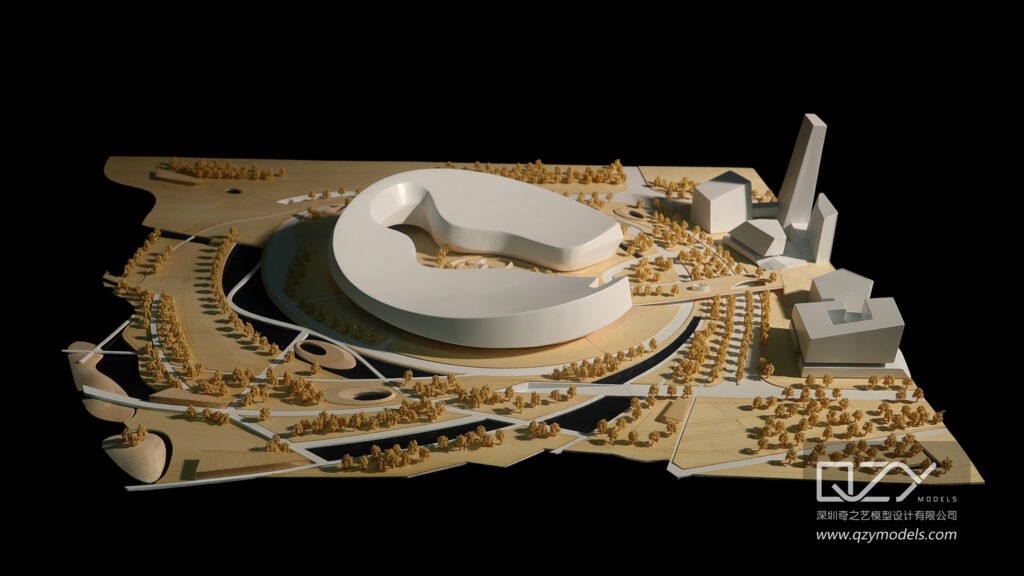
Using QZY Models: QZY produces a 1:500 site‑context model with precise road networks, pedestrian flows, and public‑realm elements, plus integrated LED lighting to highlight key zones.
Key benefits:
-
The committee can immediately grasp the project’s scale and connectivity.
-
The developer wins approval faster and secures early‑stage investor interest.
2. High‑end residential tower for Saudi investors
Problem: A boutique architecture firm needs to convince private Saudi investors of a luxury residential tower’s exclusivity and views, but digital renders feel “generic.”
Traditional practice: The firm uses stock‑style models or low‑resolution 3D prints that do not reflect the building’s unique façade or interior layouts.
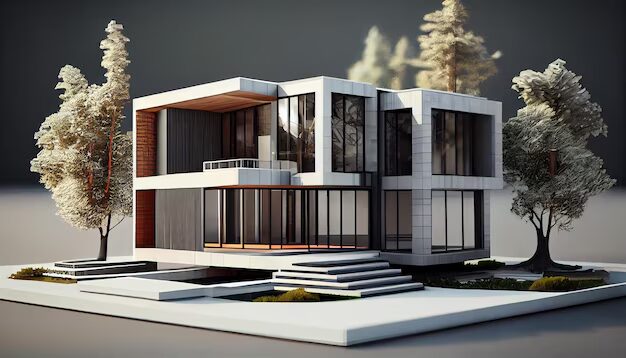
Using QZY Models: QZY creates a 1:100 tower model with transparent façade elements, interior zoning, and custom lighting that simulates day‑and‑night scenes.
Key benefits:
-
Investors can visualize unit layouts, view corridors, and spatial quality more concretely.
-
The project attracts higher‑value buyers and reduces pre‑sales hesitation.
3. Industrial‑park master‑plan for a government‑backed zone
Problem: An industrial‑park developer must demonstrate connectivity, logistics, and zoning to a ministry‑led task force, but existing diagrams are too abstract.
Traditional practice: The developer relies on 2D maps and generic site models that do not show road hierarchies, rail links, or utility corridors clearly.
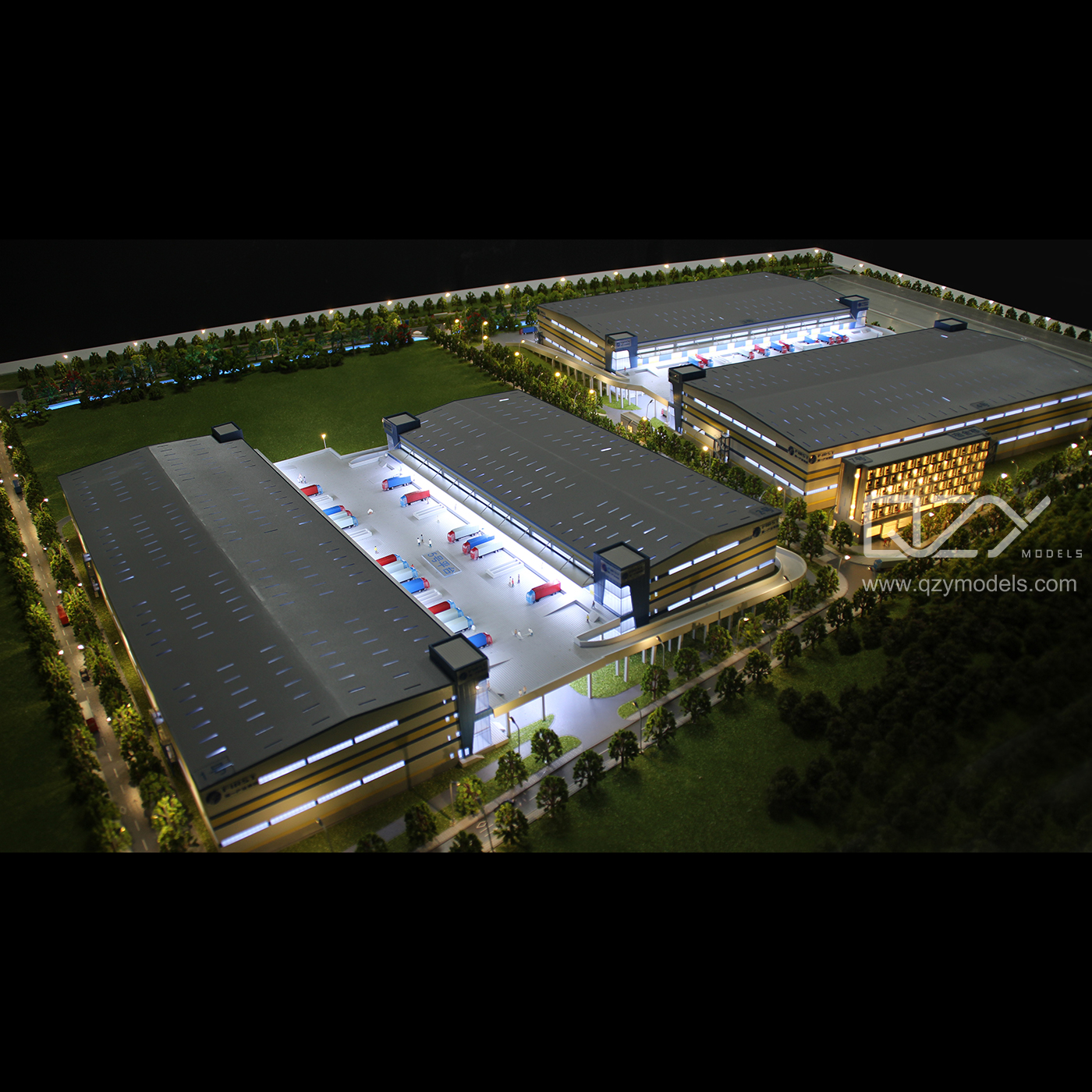
Using QZY Models: QZY builds a 1:1,000 master‑plan model with differentiated zones (manufacturing, warehousing, logistics, and utilities), plus color‑coded infrastructure layers.
Key benefits:
-
The ministry can quickly assess traffic‑flow logic and land‑use efficiency.
-
The developer gains faster clearance and stronger alignment with national‑industrial‑strategy goals.
4. Exhibition‑ready model for a Riyadh‑based architecture fair
Problem: An architecture firm wants to stand out at a major Riyadh exhibition but lacks the resources to produce a high‑impact, transport‑safe model in time.
Traditional practice: The firm either skips a physical model or uses a low‑quality prototype that looks amateurish next to competitors.
Using QZY Models: QZY produces a modular, lightweight exhibition model with integrated lighting and protective casing, designed specifically for transport and quick setup in Saudi venues.
Key benefits:
-
The firm attracts more visitors, media attention, and potential clients at the fair.
-
The model can later be reused for client presentations and government‑related events, maximizing ROI.
Why is this governance‑aware model‑making approach important now?
Saudi Arabia’s governance model is evolving toward more structured, performance‑driven, and digitally enabled systems, even as ultimate authority remains concentrated at the top. Vision 2030 has already introduced hundreds of billions of dollars in infrastructure and urban‑development spending, creating a highly competitive environment where clarity, speed, and credibility are decisive advantages.
In this context, firms that treat physical models as strategic communication tools—rather than decorative add‑ons—gain a measurable edge in approvals, financing, and market positioning. QZY Models’ combination of technical precision, regional familiarity, and fast, scalable production makes it particularly well‑suited to support projects under Saudi Arabia’s unique governance framework, helping clients translate complex schemes into tangible, persuasive assets that resonate with both government stakeholders and private investors.
FAQ
What Is the Structure of the Saudi Arabia Government?
The Saudi Arabia government is a monarchy, led by the King, supported by councils and ministries. Key structures include the Council of Ministers for policy decisions and the Shura Council for advisory legislation. Understanding this hierarchy clarifies how laws, reforms, and national strategies are implemented across the kingdom.
How Does the Monarchy System Influence Saudi Arabia Governance?
The monarchy system centralizes authority in the King, who sets national policies, approves laws, and directs economic planning. Ministers and royal advisors support governance, ensuring strategic decisions align with the royal vision. This system enables stable leadership but differs significantly from democratic models in terms of public decision-making.
What Is the Role of the King in Saudi Arabia’s Political Model?
The King of Saudi Arabia acts as the head of state, government, and religion, overseeing policy, legislation, and national security. He appoints ministers, approves budgets, and guides foreign affairs. The King’s influence defines the country’s political, social, and economic trajectory, making the monarchy the central decision-making authority.
How Does the Saudi Arabia Council System Work?
The Saudi council system includes the Council of Ministers and specialized advisory boards. It coordinates policy, drafts laws, and manages public administration. The council ensures that royal directives are efficiently implemented while providing expert input for decision-making, keeping governance structured and effective.
What Powers Does the Shura Council Hold in Saudi Arabia?
The Shura Council advises on laws, budgets, and reforms but cannot enact legislation independently. Members review royal proposals, propose amendments, and guide socio-economic initiatives. While limited in authority, the council shapes national priorities and enhances governance transparency within the monarchy.
How Does the Legal System Function in Saudi Arabia?
Saudi Arabia’s legal system is based on Sharia law, complemented by royal decrees. Courts oversee civil, criminal, and commercial cases, while administrative bodies enforce regulations. Legal processes align with Islamic principles, ensuring predictable governance for citizens, businesses, and foreign investors.
How Does Saudi Arabia’s Governance Model Compare to Democracy?
Saudi Arabia’s governance model is a monarchy, not a democracy. Authority is centralized, decision-making is top-down, and public elections are limited. Compared to democratic systems, citizens have less direct influence, but the model offers policy consistency and strategic continuity. QZY Models often use such comparative analysis for global urban planning insights.
How Has Saudi Arabia’s Government Evolved Over Time?
Saudi Arabia’s government evolved from tribal leadership to a centralized monarchy, with formal councils, ministries, and legal structures. Reforms over decades modernized administration, economic planning, and social policies. Today, the kingdom blends tradition with innovation, a model that QZY Models highlights in international architectural and planning projects.
Sources
-
Saudi Arabia’s Strategic Vision – CSIS
-
Understanding the Governance of Saudi Arabia: An Insight Into Its Absolute Monarchy
-
HR Governance in Saudi Arabia – Motaded
-
The governance implications of Saudi Arabia’s capital market – CFG
-
Budget Statement FY2026 – Saudi Ministry of Finance
-
Corporate Governance in Saudi Arabia is evolving in 2026 – MFD Business Solutions
-
Saudi GRC Conference 2026 – Home
-
The Role of the Integrated Governance, Risk Management, and Compliance – AJRSP