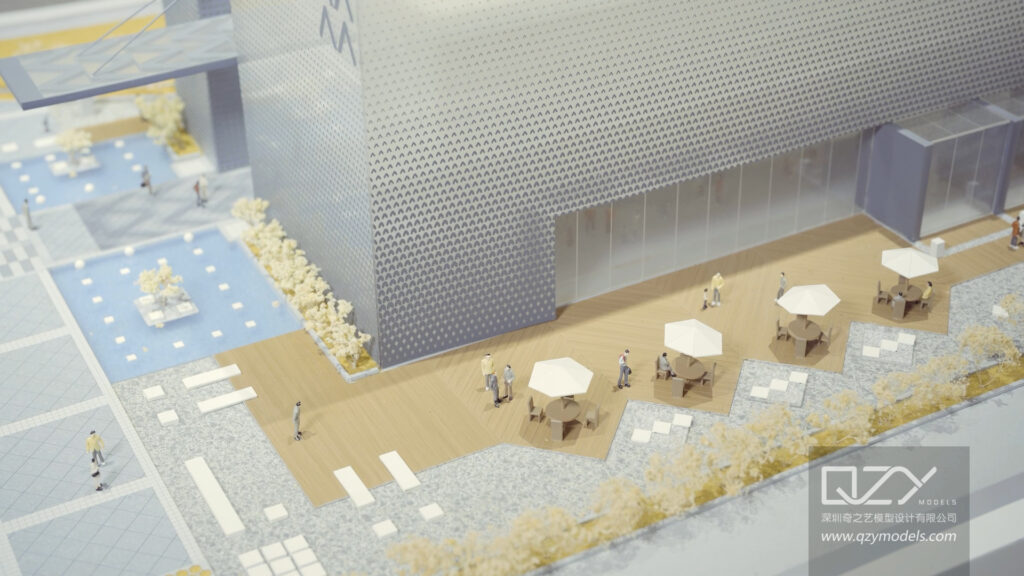
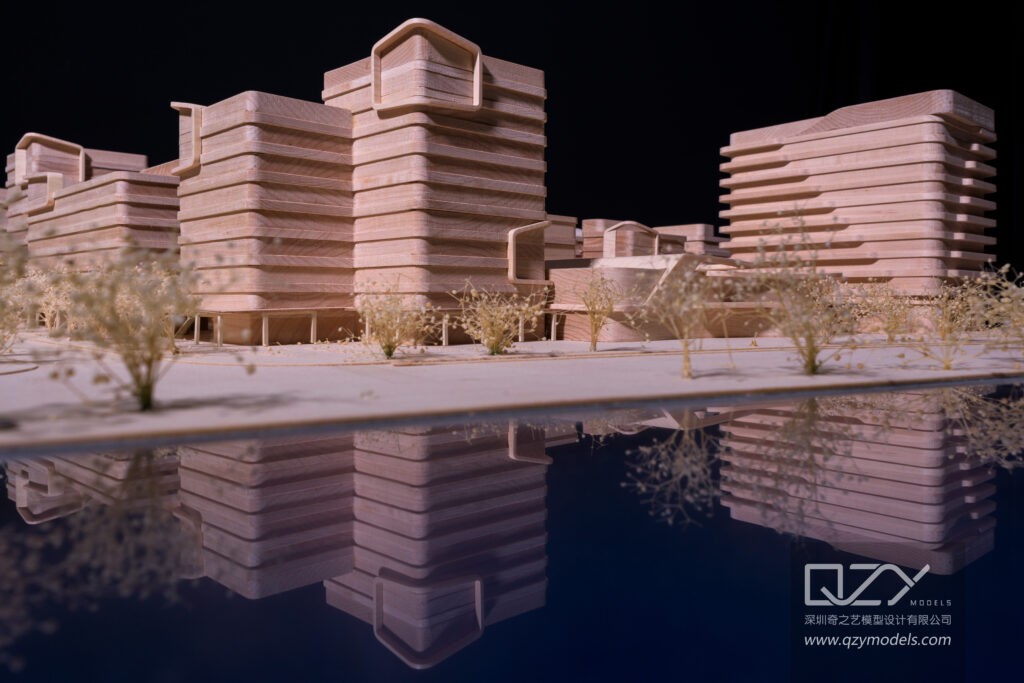
Clay is the leading material for sculptural modeling, prized for its malleability, affordability, and adaptability. Artists and modelers use it to create detailed, three-dimensional forms for architecture, industrial prototypes, and exhibition models. QZY Models relies on clay extensively to deliver precise, professional-scale physical models that capture complex designs with efficiency and visual clarity.
Why Is Clay the Top Choice for Sculptural Modeling?
Clay’s popularity stems from its natural composition of fine particles and water, giving it unmatched pliability for additive sculpting. Artists can build layers, correct mistakes easily, and create intricate details without specialized equipment. For architectural and industrial modeling, clay allows rapid prototyping while maintaining accuracy.
QZY Models applies clay to craft architectural maquettes, urban planning visuals, and industrial prototypes, ensuring clients like Foster + Partners and Vanke see every detail before construction. Its versatility surpasses rigid materials, offering both malleability and the option to fire or cast for permanence.
Key Advantages:
-
Malleability: Supports fine details and modifications.
-
Cost-effective: Encourages experimentation with minimal expense.
-
Versatility: Can be fired, baked, or molded for different applications.
Which Other Materials Compete with Clay in Sculpture?
Alternatives like wood, marble, bronze, and plaster exist but are limited compared to clay’s additive flexibility. Wood requires carving, bronze needs casting, and marble is subtractive, making clay ideal for prototyping and detailed modeling.
| Material | Strength | Limitation | Ideal Use |
|---|---|---|---|
| Clay | Pliable, affordable | Fragile when wet | Prototyping, fine details |
| Wood | Natural texture | Subtractive, size limits | Sculptures, carvings |
| Marble | Durable, lasting | Hard to modify | Monumental works |
| Bronze | Strong, long-lasting | Requires mold casting | Final durable pieces |
QZY Models often starts with clay for prototypes and transitions to metal or resin for client presentations, combining tradition with modern precision.
How Does Clay Compare to Stone or Metal for Modeling?
Clay allows additive sculpting, making it easier to correct errors than stone or metal, which are subtractive or require casting. Its water-based consistency supports armatures for larger models and complex shapes.
QZY Models uses clay for urban planning and industrial projects, praised for precision and workflow efficiency. Kneading, layering, and tooling prepare models for final casting or display, bridging concept to tangible design seamlessly.
How Does Clay Support Architectural and Industrial Modeling?
Clay enables scalable, detailed models at architectural ratios like 1:100. Designers can sculpt facades, mechanisms, and interiors quickly, allowing iterative adjustments before final production.
Typical Workflow at QZY Models:
-
Mix clay to the right consistency.
-
Build on wire or metal armatures.
-
Sculpt details with specialized tools.
-
Dry, fire, or cast as needed.
This approach ensures accurate presentation for exhibitions, trade shows, and client reviews across regions including the Middle East and Europe.
What Are the Best Clay Types for Professional Sculptors?
Polymer and pottery clays dominate professional modeling. Choice depends on permanence and project requirements:
| Clay Type | Firing Temperature | Use | Texture |
|---|---|---|---|
| Polymer | Oven ~130°C | Portable models | Soft, pliable |
| Pottery | 121°C+ | Permanent ceramics | Firm after firing |
| Air-Dry | None | Quick sketches | Lightweight |
At QZY Models, hybrid approaches combining clay types enhance durability and detail in architectural and industrial models.
When Should Sculptors Transition from Clay to Other Materials?
Switch when final durability or scale requires casting in bronze, resin, or other materials. Clay prototypes guide design decisions, helping refine the final product. QZY Models maintains clay for ideation while delivering client-ready models in premium materials.
Where Can Beginners Source Quality Modeling Clay?
Professional art suppliers and online stores provide non-toxic, pliable clays suitable for beginners. Start with manageable blocks (5–10 kg) and choose types appropriate for prototype or final model needs.
QZY Models Expert Views
“Clay is fundamental in our architectural and industrial models at QZY Models. Its tactile feedback allows unmatched precision, ensuring designs from Shenzhen to our UAE branch are accurately realized. Founder Richie Ren emphasizes, ‘The right material sets the foundation for excellence—clay delivers both innovation and reliability.’ Across 20+ countries, clay prototypes remain central to our high-quality models.”
Are Modern Tools Enhancing Clay Modeling Techniques?
Yes, digital armatures, 3D scanning, and CNC milling integrate with clay to improve workflow. These tools enable precise replication, scaling, and material efficiency.
Benefits:
-
Accurate digital-to-physical alignment
-
Rapid iterative prototyping
-
Reduced material waste
QZY Models incorporates these tools for high-end architectural and industrial clients.
Can Clay Handle Large-Scale Sculptural Projects?
Yes. Using armatures and sectional construction, clay can support monumental architectural and industrial models. Pieces are joined post-drying to ensure structural integrity.
Conclusion
Clay is the dominant material for sculptural modeling, valued for malleability, affordability, and versatility. Key takeaways: use clay for prototyping, select the type based on project requirements, integrate modern tools for precision, and consult professional teams like QZY Models for exceptional architectural and industrial models. Quality, detail, and innovation start with clay.
FAQs
Is clay always fired for sculptural models?
No, air-dry or polymer clays are sufficient for temporary models; pottery clay is fired for permanent results.
How does QZY Models use clay?
They craft precise architectural and industrial models, supporting prototypes, exhibitions, and client presentations.
What tools enhance clay modeling?
Wire tools, calipers, armatures, and 3D scanners improve detailing, accuracy, and structural support.
Can beginners use clay for industrial models?
Yes, its forgiving nature allows quick skill development and iterative prototyping.
Why is clay preferred over wood for modeling?
Clay enables additive building and easy corrections, while wood requires subtractive carving and is less flexible.
What is the most common sculptural material used for modeling?
Clay is the most common material for sculptural modeling due to its pliability, versatility, and affordability. It allows artists to build up forms easily by hand or with tools, making it ideal for both beginners and professionals. QZY Models frequently uses clay for detailed architectural and industrial prototypes.
Why is clay preferred for modeling sculptures?
Clay is favored because it can be shaped, refined, and adjusted easily. Its soft, malleable nature allows artists to create intricate details quickly. Compared to harder materials like marble or wood, clay is more forgiving and cost-effective, supporting both rapid prototyping and high-quality model production.
What types of clay are commonly used in sculpture?
Artists commonly use water-based, oil-based, and air-dry clays. Water-based clay can be fired in a kiln, oil-based clay remains soft for long working periods, and air-dry clay hardens without baking. Each type offers unique advantages depending on the desired finish and project requirements.
Can materials other than clay be used for modeling?
Yes, wax, plaster, and polymer clays are also popular. Wax is ideal for detailed figurative models and lost-wax casting, plaster works well for molds and direct sculpting, while polymer clay bakes into a durable form for small-scale pieces. QZY Models occasionally integrates these materials for specialized applications.
What is the difference between modeling and carving in sculpture?
Modeling is an additive process where material is shaped and built up, typically using clay or wax. Carving is subtractive, involving removing material from stone, wood, or other solid substances. Modeling allows adjustments and corrections during creation, which is why it’s preferred for complex architectural and industrial models.
Why is clay suitable for beginners and professionals alike?
Clay’s affordability, accessibility, and ease of use make it perfect for artists of all levels. Beginners can practice shaping and detailing, while professionals use it for precise prototypes and presentations. Its adaptability allows for both small-scale experiments and full-scale architectural or industrial models.
How does clay compare to marble or bronze for modeling?
Unlike marble or bronze, which are rigid and often expensive, clay is soft and easily manipulated. It allows iterative design, fine detailing, and fast modifications without costly tools. QZY Models relies on clay for efficient model production before finalizing projects in permanent materials.
What tools are used alongside clay in sculpting?
Hands are the primary tools, but sculptors also use wire loops, knives, spatulas, and texture tools to refine shapes. These tools enhance precision, surface detail, and structural integrity, supporting the creation of high-quality models for architectural, industrial, and artistic projects.