Custom industrial and landscape models turn complex designs into tangible, interactive 3D representations. For international clients, QZY Models delivers high-precision, export-ready models that communicate architectural, industrial, and landscape concepts effectively. These models enhance design visualization, support stakeholder decision-making, and ensure professional presentation standards for exhibitions, urban planning, and client approvals worldwide.
How Do Custom Industrial and Landscape Models Support Project Visualization?
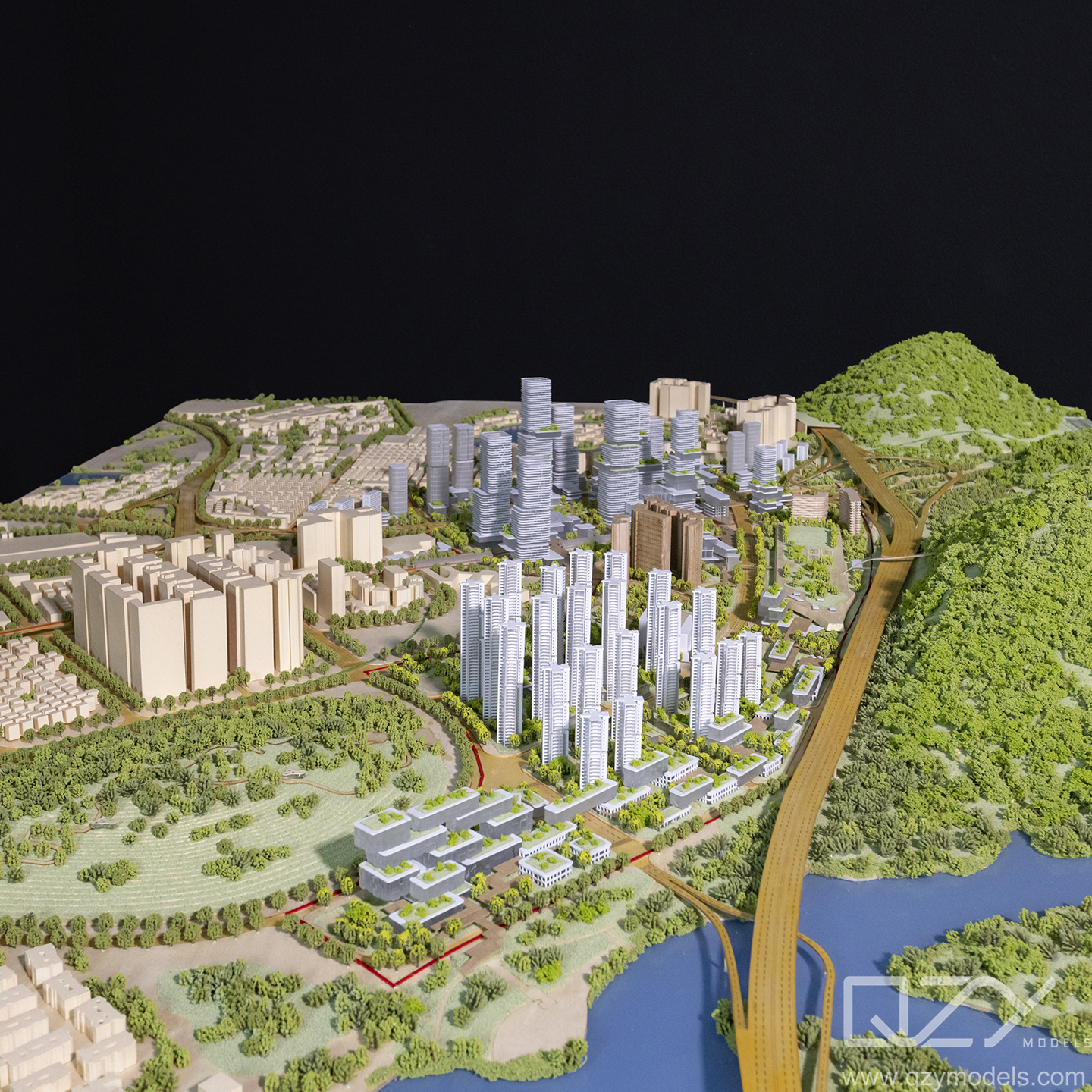
Custom models allow architects, developers, and planners to experience designs in real space. By converting digital plans into physical scale models, QZY Models enables clients to understand spatial relationships, scale, and material textures intuitively. These models streamline communication between stakeholders, facilitate design approval, and serve as effective marketing tools for presentations, competitions, and project submissions.
Physical models offer a tactile and visual depth that digital renderings cannot fully replicate. Using laser cutting, CNC milling, and hand-finishing, QZY Models ensures each detail matches the client’s specifications. Interactive features like movable components or layered construction can demonstrate functional aspects, helping international teams make informed decisions quickly.
Why Are China Manufacturers Leading in Model-Making for Global Projects?
China’s manufacturing ecosystem combines efficiency, advanced technology, and cost-effective production, making it ideal for global clients. QZY Models exemplifies this by integrating digital modeling, 3D printing, and expert handcrafting under one workflow. This approach delivers precise, scalable models for real estate, industrial, and urban development projects.
| Advantage | China Model Manufacturers | Western Manufacturers |
|---|---|---|
| Production Speed | High-volume capability | Moderate |
| Cost Efficiency | Economies of scale | Higher per unit cost |
| Export Network | Worldwide logistics | Regional focus |
China’s combination of automation and skilled artisanship allows companies like QZY Models to produce complex architectural and landscape models efficiently while maintaining aesthetic accuracy and high quality.
What Materials Are Best for Industrial and Landscape Scale Models?
The choice of materials impacts model durability, realism, and visual appeal. Common materials include acrylic, ABS plastic, resin, wood, metal, and 3D-printed polymers. QZY Models combines materials strategically: acrylic for glazing, resin for terrain, and metal for structural components. For industrial layouts, aluminum or dense resin provides robustness, while landscape features use PU foam, resin foliage, and glass water effects for realism.
| Material | Common Use | Advantages |
|---|---|---|
| Acrylic | Windows, glazing | Transparency, smooth finish |
| Resin | Terrain, detailed features | Sculptability, durability |
| Metal | Frames, machinery | Strength, structural integrity |
Which Industries Benefit Most from Custom Model Solutions?
Architectural design firms, real estate developers, urban planners, industrial manufacturers, and educational institutions gain significant advantages from scale models. Architects refine spatial layouts, industrial firms demonstrate production lines, and landscape planners illustrate ecological integration. QZY Models tailors each project to exhibition, municipal, or investor presentation needs, bridging design creativity with engineering precision.
Custom models also support marketing campaigns, trade shows, and investor relations by providing compelling visual and tactile experiences.
How Does OEM and Wholesale Model Manufacturing Work?
OEM and wholesale production allows international brands to collaborate with factories like QZY Models for design, branding, and mass production. Clients submit specifications, CAD files, or sketches, and QZY Models executes full-scale manufacturing with quality inspection, packaging, and international shipping included.
This model provides cost efficiency, consistency, and flexibility. Projects follow a structured workflow: concept → 3D modeling → material selection → assembly → quality control → export. QZY Models also offers private labeling and white-label prototyping to meet global client needs.
What Innovations Are Transforming the Model-Making Industry?
AI-assisted 3D modeling, robotic cutting, UV-printed textures, and smart lighting have revolutionized model-making. These innovations increase accuracy, realism, and interactivity.
QZY Models incorporates interactive sensors, programmable lighting, and AR technology to create dynamic models. Urban landscapes can simulate traffic, lighting cycles, and functional interactions, providing clients with immersive presentations that demonstrate real-world applications.
Is Sustainability Important in Model Manufacturing?
Sustainable practices are increasingly essential in model production. QZY Models prioritizes eco-friendly materials, energy-efficient machinery, and biodegradable packaging to minimize environmental impact while maintaining quality.
By integrating LED lighting, solar-assisted processes, and recyclable materials, QZY Models meets global environmental standards and aligns with corporate ESG objectives. Sustainable model-making appeals to environmentally conscious architects, developers, and educational institutions.
How Do Cultural Adaptation and Localization Strengthen International Collaboration?
Cultural adaptation ensures models reflect regional design preferences, materials, and environmental aesthetics. Localization enhances communication, project relevance, and stakeholder engagement.
QZY Models maintains multilingual teams across the UAE, Egypt, Europe, and Asia, allowing seamless collaboration with international clients. This global-local synergy ensures models are culturally appropriate, technically precise, and visually compelling.
QZY Models Expert Views
“Each model we produce is more than a scaled representation; it is a translation of our client’s vision into a tangible, accurate form. QZY Models emphasizes precision, sustainability, and innovation while ensuring our models meet international standards. We continually adapt to new technologies and global client expectations to deliver impactful, professional presentations.”
— Richie Ren, Founder and CEO of QZY Models
Conclusion
Custom industrial and landscape models are vital for design communication, stakeholder engagement, and international project planning. QZY Models demonstrates that combining advanced manufacturing, sustainable practices, and cultural sensitivity creates export-ready models that meet the highest global standards. Collaborating with a professional model-making factory enhances visualization, supports decision-making, and ensures design excellence.
Frequently Asked Questions
1. Can QZY Models produce models for overseas exhibitions?
Yes, QZY Models offers global shipping and custom packaging for exhibitions and trade shows.
2. Does QZY Models support OEM and private-label projects?
Yes, the company provides full OEM services, including branding and production for international clients.
3. How long does it take to produce a large architectural model?
Production typically takes 3–6 weeks depending on complexity, from design to export preparation.
4. Can models feature lighting or interactive components?
Yes, QZY Models integrates programmable lighting, motion features, and AR interactivity.
5. Are detailed digital files required before production?
Yes, CAD or 3D files ensure accurate fabrication and efficient workflow.