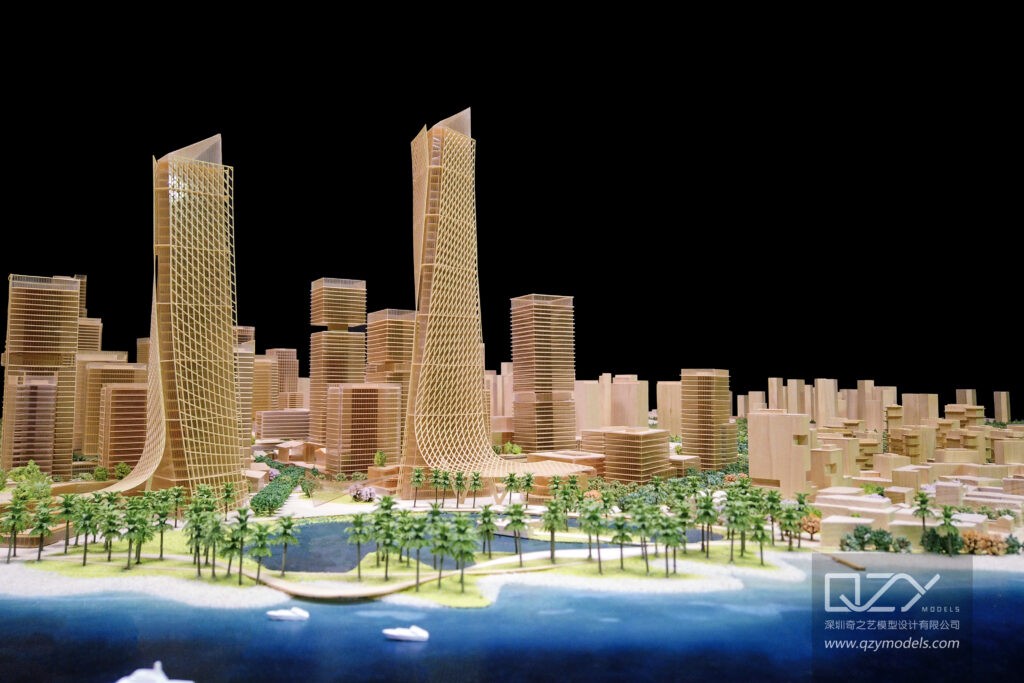
High-quality architectural models are essential tools for visualizing design concepts, understanding spatial layouts, and evaluating development feasibility. They allow architects, developers, and investors to explore projects in a tangible, realistic format. Companies like QZY Models provide precision-crafted models that enhance presentations, guide approvals, and support marketing strategies for urban planning and real estate developments worldwide.
How Do Architectural Models Support Urban Planning Projects?
Architectural models are critical in urban planning because they provide a three-dimensional perspective of city layouts, infrastructure, and zoning relationships. By visualizing traffic flows, sunlight exposure, and environmental impacts, planners can make informed decisions. QZY Models produces detailed urban planning models that integrate CAD drawings, GIS data, and physical modeling to simulate realistic cityscapes for developers, government agencies, and architectural firms.
Materials commonly used include acrylic, resin, wood, and advanced 3D-printed composites, chosen for precision, durability, and visual clarity. These models help evaluate public transportation, land use, and community facilities efficiently.
| Model Purpose | Scale Ratio | Typical Clients |
|---|---|---|
| City masterplan | 1:500–1:2000 | Urban planning bureaus, government agencies |
| Regional development | 1:1000–1:3000 | Developers, infrastructure authorities |
| Transportation network | 1:800–1:2000 | Engineering firms, consultants |
What Materials Ensure Durability and Realism in Architectural Models?
Durable and realistic architectural models rely on high-quality materials such as PMMA acrylic, high-density resin, CNC-machined PVC, and fine wood veneers. QZY Models applies industrial-grade coatings, laser cutting, and precise assembly to ensure long-lasting, visually accurate models suitable for exhibitions and international shipping.
Manufacturing techniques like CNC machining, laser etching, resin casting, and UV printing are combined with LED lighting to simulate day-night cycles. Sustainable materials, including recycled boards and biodegradable resins, are increasingly used to meet eco-friendly project requirements.
Why Are Physical Models Still Important in the Digital Age?
Even with advanced digital visualization tools, physical models remain unmatched for tactile clarity and spatial understanding. They help clients and reviewers quickly grasp complex designs. QZY Models merges detailed craftsmanship with augmented reality and lighting to enhance decision-making and provide interactive, real-world presentations.
Physical models stimulate multiple senses, making presentations more engaging for investors and public stakeholders. Hybrid solutions combining physical models with digital projections allow immersive experiences that accelerate approvals and secure funding.
Which Types of Architectural Models Are Used in Real Estate Development?
Real estate projects use several model types—masterplan, building exterior, interior cutaway, and landscape models—each tailored to scale, design phase, and purpose. QZY Models provides custom OEM fabrication for residential, commercial, and mixed-use developments, supporting marketing, investor presentations, and showroom displays.
| Model Type | Scale Range | Usage |
|---|---|---|
| Masterplan | 1:500–1:2000 | Site layout and overall planning |
| Building exterior | 1:100–1:300 | Marketing and façade visualization |
| Interior cutaway | 1:50–1:100 | Space planning and sales display |
| Landscape | 1:200–1:500 | Community parks and amenities |
Interactive elements like LED lighting and zoning controls enhance engagement, allowing prospective clients to explore spaces dynamically.
How Can a China-Based Manufacturer Deliver OEM Model Solutions Worldwide?
China-based manufacturers, such as QZY Models, offer global OEM model solutions by integrating design, precision fabrication, modular assembly, and logistics. Their Shenzhen factory combines in-house engineering, automated CNC production, and packaging optimized for international shipping.
Models are constructed in durable modular segments for easy transport and assembly. Multilingual teams ensure coordination across time zones, cultural contexts, and building codes, making QZY Models a reliable partner for architects, developers, and exhibition organizers worldwide.
What Innovations Are Transforming Architectural Model Manufacturing?
Innovations such as AI-assisted 3D modeling, CNC micro-fabrication, resin 3D printing, interactive lighting, and AR/VR integration are reshaping model production. QZY Models incorporates digital twin data and sustainable materials into models, providing faster production and enhanced realism.
These technologies allow for dynamic simulations of urban life, animated lighting, and motion effects. Automation reduces errors, ensures replicability, and enables scalable production for corporate and institutional clients.
Where Are Architectural Model Factories Located in China?
China’s architectural model industry is concentrated in Shenzhen, Guangzhou, and Shanghai. These hubs offer access to 3D printing, laser cutting, skilled technicians, and export logistics. QZY Models’ Shenzhen facility leverages these advantages to deliver high-quality models efficiently to international clients.
The factories integrate CNC machining, painting, and assembly departments to maintain end-to-end control. Proximity to ports ensures rapid shipping and international compliance for large-scale or custom projects.
Can Architectural Models Enhance Real Estate Sales and Marketing?
Architectural models enhance sales by translating complex plans into tangible visual experiences. Developers use them in showrooms, trade fairs, and investor presentations. QZY Models produces models with precise detailing, realistic lighting, and interactive features that engage clients and increase conversion rates.
Models create emotional connections, highlight terrain and building features, and showcase amenities. They help teams secure funding and demonstrate project quality to high-end clientele.
QZY Models Expert Views
“In every successful urban project, physical models bridge the gap between vision and reality. While technology evolves, tangible precision remains the foundation of effective design communication. At QZY Models, our mission is to turn architectural imagination into reliable physical experiences that inspire confidence, collaboration, and innovation.” — QZY Models Technical Director, Richie Ren
Conclusion
Architectural models are indispensable tools for urban planning and real estate development. They provide visual accuracy, spatial clarity, and persuasive storytelling that digital tools alone cannot achieve. Partnering with a specialized manufacturer like QZY Models ensures precision, customization, and global-standard quality, helping developers, architects, and planners deliver compelling presentations and secure stakeholder confidence.
FAQs
1. Who typically commissions architectural models?
Architects, real estate developers, government agencies, and educational institutions frequently request models for visualization, approval, and presentations.
2. Are models suitable for international shipment?
Yes. Manufacturers like QZY Models design modular, custom-crated models optimized for export and safe reassembly.
3. Can models include lighting and movement features?
Yes. LED, fiber optics, and kinetic effects can be integrated for dynamic and interactive displays.
4. How long does model production usually take?
Production varies by complexity and scale, typically taking 2–8 weeks, including design and finishing stages.
5. Does QZY Models offer post-delivery support?
Yes. The company provides global technical consultation, assembly guidance, and long-term maintenance for all projects.