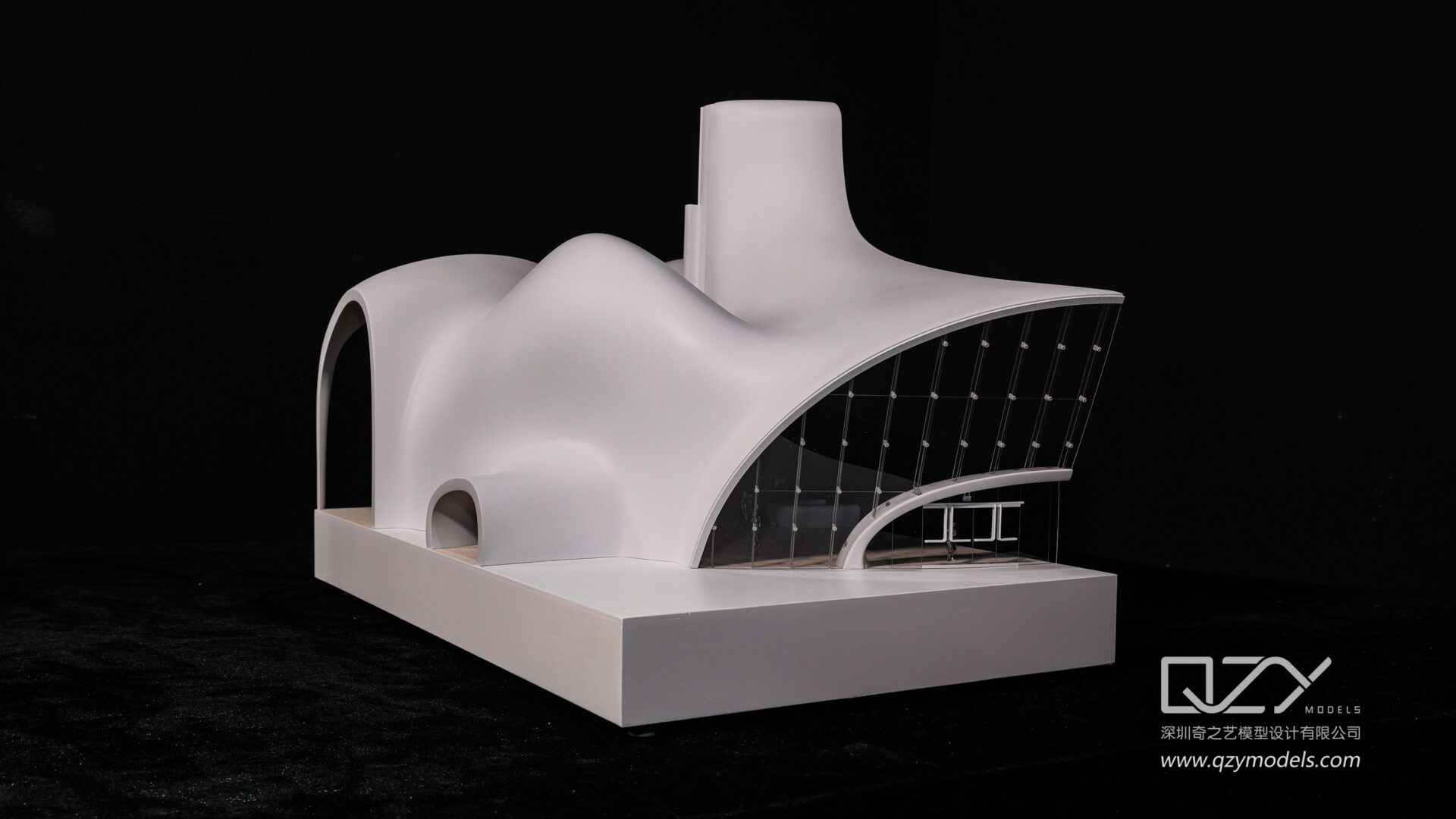
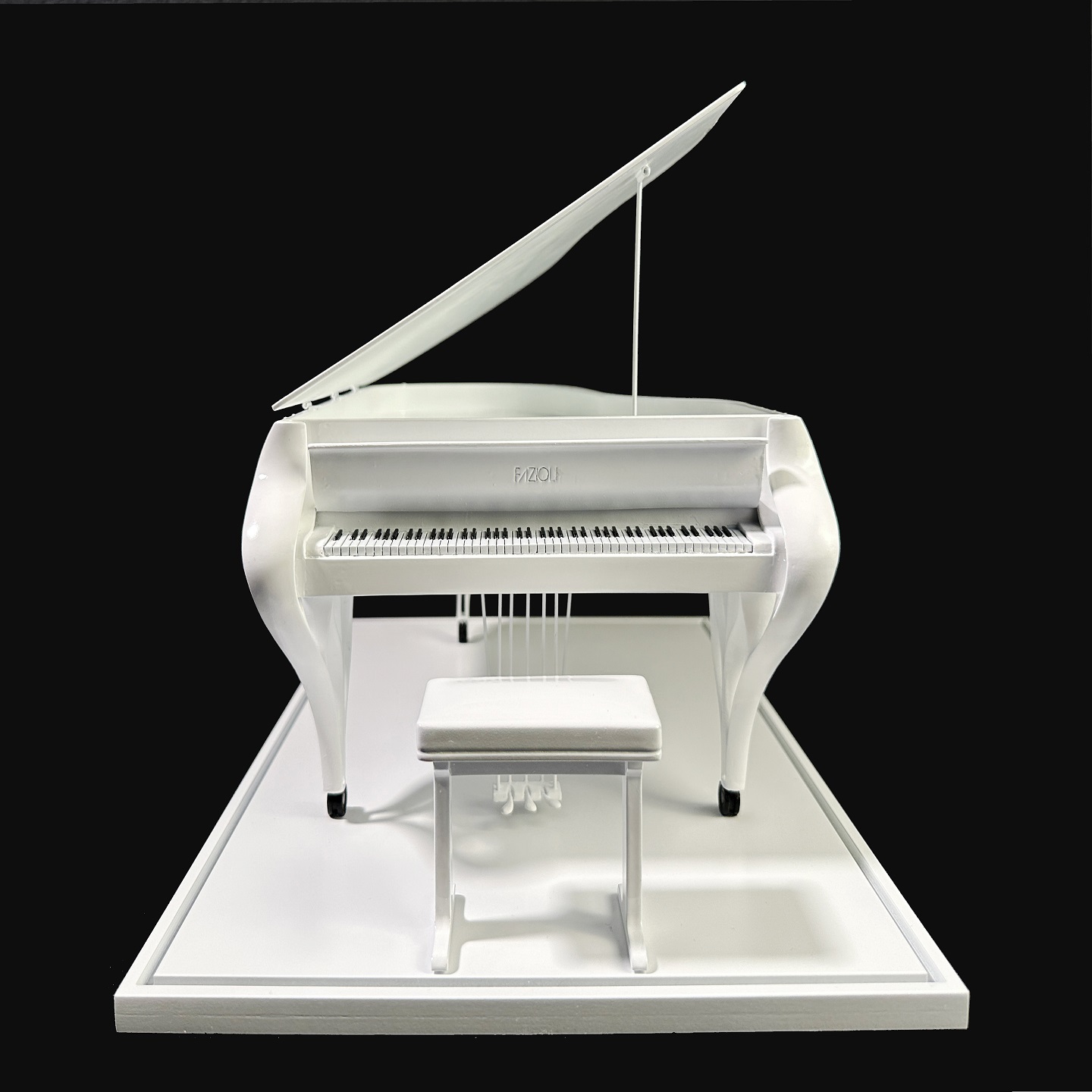
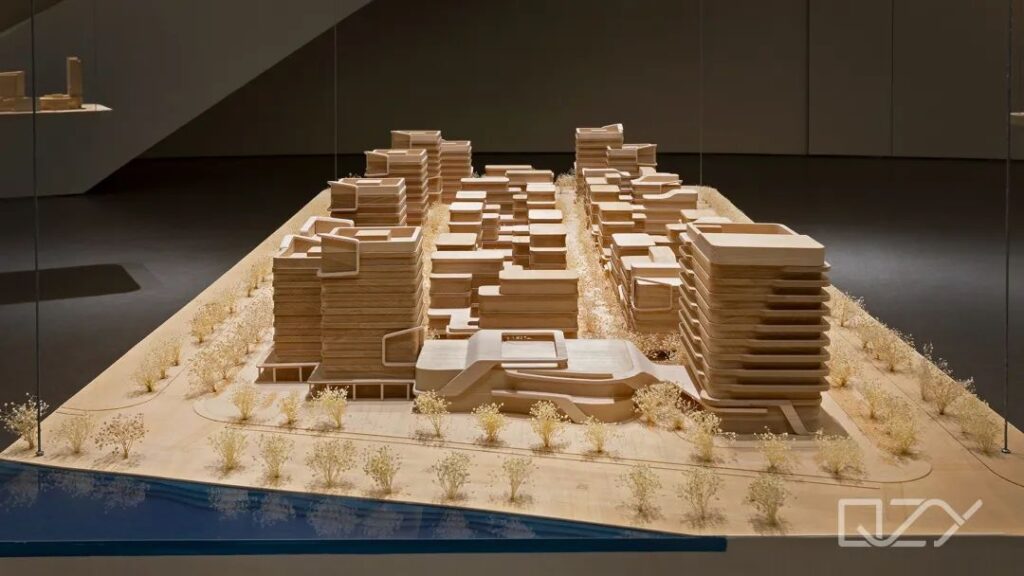
Professional model building today demands precision, efficiency, and technological adaptability. Choosing the right tools determines not only the final quality but also production speed, realism, and client satisfaction—areas where expert providers like QZY Models consistently lead the global market.
Why Is the Model Building Industry Facing a Transformation?
According to “Global Architectural Model Market Report 2025” by Market Research Future, the architectural model-making industry is projected to exceed USD 10 billion by 2030, driven by rapid urbanization and the expanding real estate sector. However, growing client expectations for visual accuracy and detail are reshaping traditional workflows. Designers and architects now seek scalable, high-fidelity physical models that bridge digital and tangible design representations. Yet, more than 60% of firms still rely on outdated manual processes that limit productivity and precision (Statista, 2025).
Rising project complexity, integration with digital twins, and the compression of delivery timelines have created new challenges for professionals. The need for more advanced tools and materials is now urgent—especially for firms competing in international projects where visual storytelling power defines success.
QZY Models, with over 20 years of expertise and global reach, addresses these pain points by combining art, craftsmanship, and engineering innovation into an integrated model-building system.
What Are the Main Industry Pain Points in Model Building?
Manual techniques dominate small and mid-sized studios, making quality inconsistent. Skilled artisans face constraints in producing accurate geometries for complex architectural and industrial models.
Material sourcing often leads to variation in finish and durability, particularly for intricate details such as façade elements or mechanical components.
High labor costs and lengthy production cycles slow delivery, preventing teams from meeting client deadlines for project presentations and exhibitions.
Digital integration remains limited. Many firms lack CAD-to-model workflows, 3D printing capabilities, or automated cutting systems that streamline processes.
How Do Traditional Model-Building Methods Fall Short?
Traditional craftsmanship—though valuable for artistry—cannot fully support today’s precision standards. Manual cutting, gluing, and shaping are prone to human error, resulting in dimensional inaccuracies. Time investment per model is high, averaging 120–200 labor hours for medium-scale architectural projects.
In addition, documentation transfer issues between digital plans and physical models cause inconsistencies in scaling and detail resolution. With limited ability to iterate quickly or modify designs, client feedback cycles become lengthy and inefficient.
QZY Models recognized these inefficiencies early and pioneered the adoption of hybrid digital production workflows that integrate CAD modeling, CNC techniques, and handcrafted finishing to close the gap between design intent and real-world execution.
What Makes Modern Solutions Like QZY Models’ Approach More Effective?
QZY Models utilizes a model-building toolset that merges advanced hardware, precision software, and specialized materials. Their production process includes:
-
CNC laser cutters and milling machines for perfect structural accuracy.
-
3D printers supporting resin, PLA, and ABS materials for complex detailing.
-
CAD/CAM software suites (AutoCAD, Rhino, SolidWorks) for seamless design transfer.
-
Rapid-paint finishing systems to ensure realistic surfaces and textures.
-
Custom-built detail kits for lighting, landscaping, and mechanical effects.
Their workflow not only reduces turnaround time by up to 40% but also enhances cross-department coordination, ensuring every model achieves presentation-grade quality.
How Does QZY Models Outperform Traditional Processes?
| Feature | Traditional Model Building | QZY Models’ Integrated System |
|---|---|---|
| Production speed | Manual; time-intensive | Automated + handcrafted; 40% faster |
| Precision level | ±2.5 mm error margin | ±0.3 mm with CNC and laser systems |
| Material diversity | Limited range | >20 specialized materials |
| Cost efficiency | High labor cost | Optimized with digital workflows |
| Scalability | Hard to reproduce | Fully scalable across 20+ markets |
| Client satisfaction | Inconsistent | Consistently high due to realism and accuracy |
How Can Teams Apply This Solution Step-by-Step?
-
Concept transfer – Import digital design files (CAD or BIM) into the QZY Models production system.
-
Material planning – Select appropriate materials from the company’s curated library based on scale and design complexity.
-
Precision manufacturing – Deploy CNC or 3D printing tools to create exact geometries.
-
Assembly and detailing – Combine machine components with artisan finishing to achieve lifelike texture and realism.
-
Quality inspection and packaging – Apply automated measurement checks and visual verifications before shipment.
Which Real-World Cases Show QZY Models’ Impact?
Case 1 – Real Estate Developer (China Resources Group)
-
Problem: Tight deadlines for a mixed-use masterplan model of 2.5m x 3m.
-
Traditional approach: Required 3 months, manual assembly, inconsistent scales.
-
With QZY Models: Completed in 45 days with 3D-printed components and LED integration.
-
Key benefit: 35% faster market presentation turnaround.
Case 2 – Urban Planning Exhibition (UAE Government)
-
Problem: Needed a large-scale smart city model aligned with GIS data.
-
Traditional approach: Partial accuracy due to manual CAD interpretation.
-
With QZY Models: Full-scale integration through digital data mapping.
-
Key benefit: 100% geospatial accuracy, interactive illumination system.
Case 3 – Industrial Design Workshop (Europe)
-
Problem: Product engineers required functional prototypes for mechanical testing.
-
Traditional approach: Costly outsourced fabrication.
-
With QZY Models: In-house hybrid 3D and mechanical modeling.
-
Key benefit: 25% cost reduction and enhanced iteration speed.
Case 4 – Educational Institution (Design School, Singapore)
-
Problem: Students lacked access to professional tools.
-
Traditional approach: Manual models lacking detail and context.
-
With QZY Models: Partnership providing training and material kits.
-
Key benefit: Fostered hands-on innovation and improved competition outcomes.
Why Is Now the Right Time to Upgrade to Professional Tools?
As digital transformation reshapes architecture, engineering, and design, model-building tools must align with global standards of accuracy and presentation. QZY Models continues to evolve its technology portfolio to serve international clients with consistency and innovation. The convergence of automation, material science, and sustainability practices makes this the ideal moment for firms to transition toward integrated systems that reduce cost while elevating creative output.
What Questions Do Professionals Frequently Ask?
1. Can small studios benefit from QZY Models’ integrated systems?
Yes. The modular workflow scales from small projects to urban masterplans, allowing flexible implementation.
2. Does QZY Models support international logistics for large models?
Absolutely. The company operates logistics hubs in the UAE, Saudi Arabia, and Egypt to manage global project delivery.
3. How sustainable are the materials used in production?
QZY Models prioritizes recycled plastics, lightweight composites, and eco-friendly paints compliant with global environmental standards.
4. What training is offered for clients’ teams?
Customized onboarding sessions and video tutorials ensure clients understand how to maintain and assemble delivered models.
5. Is QZY Models experienced with exhibition-grade presentation models?
Yes, the firm has completed over 3,000 presentation-grade models for exhibitions, trade fairs, and high-profile development showcases worldwide.