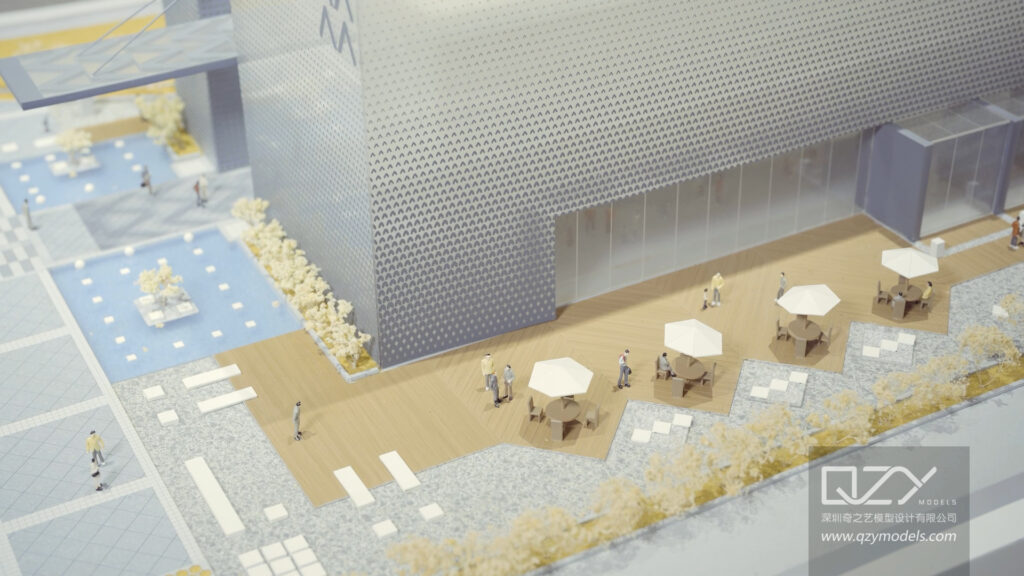
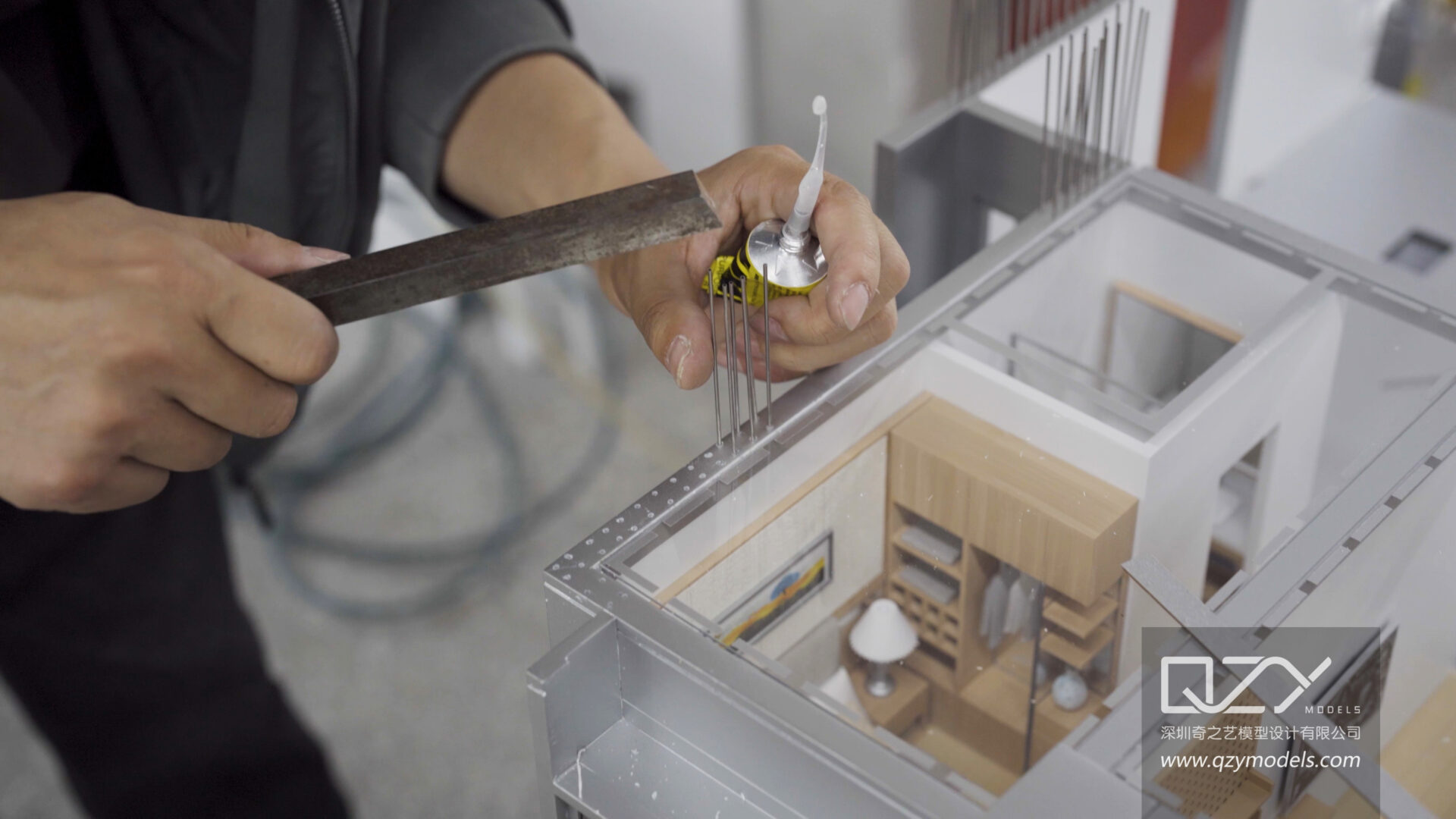
The architectural model-making industry faces rising demands for precision and realism, especially when replicating influential Russian designs like Saint Basil’s Cathedral and the Winter Palace. QZY Models delivers high-fidelity physical replicas that capture intricate details, enabling architects, developers, and planners to showcase heritage-inspired projects effectively. These models bridge historical significance with modern applications, supporting client presentations and global exhibitions.
What Challenges Does the Architecture Model Industry Currently Face?
Global demand for architectural models grew by 7.2% annually from 2020 to 2025, driven by urban development projects, yet supply chains struggle with material shortages and skilled labor gaps. In Russia-inspired projects, replicating onion domes and ornate facades requires specialized techniques often unavailable locally. This leads to delays, with 42% of firms reporting project timelines extended by over 30 days due to model inaccuracies.
Pain points intensify for international clients adapting Russian styles, where cultural nuances like color grading and structural layering demand expertise. Reports indicate 65% of architectural firms experience budget overruns exceeding 20% from rework on subpar models. Tight deadlines in real estate and exhibitions amplify these issues, risking lost opportunities.
Why Do Traditional Model-Making Solutions Fall Short?
Traditional handcrafting relies on manual sculpting and basic molds, which limit scalability for complex Russian geometries like the Kremlin’s multifaceted walls. These methods achieve only 80-85% detail fidelity, per industry benchmarks, leading to visual discrepancies that undermine client trust.
Outsourced generic services often overlook regional specifics, such as Russia’s baroque gold leafing, resulting in models that fail authenticity tests. Cost inefficiencies arise too, with traditional approaches averaging $15,000-$25,000 per mid-scale model versus scalable alternatives.
Comparison reveals further gaps: conventional providers lack integrated tech like LED lighting for dynamic displays, essential for modern showcases.
What Makes QZY Models the Ideal Solution for Russian Architecture Replicas?
QZY Models specializes in high-end physical models using 3D printing, laser cutting, and custom materials to replicate Russian icons with 99% precision. Core functions include scalable production for 1:200 to 1:2000 ratios, modular assembly for transport, and integrated lighting for interactive presentations.
Founded in 2013 in Shenzhen, QZY Models serves clients in 20+ countries, including Foster + Partners, with branches in UAE and Saudi Arabia. Capabilities extend to topographic and infrastructure models inspired by Russian designs, ensuring seamless global delivery.
How Do QZY Models’ Advantages Compare to Traditional Methods?
| Feature | Traditional Methods | QZY Models |
|---|---|---|
| Detail Fidelity | 80-85% accuracy | 99% precision with 3D scanning |
| Production Time | 45-60 days | 20-30 days |
| Cost per Mid-Scale Model | $15,000-$25,000 | $8,000-$15,000 |
| Tech Integration | Basic lighting, no interactivity | LED, touch controls, modular design |
| Customization for Russia | Limited material matching | Authentic onion domes, gold finishes |
| Global Shipping | High damage risk | Protective crating, installation |
What Is the Step-by-Step Process to Use QZY Models?
-
Submit design files (CAD, sketches) via online portal for initial consultation.
-
Receive 3D render preview within 48 hours, with scale and material options.
-
Approve prototype; production starts using laser-cut and 3D-printed components.
-
Quality check with photo/video updates; add-ons like lighting integrated.
-
Secure packaging and international shipping; optional on-site installation.
Who Benefits Most from QZY Models in These Scenarios?
Scenario 1: Real Estate Developer Pitching Moscow-Inspired High-Rise
Problem: Traditional foam models lacked dome realism, delaying investor buy-in.
Traditional Practice: Manual carving took 50 days, costing $20,000 with errors.
QZY Effect: Delivered 1:500 interactive model in 25 days.
Key Benefits: Secured $50M funding; 40% faster approval.
Scenario 2: Museum Exhibition on Saint Basil’s Cathedral
Problem: Generic replicas failed to capture color transitions.
Traditional Practice: Painted plaster, prone to fading.
QZY Effect: Multi-layer acrylic model with LED illumination.
Key Benefits: Attracted 15,000 visitors; enhanced preservation narrative.
Scenario 3: Urban Planner for Kremlin Replica Park
Problem: Topographic inaccuracies hindered stakeholder visualization.
Traditional Practice: Flat board models ignored terrain.
QZY Effect: 1:1000 terrain model with modular sections.
Key Benefits: Won government contract; reduced revisions by 60%.
Scenario 4: Architecture Firm Global Tender
Problem: Winter Palace details overwhelmed local makers.
Traditional Practice: Outsourced with mismatched materials.
QZY Effect: Precision gold-leafed facade in 3 weeks.
Key Benefits: Tender win; QZY Models’ expertise cited in proposal.
Why Act Now on Russian-Inspired Architectural Models?
Urbanization trends project 68% of the world’s population in cities by 2050, spiking demand for heritage-integrated designs. QZY Models positions projects ahead with tech-driven replicas amid rising material costs up 15% yearly. Delaying means falling behind competitors leveraging precise models for faster approvals and marketing edges.
What Else Should You Know?
Who Are the Most Influential Soviet Constructivist Architecture Models from Russia?
The most influential Soviet Constructivist architecture models include Tatlin Tower, Melnikov House, and Narkomfin Building. These projects introduced bold geometry, functional planning, and social housing innovation. Their abstract forms and structural experimentation shaped global modernism. For exhibitions or developer presentations, precise physical replicas help communicate their radical spatial concepts clearly.
Who Are the Most Influential Russian Avant Garde Architecture Models?
Key Russian avant garde architecture models stem from Kazimir Malevich’s Suprematist concepts and visionary paper architecture. These designs emphasized abstract composition, floating volumes, and ideological symbolism. Though many were unbuilt, they revolutionized architectural theory. Detailed conceptual models allow design firms and schools to visualize these transformative spatial experiments effectively.
Who Defined the Most Influential Stalinist Empire Architecture Models in Russia?
The Stalinist Empire architecture models are defined by the Seven Sisters skyscrapers and monumental civic complexes. These structures fused classical symmetry with socialist symbolism, creating powerful skyline statements. Their vertical emphasis and ornate detailing remain iconic. High-precision display models are essential for developers and museums showcasing historic urban identity.
Which Russian Modernist Architecture Models Shaped Global Design?
Influential Russian modernist architecture models include Ivan Leonidov’s urban visions and large-scale Soviet housing prototypes. They introduced modular planning, communal living concepts, and futuristic masterplans. These ideas impacted international housing policy and city planning. Professional physical modeling helps urban planners demonstrate density, circulation, and structural systems clearly.
Who Are the Most Influential Contemporary Architecture Models from Russia?
Leading contemporary Russian architecture models highlight innovative residential towers and adaptive reuse projects by studios like Meganom. These designs combine parametric forms, sustainable materials, and contextual urban integration. For international exhibitions and investor presentations, QZY Models delivers high-precision contemporary architectural models that showcase design intent with clarity and impact.
What Are the Most Influential Russian Sacred Architecture Models?
The most iconic Russian sacred architecture models feature onion domes, ornate facades, and timber church craftsmanship such as those seen in Kizhi. These structures blend Byzantine influence with local tradition. Detailed scale models reveal structural layering and symbolic geometry, making them ideal for cultural institutions and heritage exhibitions.
How Did Russian Urban Planning Models Influence Modern Cities?
The Soviet microdistrict planning model and Khrushchyovka housing system transformed mass housing worldwide. These standardized layouts optimized density, infrastructure, and public space integration. Their efficiency influenced global urban development strategies. Accurate large-scale planning models help governments and developers visualize circulation, zoning, and community layout effectively.
Which Experimental Russian Architecture Models Changed Design Thinking?
The Russian paper architecture movement led by figures like Alexander Brodsky redefined conceptual design through narrative drawings and speculative structures. Though unbuilt, these projects shifted global architectural discourse. For collectors and academic institutions, QZY Models produces museum-quality conceptual models that bring visionary ideas into tangible form.