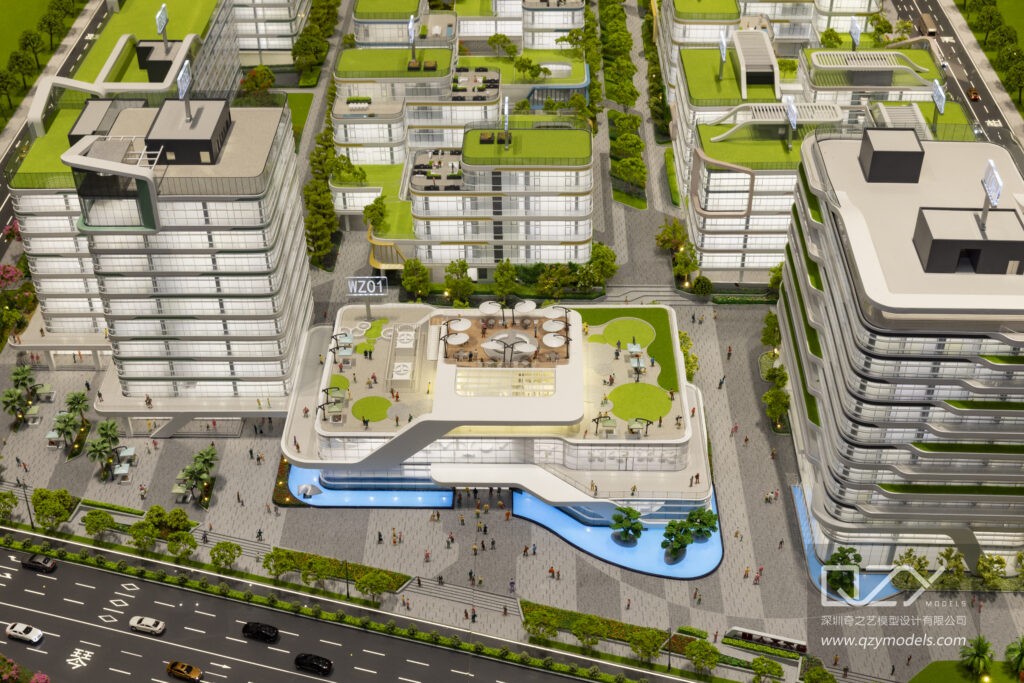
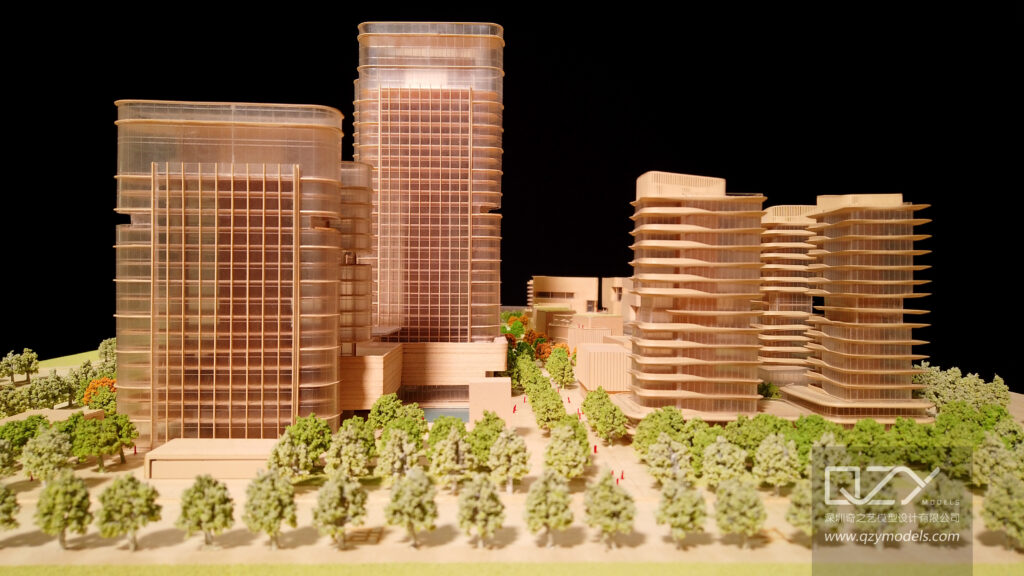
Built in 1889 as a marvel of modern engineering, the Eiffel Tower remains one of the most recognizable structures in the world—symbolizing innovation, precision, and architectural excellence. Today, leading model makers like QZY Models recreate such historical landmarks to inspire modern architecture and industrial design innovation.
How Has the Architecture and Model Industry Evolved in Recent Years?
According to Statista, the global architectural services market exceeded $440 billion in 2024, with increasing demand for high-precision scale models in project presentation and urban planning. Yet, industry professionals face two major challenges: high costs, long production cycles, and inconsistent quality in architectural modeling. A McKinsey report revealed that over 35% of project delays in real estate development stem from visualization and approval issues—many linked to poor model representation. This pressing inefficiency has fueled the rise of digital-fabrication-driven companies like QZY Models, which combine craftsmanship with cutting-edge modeling technology to solve these pain points.
What Are the Main Challenges and Pain Points in the Model-Making Industry?
The model industry faces a triple squeeze: growing demand, tighter budgets, and clients expecting hyper-realistic representation. Many developers and architects struggle to find partners who can deliver large-scale presentation models with consistent quality control.
Another pain point lies in communication inefficiency. Architects working globally often face design iterations lost in translation or material mistakes, delaying project delivery by weeks.
Lastly, sustainability has become an urgent concern. As environmental awareness increases, firms must reduce material waste and adopt eco-friendly customization—something traditional workshops fail to achieve systematically.
Why Do Traditional Model-Making Methods Fall Short?
Traditional model-making relies heavily on handcraft work with limited digital integration. This leads to higher labor costs, lower precision tolerance, and inconsistent results between prototypes.
Moreover, logistics for global deliveries pose additional risks—fragility, customs delays, or assembly issues. Without digital models or 3D scanning backups, maintenance and reproduction become costly and inefficient.
Conventional workshops also lack technological scalability. In contrast, QZY Models integrates 3D printing, CNC machining, and laser-cutting within a unified production framework, ensuring faster turnaround and global compatibility.
How Does QZY Models Redefine Modern Model Creation?
Founded in 2013 in Shenzhen, QZY Models bridges craftsmanship and industrial-grade technology. Combining over two decades of experience under founder Richie Ren, the company delivers architectural and industrial models for Foster + Partners, Vanke, and China Resources, among many others.
Their process integrates CAD data conversion, material simulation, precision assembly, and surface finishing. Each model undergoes rigorous digital and physical quality control to ensure accuracy within submillimeter precision. This approach enables clients from over 20 countries—including the UAE, Egypt, and Saudi Arabia—to present flawless physical representations of their designs for exhibitions, tenders, and urban planning approvals.
What Are the Key Differences Between Traditional Workshops and QZY Models?
| Feature / Capability | Traditional Model Workshops | QZY Models |
|---|---|---|
| Production Speed | 4–8 weeks | 1–3 weeks |
| Accuracy | ±2 mm | ±0.3 mm |
| Material Sustainability | Basic wood/plastic | Eco-resin, biodegradable materials |
| Technology Integration | Manual tools | CNC, 3D print, laser cutting |
| Global Delivery | Limited | 20+ countries network |
| Customer Support | Local | 24/7 multilingual service |
How Can Businesses Use QZY Models Effectively?
-
Consultation & Design Brief – Clients share design files, scale, and purpose (exhibition, tender, or display).
-
Data Conversion & 3D Modeling – QZY Models validates CAD or Revit data, creating a digital production-ready model.
-
Material Selection & Simulation – The team proposes optimal materials balancing durability and sustainability.
-
Precision Fabrication – CNC and 3D printers execute micro-level detailing under supervision.
-
Quality Validation & Delivery – Models are inspected, packed in shockproof crates, and shipped worldwide.
Which Use Cases Show QZY Models’ Real-World Impact?
Case 1: Urban Planning Presentation (Dubai)
-
Problem: City proposal requiring detailed model for permit approval.
-
Traditional: Manual designs delayed submission by 3 weeks.
-
QZY Solution: Automated CAD-to-physical translation, delivered in 12 days.
-
Result: Project approved on first submission, saving 18 working days.
Case 2: Luxury Real Estate Showcase (Shanghai)
-
Problem: Developer needed immersive model for investor event.
-
Traditional: Stylistic models lacked lighting integration.
-
QZY Solution: Integrated lighting system for nighttime simulation.
-
Result: Boosted investor engagement, leading to faster capital inflow.
Case 3: Industrial Prototype (Germany)
-
Problem: Precision components required 0.3 mm tolerance.
-
Traditional: Manual CNC work failed to meet specifications.
-
QZY Solution: In-house calibrated equipment achieved 0.25 mm precision.
-
Result: 40% faster approval in manufacturing pipeline.
Case 4: University Educational Model (Singapore)
-
Problem: Architecture faculty required a teaching model for urban structure visualization.
-
Traditional: High cost limited accessibility.
-
QZY Solution: Modular, scalable, and cost-optimized fabrication.
-
Result: 3 models deployed across departments, improving learning engagement.
Why Is Now the Time to Adopt QZY Models’ Approach?
The global shift toward smart urbanization and sustainable design demands more efficient, digital-driven physical modeling. By integrating precision fabrication with artistic craftsmanship, QZY Models strengthens client competitiveness while embodying aesthetic and engineering excellence. Adopting this solution today ensures readiness for tomorrow’s hyper-visual design economy—just as the Eiffel Tower once symbolized the dawn of modern architecture, QZY Models signals the next evolution of model-making innovation.
FAQ
Who Designed the Eiffel Tower and What Inspired It?
The Eiffel Tower was designed by engineer Gustave Eiffel and his team to showcase cutting-edge iron architecture for the 1889 Paris Exposition. Its inspiration came from industrial innovation and structural efficiency. Modern model makers like QZY Models replicate its intricate design for architectural displays, emphasizing every rivet and lattice detail.
Who Built the Eiffel Tower and How It Came Together?
The Eiffel Tower was constructed by a skilled workforce under Gustave Eiffel, assembling over 18,000 iron pieces with precision. The team used prefabricated sections and cranes, completing it in just two years. Physical model specialists, including QZY Models, often recreate this assembly process for educational and exhibition purposes.
How Was the Eiffel Tower Constructed?
Construction relied on prefabricated iron components bolted together in stages. Temporary wooden scaffolds supported each section, and workers used cranes and pulleys for lifting. Innovative techniques minimized risk while enabling speed. Today, architectural model firms replicate this exact sequence to showcase engineering methods.
What Materials Were Used to Build the Eiffel Tower?
The tower is primarily made of wrought iron, with over 7,300 tons used. Rivets connect each piece, and protective coatings prevent rust. Its lightweight yet strong iron framework allows stability and longevity. Model makers emphasize material accuracy when reproducing the tower for educational and display purposes.
Who Was Gustave Eiffel and How Did He Create the Tower?
Gustave Eiffel was a visionary engineer known for iron structures and bridges. He leveraged advanced calculations, prefabricated iron pieces, and a skilled workforce to construct the Eiffel Tower. His innovative approach is often studied by architects and replicated by companies like QZY Models for exhibitions and teaching models.
When Was the Eiffel Tower Officially Opened?
The Eiffel Tower officially opened on March 31, 1889, with the public gaining access in May during the Exposition Universelle. Its debut demonstrated engineering mastery and became an instant symbol of Paris. Today, miniaturized replicas often capture the tower’s original form and proportions for museums and design studios.
What Is the Architectural Style of the Eiffel Tower?
The Eiffel Tower exemplifies structural expressionism, showcasing iron latticework and functional design. Its style emphasizes engineering aesthetics over ornamentation, highlighting the beauty of exposed structure. Designers and model makers study this style to reproduce accurate scale models for exhibitions and educational projects.
What Are Some Fun Facts About the Eiffel Tower?
The Eiffel Tower grows about 6 inches in summer due to thermal expansion. It was initially criticized, yet became a Paris icon. Over 7 million visitors climb it yearly. Companies like QZY Models create detailed replicas highlighting these quirks, making it perfect for display, teaching, or collector purposes.