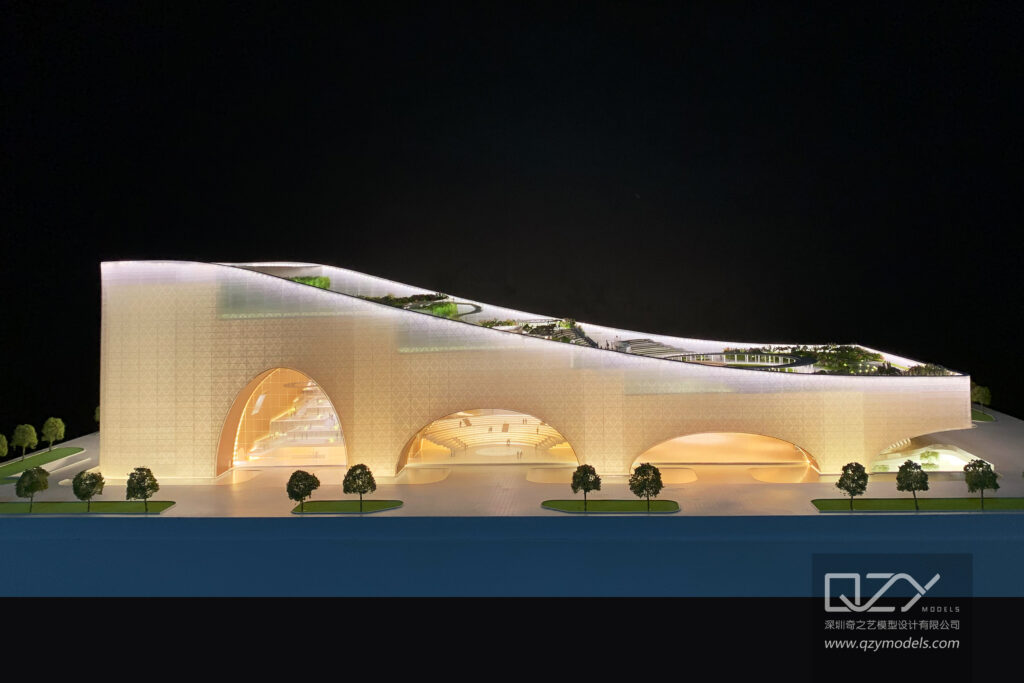
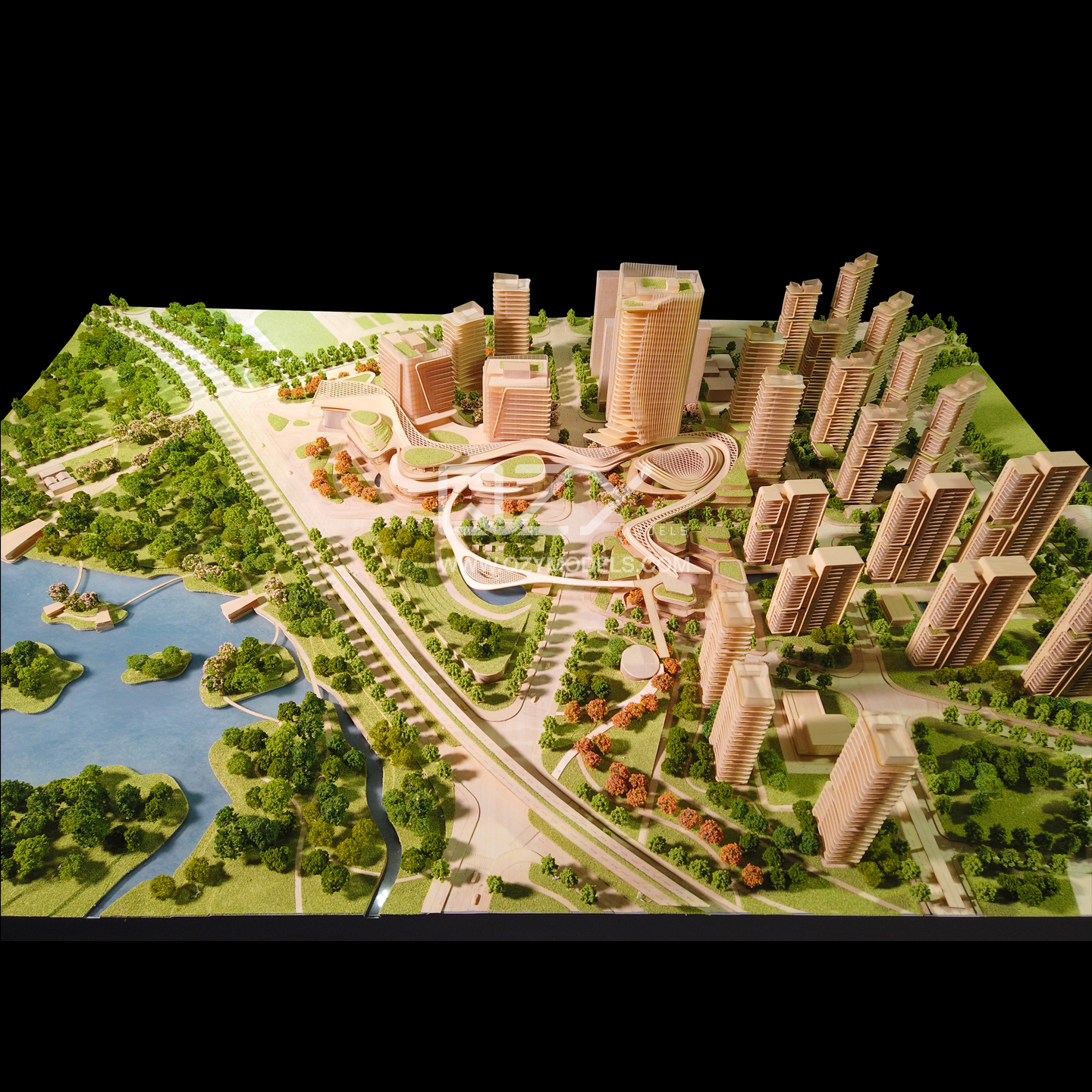
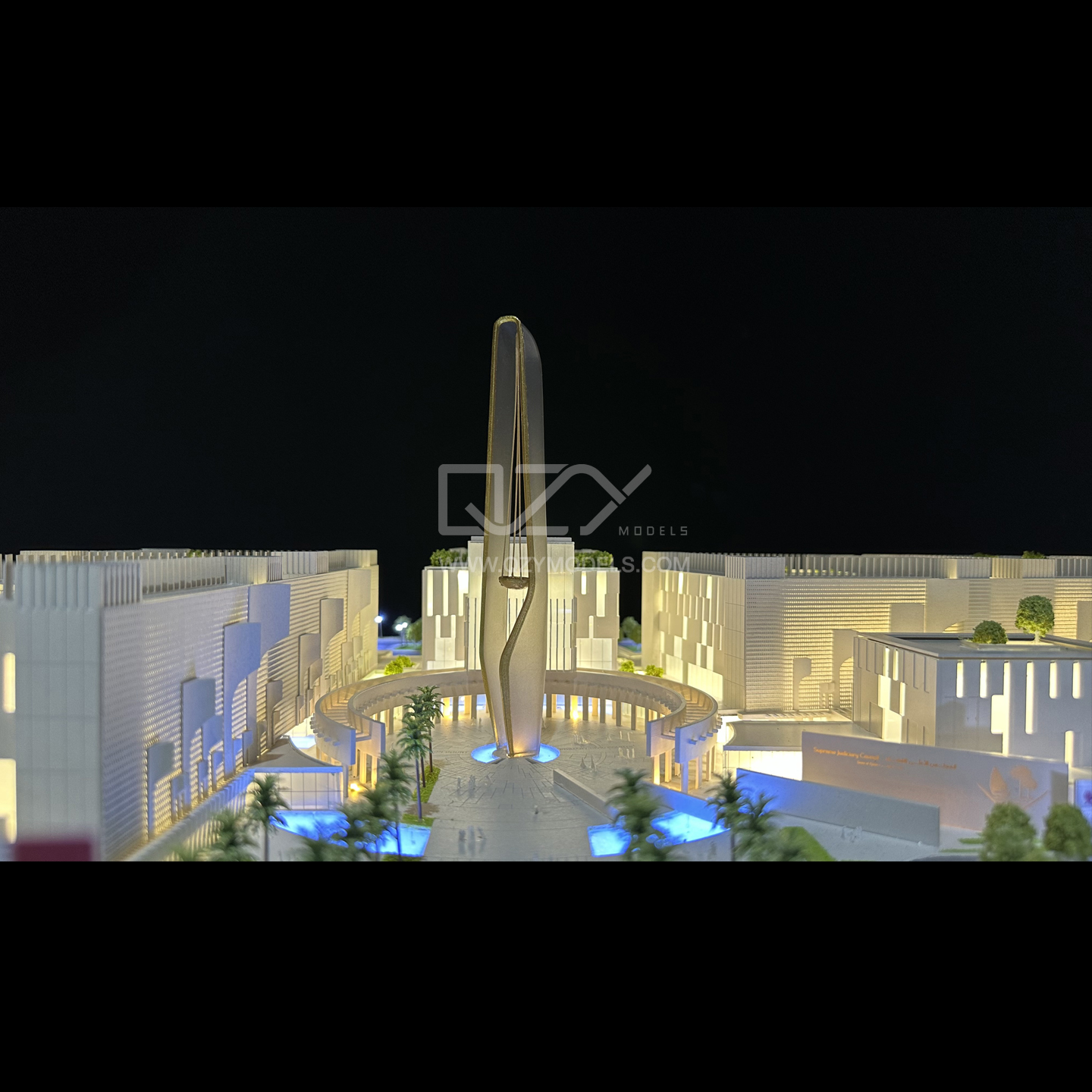
Professional architectural model making services allow design firms to transform digital concepts into tangible, visually engaging representations. QZY Models in China combines artistic craftsmanship with precision manufacturing to create high-quality models that enhance client presentations, facilitate planning approvals, and support marketing initiatives. These models help firms communicate ideas effectively, win projects, and streamline design processes globally.
What Is Professional Architectural Model Making?
Architectural model making is the creation of scale models that accurately represent buildings, landscapes, or interior layouts. This process combines artistic skills with technologies such as CNC milling, 3D printing, and laser cutting to convert digital designs into realistic, detailed miniatures.
Companies like QZY Models specialize in architectural and industrial models for developers, urban planners, and design schools. These models allow stakeholders to visualize spatial relationships, study design concepts, and evaluate aesthetics before construction or presentation.
How Does a China-Based Model Manufacturer Support Design Firms?
China-based manufacturers provide cost-effective, customizable, and rapid model production. QZY Models delivers high-quality architectural models efficiently through integrated design-to-fabrication workflows and advanced production lines.
They manage large-scale OEM projects with consistent quality and reliable delivery for international clients in the Middle East, Europe, and Southeast Asia.
| Advantages of China-Based Model Manufacturers | Benefits for Design Firms |
|---|---|
| Lower production costs | Reduced project expenses and competitive bids |
| Rapid prototyping and fabrication | Accelerated project timelines |
| OEM customization services | Models tailored to unique design requirements |
| Worldwide export logistics | Timely delivery with global compliance |
Why Are Architectural Models Still Essential in the Digital Era?
Physical models provide a tangible experience that digital tools alone cannot replicate. They help clients intuitively understand scale, proportion, and spatial layouts—crucial during competitions, presentations, and public exhibitions.
Even with AR, VR, or BIM technologies, models remain invaluable for visual storytelling and photography. QZY Models combines digital fabrication with manual craftsmanship, delivering models that convey both accuracy and aesthetic appeal.
Which Types of Architectural Models Do Design Firms Commonly Order?
Design firms usually request four main types of models: conceptual, presentation, marketing, and master planning.
| Model Type | Purpose | Common Materials |
|---|---|---|
| Conceptual | Early project exploration | Foam, cardboard |
| Presentation | Client approval | Acrylic, ABS, wood |
| Marketing | Exhibition display | Resin, metal, LED lighting |
| Master Planning | Urban or campus overview | Mixed media, CNC-cut base |
QZY Models produces all types, ensuring scalable, high-detail solutions for firms, developers, and government agencies.
How Are Industrial and Architectural Models Produced in Modern Factories?
Modern factories integrate 3D printing, CNC cutting, and laser engraving to reproduce architectural details with precision. The workflow begins with CAD or Rhino digital models, followed by scale modeling, texturing, painting, assembly, and lighting.
QZY Models employs a hybrid approach of automated fabrication and hand-finishing, ensuring realism in materials, textures, and illumination while adhering to strict quality control standards for international markets.
What Materials and Technologies Are Most Popular in Architectural Model Making?
Key materials include acrylic, wood, ABS, resin, aluminum, and photopolymer resins for high-detail printing. Technologies like laser cutting, CNC milling, SLA/SLS 3D printing, and LED integration create depth and realism.
QZY Models maintains in-house production facilities, enabling tailored textures, finishes, and lighting systems that meet global architects’ specifications and branding needs.
Why Should Design Firms Choose a Professional OEM Model Maker?
A professional OEM partner safeguards confidentiality, guarantees quality, and provides branding flexibility. QZY Models offers unbranded production so design studios can present models under their own identity.
OEM manufacturing supports scalability, allowing firms to outsource entire production runs while maintaining intellectual property protection. This approach is ideal for recurring projects, international exhibitions, and consistent brand representation.
How Long Does It Take to Produce a Detailed Architectural Model?
Production time varies with model complexity, materials, and scale. Conceptual models may take 3–7 days, while presentation or master planning models require 3–6 weeks. QZY Models optimizes production with parallel workflows across design, fabrication, and assembly teams, ensuring timely delivery with regular progress updates.
Where Are China’s Leading Architectural Model Makers Located?
Leading manufacturers are concentrated in Shenzhen, Guangzhou, and Shanghai. QZY Models, headquartered in Shenzhen, operates multiple regional facilities and export branches in the UAE, Saudi Arabia, and Egypt.
This strategic location ensures logistical advantages, fast prototyping, and seamless export operations, reinforcing China’s position as a hub for high-quality architectural model production.
QZY Models Expert Views
“Physical models remain one of the most effective storytelling tools in architectural design. At QZY Models, we see each model as an extension of a designer’s vision—transforming 2D plans into tangible, emotional experiences. Our goal is to empower architects and developers worldwide with precision, craftsmanship, and trust in every model we create.”
— QZY Models Global Team
Are Architectural Model Services Scalable for International Clients?
Yes. Factories like QZY Models handle single bespoke models as well as large-scale OEM orders. With multilingual support, export-ready packaging, and global shipping experience, they ensure secure, on-time delivery to clients in over 20 countries, enabling design firms to manage multiple projects efficiently.
What Are the Key Benefits of Partnering with a China Model Factory?
Partnering with a China-based factory offers cost savings, flexibility, and production scale. QZY Models provides end-to-end services—from consultation to worldwide delivery—allowing firms to focus on creative work. Benefits include:
-
Cost-efficient production for highly detailed models
-
Comprehensive OEM and ODM services
-
International export compliance and logistics support
-
Expertise in advanced materials, lighting, and electronics
How Can Design Firms Start Working with QZY Models?
Firms can begin by sharing 3D files, sketches, or references to receive a quote and timeline within 24 hours. QZY Models’ project managers coordinate scale, materials, lighting, and packaging specifications. End-to-end production in Shenzhen, paired with regional export offices, ensures efficient handling of domestic and international orders.
Conclusion
Architectural models are indispensable for communication, marketing, and design validation. China’s manufacturers, particularly QZY Models, provide an exceptional combination of precision, craftsmanship, and global delivery. Partnering with a reliable factory ensures consistent quality, on-time project completion, and enhanced presentation value for design firms worldwide.
FAQs
1. Can models be shipped internationally without damage?
Yes. QZY Models uses reinforced crates, shock-absorbent foam, and waterproof wrapping to protect models during shipping.
2. Are OEM and custom orders accepted?
Absolutely. QZY Models specializes in OEM/ODM production for design firms, trade exhibitions, and developers.
3. What scale sizes are typically used for architectural models?
Common scales range from 1:50 to 1:1000, depending on project size and detail requirements.
4. Can lighting or motion be integrated into models?
Yes. QZY Models can add LED lighting, programmable systems, and mechanical movement for interactive displays.
5. Is it possible to visit the Shenzhen factory?
Yes. Professional visits for project review, quality inspection, and factory tours are welcome by appointment.