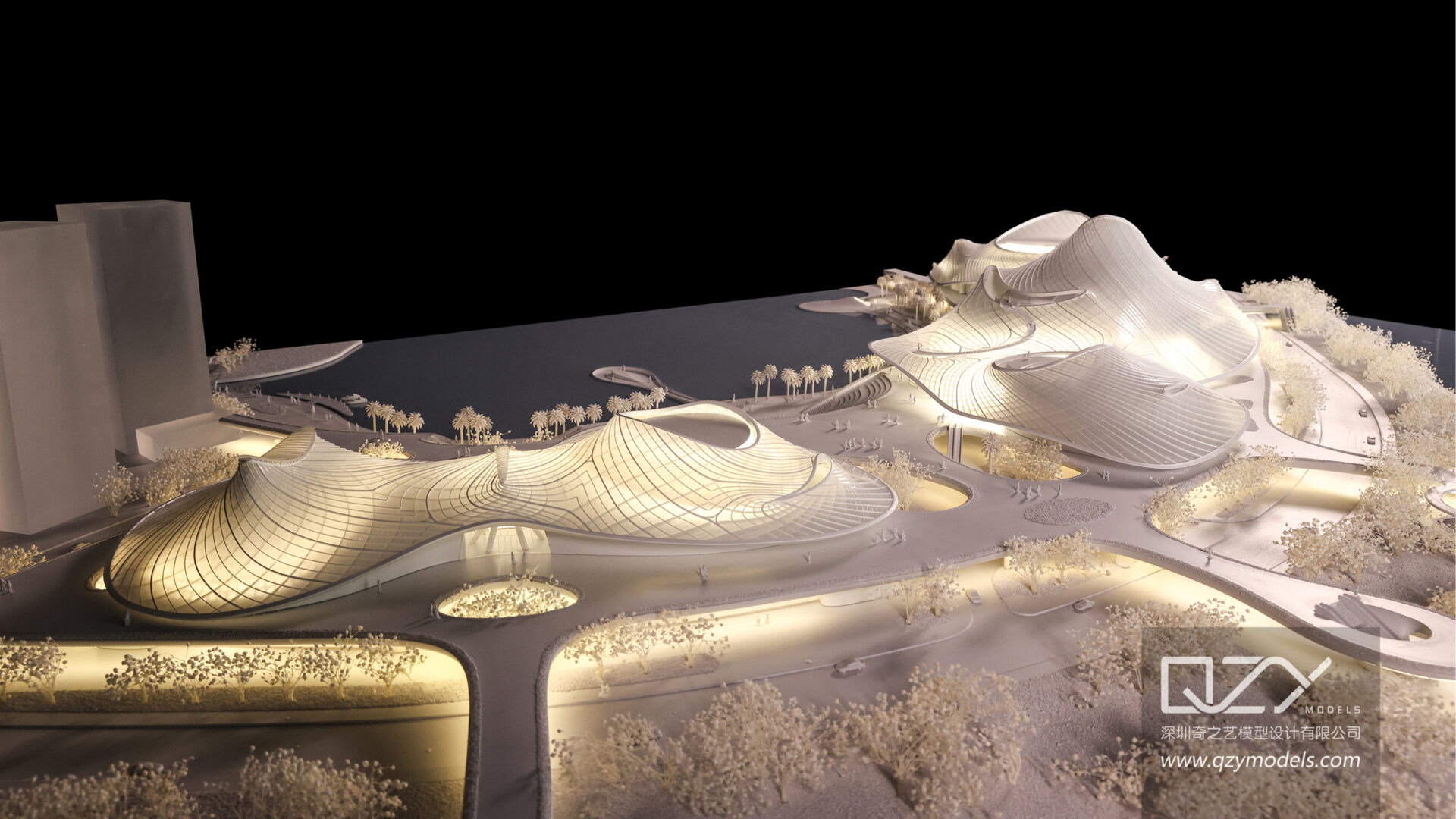
A Real-World Guide for Developers, Architects, and Planning Teams
Can architectural scale models be modified after completion? This guide explains what changes are possible, what limitations exist, and how developers can plan models more intelligently to avoid costly revisions.
Introduction: When the Design Moves, But the Model Is Already Built
In architectural practice, change is not an exception — it is the norm.
A model is completed, delivered, and installed. It represents a carefully resolved design moment. Then the reality of development takes over: planning feedback arrives, stakeholders refine expectations, or the design evolves further.
At that point, a familiar question emerges:
Can we still change the architectural scale model?
The answer is not a simple yes or no. It depends entirely on how the model was designed, constructed, and planned from the beginning.
Some models allow careful modification without disruption. Others require partial reconstruction. And in certain cases, rebuilding becomes the most efficient and visually consistent solution.
This is why experienced studios such as QZY MODELS approach model making not as a fixed product, but as a structured system that anticipates future design evolution — particularly in residential masterplans, mixed-use developments, and large-scale urban projects.
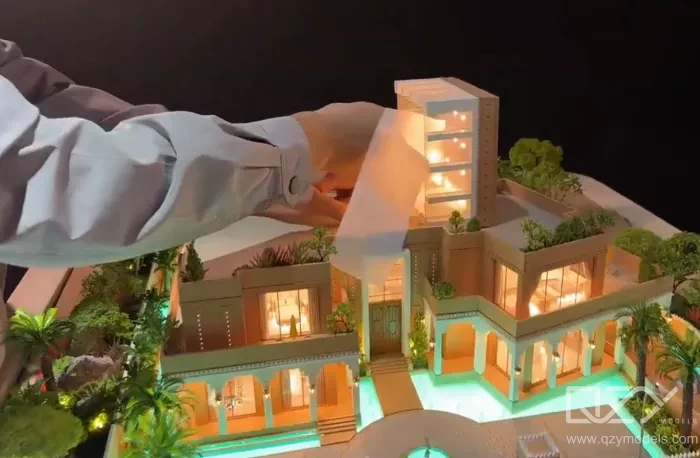
The Real Issue: Architectural Models Are Built in Different Ways
Whether a model can be changed later is determined long before any design revision happens — during the construction logic itself.
In modern professional practice, advanced model makers like QZY MODELS often engineer models using a layered or modular system. This means that key architectural components such as roof structures, façade panels, podiums, and landscape elements are designed to be separated, accessed, and replaced.
This approach is especially important for projects that are still evolving through planning negotiations or design development stages, where revisions are expected rather than exceptional.
By contrast, fully sealed or permanently bonded models behave very differently. Once assembled and finished as a single object, modification becomes technically difficult, time-consuming, and in many cases visually disruptive.
The difference is not just technical — it is strategic. A well-planned model can evolve with the project. A poorly planned one becomes static the moment it is finished.
When Changes Are Relatively Simple
Some adjustments can be made without disturbing the core structure of the model.
These are typically elements that sit on top of the architecture rather than define it. Landscaping adjustments, for example, are often among the most flexible parts of a model. When planting schemes evolve or public realm layouts are refined, these elements can usually be updated without affecting the buildings themselves.
Similarly, branding updates are often straightforward. Development names, signage, and marketing identity elements are designed to be visually prominent but physically light in construction, making them easier to replace when needed.
Lighting systems also fall into this category. Modern architectural models frequently use LED-based illumination, and with proper design planning, these systems can be adjusted after completion — whether to refine atmosphere, adjust intensity, or extend lighting into new areas of the scheme.
At , lighting systems are often designed with future adaptability in mind, especially for sales suite models and long-term exhibition pieces where visual presentation may evolve over time.
When Modifications Become More Complex
There are changes that go beyond surface-level adjustments and begin to affect the physical structure of the model itself.
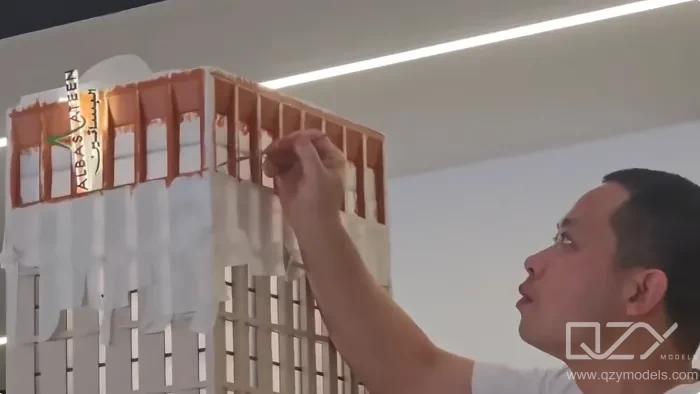
A façade redesign is one of the most common examples. When materials, fenestration patterns, or architectural expression change, entire surface layers may need to be reconstructed. This is not impossible, but it requires careful removal and replacement to maintain visual consistency across the model.
Height changes introduce another layer of complexity. Adding or removing floors is not simply a visual edit — it involves recalibrating proportions, re-aligning structural segments, and ensuring that lighting and façade continuity remain intact.
Changes to building massing or footprint are even more involved. When the geometry of the development shifts significantly, the model may need partial reconstruction rather than simple modification. At this stage, experienced studios such as typically evaluate whether targeted rebuilding or full replacement offers better long-term value.
In masterplan models, phasing updates also require careful integration. As developments evolve over time, new buildings may be added or removed from the narrative of the model, and ensuring consistency across the entire composition becomes essential.
When Modification Stops Making Sense
There is a point where modifying a model is technically possible but strategically inefficient.
If the design has fundamentally changed — not just in detail, but in overall concept, scale, or spatial logic — then the original model becomes a reference point rather than a working base.
At that stage, attempting to force revisions into an existing structure can lead to visual inconsistency and increased cost. In many cases, rebuilding produces a cleaner, more accurate, and more visually coherent result.
The same applies when scale changes are required. A model built for one presentation scale cannot simply be adapted to another. It must be reconstructed with new proportions and fabrication logic.
This is why early planning decisions are so important in professional model making workflows.
How Professional Studios Plan for Change
The most effective way to manage model revisions is not to react to change, but to anticipate it.
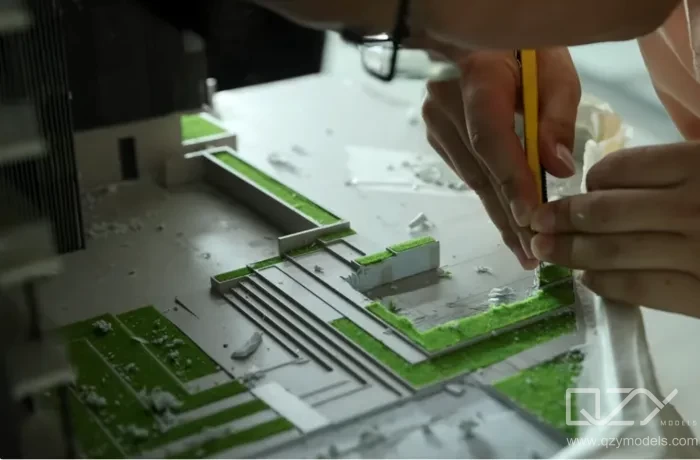
Experienced model makers understand that architectural design is rarely fixed early in the process. For this reason, studios like often structure models with flexibility in mind from the outset.
This includes designing components in a way that allows future separation, selecting materials that can be refinished or replaced, and ensuring that lighting and internal structures remain accessible rather than permanently enclosed.
Equally important is the idea of staging production. Many successful projects begin with a simpler conceptual or massing model, followed by a more detailed presentation model once the design has stabilized. This reduces wasted effort and ensures that high-detail craftsmanship is applied at the right moment.
A critical but often overlooked element is the “design freeze” point — the moment where drawings are locked for production. Projects that define this clearly tend to experience fewer revision issues and significantly smoother model delivery.
What to Do When Your Design Has Already Changed
When a model is already built and the design has evolved, the first step is not modification — it is assessment.
The original model maker should evaluate how the structure was built, what components can be reused, and what level of intervention is realistic. This evaluation determines whether targeted updates, partial reconstruction, or full replacement is the most appropriate route.
Time is also a key factor. Model revisions are not instant adjustments; they are scheduled production tasks that require coordination, materials, and careful craftsmanship.
In many cases, the difference in cost between heavy modification and a new build is smaller than expected — but the difference in quality is often significant.
This is why studios such as are frequently brought back in for revisions, ensuring continuity of craftsmanship, material matching, and construction logic.
Conclusion: Yes, Architectural Models Can Change — But Strategy Matters More Than Possibility
Architectural scale models are not static objects. They are physical representations of a design process that is itself constantly evolving.
Yes, they can be modified after completion. But whether they should be modified — and how — depends on how intelligently they were originally planned.
The most successful developers and architects are those who treat model making as part of the design lifecycle, not the final step of it. They plan for flexibility, define decision points early, and work with studios that understand both craftsmanship and change.
At , this philosophy is central to how models are designed and built — ensuring that even when projects evolve, the model remains a reliable, high-quality communication tool throughout the life of the development.
About QZY Models
QZY MODELS is a professional model-making company specializing in architectural scale models, industrial models, and urban planning models for global clients.
With more than 20 years of experience, the team provides complete services including:
architectural model design
model fabrication
international packaging and shipping
on-site installation support
These integrated services ensure that every model can be safely transported and efficiently presented anywhere in the world.