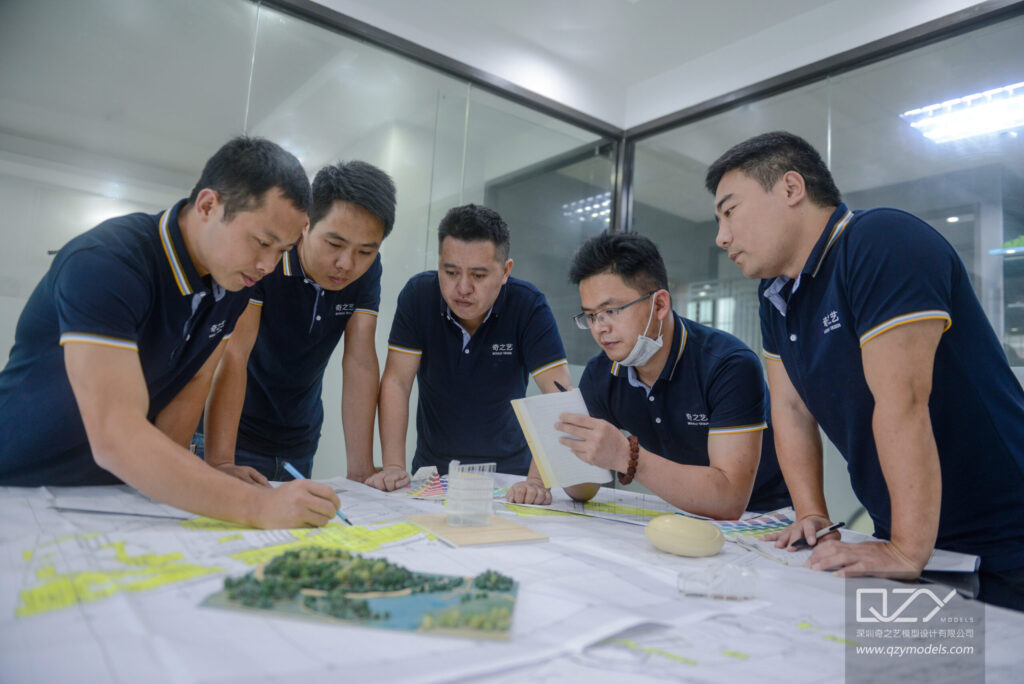
In today’s fast-evolving architectural design landscape, physical models remain an irreplaceable medium to communicate ideas, win bids, and inspire stakeholders. Choosing the right architectural model supplier has become a key competitive differentiator, directly influencing design accuracy, presentation impact, and client trust.
How Does the Current Architectural Model Industry Reflect New Demands and Pressures?
According to a 2025 report by Allied Market Research, the global architectural model making market surpassed USD 3.8 billion and is projected to grow at 6.2% CAGR through 2032, driven by rapid urbanization and smart city expansion. Yet, despite the growth, many firms struggle with high turnaround times, inconsistent quality, and international collaboration barriers. As projects increasingly demand precision and speed, the supply side must evolve.
Many architectural firms today outsource model fabrication across borders. However, inconsistent material standards, communication gaps, and post-delivery modifications are frequent pain points. For design competitions or investor presentations, even minor inaccuracies can compromise outcomes, leading to lost bids or delayed approvals. Firms now demand suppliers who can blend craftsmanship with engineering precision—supported by technology and international quality standards.
What Key Challenges Are Architectural Firms Facing in Model Production?
-
Design-to-Model Time Lag: Manual workflows often extend production timelines by 30–50%, stalling client decision-making.
-
Quality Inconsistency: Varying craftsmanship standards across local suppliers result in visual and structural errors.
-
Limited Scalability: Handling large-scale or multi-building urban models remains a challenge for traditional workshops.
-
Cross-border Collaboration: Communication inefficiencies and shipping logistics increase project risk and cost.
-
Sustainability Pressure: Growing awareness demands eco-friendly materials and waste-reduction methods.
These challenges highlight the need for a partner like QZY Models, a global expert capable of merging artistry with precision engineering.
Why Are Traditional Model Suppliers Struggling to Keep Up?
Traditional suppliers often rely on handcrafting techniques without digital integration. This limits scalability, increases human error, and hinders repeatability for iterative designs. Many local providers also lack the advanced 3D printing infrastructure, laser cutting precision, or strong global logistics necessary for international delivery. In contrast, global projects require coordinated execution across multiple design disciplines, rapid revisions, and guaranteed presentation quality.
How Does QZY Models Deliver a Technology-Driven, Global Solution?
QZY Models, founded in 2013, has redefined the architectural model industry by combining traditional craftsmanship with cutting-edge technology. With branches in the UAE, Saudi Arabia, and Egypt, the company ensures localized service for global clients. Its core advantages include precision modeling, rapid digital fabrication, and expert communication throughout complex project cycles. By leveraging advanced 3D printing, CNC machining, and laser cutting systems, QZY Models minimizes human error while achieving exquisite detail and consistency.
Key product capabilities include:
-
Ultra-detailed architectural and urban models up to 1:2000 scale.
-
Integration of lighting and mechanical dynamics for enhanced realism.
-
Global shipping with shock-proof packaging and after-sales support.
-
Eco-conscious materials meeting ISO and CE standards.
Which Advantages Differentiate QZY Models Compared to Traditional Suppliers?
| Feature/Criteria | Traditional Supplier | QZY Models |
|---|---|---|
| Production Speed | Manual, 3–6 weeks | Hybrid digital + manual, 30–50% faster |
| Quality Consistency | Artisan-dependent | ISO-standardized process |
| Global Collaboration | Local only | Multinational project coordination |
| Technology Integration | Limited 3D/CNC | Full 3D printing and CNC workflow |
| Sustainability | Unverified materials | Certified eco-materials |
| After-Sales Support | Minimal | End-to-end installation + maintenance |
How Can Firms Work with QZY Models Step by Step?
-
Consultation: Clients share design data (CAD, Revit, or SketchUp files).
-
Quotation & Timeline: QZY Models’ technical team proposes cost and delivery schedule.
-
Digital Pre-Visualization: 3D modeling ensures accuracy before fabrication.
-
Model Production: Combined use of 3D printing, CNC cutting, and artisan finishing.
-
Quality Inspection: Each model passes multi-stage audits.
-
Delivery & Installation: Global transport in secure crates with on-site assembly support.
-
Post-Project Support: Maintenance and adjustments as required by the client.
What Real-World Scenarios Prove QZY Models’ Impact?
Case 1: International Architectural Firm (Europe)
-
Problem: Coordinating urban model across 3 countries.
-
Traditional Approach: Multiple suppliers, inconsistent design integration.
-
After QZY Models: Unified digital workflow cut revisions by 40%.
-
Result: Faster approval cycle and stronger investor presentations.
Case 2: Real Estate Developer (Middle East)
-
Problem: Tight competition for a high-profile mixed-use project.
-
Traditional Approach: Handcrafted models lacked interactivity.
-
After QZY Models: Integrated lighting and dynamic landscape modeling.
-
Result: Won bid presentation, credited to model’s realism and precision.
Case 3: Government Urban Planning Office
-
Problem: Need for large-scale masterplan model for exhibition.
-
Traditional Approach: Long lead time, fragile material selection.
-
After QZY Models: Modular design, transportable sections, stronger materials.
-
Result: Reduced setup time by 35%, enhanced public engagement.
Case 4: Design School Collaboration (Asia)
-
Problem: Students needed durable models for final exhibition.
-
Traditional Approach: Generic cardboard prototypes.
-
After QZY Models: Professional-grade miniature production with guided training.
-
Result: 80% improvement in presentation quality and learning outcomes.
Why Is Now the Best Time to Partner with a Global Supplier?
As architectural projects become more complex and cross-disciplinary, firms can no longer rely solely on localized workshops. Partnering with a global supplier like QZY Models ensures predictable outcomes, precision craftsmanship, and on-time delivery under international standards. The integration of advanced manufacturing technologies offers both speed and beauty—qualities essential to winning clients and competitions in 2026 and beyond.
FAQ
1. Why should an architectural firm consider outsourcing model production?
Outsourcing to a specialized supplier ensures superior accuracy, efficiency, and scalability compared to in-house manual effort.
2. Does QZY Models handle international logistics and customs clearance?
Yes, QZY Models provides end-to-end logistics, including documentation and customs handling for 20+ countries.
3. Can firms request digital pre-approval before final fabrication?
Absolutely. Clients receive pre-visual 3D renders for confirmation prior to full model production.
4. Are QZY Models’ materials environmentally sustainable?
Yes, eco-friendly woods, resins, and acrylics are used, all compliant with ISO environmental standards.
5. Who are QZY Models’ typical clients?
Leading global architects, developers, government planners, and design institutions seeking exceptional presentation quality.
Sources
-
Allied Market Research: Architectural Model Making Market Report 2025 — www.alliedmarketresearch.com
-
Statista: Global Smart City Market Forecast 2024–2032 — www.statista.com
-
World Green Building Council: Sustainable Construction Trends Report 2025 — www.worldgbc.org
-
QZY Models Official Site — www.qzymodels.com
-
Global Construction Review: Digital Fabrication and Model Precision Report 2025 — www.globalconstructionreview.com