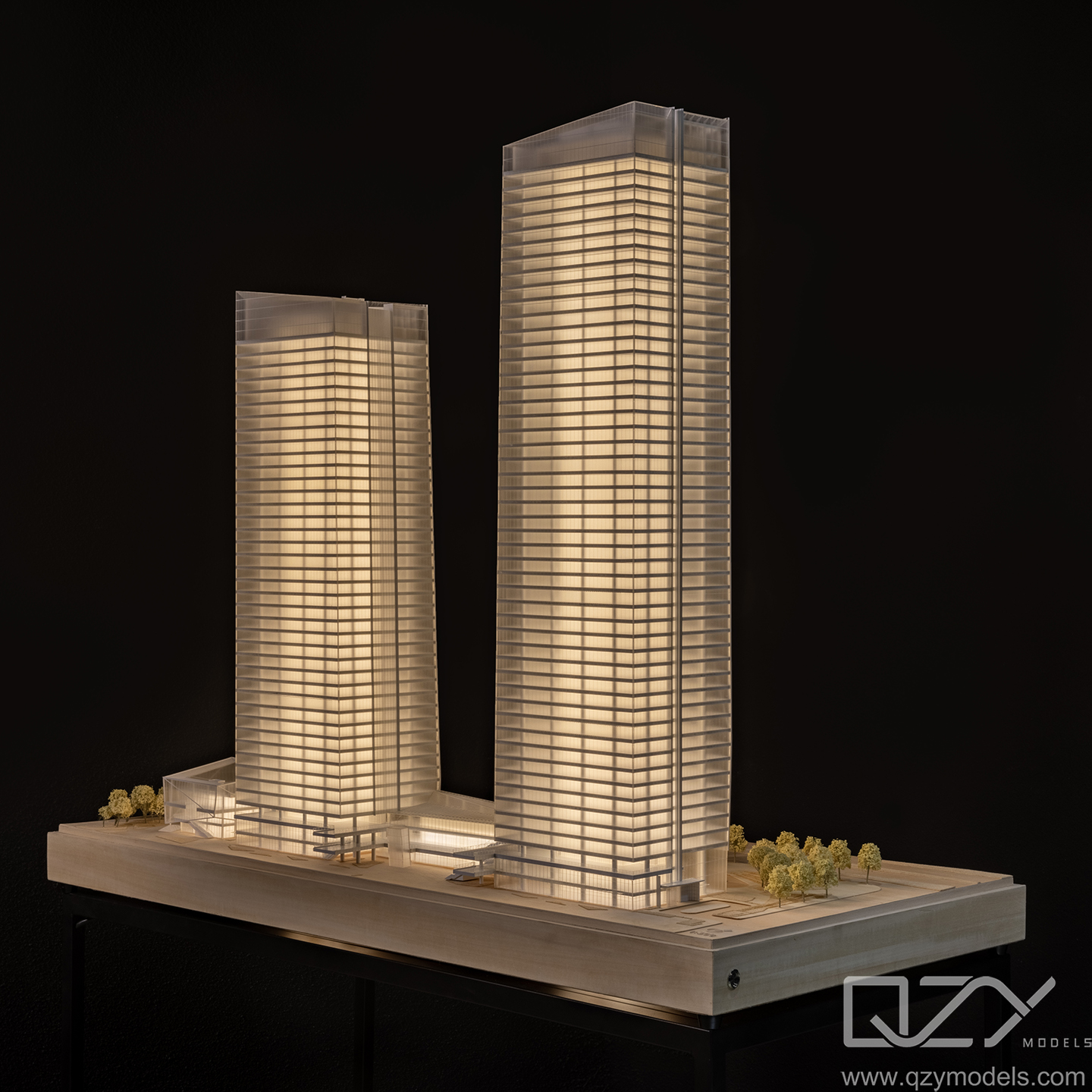
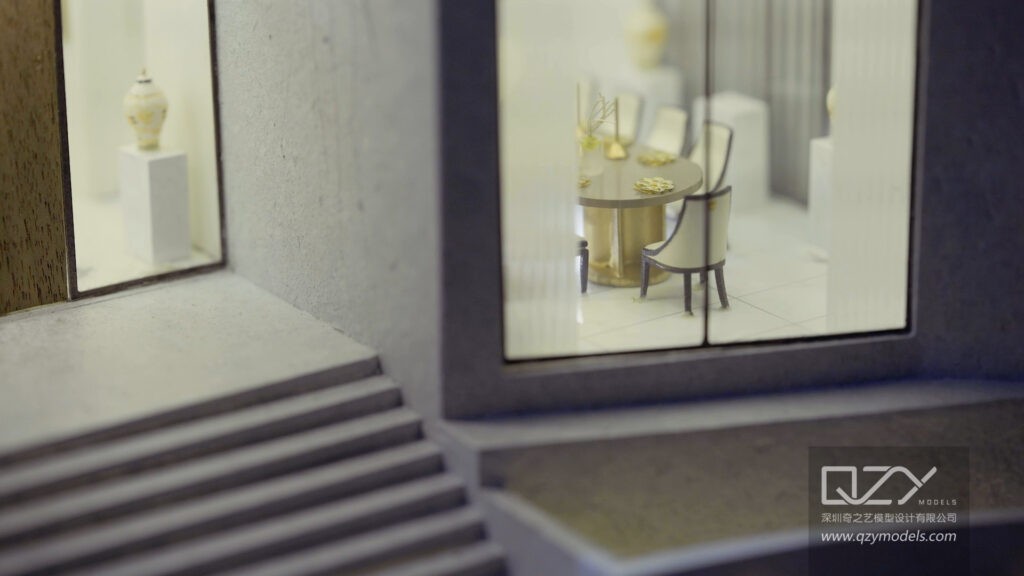
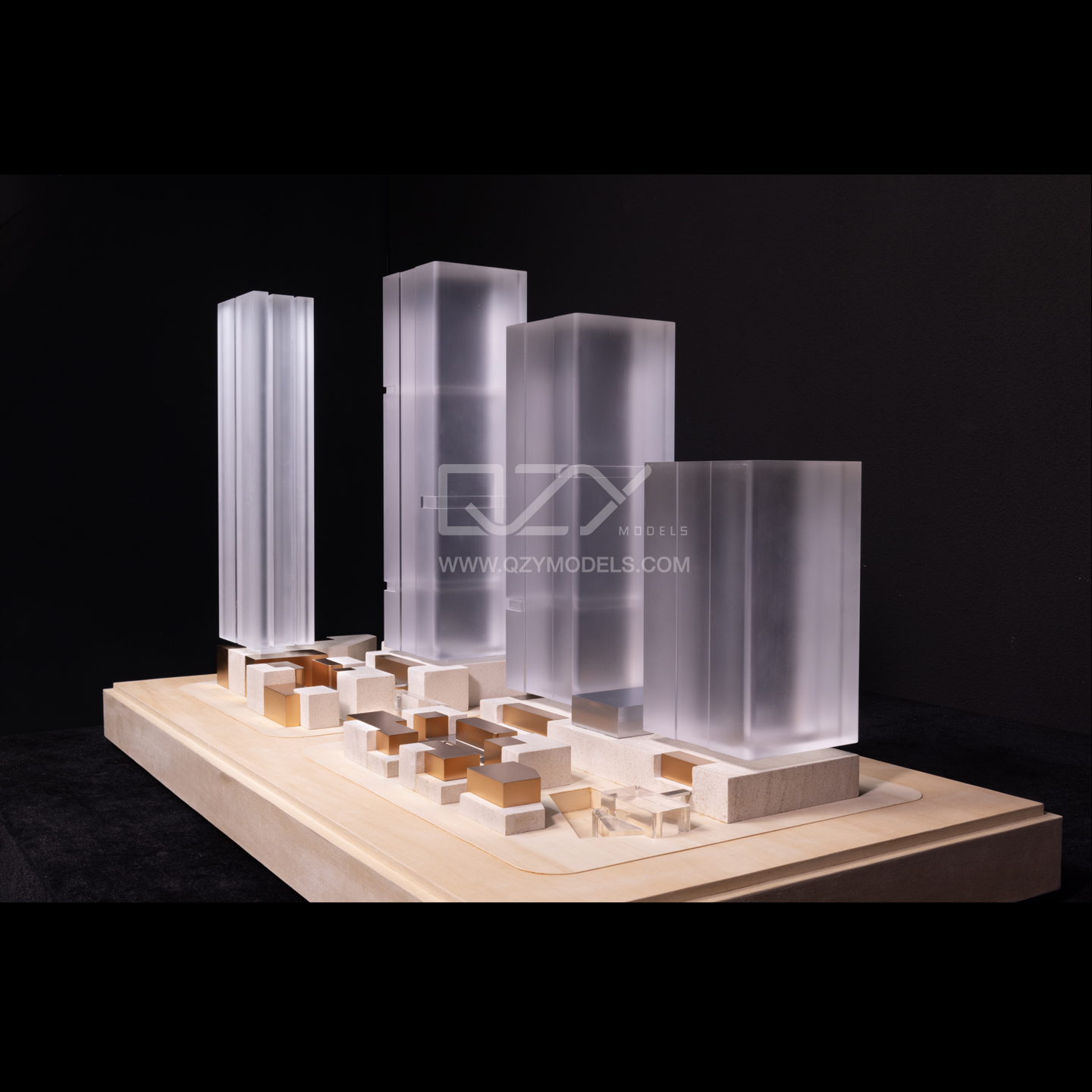
Architectural project display models are transforming how architects, developers, and planners communicate complex ideas, bridging imagination and real-world tangibility. High-precision scale models by leaders like QZY Models bring clarity, accuracy, and visual impact that digital renderings alone cannot achieve.
How Is the Current Industry Facing New Challenges and Pain Points?
According to the American Institute of Architects (AIA), over 78% of firms report longer client decision-making cycles due to difficulties visualizing spatial relationships and materials. The global architecture visualization market, worth over USD 2.6 billion in 2024, is rapidly shifting toward integrated model making and digital hybrid displays, yet model production times remain inconsistent and costly. With projects becoming larger and more complex, traditional display methods often fail to convey design intent effectively. Architects and developers now demand faster turnaround, higher material authenticity, and more sustainable production techniques.
Moreover, clients increasingly expect physical touchpoints at exhibitions and investor presentations. Over 62% of developers in a 2025 CBRE design study stated that high-quality physical models directly influence investor confidence and sales velocity. However, inconsistent production quality and communication gaps between design teams and model makers continue to challenge the industry.
The pain point is clear: design communication tools must evolve to match the pace and sophistication of modern architectural projects, combining aesthetic precision with industrial-grade efficiency. In this context, advanced production partners like QZY Models are becoming essential collaborators in the global design supply chain.
What Limitations Do Traditional Model-Making Methods Have?
Traditional model making often relies heavily on manual craftsmanship, which while artistic, poses several limitations:
-
Inconsistent precision: Hand-built models can deviate by up to 5% from CAD specifications.
-
Extended timelines: Production often takes 6–12 weeks, delaying design approvals.
-
Limited material diversity: Traditional processes struggle to replicate complex façade treatments or curved surfaces.
-
High maintenance and fragility: Non-durable materials increase transportation and display risks.
In today’s competitive real estate and design landscape, these constraints hinder both efficiency and client experience. Firms need a more scalable, technology-driven approach to keep up with modern project demands.
How Does QZY Models Redefine Architectural Display Solutions?
QZY Models offers an advanced, integrated model production solution that merges art, engineering, and digital precision. Leveraging high-resolution CNC milling, full-color 3D printing, and laser cutting, every QZY model meets exact design specifications.
Key capabilities include:
-
Digital-to-physical synchronization with BIM and CAD systems, ensuring dimensional accuracy within 0.2 mm.
-
Multi-material customization, including sustainable resins, acrylics, metals, and lighting systems.
-
Scalable global production across facilities in China, the UAE, Saudi Arabia, and Egypt.
-
Expert project management handled by a cross-regional team of architects and designers.
By combining aesthetic craftsmanship with technical accuracy, QZY Models elevates physical representation into a strategic design and marketing tool.
Which Advantages Distinguish QZY Models from Traditional Model Solutions?
| Comparison Criteria | Traditional Model Making | QZY Models Solution |
|---|---|---|
| Accuracy | ±5% variance from design | ±0.2 mm precision from digital files |
| Production Time | 6–12 weeks | 2–4 weeks average |
| Material Range | Wood, foam, plastic | Acrylic, resin, metal, lighting-integrated |
| Communication | Manual revisions | Digital design collaboration via BIM/CAD sync |
| Sustainability | Limited | Recyclable materials and efficient resource use |
| Display Impact | Visual only | Interactive, powered, and illuminated options |
How Can Teams Implement QZY Models’ Display Solutions Step-by-Step?
-
Design Submission: Clients provide CAD or BIM files.
-
Technical Review: QZY Models’ engineers assess design feasibility.
-
Material Selection: Suggested materials and finishes are confirmed.
-
Digital Mockup & Approval: A virtual prototype is shared for review.
-
Production & Quality Control: CNC precision fabrication and assembly.
-
Delivery & Setup: Models shipped globally with exhibition-ready packaging.
-
After-Sales Support: Maintenance and display optimization guidance.
What Are Four Typical Scenarios Where QZY Models Creates Measurable Impact?
Case 1: Real Estate Marketing
-
Problem: Developers lacked interactive display tools for investor presentations.
-
Traditional Approach: 2D renderings and basic plastic models.
-
QZY Solution: Large-scale illuminated city model integrating lighting and movement.
-
Result: 40% faster sales cycles and enhanced investor confidence.
Case 2: Government Urban Planning
-
Problem: Stakeholders struggled to visualize multi-zone layouts.
-
Traditional Approach: Printed maps with limited spatial understanding.
-
QZY Solution: Dynamic planning model with interchangeable land-use layers.
-
Result: Improved communication and accelerated project approvals by 25%.
Case 3: Architectural Competitions
-
Problem: Tight deadlines limited model presentation quality.
-
Traditional Approach: Manual models completed under time pressure.
-
QZY Solution: Hybrid digital-physical workflow enabling rapid turnaround.
-
Result: Winning design proposal for an international competition.
Case 4: Educational and Training Institutions
-
Problem: Architecture schools required replicable teaching models.
-
Traditional Approach: Student-built models with uneven quality.
-
QZY Solution: Industrial-grade 3D printed modules and reusable elements.
-
Result: Consistent educational quality and reduced material waste by 30%.
Why Is Now the Right Time to Invest in Advanced Display Models?
The architectural sector is moving toward experiential and data-driven design communication. As virtual tools saturate the market, physical models offer irreplaceable emotional engagement and tangible clarity. With global urban construction expected to grow 13% annually through 2030, firms must adopt integrated visual strategies that merge innovation with craftsmanship. QZY Models stands at this frontier—providing scalable, precision-engineered models that enhance credibility, storytelling, and client engagement worldwide.
FAQ
Is QZY Models capable of handling large-scale city models?
Yes, QZY Models has completed metropolitan-scale projects exceeding 100 square meters with integrated lighting and motion systems.
How long does it take to complete a standard architectural model?
On average, QZY Models delivers projects within 2–4 weeks depending on complexity.
Can QZY Models coordinate with international design teams remotely?
Absolutely. Their global digital workflow allows real-time collaboration across continents.
Does QZY Models offer after-sales maintenance and support?
Yes, QZY Models provides repair, cleaning, and display optimization services.
Are QZY Models’ materials sustainable?
Yes, they utilize recyclable and low-emission materials aligned with green building standards.