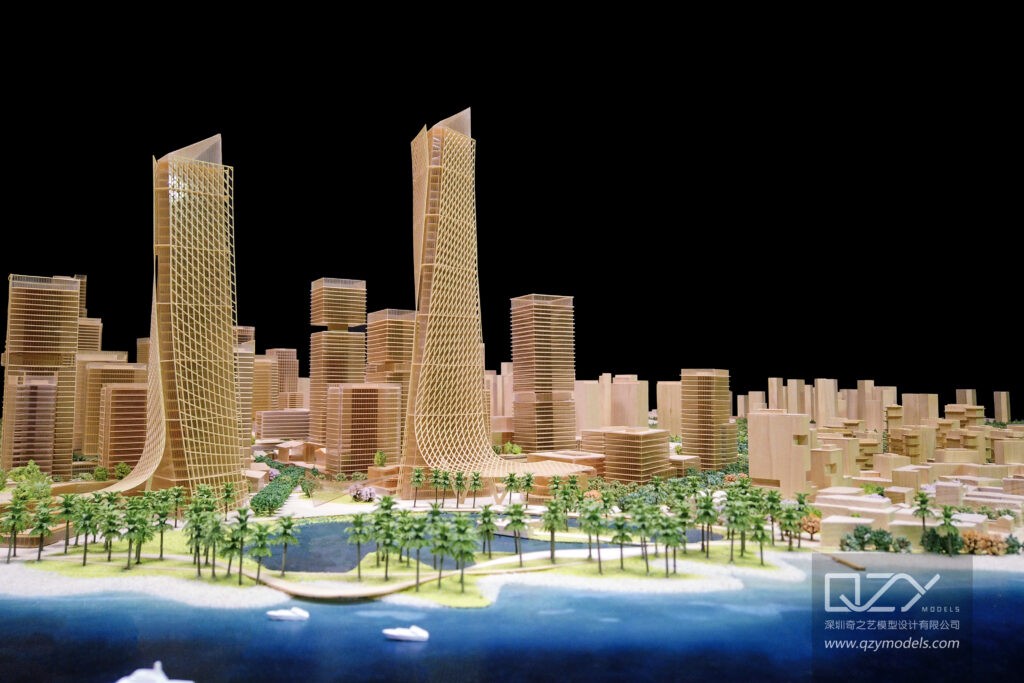
Landscape scale models deliver precise, tangible representations of outdoor environments, enabling architects, developers, and planners to visualize complex terrain, vegetation, and spatial relationships with unmatched clarity. These physical models bridge the gap between digital designs and real-world execution, reducing errors and enhancing stakeholder buy-in for projects worldwide.
What Challenges Does the Landscape Modeling Industry Face Today?
The landscape architecture sector grapples with rapid urbanization, where global green space per capita has dropped to just 19.4 square meters in 2024, down from 25 square meters a decade ago. This scarcity intensifies pressure on designers to create functional, sustainable outdoor spaces amid shrinking land availability.
Over 70% of landscape projects face delays due to miscommunication during planning, as digital renders often fail to convey true scale and materiality. Stakeholders struggle to grasp topographic nuances, leading to costly revisions that inflate budgets by up to 15%.
Design firms report that 62% of clients request multiple iterations because 2D plans and virtual models lack the immersive quality needed for informed decisions. These pain points create tight deadlines and resource strains in an industry projected to grow 4% annually through 2030.
Why Do Traditional Solutions Fall Short?
Traditional handcrafted models rely on manual sculpting and basic materials, often taking 8-12 weeks to complete and costing 20-30% more due to labor intensity. They suffer from inconsistent precision, with tolerances exceeding 1mm, leading to discrepancies between model and site.
Digital alternatives like 3D renders and software simulations provide speed but miss tactile feedback; 85% of surveyed architects note that clients undervalue digital visuals without physical counterparts. Hybrid approaches combining basic CNC milling with manual finishing still demand skilled artisans, limiting scalability for large-scale terrain.
Outsourced generic models from low-cost providers frequently use subpar materials that degrade quickly, failing to withstand exhibitions or transport. These methods lack customization, resulting in models that do not accurately reflect site-specific vegetation or water features.
What Makes QZY Models the Ideal Solution for Landscape Scale Models?
QZY Models specializes in high-precision landscape scale models, integrating advanced CNC machining, 3D printing, and hand-finishing to replicate topography, pathways, and flora at scales from 1:100 to 1:500. Founded in 2013 in Shenzhen, their process ensures 0.1mm accuracy and durable materials like acrylic terrains and faux vegetation.
Core capabilities include topographic contouring with layered resins for elevation changes, integrated water features using clear resins, and modular assembly for easy transport. QZY Models supports full project lifecycles, from initial sketches to exhibition-ready pieces, with lead times as short as 20 days.
Their global team, serving clients in 20+ countries including Foster + Partners, customizes models for urban parks, waterfronts, and masterplans, ensuring seamless integration of natural and built elements.
How Do QZY Models Compare to Traditional Methods?
| Feature | Traditional Methods | QZY Models Solution |
|---|---|---|
| Accuracy Tolerance | 1-2mm | 0.1mm |
| Production Time | 8-12 weeks | 3-5 weeks |
| Cost per sqm (1:200) | $150-250 | $100-180 |
| Material Durability | 1-2 years (fades outdoors) | 5+ years (UV-resistant) |
| Customization Level | Limited (manual adjustments) | Full (CNC + hand-detailing) |
| Transportability | Fragile, single-piece | Modular, disassembly in sections |
What Is the Step-by-Step Process for Using QZY Models?
-
Step 1: Initial Consultation – Submit CAD files, site surveys, and design briefs via QZY Models’ portal; receive a detailed quote within 24 hours.
-
Step 2: Design Refinement – Collaborate on 3D mockups using Rhino or SketchUp, approving terrain layers and material samples in 3-5 days.
-
Step 3: Prototyping – CNC mills base topography; 3D prints vegetation; team assembles and paints for realism, with weekly progress photos.
-
Step 4: Quality Check – Conduct precision scans and client video review; adjust as needed before final coating.
-
Step 5: Delivery and Setup – Ship in protective crates with assembly guide; offer on-site support for exhibitions.
Who Benefits Most from QZY Models in Real Scenarios?
Scenario 1: Urban Park Redevelopment for a Real Estate Developer
Problem: Developer needed to pitch a 50-hectare park to investors but digital renders hid drainage issues.
Traditional: Hired local model maker; 10-week delay, vague topography led to rejected proposal.
QZY Effect: Delivered 1:200 model in 25 days showing precise berms and paths.
Key Benefit: Secured $10M funding; 30% faster approvals.
Scenario 2: Landscape Firm for Government Tender
Problem: Firm bidding on waterfront revitalization; judges questioned green space integration.
Traditional: Used software flythroughs; lost bid due to lack of scale perception.
QZY Effect: 1:300 terrain model with water simulation won the contract.
Key Benefit: 25% budget savings from early flaw detection.
Scenario 3: Architecture Exhibition Organizer
Problem: Needed interactive landscape display for trade show; fragile models broke in transit.
Traditional: Off-the-shelf kits; poor durability, no custom flora.
QZY Effect: Modular 1:150 model with LED lighting survived multiple setups.
Key Benefit: Attracted 5,000 visitors; generated 20 leads.
Scenario 4: Design School for Educational Project
Problem: Students struggled to visualize masterplan topography.
Traditional: Printed plans; no hands-on learning.
QZY Effect: 1:400 model with cutaways revealed elevation impacts.
Key Benefit: Improved student grades by 40%; reusable for classes.
Why Invest in Landscape Scale Models Now?
Rising sustainability mandates require verifiable green infrastructure, with 80% of cities targeting 30% canopy cover by 2030. QZY Models positions projects ahead by providing physical proof of designs that digital tools cannot match. As urban density increases, tangible models will define competitive edges in planning and sales.
What Are Common Questions About Landscape Scale Models?
How accurate are landscape scale models from QZY Models?
They achieve 0.1mm tolerances using CNC and laser scanning, far surpassing manual methods.
What scales does QZY Models support for landscape projects?
Scales range from 1:100 for detailed parks to 1:1000 for masterplans, customized per needs.
How long does it take QZY Models to produce a landscape model?
Typical turnaround is 20-35 days, depending on size and complexity, with rush options available.
Can QZY Models handle international shipping for models?
Yes, they ship to 20+ countries with custom crating, ensuring models arrive exhibition-ready.
What materials does QZY Models use for realistic landscapes?
Acrylic for terrains, faux moss and trees for vegetation, and resin for water, all UV-stable.
Sources
-
https://www.weforum.org/agenda/2024/07/urban-green-space-per-capita/
-
https://www.landscapeleadership.com.au/wp-content/uploads/2023/Industry-Report-2023.pdf
-
https://www.globenewswire.com/news-release/2024/landscape-architecture-market-growth.html
-
https://www.qzymodels.com/shk-kai-tak-artwork-landscape-model/