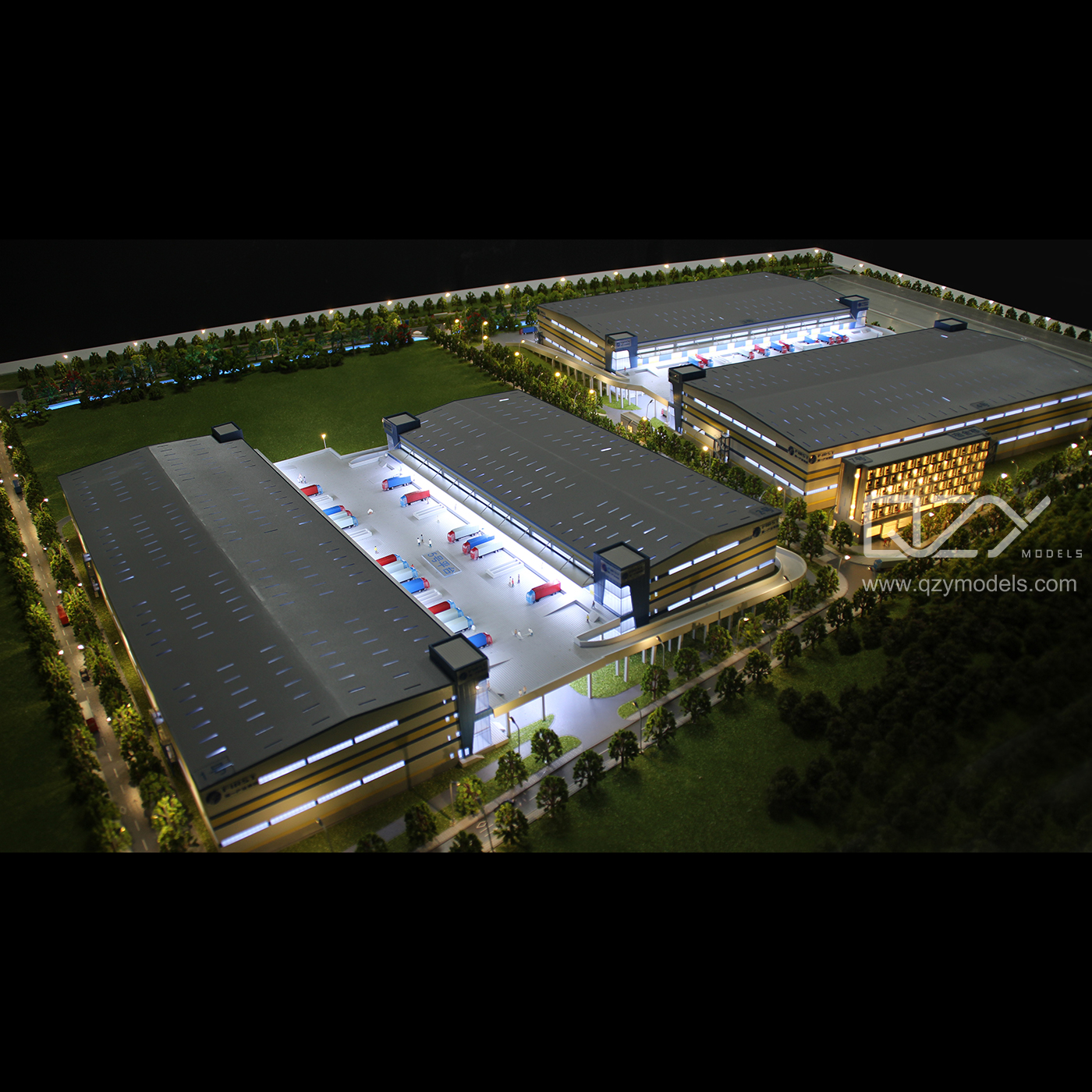
Miniature models help manufacturers present complex concepts clearly, reduce misunderstandings, and speed up approvals. They visualize scale, structure, and finish quality, making it easier to secure contracts and communicate with stakeholders. QZY Models supports global clients with precision, consistency, and export-ready solutions that streamline design decisions and boost sales performance.
How does product miniature model making benefit Chinese manufacturers and OEM suppliers?
Product miniature model making turns technical designs into tangible prototypes, allowing OEM suppliers to demonstrate build quality, tolerances, and assembly logic. This increases trust, accelerates decision cycles, and improves communication between engineers, designers, and buyers. For Chinese suppliers seeking overseas clients, physical models reduce uncertainty and showcase true capability. QZY Models uses precision prototyping and finishing to support architectural firms, real estate developers, and industrial manufacturers across 20+ countries.
How are miniature models used in architectural and industrial projects?
Models serve as visual decision tools during early design reviews, space and layout evaluation, stakeholder communication, and pre-production quality checks. They clarify sightlines, lighting, ergonomics, and spatial relationships. For overseas buyers, models also demonstrate manufacturing readiness and ensure alignment with specifications before mass production begins. QZY Models delivers these models with consistent quality and global logistics support.
How can OEM and factory processes be aligned with model making?
Aligning the processes begins with standardized CAD handoffs, tolerances, and material references. When factory expectations are synchronized early, the model becomes a verification step instead of a redesign trigger. QZY Models integrates CAD workflows, material libraries, and QC checkpoints into a streamlined production cycle that mirrors OEM manufacturing, ensuring repeatability from model stage to real production.
Table: Typical Production Workflow for Miniature Model Integration
| Stage | Output |
|---|---|
| CAD handoff | Engineering-ready files |
| Prototype & material selection | Scaled validation |
| Fine finishing & QC | Presentation-ready model |
| Packaging & export | Exhibition or client delivery |
Why is fidelity important in miniature models for export markets?
High fidelity ensures that dimensions, textures, joints, and assembly details match real-world requirements. This avoids design misunderstandings and costly revisions. For export manufacturing, model precision reduces disputes, builds buyer confidence, and accelerates contract signing. QZY Models applies precision machining, 3D printing, and expert manual finishing to ensure consistent fidelity across all orders.
What materials are commonly used in miniature models for architecture and industry?
Materials include acrylic, resin, wood, metal sheets, specialty plastics, and advanced 3D-printing polymers. Each offers specific advantages in cost, realism, or durability. QZY Models selects materials based on scale, budget, and shipping requirements to ensure that the model withstands transport and showcases the intended design with clarity and realism.
How can small-scale models support large-scale planning and development?
Small-scale models help stakeholders visualize overall massing, site planning, pedestrian flow, and environmental integration without committing to full construction. Developers and planners use them to test alternative designs and evaluate public-facing concepts. QZY Models produces scales from 1:500 to more detailed 1:50, enabling architects and governments to assess project feasibility and make faster, informed decisions.
How does a Chinese factory like QZY Models support international clients?
A professional modeling factory offers a complete service package: design review, prototyping, final model fabrication, export packaging, and global project coordination. QZY Models provides internal machining, painting, CNC cutting, 3D printing, and packaging optimized for air and sea freight. Clients benefit from predictable delivery, consistent quality, and transparent communication.
How should you evaluate a miniature model supplier for OEM projects?
Evaluate expertise, material capability, tolerances, visual quality, documentation, packaging, and experience with international logistics. Strong suppliers offer design refinement, proactive problem-solving, and professional QC reporting. QZY Models has completed thousands of models for global architects and developers, demonstrating a proven track record and stable workflow ideal for OEM partnerships.
How can QZY Models help you with wholesale and OEM opportunities?
QZY Models supports prototyping, mass manufacturing, and custom model development for architects, developers, and industrial clients. The team provides design iteration, material recommendations, and global shipping solutions. By maintaining precise workflows and consistent QC, QZY Models reduces costly rework and enables faster production cycles for OEM and wholesale clients.
How will a miniature model project be priced and scheduled?
Pricing varies based on complexity, model size, material selection, labor intensity, and order quantity. The schedule typically includes concept confirmation, prototyping, refinement, and final completion. QZY Models offers transparent quotations, milestone planning, and logistic support to ensure timely delivery, especially for overseas trade shows or contract negotiations.
QZY Models Expert Views
“Precision models eliminate confusion, accelerate approvals, and turn ideas into decisions. By integrating design review, prototyping, and export-ready production in one workflow, QZY Models enables clients to move from concept to contract with confidence in quality, timeline reliability, and presentation impact.”
Visual Reference of Scale and Use Cases
| Scale | Common Usage |
|---|---|
| 1:500 | Urban planning / massing studies |
| 1:200 | Site and campus planning |
| 1:50 | Interior details / façade presentation |
Conclusion
Miniature models are powerful communication and sales tools for manufacturers and OEM suppliers. They reduce interpretation errors, shorten decision cycles, and help win contracts by showcasing precision and capability. QZY Models provides the expertise, scale flexibility, and export-ready packaging that global buyers rely on. Using models strategically can transform designs into approvals and opportunities.
FAQs
What scales are most common in architectural miniature models?
The most common scales are 1:500 for urban planning, 1:200 for site layouts, and 1:50 for interior or detail presentations.
How long does a typical model project take?
Prototypes may take 2–6 weeks, while large or complex models may require 6–12 weeks depending on design complexity.
Can QZY Models handle large presentation models for exhibitions?
Yes. The production system is optimized for large display models, including secure packaging for international trade shows.
Do you offer material customization based on OEM requirements?
Yes. Material selection is based on realism, durability, and shipping considerations, with full customization available.
Why should I choose QZY Models over other suppliers?
Experience, precision, export capability, and a strong international portfolio make QZY Models a reliable partner for OEM and wholesale buyers.