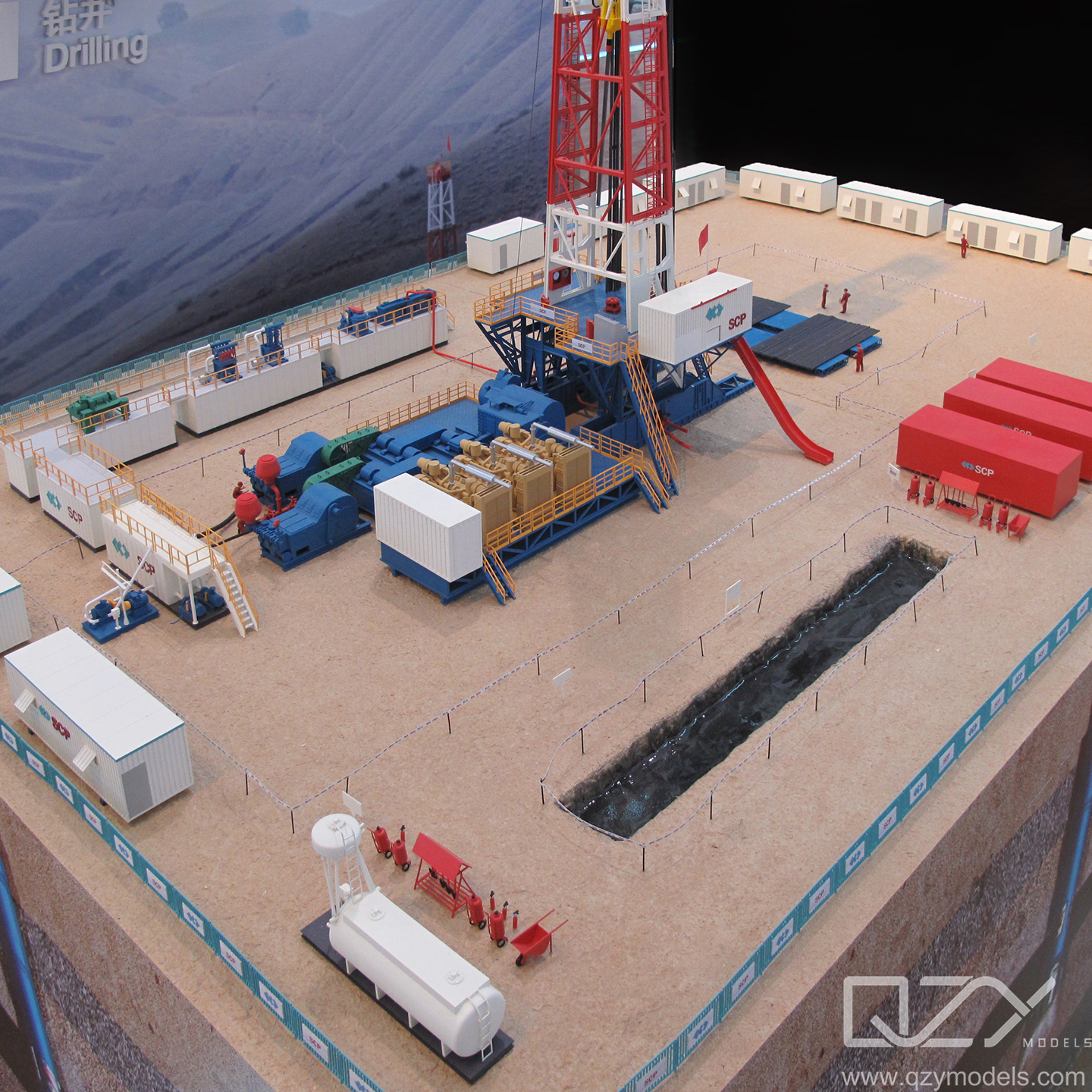
Simulation is a game-changer for mechanical design, speeding up workflows, enhancing reliability, and delivering cost-effective solutions for Chinese manufacturers, OEMs, and suppliers. By integrating simulation with physical prototyping, companies like QZY Models reduce development time and ensure products meet the highest global standards, resulting in faster time-to-market and superior quality for B2B buyers.
How does simulation improve mechanical design for Chinese manufacturers?
Simulation allows manufacturers to rapidly iterate and test ideas before committing to expensive physical prototypes. It reduces design risk and supports critical analyses, including tolerance, thermal and structural performance, and motion studies. For OEMs, this means faster time-to-market, fewer field failures, and stronger bids in competitive global markets. At QZY Models, simulation is used to optimize components and packaging, ensuring that products are ready for export.
What are the core simulation techniques used in mechanical design?
Core simulation techniques include Finite Element Analysis (FEA), which assesses stress and deformation; Computational Fluid Dynamics (CFD), which analyzes airflow and heat transfer; Multibody Dynamics (MBD), which models motion and interactions; and Topology Optimization, which finds the most efficient material layouts. These methods guide design decisions early in the development process, aligning with QZY Models’ precision-driven approach.
Which stages of product development benefit most from simulation?
Simulation has the greatest impact during concept validation, preliminary design, and design-for-manufacturability stages. Virtual testing during these phases accelerates decision-making, while later stages verify assembly, fit, and safety. For manufacturers in China, simulation helps reduce rework and ensures scalable production, a priority at QZY Models.
Why should Chinese manufacturers partner with a model-focused supplier?
A model-centric partner like QZY Models offers end-to-end services that combine digital simulation with physical prototyping, tailored specifically for OEM and wholesale needs. This integration reduces development cycles, mitigates risks, and ensures products meet international quality standards. With QZY Models, manufacturers achieve consistent quality across millions of units and multiple markets.
What role does data-driven simulation play in cost control?
Data-driven simulations predict part lifetimes, failure modes, and maintenance costs, allowing for proactive design adjustments. This leads to reduced warranty claims and post-sale service needs, optimizing material usage and manufacturing processes. QZY Models leverages these insights to deliver cost-effective, export-ready models that meet global market demands.
How does simulation integrate with physical prototyping?
Simulation guides initial prototype development by providing valuable insights into potential design flaws before physical production begins. Virtual results are then cross-validated with scale models, refining CAD data and manufacturing instructions. This approach streamlines approvals, ensuring alignment with QZY Models’ high standards for quality and reliability.
When should a Chinese supplier adopt simulation in the project timeline?
Simulation should be integrated as early as the concept phase, continuing through detailed design and pre-production. Early adoption minimizes costly late-stage changes and rework. QZY Models recommends embedding simulation at project kick-off to maximize efficiency and competitiveness in the global marketplace.
Where can Chinese manufacturers source reliable simulation-driven model services?
Specialized service providers like QZY Models in Shenzhen offer comprehensive solutions, from design optimization to the creation of digital twins and physical models. Local partnerships ensure faster feedback, closer collaboration, and stronger intellectual property protection for projects aimed at global exports.
Does simulation impact thermal management in outdoor playground and amusement equipment?
Yes, simulations like CFD and thermal analyses are essential for predicting heat transfer, component temperatures, and airflow. These insights guide the placement of heat sinks, material choices, and airflow paths, ensuring the equipment performs well in various climates and maintains long-term durability. QZY Models applies these principles to enhance the performance of outdoor playground structures and other mechanical assemblies.
Has simulation influenced assembly accuracy and repeatability for mass production?
Yes, simulation techniques such as multibody dynamics and tolerance analyses help identify potential assembly issues like clearance and interference early in the design process. This reduces assembly variations and scrap rates in high-volume manufacturing, ensuring the high standards expected of products made by QZY Models.
Are virtual fatigue and wear predictions reliable for long-term life cycles?
When realistic loading spectra and accurate material data are used, fatigue simulations provide reliable projections for product life cycles. While physical testing remains necessary for validation, simulations help optimize design choices, increasing the longevity and durability of products—a critical consideration for OEM customers.
Is additive manufacturing compatible with simulation-driven design?
Yes, simulation data can be directly applied to optimize parts for additive manufacturing. Topology optimization can help design lattice structures ideal for 3D printing, enabling customized, lightweight parts without compromising performance. QZY Models merges traditional machining techniques with additive capabilities, offering flexible production solutions in China.
Can QZY Models help with international compliance through simulation?
Absolutely. Simulation enables manufacturers to demonstrate compliance with international standards, such as safety, EMC, and thermal limits, supporting technical files required for export. QZY Models’ integrated approach ensures that all models meet compliance expectations across various markets, helping you achieve smoother international transactions.
Why choose QZY Models as your simulation partner in China?
QZY Models combines two decades of industrial expertise with cutting-edge simulation and prototyping services from Shenzhen. Our team supports OEMs, wholesalers, and manufacturers in global markets, ensuring export-ready products that reduce risk, lower costs, and speed up time-to-market. We pride ourselves on precision and reliability, with a strong track record working with top international developers and architects.
QZY Models Expert Views
“Effective simulation bridges the gap between innovative ideas and reliable products. At our Shenzhen facility, we turn digital models into physical accuracy, helping Chinese manufacturers secure global tenders with confidence. The synergy of virtual and physical models ensures that quality is embedded at every stage of production.” — Senior Engineer, QZY Models
What to implement next with QZY Models
-
Establish a digitized design review process integrating FEA, CFD, and MBD to validate early concepts.
-
Align material selections and tolerances with international export standards to minimize rework.
-
Launch rapid prototyping cycles using simulation results to reduce lead times for OEM orders.
{start table}
| Section | Key Benefit | Practical Action for China OEMs |
| Simulation Techniques | Fast iteration, risk reduction | Utilize FEA and CFD early to test designs before prototyping |
| Prototyping Integration | Time and cost savings | Combine virtual testing with physical models from QZY Models |
{stop table}
How to measure success with simulation in your next project
-
Reduced time-to-market through faster validation and fewer revisions.
-
Cost savings from less scrap and fewer physical prototypes.
-
Consistency in quality across large-scale production through validated tolerances and assembly accuracy.
-
Enhanced customer satisfaction with performance in international markets.
Conclusion
Integrating simulation with physical modeling empowers Chinese manufacturers, wholesalers, and OEMs to make smarter design decisions, reduce risks, and accelerate time-to-market. Partnering with QZY Models gives you access to advanced digital-twin methodologies and precise, export-ready physical models that meet global standards, making your products competitive in international markets.
FAQs
-
What simulation tools should a Chinese OEM prioritize?
Focus on FEA for structural integrity, CFD for thermal management, and MBD for motion analysis. QZY Models frequently uses these along with topology optimization for lightweight critical components. -
How can I justify simulation ROI to procurement teams?
Show how simulation reduces design iteration time, lowers prototyping costs, and improves first-pass yields, resulting in faster bids and higher win rates for international contracts. -
How long does it take to implement a simulation-driven workflow?
Typically, it takes about 4–8 weeks to establish the workflow, validate it with a pilot project, and begin delivering export-ready models and prototypes.