A Step-by-Step Guide for Safe, Efficient, and Cost-Effective Transport
Introduction
Shipping an architectural model internationally is more complex than it seems. Unlike regular cargo, models are delicate, often highly detailed, and partially hand-crafted, meaning mistakes during transport can result in costly damage or lost time.
For developers, architects, and sales teams, understanding how to pack, protect, and ship models across borders is critical. A well-planned logistics strategy ensures your model arrives intact, ready for presentation, and maintains its professional appearance.
In 2026, modern model shipping combines engineering precision, modular design, and high-quality transport materials to guarantee global delivery without compromise.
Understanding the Challenges of International Model Shipping
Architectural models are fragile, irregularly shaped, and often heavy, which introduces unique shipping challenges:
Fragile components (glass, acrylic, 3D-printed parts)
Sensitive finishes and paintwork
Delicate lighting systems
Large, non-standard sizes
Key Questions Before Shipping
What is the final weight and size of the model?
Can the model be disassembled or modularized for transport?
Are there electrical components that need special handling?
What are the customs and international shipping regulations in the destination country?
Answering these questions early helps prevent delays, damage, or additional costs.
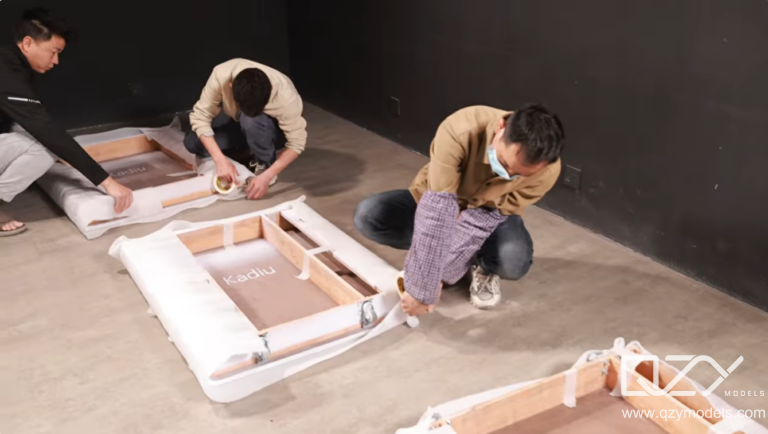
Step 1: Modular Design for Safe Transport
A critical factor for international shipment is modular construction. Large models are often divided into sections to:
Reduce shipping volume
Lower the risk of damage
Make handling easier
Allow quick assembly on site
Benefits of Modular Models
Sections fit into custom transportcases
Delicate components can be packed separately
Assembly instructions and reference guides can accompany each module
Pro tip: Our Models are designed with shipping in mind. Planning modularity during the model’s design stage significantly reduces risk.
Step 2: Choosing the Right Packaging
The right packaging is crucial. Most high-end architectural models use custom cases with precision foam inserts.
Packaging Essentials
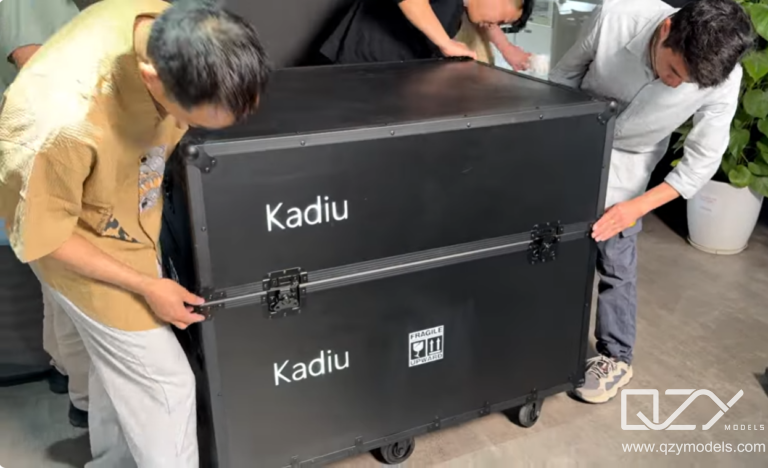
Custom Aluminum Cases: Durable, lightweight, reusable
Sea and Air Shipping friendly Cases: Sturdy and safe for Sea and Air shipping. Usually for Larger Models.
Custom Wooden Cases: Cost efffective option to Aluminum Cases.
Precision Foam Inserts: High-density foam cut to the shape of each component, preventing movement
Internal Dividers: Protect sensitive parts such as windows, lights, or fine structures
Shock Absorption: Ensures safety against vibrations during transport
For smaller travel models, luggage-friendly aluminum cases with wheels and handles allow easy hand-carrying or air transport without damage.
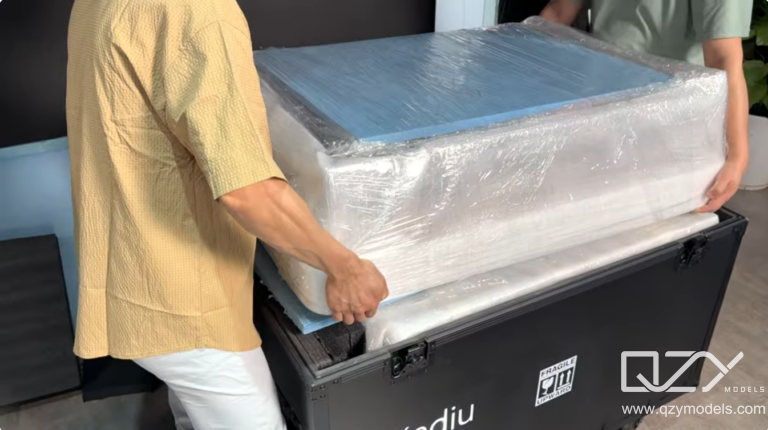
Step 3: Protecting Sensitive Components
Many models contain LED lighting, acrylic facades, or delicate 3D-printed elements.
Protection Techniques
Bubble wrap or soft foam around fragile parts
Remove or secure small accessories separately
Disconnect electrical components to prevent short-circuiting
Always label sensitive parts clearly to guide assembly at the destination.
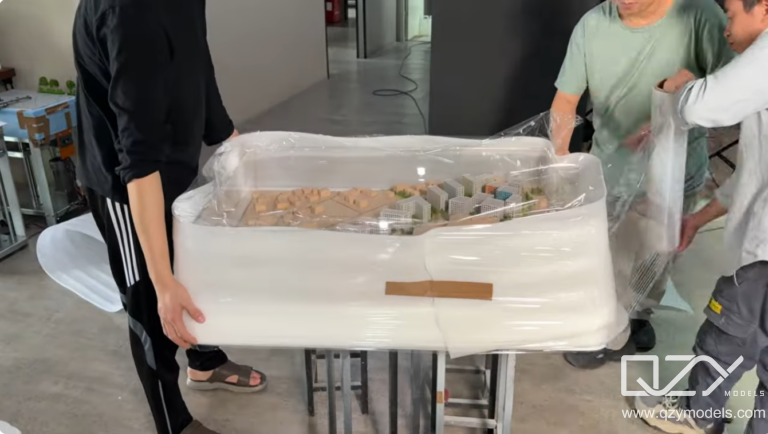

Step 4: Documentation and Customs
Shipping internationally requires accurate documentation:
Commercial invoice with detailed description
Weight and dimensions of each package
Harmonized codes for customs clearance
Special handling instructions if the model contains electronics
Pro tip: Include a printed assembly guide and photos inside the case to aid the receiving team.
Step 5: Choosing the Right Transport Method
Your model’s size, fragility, and urgency dictate the shipping method:
| Method | Pros | Cons |
| Air Freight | Fast, reliable, less handling | Higher cost, size limits |
| Sea Freight | Economical for large models | Longer transit, more vibration |
| Courier Services | Door-to-door convenience | Costly for oversized models |
High-end models are often shipped via air freight in custom cases to balance speed, security, and cost.
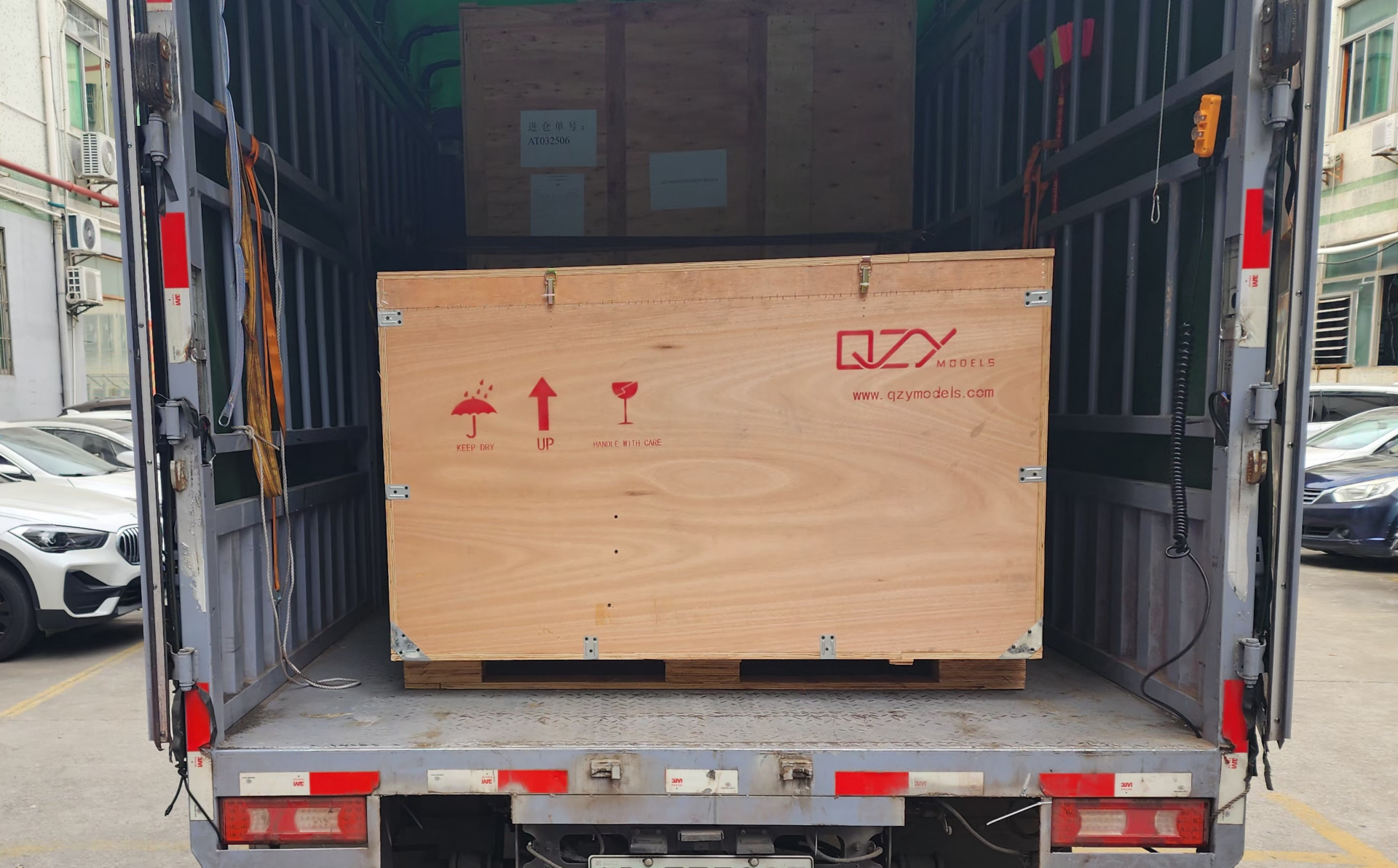
Step 6: On-Site Assembly
Once the model arrives:
- Check each module against the packing list
- Follow step-by-step assembly instructions
- Connect electrical components carefully
- Perform a final inspection for damage
A well-designed modular system ensures the model can be reassembled without technical expertise, even overseas.
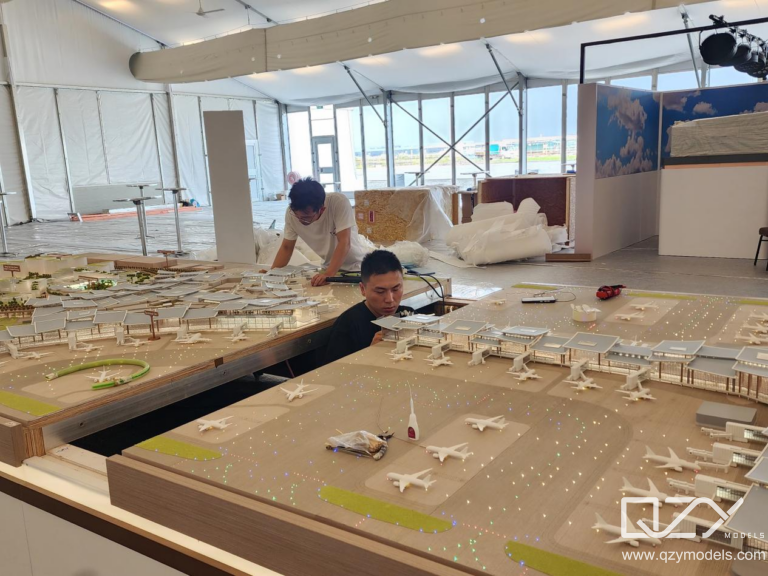
Best Practices for Shipping Architectural Models
Plan shipping during the design phase
Use modular construction wherever possible
Invest in custom protective cases
Document all parts and steps clearly
Select the appropriate transport method based on size and urgency
Ensure insurance coverage for high-value models
Conclusion
International shipping of architectural models is a precise operation that requires planning, protection, and logistics expertise.
By combining:
Modular design
High-quality packaging
Thoughtful handling of delicate components
Professional transport and customs documentation
…you can ensure your models arrive safe, pristine, and ready to impress clients or investors anywhere in the world.
About QZY Models
QZY MODELS is a professional model-making company specializing in architectural scale models, industrial models, and urban planning models for global clients.
With more than 20 years of experience, the team provides complete services including:
architectural model design
model fabrication
international packaging and shipping
on-site installation support
These integrated services ensure that every model can be safely transported and efficiently presented anywhere in the world.
🌐 www.qzymodels.com
📧 [email protected]