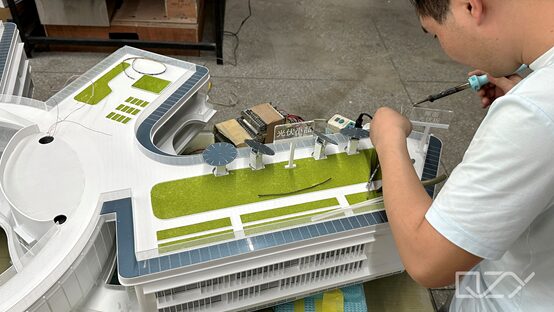
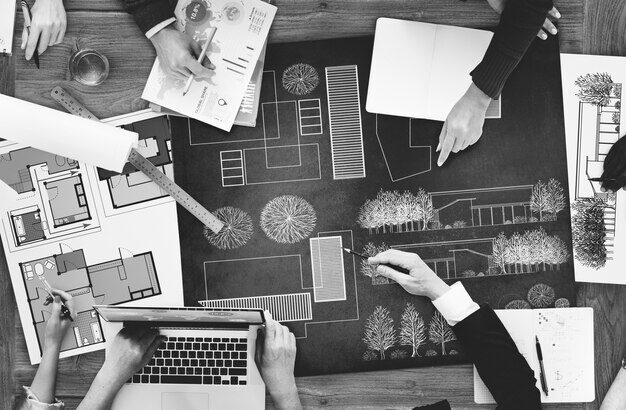
How High-Impact Architectural Models Shape Sales, Investment, and Project Clarity
Introduction: Why Developers Still Rely on Physical Models
In large real estate developments, the challenge is rarely design—it’s communication.
A master plan might look perfect in drawings or renders, but when it reaches investors, buyers, or government stakeholders, questions immediately arise:
How dense is the project actually?
How far are buildings from each other?
What does the lifestyle layout feel like?
Where are the real focal points?
This is where master plan models become critical.
A well-built model does something digital tools struggle with—it allows people to understand a project instantly, physically, and without explanation. That clarity directly affects sales performance, investor confidence, and approval processes.
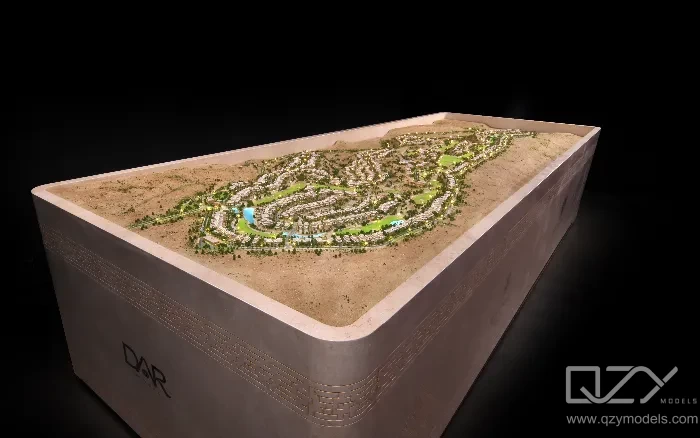
What Clients Actually Need From a Master Plan Model
Most developers don’t just want a “nice model”—they want a tool that answers real questions.
Clarity at First Glance
A strong master plan model should allow someone unfamiliar with the project to immediately understand:
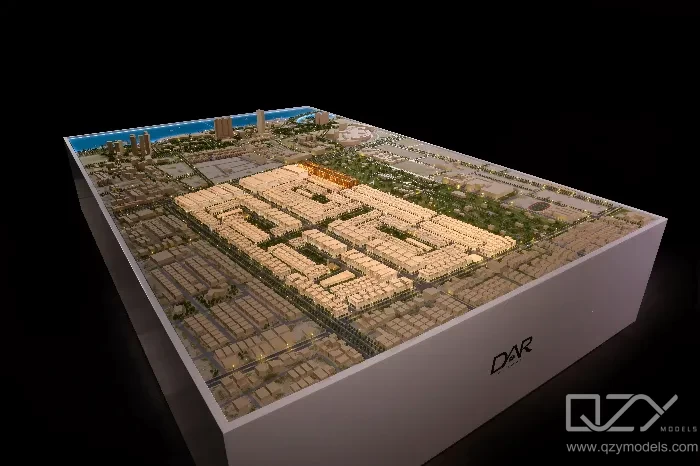
Overall layout and density
Building hierarchy (what stands out, what supports)
Movement (roads, access, flow)
Key lifestyle features (parks, water, amenities)
If a model requires explanation, it’s already losing effectiveness.
Sales Conversion, Not Just Presentation
In real estate showrooms, master plan models directly influence buying decisions.
Buyers are not analyzing architecture—they are asking:
Where is my unit?
What’s around it?
How private or open is it?
A good model answers these visually, reducing hesitation and accelerating purchase decisions.
Investor Confidence
For large developments, investors want to see logic and structure, not just beauty.
A master plan model helps communicate:
Phasing strategy
Infrastructure planning
Land utilization efficiency
Development scale vs investment

Designing a Master Plan Model That Actually Works
This is where many models fail—they try to show everything, and end up showing nothing clearly.
Controlling Visual Noise
Not every building needs equal attention.
Professional models are designed with visual hierarchy:
Primary buildings → slightly more detail or lighting
Secondary buildings → simplified massing
Background context → minimal representation
This allows the viewer’s eye to naturally focus on what matters.
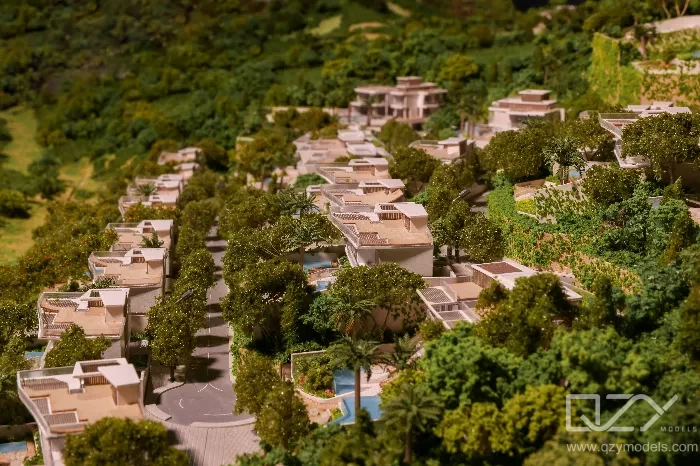
Landscape Is Not Decoration—It’s Strategy
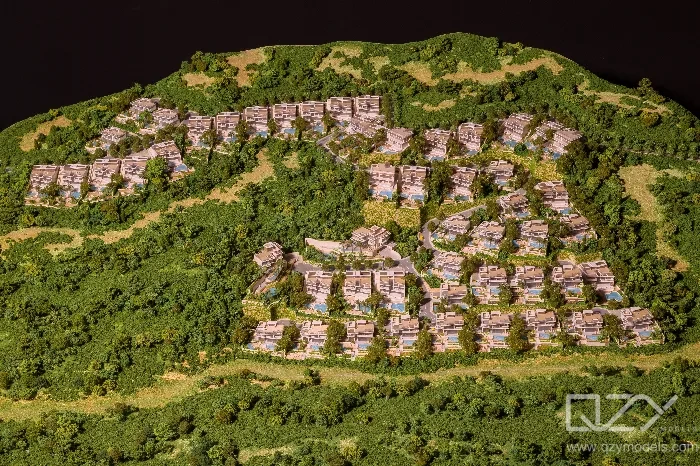
In modern developments, landscaping often sells the project more than the buildings themselves.
High-quality models emphasize:
Green corridors
Water features
Walkability and open space
Community zones
Done correctly, this shifts perception from “buildings” to lifestyle environment.
Roads and Movement Tell the Story
One of the most overlooked elements is circulation.
A strong model clearly shows:
Entry and exit points
Traffic flow
Pedestrian pathways
Accessibility to amenities
This is critical for both buyers and planners.
Scale Strategy: It’s Not Just About Size
Choosing the wrong scale is one of the most expensive mistakes in model making.
The Reality of Scale Selection
1:1000 – 1:500 → Best for large developments and sales galleries
1:300 – 1:200 → Better for detailed presentation of smaller projects
But the real decision is not the number—it’s the viewing experience.
Ask:
How far will people stand from the model?
Is it for overview or detail?
Will it be used for sales or planning approval?
The Trade-Offs Developers Must Understand
Larger Scale (e.g., 1:200):
More detail
Strong visual impact
– Requires more space
– Higher cost
Smaller Scale (e.g., 1:1000):
Covers full development
Easier to transport
– Less architectural detail
The best models are those that balance readability with impact, not just detail.
Materials That Define Quality (and Cost)
Clients often ask: “Why do some models look premium while others feel basic?”
The answer is material strategy and finishing.
Common Material Combinations
Acrylic → Clean, precise building forms
Wood finishes → Warm, premium presentation
3D printed elements → Complex geometry
Layered PVC/foam → Terrain and base
The Difference Is in the Finishing
High-end models stand out because of:
Seamless joints
Consistent color tones
Sharp edges and clean cuts
Controlled lighting diffusion
This is what separates a presentation model from a showpiece model.
Lighting: The Feature That Sells the Project
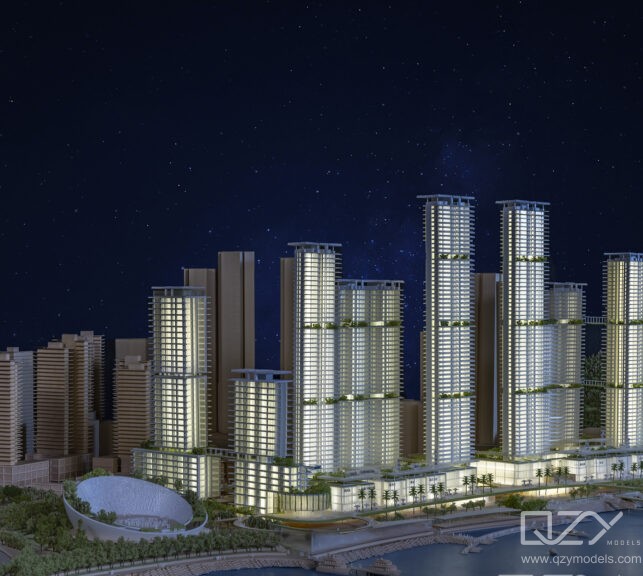
Lighting is not optional anymore—it’s one of the strongest selling tools.
What Good Lighting Does
Highlights key buildings
Defines roads and circulation
Creates depth and contrast
Simulates real-life environment
Strategic Lighting (Not Just “Everything On”)
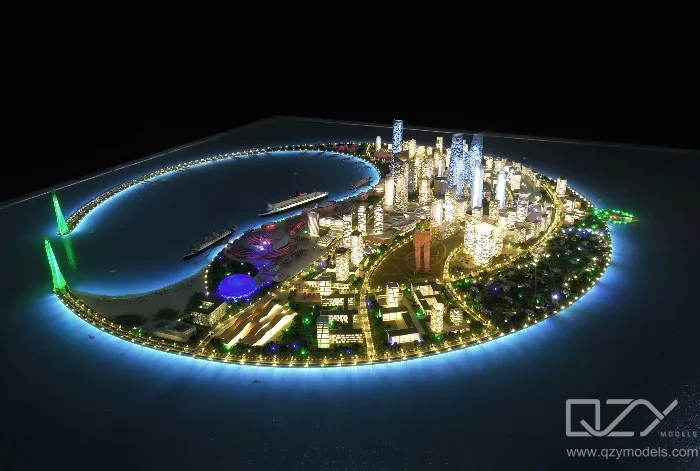
Professional models use zoned lighting, such as:
Highlighting premium units
Differentiating phases of development
Emphasizing commercial vs residential zones
Lighting turns a model from static into experiential.
Transport, Installation, and Real-World Use
One of the biggest concerns for international clients is:
“How do we move this safely?”
Modular Construction Is Essential
Large models are built in sections to allow:
Safe shipping
Easy handling
Quick installation
Professional Transport Solutions
High-end models are delivered using:
Custom aluminum flight cases
Precision-cut foam protection
Clearly labeled components
Installation Without Complexity
Modern models are designed so that:
Assembly is straightforward
Electrical connections are simplified
No specialized installation team is required
This is especially important for developers operating across multiple countries.
Where Master Plan Models Create the Most Value
Master plan models are not just display pieces—they are business tools.
Key Use Cases
Real estate sales galleries
Investor presentations
Government approvals
International exhibitions
Marketing campaigns
In each of these, the model acts as a central communication anchor.

Conclusion: A Model That Actually Works for the Project
A master plan model should not just look impressive—it should work for the project.
That means:
Communicating clearly
Supporting sales
Building investor confidence
Withstanding transport and repeated use
In today’s market, the difference between a standard model and a well-executed one is measurable—it directly impacts how a project is perceived, understood, and ultimately sold
About QZY Models
QZY MODELS is a professional model-making company specializing in architectural scale models, industrial models, and urban planning models for global clients.
With more than 20 years of experience, the team provides complete services including:
architectural model design
model fabrication
international packaging and shipping
on-site installation support
These integrated services ensure that every model can be safely transported and efficiently presented anywhere in the world.
🌐 www.qzymodels.com
📧 [email protected]