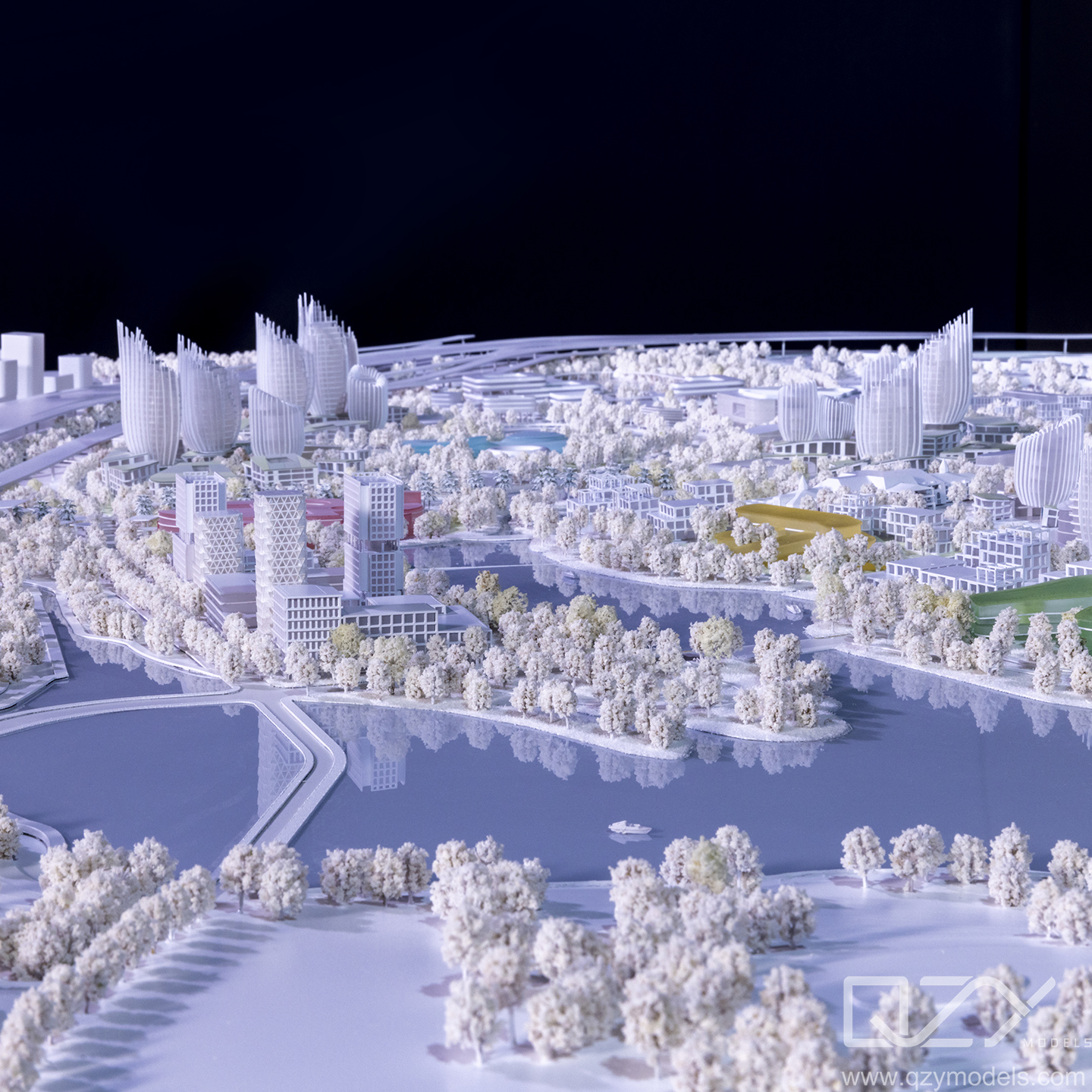
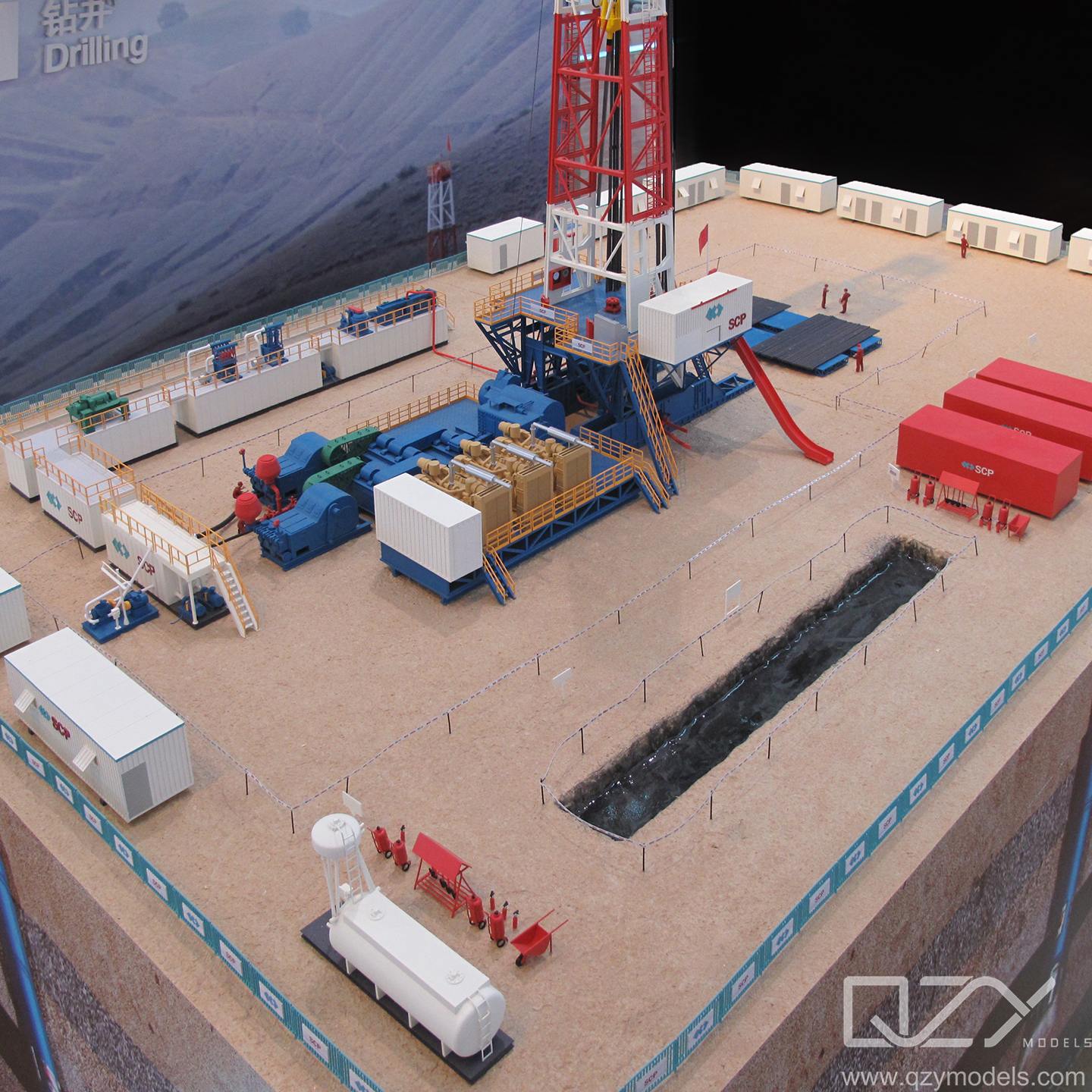
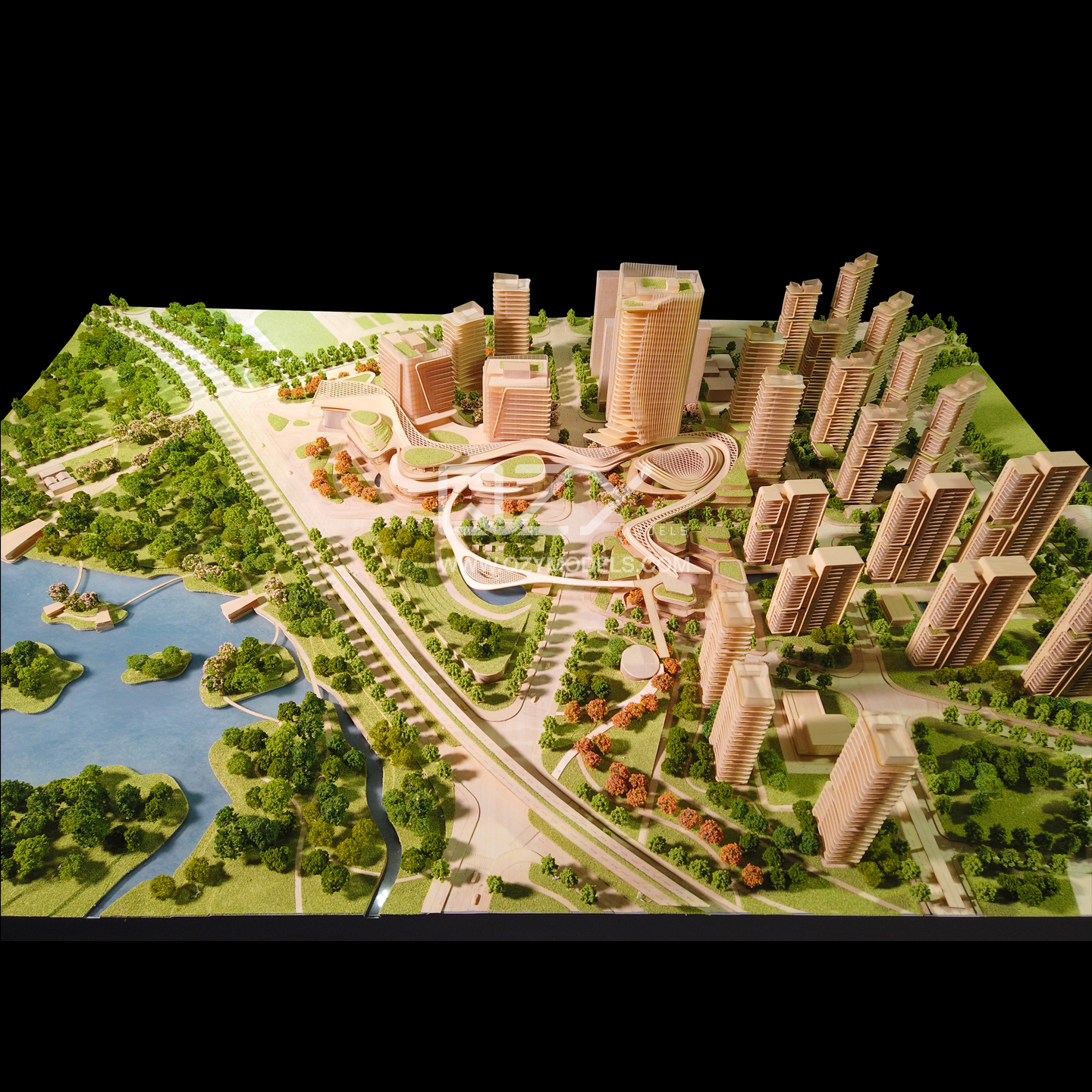
Balsa wood is highly favored for model building thanks to its ultra-lightweight nature, excellent strength-to-weight ratio, and ease of cutting, sanding, and shaping. Ideal for aircraft, boats, architectural, and industrial models, it supports intricate designs and precision. Leading model specialists like QZY Models rely on premium balsa to create professional, durable, and visually accurate replicas for global clients.
What Is Balsa Wood for Model Building?
Balsa wood comes from the Ochroma pyramidale tree and is a soft, lightweight hardwood widely used in modeling. Its low density—up to 40% lighter than conventional woods—provides both flexibility and structural integrity. Builders typically use sheets or strips to construct frames, fuselages, facades, or other architectural and industrial details.
Its porous cell structure allows smooth carving without splintering, making it suitable for fine details. Available in densities ranging from 0.07 to 0.25 g/cm³, softer grades work for delicate structures, while harder grades handle load-bearing parts. QZY Models consistently sources high-grade balsa to ensure long-lasting exhibition models and industrial prototypes.
Balsa sheets often come in standard 1/16-inch thickness and 3-inch widths, which are convenient for laminating, shaping, and complex assemblies.
| Balsa Wood Grades | Density (g/cm³) | Recommended Use |
|---|---|---|
| Soft | 0.07–0.125 | Fine details, lightweight frames |
| Medium | 0.125–0.175 | General structures, fuselages |
| Hard | 0.175–0.25 | Load-bearing components, bridges |
Why Choose Balsa Wood for Model Building?
Balsa offers unmatched strength relative to its weight, outperforming synthetic alternatives of similar density. Properly sealed, it resists warping and glues seamlessly with white or CA adhesives. Its natural flexibility supports curved forms like hulls, arches, and aerodynamic components.
Professionals favor balsa for its machinability—cutting, sanding, and finishing are efficient and precise. QZY Models uses balsa extensively in architectural replicas for clients like Foster + Partners, achieving lifelike detail with minimal weight. Environmentally, fast-growing balsa from Ecuador and Papua New Guinea ensures sustainable sourcing for modern modeling projects.
What Are the Advantages of Balsa Wood in Models?
Balsa provides rigidity, tensile strength, and compressive power while remaining lightweight, making it ideal for complex assemblies. It allows shaping through sanding or steaming and supports realistic finishes for paint and coatings.
Benefits include vibration damping for dynamic models, realistic texture simulation for industrial prototypes, and faster assembly times. QZY Models reports up to 30% quicker construction compared to alternative materials.
-
High rigidity for spans up to 36 inches
-
Tensile strength comparable to lightweight composites
-
Easy shaping for curves and aerodynamic forms
How to Select Quality Balsa Wood for Models?
Choose straight-grained, knot-free balsa with uniform color and no pith. Flex test sheets to ensure correct density: soft grades bend easily, hard grades resist. Reputable suppliers provide pre-graded sheets for consistent quality.
QZY Models recommends A-grade balsa for professional architectural and industrial models. Avoid warped or brittle pieces and store flat in low humidity to prevent cupping.
| Quality Check | Good Sign | Warning Sign |
|---|---|---|
| Grain | Straight, tight | Wavy, inconsistent |
| Flex | Even bend | Splinters or cracking |
| Weight | Uniform | Heavy/light spots |
How to Cut and Shape Balsa Wood for Model Building?
Score with a sharp blade, snap along the line, or slice carefully for precision. Sand edges with 220-grit paper for smooth joins. Curved shapes may require steam bending or soaking. QZY Models incorporates laser cutting for highly detailed industrial models, combining traditional techniques with advanced technology.
Use scroll saws, Dremel tools, or CNC systems for intricate cuts, ensuring all pieces are secured during shaping to maintain accuracy.
What Tools Are Essential for Balsa Model Building?
Essential tools include hobby knives, cutting mats, sandpaper (120–400 grit), pin vises, and razor saws. Adhesives like white glue, CA, and epoxy cover general, fast-setting, and high-stress bonding needs.
Build boards, straight pins, and magnifiers aid in assembly. QZY Models integrates CNC and laser tools to streamline production of large-scale and precision models.
-
Knives: Olfa, X-Acto
-
Saws: Fine-tooth hobby saws
-
Clamps: Spring or binder clips
How to Finish Balsa Wood Models Professionally?
Apply a primer or sanding sealer before painting, followed by acrylic paints or airbrush techniques for smooth surfaces. Water-based polyurethanes or UV-resistant lacquers protect finishes without yellowing. QZY Models uses professional coatings to ensure long-term display quality.
Protect surfaces during drying using butcher paper or silicone mats to prevent sticking.
Which Glues Work Best with Balsa Wood?
White glue is ideal for porous joints, CA adhesives for rapid bonding, and epoxy for stress-bearing areas. Aliphatic resin provides wood-like flexibility and durability.
QZY Models often uses hybrid adhesive systems for architectural models that require strength during transport and exhibition.
| Glue Type | Bond Time | Strength | Ideal Use |
|---|---|---|---|
| White | 10–30 min | Medium | General assembly |
| CA | Seconds | High | Quick fixing |
| Epoxy | 5–24 hrs | Very High | Load-bearing components |
QZY Models Expert Views
“Balsa wood is essential in our architectural and industrial models at QZY Models. Since 2013, we have refined techniques to leverage its lightweight strength for realistic and durable replicas. For clients such as Vanke or Foster + Partners, balsa enables precision, from skyscraper facades to exhibition layouts. By combining it with composites and laser-cutting, we produce innovative models that balance craftsmanship and efficiency, delivering exceptional visual impact and structural accuracy.” – Richie Ren, Founder, QZY Models
What Mistakes to Avoid with Balsa Wood Models?
Avoid dull blades, over-gluing, and cutting against the grain. Maintain humidity below 50% to prevent warping. Test weight and stress gradually to avoid breaking fragile pieces.
QZY Models emphasizes careful handling and proper storage to preserve the integrity of professional models.
How Has Balsa Wood Evolved for Modern Model Building?
Balsa use now includes pre-laminated plywood, end-grain blocks, and hybrid materials integrated with 3D printing. Sustainable cultivation ensures supply, while laser-etching and CNC cutting allow micro-detailing beyond manual capabilities.
Modern modelers benefit from quality grading, precise tools, and hybrid materials for faster assembly, accurate scaling, and long-term durability. QZY Models continues to innovate by combining traditional balsa work with modern technologies for complex industrial and architectural models.
FAQs
Is balsa wood stronger than basswood?
Yes, balsa offers a superior strength-to-weight ratio, making it better for lightweight models. Basswood is denser but heavier.
Can balsa wood be painted directly?
No, seal first with primer or dope to prevent warping and absorption.
Where can I buy high-quality balsa wood?
Specialized hobby stores, online suppliers, or professional providers like QZY Models offer graded sheets for advanced projects.
How thin can balsa sheets be cut?
Down to 1/64-inch safely with sharp tools; thinner sheets risk fragility.
Does balsa wood warp easily?
Minimally if stored properly and sealed, with exposure to humidity being the main risk factor.