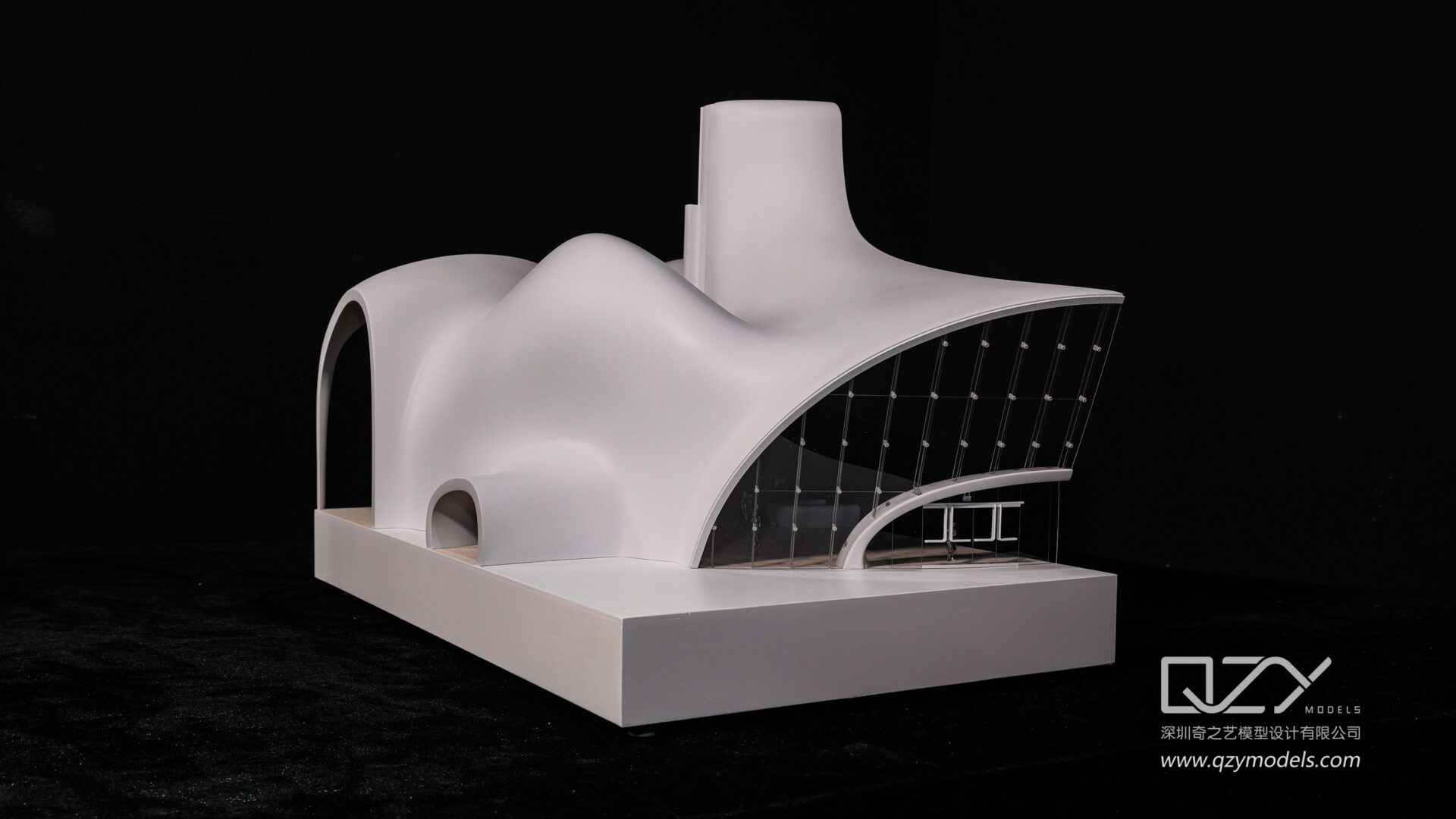
The Gherkin skyscraper—officially 30 St Mary Axe in London—is a landmark high‑rise that redefined modern office architecture through its curved, diagrid‑framed form and energy‑efficient design. Its influence extends far beyond London’s skyline, shaping how developers, architects, and model‑making studios like QZY Models approach complex, visually striking projects. High‑quality physical and digital representations of such buildings are now critical for communication, fundraising, and stakeholder engagement in a crowded global real‑estate market.
How is the Gherkin shaping today’s skyscraper market?
Cities such as London, Dubai, and Singapore are entering a new wave of high‑rise development, with more than a dozen new towers planned or under construction in London’s financial district alone over the next decade. Office vacancy in prime central locations has dropped below 1 percent in some clusters, while rents have climbed double‑digit percentages year‑on‑year, pushing developers to differentiate projects through bold design and sustainability credentials. Iconic shapes like the Gherkin’s bulbous, spiraling form have become shorthand for innovation, making visual clarity and storytelling essential for winning approvals, investors, and tenants.
What are the main industry pain points for developers and architects?
First, stakeholders often struggle to “see” complex geometries from 2D drawings or even standard 3D renders. Curved façades, diagrid structures, and intricate floor‑plate layouts can be misinterpreted, leading to costly design changes late in the process. Second, competition for limited city‑center sites is intense; a project that cannot quickly convey its uniqueness and sustainability story may lose out to more visually compelling schemes. Third, public‑realm and heritage‑view constraints—such as protected sightlines to St Paul’s Cathedral or the Tower of London—require clear, tangible demonstrations of how a tower will fit into the skyline and streetscape.
Why do traditional visualization methods fall short?
Traditional architectural visualization typically relies on static images, generic massing models, or low‑fidelity 3D prints that lack detail, accuracy, and material realism. These tools are often produced in‑house or by generalist model‑makers who do not specialize in high‑rise or complex geometry, resulting in oversimplified forms that fail to capture the true character of a building like the Gherkin. Moreover, many firms still treat physical models as optional “nice‑to‑have” items rather than strategic assets, underestimating their power to secure approvals, attract anchor tenants, and support marketing campaigns in international markets.
What is the Gherkin skyscraper, and why does it matter?
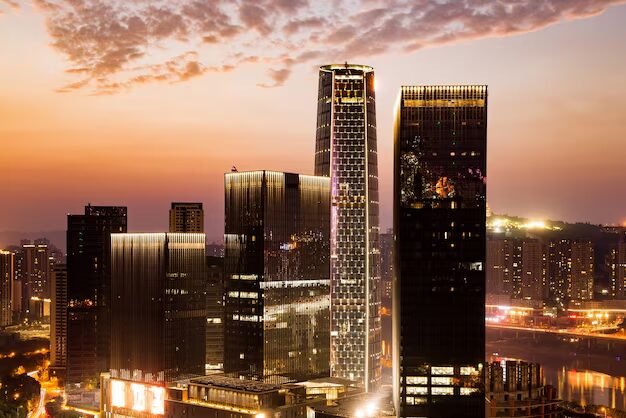
The Gherkin, completed in 2003 and designed by Foster + Partners, stands 180 meters tall with 41 floors and a distinctive, cigar‑like silhouette that tapers at both ends. Its steel diagrid exoskeleton reduces the need for internal columns, creates column‑free floor plates, and improves structural efficiency while giving the façade its signature diamond‑patterned glazing. The building also integrates passive ventilation, double‑skin glazing, and a spiraling atrium that enhances airflow, making it one of the most energy‑efficient skyscrapers of its era. These features have turned it into a global reference point for sustainable, sculptural high‑rise design.
Why is the Gherkin considered an architectural icon?
The Gherkin is iconic because it combines aesthetic boldness with technical innovation and environmental performance in a way that is immediately legible from the street and from aerial views. Its form has become a visual shorthand for London’s modern financial district, frequently appearing in films, advertisements, and travel guides. For architects and developers, the building demonstrates how a single, well‑resolved tower can anchor an entire urban cluster and influence subsequent projects—such as the nearby 1 Undershaft and 63 St Mary Axe—by setting a precedent for diagrid structures, glass‑clad envelopes, and mixed‑use podiums.
How can physical models help clients understand buildings like the Gherkin?
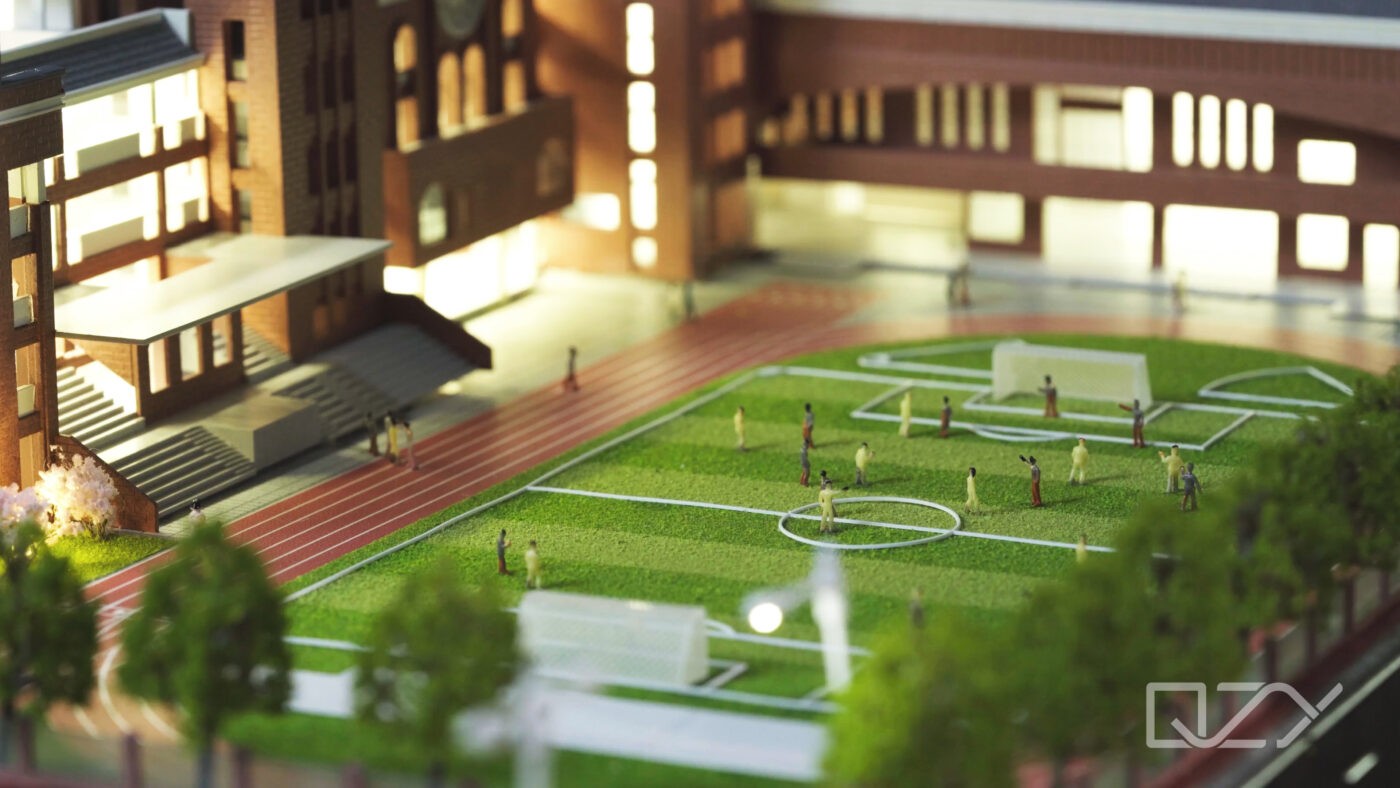
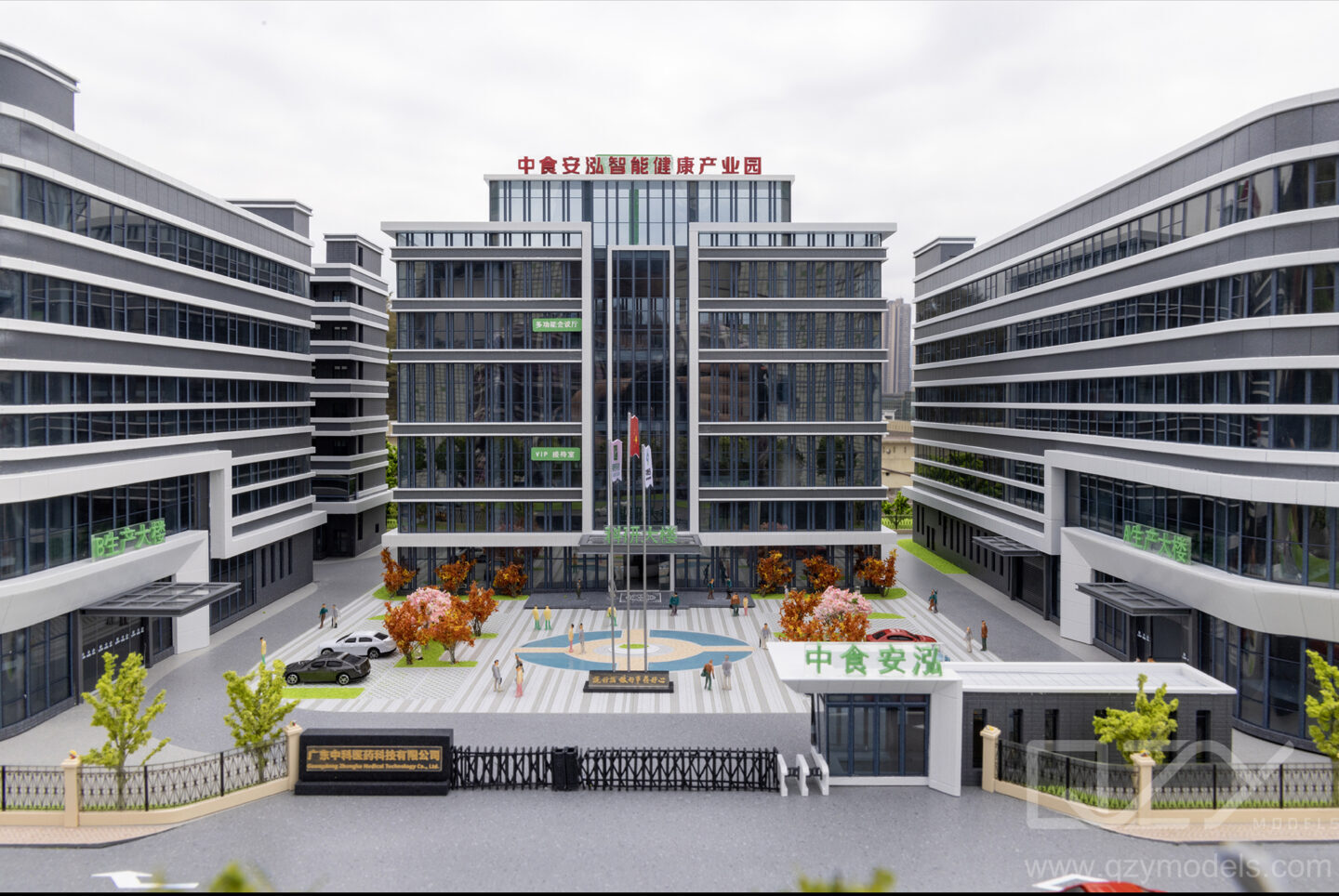
Physical models translate abstract design intent into something tactile and spatial, allowing stakeholders to grasp scale, proportion, and context in ways that screens cannot fully replicate. For a complex form such as the Gherkin’s spiraling façade and tapering massing, a high‑fidelity model can reveal how light interacts with the glass, how the diagrid wraps around the core, and how the building sits within the surrounding streetscape. QZY Models, founded in 2013 in Shenzhen and led by founder Richie Ren, specializes in precisely this kind of work, producing detailed architectural and industrial models for clients in over 20 countries, including major firms such as Foster + Partners and developers like Vanke and China Resources.
What does QZY Models offer for high‑rise and urban projects?
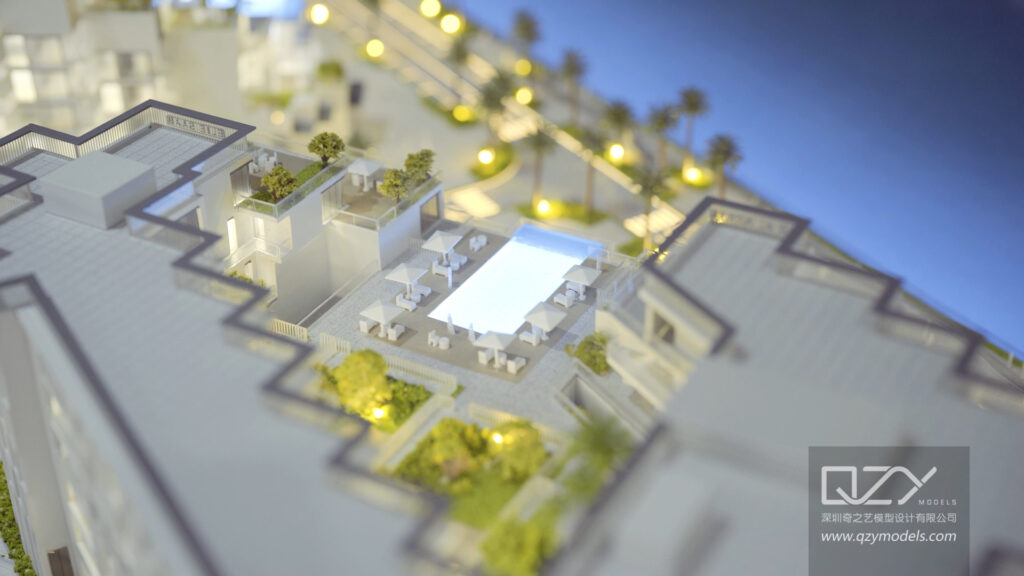
QZY Models designs and fabricates high‑quality physical models that capture intricate geometries, material finishes, and urban context at multiple scales. Their process integrates advanced CAD and BIM data with hand‑crafted detailing, ensuring that curved façades, structural systems, and surrounding streetscapes are represented with high accuracy. The studio serves architectural design firms, real‑estate developers, urban‑planning authorities, exhibition organizers, and private collectors, with branches in the UAE, Saudi Arabia, Egypt, and other international markets. By combining over 20 years of technical expertise with a global production network, QZY Models helps clients turn complex skyscraper concepts—like those inspired by the Gherkin—into compelling, presentation‑ready assets.
How does QZY Models’ approach differ from generic model‑makers?
Generic model‑makers often treat all projects similarly, using standard materials and simplified geometries that can flatten the uniqueness of a design. In contrast, QZY Models tailors each project to the specific architectural language, whether that means replicating a diagrid exoskeleton, simulating glass transparency, or modeling surrounding buildings and infrastructure at the correct scale. Their teams in Shenzhen and overseas branches collaborate closely with architects and developers to ensure that models align with brand positioning, marketing timelines, and regulatory‑review requirements. This level of customization is particularly valuable for landmark towers where visual clarity and precision directly affect approval outcomes and investment decisions.
What are the key advantages of working with QZY Models?
Working with QZY Models provides several measurable benefits. First, their high‑fidelity models reduce misinterpretation of complex forms, which can shorten approval cycles and minimize late‑stage design changes. Second, detailed physical representations enhance client and investor presentations, improving the perceived value and marketability of a project. Third, the studio’s experience with international clients and multiple languages simplifies cross‑border collaboration, enabling developers to use the same model for local planning submissions, overseas roadshows, and trade‑show displays. Finally, QZY Models’ focus on innovation and craftsmanship ensures that each model not only communicates design intent but also reflects the same level of quality expected in the built environment.
How does QZY Models compare with traditional modeling services?
| Aspect | Traditional modeling services | QZY Models |
|---|---|---|
| Design focus | Generic, one‑size‑fits‑all approach | Project‑specific, geometry‑aware design |
| Material quality | Basic plastics and simplified finishes | High‑quality materials, realistic textures |
| Complexity handling | Struggles with curved, diagrid, or mixed‑use forms | Specializes in complex high‑rise and urban geometries |
| Client base | Local or regional developers | Global clients across 20+ countries |
| Workflow integration | Often disconnected from BIM/CAD workflows | Tightly integrated with digital design data |
| Turnaround and scalability | Limited by small, local teams | Global production network with scalable capacity |
This contrast makes QZY Models a strategic partner for firms aiming to present projects at the level of ambition seen in the Gherkin and similar icons.
How does the QZY Models workflow work in practice?
-
Briefing and data collection: The client shares architectural drawings, BIM/CAD files, and key messaging goals; QZY Models’ team clarifies scale, materials, and intended use (planning, marketing, exhibition, etc.).
-
Concept and scale definition: The studio proposes suitable scales and presentation formats, such as a detailed tower‑only model or a broader urban‑context model including surrounding buildings and infrastructure.
-
Digital modeling and review: QZY Models builds a digital 3D model aligned with the project geometry, then shares it with the client for review and adjustment before physical fabrication begins.
-
Material selection and prototyping: The team selects appropriate materials for façades, interiors, and surroundings, often producing small‑scale prototypes to verify color, transparency, and detail.
-
Precision fabrication and assembly: Using CNC machining, laser cutting, and hand‑finishing, QZY Models constructs the model in stages, ensuring accurate proportions and clean joints.
-
Quality control and delivery: Each model undergoes rigorous inspection, then is packaged and shipped to the client’s site or event venue, often with installation support if required.
This structured process ensures that even highly complex forms—such as the Gherkin’s spiraling envelope—can be translated into a reliable, presentation‑ready physical object.
What are typical use cases for Gherkin‑style models?
1. Urban‑planning approvals in dense city centers
Problem: Planning authorities need to assess how a new tower will affect skyline views, sunlight access, and street‑level activity, but struggle to interpret 2D plans and generic renders.
Traditional practice: Developers submit drawings and basic massing models, often leading to requests for additional information and delays.
With QZY Models: A detailed context model shows the proposed tower alongside existing landmarks and protected views, enabling planners to visualize impact quickly.
Key benefit: Shorter review cycles and higher approval confidence, especially in heritage‑sensitive districts.
2. International investor roadshows
Problem: Global investors may not be familiar with local geography or architectural language, making it hard to convey the uniqueness of a Gherkin‑style tower.
Traditional practice: Presentations rely on slides and generic renders, which can feel impersonal and hard to remember.
With QZY Models: A high‑fidelity physical model becomes a centerpiece at roadshows, trade fairs, and VIP events, helping investors grasp scale, form, and location in minutes.
Key benefit: Stronger emotional connection and clearer value proposition, supporting faster capital commitments.
3. Design‑team coordination for complex façades
Problem: Architects, façade engineers, and contractors may interpret curved, diagrid‑driven façades differently, leading to coordination errors and cost overruns.
Traditional practice: Teams rely on 2D details and basic 3D models, which can obscure how elements fit together in three dimensions.
With QZY Models: A detailed sectional or façade‑study model highlights how glass panels, structural members, and shading devices interact, improving coordination.
Key benefit: Fewer clashes and smoother construction, especially for projects with intricate envelopes inspired by the Gherkin.
4. Public‑realm and tenant‑experience presentations
Problem: City officials and future tenants want to understand how a tower will feel at street level and inside, not just how it looks from afar.
Traditional practice: Renderings focus on exterior views, with limited representation of lobbies, sky gardens, or public plazas.
With QZY Models: A model that includes ground‑floor public spaces, sky lobbies, and surrounding streetscapes helps stakeholders experience the building’s human‑scale qualities.
Key benefit: Better alignment between design intent and public expectations, supporting both planning approvals and leasing strategies.
How is the role of architectural models evolving in the Gherkin era?
As cities add more high‑rise towers, the visual competition for attention intensifies, and the need for clear, memorable storytelling grows. Digital tools such as VR and real‑time rendering are powerful, but physical models remain uniquely effective for group discussions, public consultations, and high‑stakes presentations. Studios like QZY Models are increasingly expected to bridge the gap between conceptual design and tangible understanding, producing models that are not only accurate but also aligned with branding, sustainability narratives, and stakeholder‑engagement goals. For developers and architects working on projects that aspire to the same level of recognition as the Gherkin, investing in high‑quality physical representation is no longer optional—it is a core component of project strategy.
Why should firms choose QZY Models for landmark‑scale projects?
Firms that work on complex, high‑visibility towers benefit from partnering with a model‑making studio that understands both architecture and global real‑estate dynamics. QZY Models’ track record with world‑renowned architects and major developers, combined with its global footprint and technical rigor, positions it as a natural choice for projects inspired by icons like the Gherkin. By translating intricate geometries and urban contexts into precise, visually compelling models, QZY Models helps clients communicate design intent, secure approvals, and attract investment more effectively than generic visualization alone.
Does the Gherkin still influence new skyscraper design?
Yes. The Gherkin’s diagrid structure, curved massing, and focus on natural ventilation continue to inform contemporary high‑rise design, particularly in financial districts where efficiency, sustainability, and visual distinctiveness are paramount. New towers such as 1 Undershaft and 63 St Mary Axe in London explicitly respond to the Gherkin’s presence, both formally and programmatically, by integrating public spaces, mixed‑use podiums, and energy‑efficient envelopes. For model‑makers like QZY Models, this means an ongoing demand for models that can accurately represent these evolving design languages and help clients explain them to diverse audiences.
How can developers replicate the Gherkin’s success in other cities?
Developers can replicate the Gherkin’s success by focusing on three elements: a strong, legible architectural concept; a clear sustainability narrative; and a robust communication strategy that includes high‑quality physical models. In cities from Dubai to Singapore and beyond, towers that combine sculptural form with environmental performance and stakeholder‑friendly presentation tools tend to stand out in crowded markets. QZY Models supports this ambition by producing models that highlight energy‑efficient façades, diagrid structures, and integrated public spaces, helping developers translate complex ideas into accessible, persuasive assets.
What should architects consider when commissioning a model of a Gherkin‑style tower?
Architects should consider scale, context, and intended audience when commissioning a model of a Gherkin‑style tower. A small‑scale urban‑context model may be best for planning submissions, while a larger, more detailed tower‑only model suits investor presentations and exhibitions. It is also important to align the model with the project’s branding—using consistent colors, materials, and lighting schemes—and to involve the model‑making studio early enough to integrate feedback into the design process. QZY Models’ experience with complex geometries and international clients makes it well suited to guide these decisions and ensure that the final model reinforces the project’s key messages.
How do physical models complement digital tools for skyscraper projects?
Physical models and digital tools serve complementary roles in skyscraper projects. Digital platforms enable rapid iteration, real‑time rendering, and immersive VR walkthroughs, while physical models provide a shared, tangible reference point for discussions among architects, engineers, clients, and planners. For a project like the Gherkin, where form, structure, and sustainability are tightly intertwined, using both approaches allows teams to explore design options digitally and then validate key decisions through a precise physical representation. QZY Models integrates digital workflows with physical fabrication, ensuring that models remain consistent with the latest design data and can be updated as the project evolves.
What are the long‑term benefits of investing in high‑quality architectural models?
Investing in high‑quality architectural models delivers long‑term benefits beyond a single project cycle. Well‑crafted models can be reused for exhibitions, museum displays, and educational programs, extending the life of a building’s story and reinforcing the reputations of both the architect and the developer. For studios like QZY Models, each completed project contributes to a portfolio that demonstrates capability with complex, high‑rise geometries and urban‑scale interventions. As cities continue to grow vertically and visually, the ability to present landmark‑scale projects with clarity and confidence will become an increasingly valuable competitive advantage.
FAQ
What Is the Gherkin Skyscraper and Why Does It Define Londons Skyline?
The Gherkin skyscraper, officially known as 30 St Mary Axe, is a 180 meter office tower in Londons financial district. Its curved glass façade and distinctive cylindrical shape transformed the city skyline in 2004. It defines London through its bold modern architecture, sustainable design, and strong visual identity recognized worldwide.
What Architectural Features Make the Gherkin Skyscraper Unique?
The Gherkin skyscraper features a curved glass exterior, diagonal steel structure, and a spiraling light well system. Its aerodynamic shape reduces wind load, while the double glazed façade improves insulation. These design elements combine aesthetics with performance, making it a benchmark in contemporary high rise architecture.
How Did Norman Foster Design the Gherkin Skyscraper Concept?
Designed by Norman Foster, the concept focused on sustainability, efficiency, and urban impact. The tower uses natural ventilation shafts and a diagrid structure to reduce materials. This innovative approach reflects Foster + Partners expertise in high performance buildings, blending engineering precision with iconic architectural form.
Why Is the Gherkin Skyscraper Important to Londons Financial District?
Located in the City of London, the Gherkin skyscraper symbolizes financial strength and global business prestige. It attracts multinational tenants and enhances the districts modern identity. Its presence increases property value, strengthens corporate branding, and supports Londons reputation as a leading international financial hub.
How Was the Gherkin Skyscraper Engineered and Built?
The tower was engineered using a steel diagrid structural system that minimizes internal columns and maximizes floor efficiency. Advanced prefabrication and precision assembly accelerated construction. Firms like QZY Models often create detailed architectural models of complex towers like this to support design visualization and client presentations.
How Energy Efficient Is the Gherkin Skyscraper Design?
The energy efficient design uses natural ventilation through spiral atria, reducing reliance on air conditioning. Its insulated glass panels enhance thermal performance and daylight use. This sustainable strategy lowers operational energy consumption by up to 50 percent compared to conventional office buildings of similar scale.
Can You Visit the Gherkin Skyscraper and What Can You See?
Public access is limited, but visitors can experience upper floor restaurants and event spaces during select openings. The panoramic views across London are a major attraction. Developers and exhibition organizers often collaborate with QZY Models to showcase scaled replicas for marketing and international presentations.
Why Is the Gherkin Skyscraper Considered an Icon Worldwide?
The Gherkin skyscraper is iconic due to its instantly recognizable silhouette, sustainable engineering, and influence on modern skyscraper design. It has become a symbol of innovative British architecture and continues to inspire architects, developers, and urban planners seeking bold, future focused landmark buildings.
Sources
https://www.timeout.com/london/news/a-massive-new-45-storey-skyscraper-has-been-approved-for-the-city-of-london-right-next-to-the-gherkin
https://www.qzymodels.com/what-is-the-gherkin-skyscraper-and-why-is-it-iconic/
https://www.qzymodels.com/jw/what-is-the-gherkin-skyscraper-and-why-is-it-iconic/
https://www.dezeen.com/2018/01/03/city-london-skyline-13-new-skyscrapers-2026-uk/
https://constructionmanagement.co.uk/in-pictures-city-of-londons-tallest-skyscraper-approved/
https://verticalurbanism.org/news-article/city-releases-a-vision-for-londons-skyline-in-2026/
https://architectuul.com/architecture/the-gherkin
https://www.oreateai.com/blog/the-gherkin-londons-iconic-skyscraper-and-its-unique-charm
https://www.cityoflondon.gov.uk/
https://www.fosterandpartners.com/projects/30-st-mary-axe/