Learn how developers, architects, and exhibition teams maintain architectural scale models for years of use. Discover expert advice from QZY Models on cleaning, repairs, upgrades, storage, transportation, and long-term preservation.
A Great Architectural Model Should Age Gracefully
A museum-quality architectural scale model is never intended to be a temporary display piece.
For many developers, it becomes the centrepiece of a sales gallery for several years. Others rely on the same model for investor presentations, international property exhibitions, planning consultations, corporate headquarters, or visitor centres long after construction has begun.
Unlike digital marketing assets that can be updated with a click, a physical architectural model is a handcrafted object that represents months of design coordination, precision engineering, and skilled craftsmanship. It is also one of the first things prospective investors, buyers, government officials, and stakeholders notice when they enter a room.
That is why the most experienced developers view their model not as an expense, but as a long-term business asset.
Like any valuable asset, however, it requires proper care.
With the right materials, regular maintenance, and occasional professional servicing, a well-built architectural model can continue looking as impressive after five or even ten years as it did on the day it was delivered.
Long Before Delivery, Longevity Is Already Being Designed
The lifespan of an architectural model is determined long before it reaches a sales gallery. It begins in the workshop.
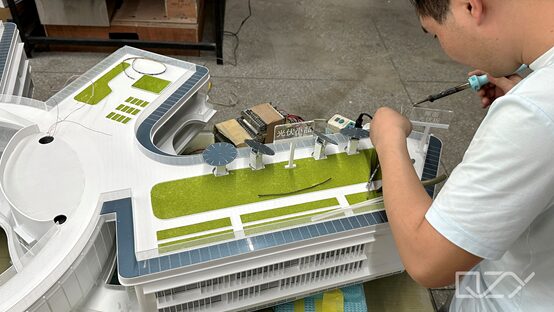
At QZY Models, durability is considered during every stage of fabrication. Material selection, lighting design, structural engineering, transportation planning, and environmental conditions all influence how well a model performs over time.
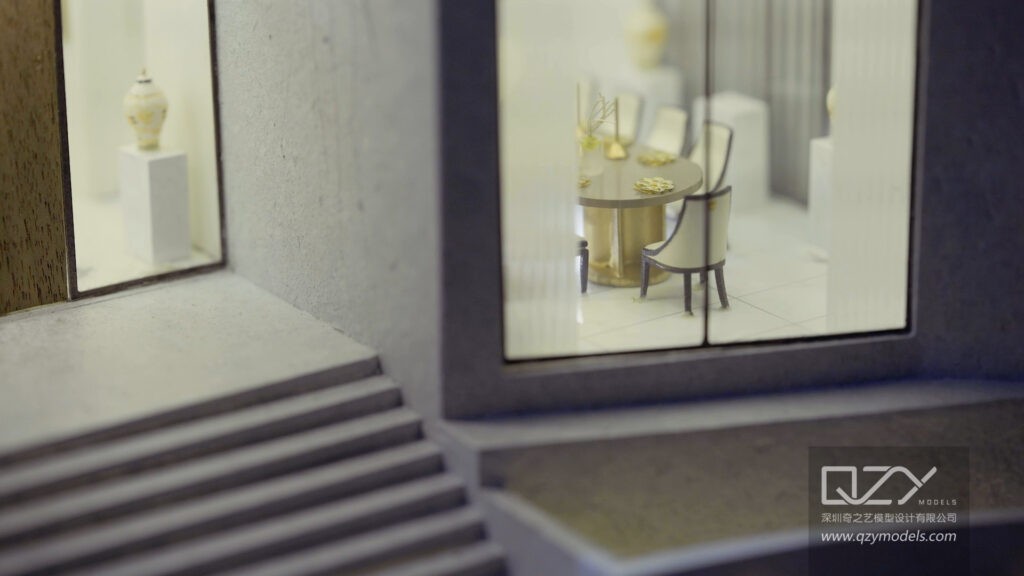
For example, premium UV-resistant acrylics and architectural-grade paints help prevent fading and yellowing when models are displayed under continuous lighting. Internal LED systems are carefully engineered to minimise heat build-up, protecting delicate components while extending the life of the lighting system itself.
Dust protection is equally important.
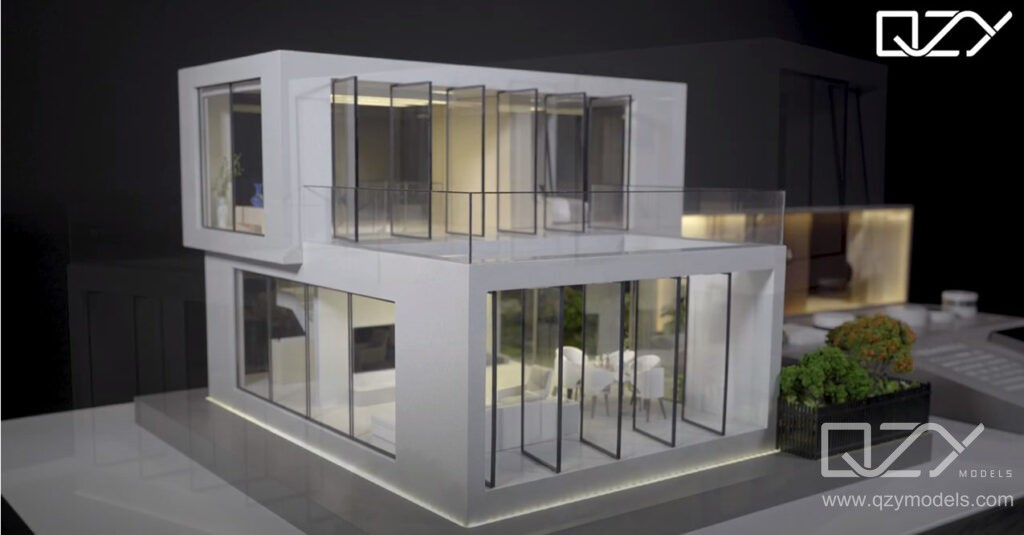
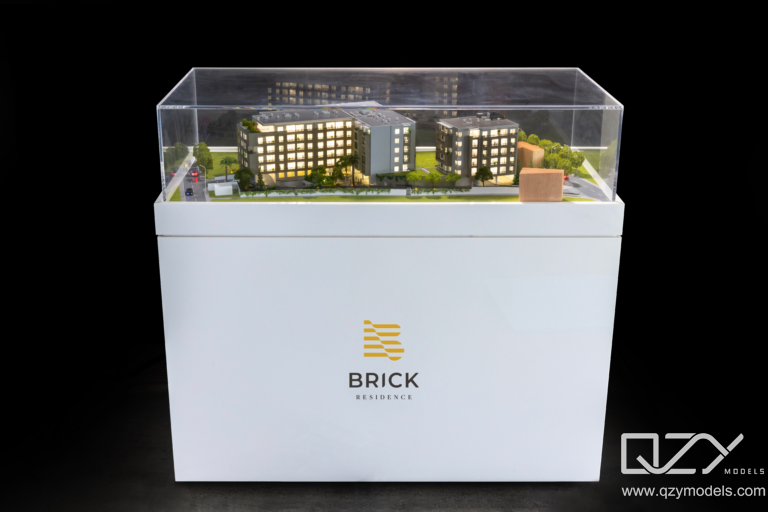
Many of the models we produce for luxury developments and international exhibitions are supplied with custom-built acrylic display enclosures. These cases do more than protect the model from accidental contact—they significantly reduce dust accumulation while filtering ultraviolet light that can gradually damage finishes over time.
The best maintenance strategy is always preventative.
Why Even the Best Models Need Regular Care
No matter how carefully a model is constructed, daily exposure gradually leaves its mark.
Sales galleries welcome hundreds of visitors every week. Exhibition models travel internationally between events. Lighting systems operate continuously for months at a time.
Eventually, dust settles.
Minor scratches appear on display cases.
Small landscape elements may loosen after transportation.
None of these issues indicate poor construction—they are simply the natural result of a working display that is doing exactly what it was built to do.
Routine maintenance prevents these small issues from becoming major repairs.
Most gallery teams are surprised to learn that keeping a model in excellent condition requires only a few minutes of attention each day.
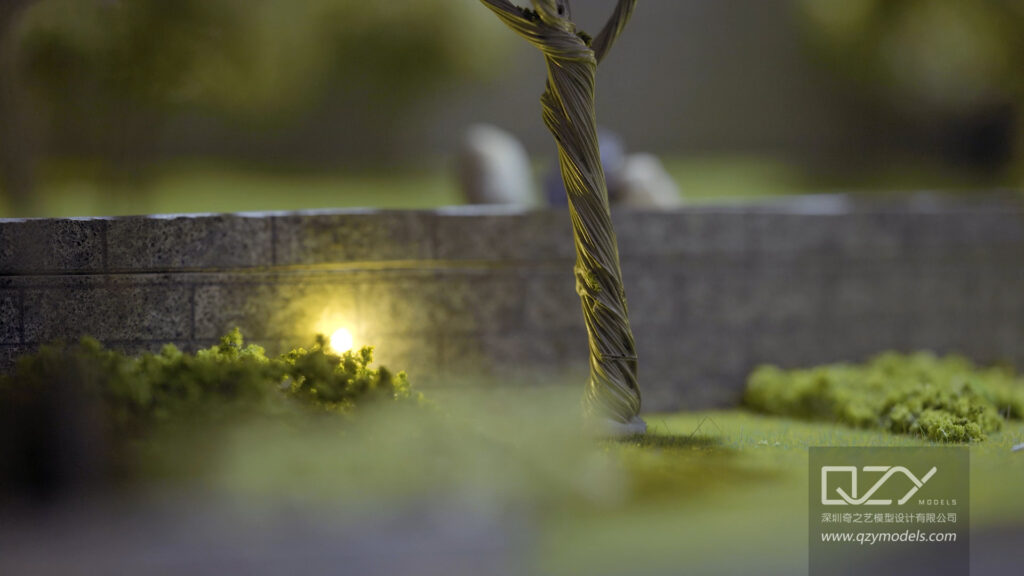
Cleaning the acrylic enclosure with anti-static cleaners helps reduce dust attraction while maintaining crystal-clear visibility. Periodic inspections of lighting systems allow technicians to identify small electrical issues before they become noticeable during an important presentation. Even simple visual inspections can quickly identify loose trees, vehicles, or landscape elements before they become damaged.
Consistency is far more effective than occasional deep cleaning.
Planning for Change Rather Than Fighting It
Perhaps the greatest misconception about architectural models is that they remain unchanged throughout a project’s life.
In reality, few developments remain exactly as originally designed.
Planning approvals evolve.
Landscapes are refined.
New towers are added.
Building façades are updated.
Sales campaigns often continue for several years while the development itself continues to evolve.
This is why experienced model makers increasingly design models with future modifications in mind.
Rather than permanently fixing every building to the base, modular construction techniques allow entire development parcels to be removed and replaced without rebuilding the complete model.
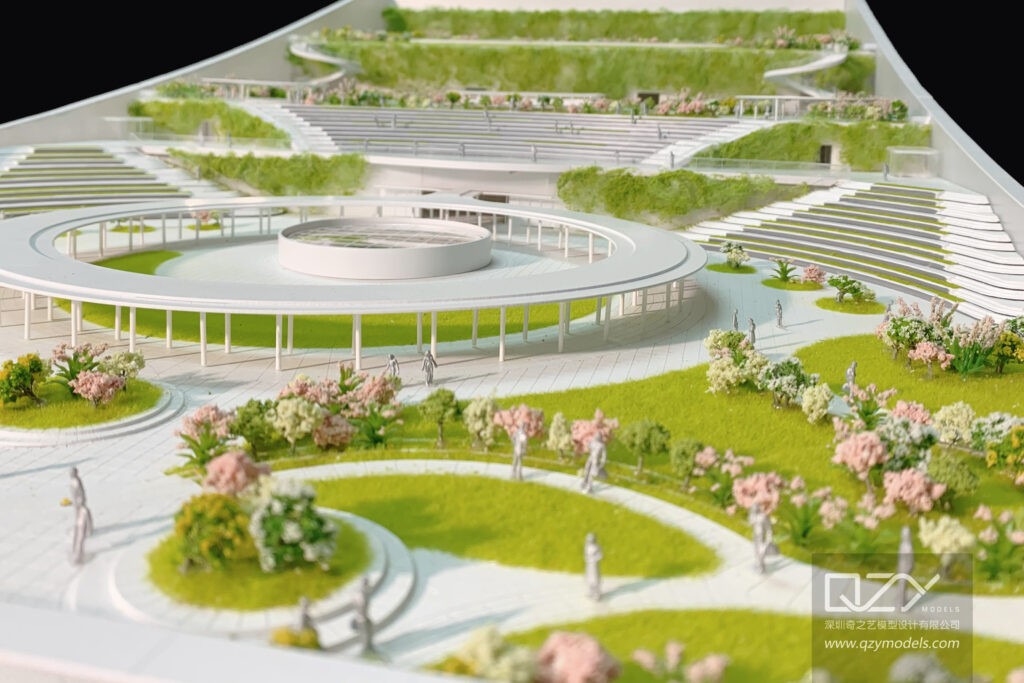
For large masterplans, this approach can dramatically reduce future costs while ensuring the presentation always reflects the latest approved design.
Instead of replacing an entire city model because one tower changes, only the affected section needs to be updated.
For long-term developments, that flexibility represents a significant commercial advantage.
When Accidents Happen
Even in carefully controlled environments, accidents occasionally occur.
A visitor leans too far over the display.
A loose tree catches a sleeve.
A transportation crate experiences unexpected movement during shipping.
Fortunately, most minor damage is entirely repairable when addressed quickly.
Professional architectural model makers typically provide maintenance support, replacement components, and repair services throughout the life of the project.
Having access to original materials, paint colours, digital fabrication files, and replacement landscaping allows damaged sections to be restored almost invisibly.
Attempting repairs without specialist knowledge, however, often causes more harm than the original damage.
For valuable exhibition or sales models, professional servicing remains the safest approach.
Exhibition Models Demand an Even Higher Standard
Models displayed at international exhibitions such as Cityscape Global Riyadh, MIPIM, EXPO events, or museum installations experience far greater demands than permanent showroom models.
They must survive repeated international transportation, assembly, dismantling, handling by multiple teams, and extended periods under exhibition lighting.
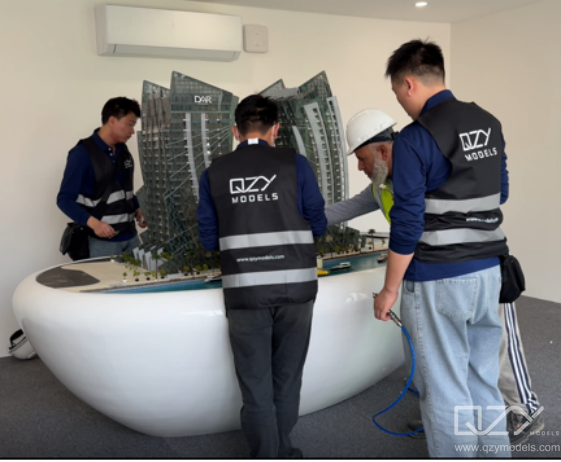
At QZY Models, we frequently accompany major exhibition models to their destination, overseeing installation, lighting calibration, final cleaning, and post-event repacking.
This ensures every model is presented exactly as intended while significantly reducing the risk of damage during setup and dismantling.
For many of our clients, this turnkey service has become just as valuable as the model itself.
A Model That Reflects the Quality of the Development
An architectural scale model often becomes the physical symbol of an entire project.
It represents the developer’s vision.
It reflects the architect’s creativity.
It shapes first impressions for investors, government officials, buyers, and future residents.
For that reason, its condition speaks volumes.
A beautifully maintained model communicates professionalism, attention to detail, and confidence. A neglected one sends exactly the opposite message.
With thoughtful engineering, regular maintenance, and expert support when required, an architectural scale model can continue delivering value throughout the entire lifecycle of a development—from the earliest investor presentations to the final phases of construction and beyond.
At QZY Models, we don’t simply build architectural scale models. We help developers protect their investment long after fabrication is complete, ensuring every model continues to tell the story it was created to represent.
About QZY Models
QZY MODELS is a professional model-making company specializing in architectural scale models, industrial models, and urban planning models for global clients.
With more than 20 years of experience, the team provides complete services including:
architectural model design
model fabrication
international packaging and shipping
on-site installation support
These integrated services ensure that every model can be safely transported and efficiently presented anywhere in the world.
🌐 www.qzymodels.com
📧 [email protected]