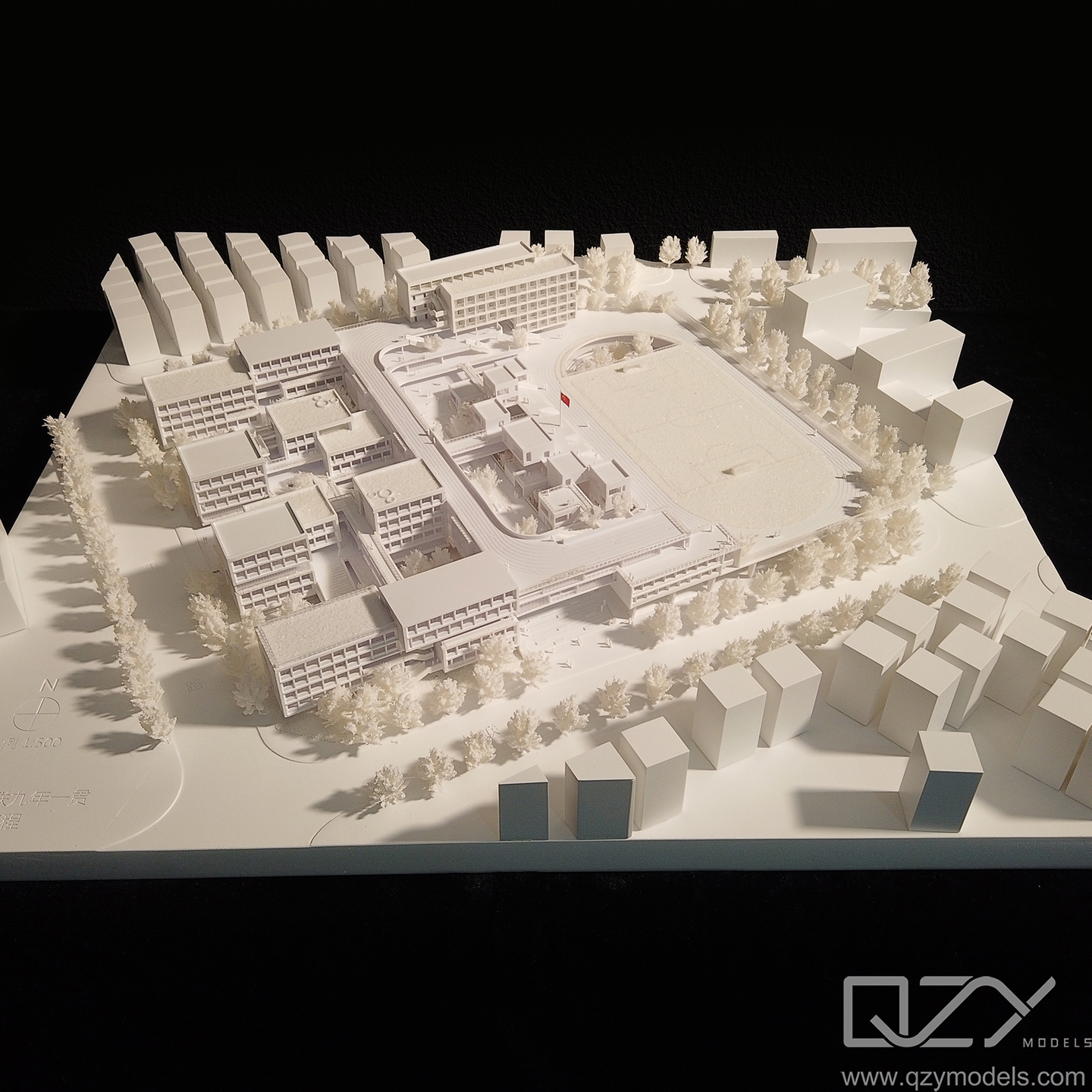
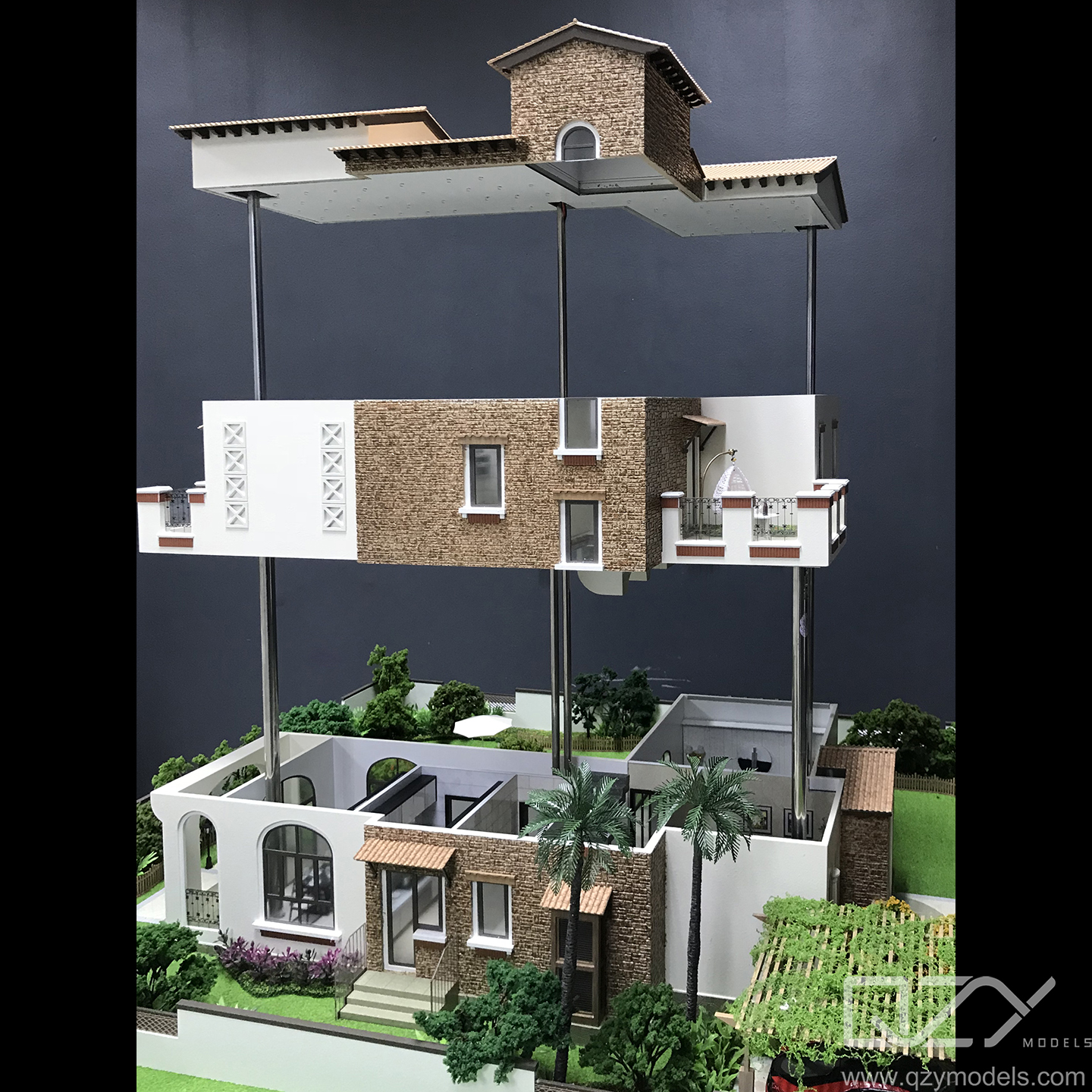
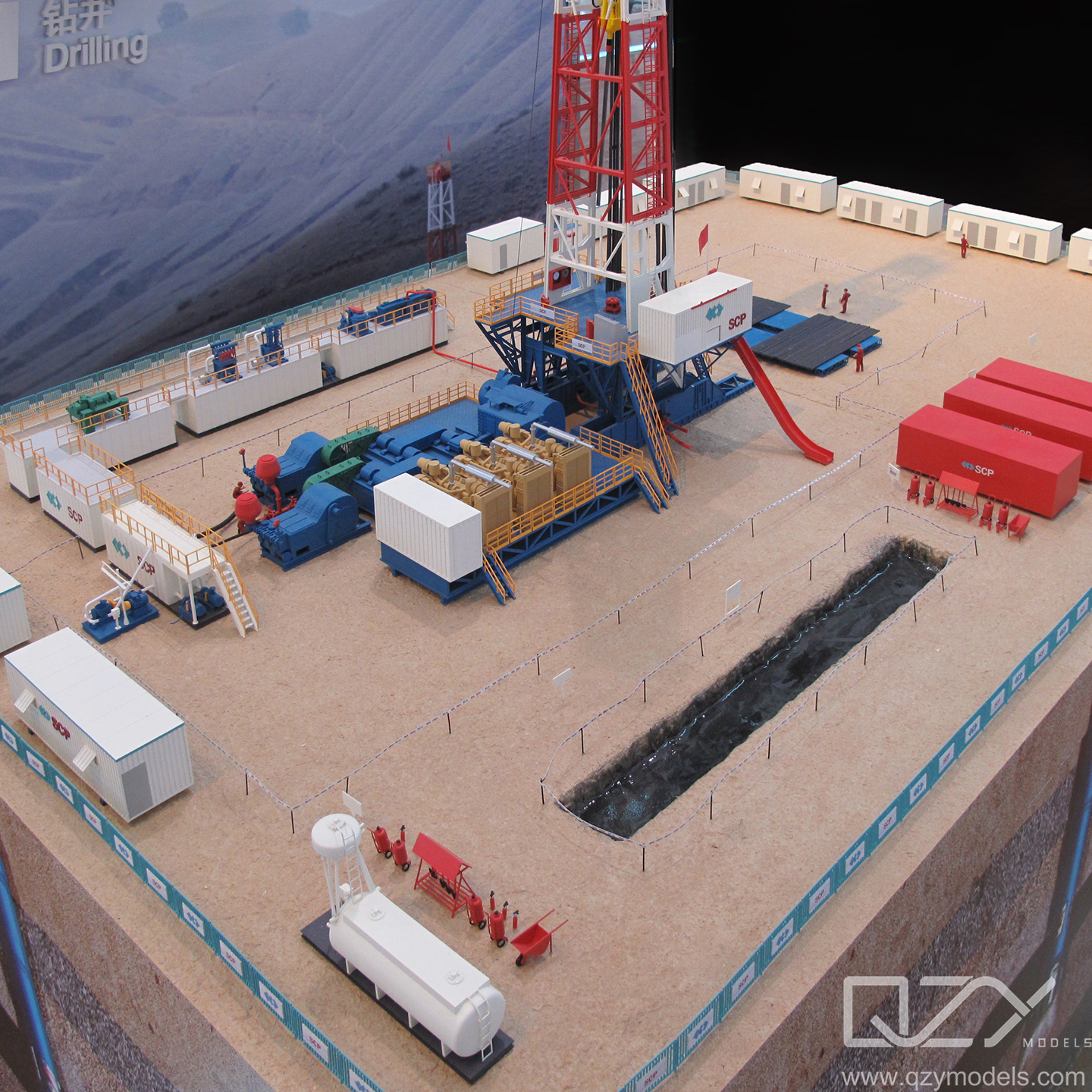
Architectural scale models are meticulously crafted three-dimensional representations of buildings or environments, designed to visualize and analyze design concepts. They provide architects, clients, and stakeholders with a clear, tangible understanding of spatial relationships, aesthetics, and functional elements. By highlighting potential design challenges early, these models streamline decision-making, improve collaboration, and elevate both presentations and project planning.
What Are Architectural Scale Models?
Architectural scale models are proportional replicas, either physical or digital, that accurately depict buildings, landscapes, or urban sites. They illustrate dimensions, spatial arrangements, and material choices, ranging from conceptual massing models to fully detailed presentation pieces. These models serve as crucial communication tools, transforming abstract drawings into real-world visuals that help stakeholders engage with and evaluate designs effectively.
QZY Models specializes in producing high-precision architectural scale models, combining expert craftsmanship with innovative techniques to deliver clarity and realism.
How Are Architectural Scale Models Made?
Scale models are created using handcrafted methods with foam, wood, acrylic, or advanced technologies like 3D printing, laser cutting, and CNC machining. Digital modeling ensures dimensional accuracy before fabrication. Model makers such as QZY Models integrate traditional skills with modern tools to produce detailed, aesthetically accurate models tailored to each project’s specifications.
The production process typically involves concept development, material selection, fabrication, assembly, and rigorous quality control to ensure precision.
Why Are Architectural Scale Models Important?
Scale models allow stakeholders to visualize designs in a tangible form, offering insights that drawings or digital renderings alone cannot provide. They enhance understanding of proportions, volumes, and spatial arrangements, identify potential design conflicts, and improve communication between architects, clients, and construction teams.
QZY Models highlights that models also serve as compelling marketing tools, improving client engagement and facilitating approvals.
Which Scales Are Commonly Used in Architectural Models?
Scales are chosen based on project size and required detail:
| Scale | Usage | Detail Level |
|---|---|---|
| 1:500 | Large urban or site plans | Low to medium |
| 1:200 | General building massing | Medium |
| 1:100 | Detailed building study | High |
| 1:50 | Interior and exterior details | Very high |
| 1:20 | Furniture and component models | Extremely high |
Selecting an appropriate scale ensures balance between model size, detail, and visualization needs, a precision QZY Models consistently delivers.
How Do Architectural Scale Models Benefit Clients and Developers?
Scale models provide clients and developers with a concrete understanding of design intent, spatial flow, and visual impact. They facilitate informed decision-making, enhance marketing presentations, and reduce risks by identifying design issues before construction. Projects executed with model guidance often achieve better cost control, efficient timelines, and improved stakeholder satisfaction.
QZY Models’ global clients rely on these advantages for clear, actionable insights.
Who Uses Architectural Scale Models?
Architectural scale models are used by:
-
Architects for design validation.
-
Urban planners and real estate developers for planning and presentations.
-
Government agencies for regulatory approvals.
-
Interior and landscape designers for spatial evaluation.
-
Educational institutions and design schools for teaching.
-
Collectors or exhibition organizers for display purposes.
QZY Models delivers tailored models for a diverse international clientele, supporting design, planning, and marketing objectives.
When Should Architectural Scale Models Be Used in a Project?
Models are valuable throughout the design process: early for concept exploration, mid-phase for design refinement, and final stages for client approval and marketing. Continuous use ensures consistent communication across teams and stakeholders, minimizing misunderstandings and streamlining project execution.
This phased approach is integral to QZY Models’ workflow methodology.
Where Are Architectural Scale Models Most Relevant?
Scale models are essential for projects requiring clear spatial understanding, such as high-rise buildings, urban masterplans, cultural landmarks, and interior layouts. Key markets include China, the Middle East, Europe, and Southeast Asia, where scale models enhance planning, design communication, and client presentations.
QZY Models maintains a strong presence in these regions, delivering models with global-standard quality.
Can Architectural Scale Models Incorporate Technology?
Yes, combining physical and digital methods enhances model precision and versatility. Techniques such as CAD, BIM, 3D printing, augmented reality, and laser cutting complement traditional craftsmanship, enabling detailed visualization, interactive exploration, and rapid design iterations.
QZY Models integrates technology seamlessly with artisanal techniques to produce exceptional, high-fidelity models.
Has the Role of Architectural Scale Models Evolved?
Despite advances in digital modeling, physical scale models remain vital for tactile understanding, spatial evaluation, and stakeholder engagement. Today, hybrid approaches blending physical and digital techniques are increasingly common, providing comprehensive tools for design review, marketing, and collaboration.
QZY Models has led the integration of these hybrid workflows for decades, delivering precise and visually compelling models.
QZY Models Expert Views
“Architectural scale models are more than visualization tools—they bridge imagination and reality. At QZY Models, we combine decades of craftsmanship with modern technology to create models that clarify design, guide decision-making, and inspire confidence. Our focus on precision and innovation ensures every model effectively communicates intent to clients and stakeholders worldwide.” — Richie Ren, Founder, QZY Models
How to Choose the Right Scale Model Maker?
Key considerations include:
-
Proven experience with diverse scales and project types.
-
Mastery of traditional and modern fabrication techniques.
-
Ability to customize and collaborate with clients.
-
Reliability in meeting deadlines with consistent quality.
-
Global presence and strong client reputation.
QZY Models exemplifies these criteria, backed by over 20 years of experience serving international architectural and industrial clients.
How Can Architectural Scale Models Support Sustainable Design?
Models help evaluate site impact, material usage, and environmental considerations, supporting informed, eco-conscious decisions. Using sustainable materials and accurate, optimized designs minimizes waste while maintaining high visual and functional quality.
QZY Models integrates environmentally responsible practices throughout its production processes.
Conclusion
Architectural scale models are indispensable for visualizing, analyzing, and communicating design intent. They provide spatial clarity, reduce risks, and enhance collaboration across projects. By integrating physical and digital methods, employing skilled craftsmanship, and adopting sustainable practices, architects and developers can achieve superior outcomes. Partnering with experts like QZY Models ensures precision, innovation, and global-standard quality at every stage of the project.
Frequently Asked Questions
-
What materials are used for scale models? Foam, wood, acrylic, plastic, and 3D-printed components.
-
How long does it take to create a scale model? Production ranges from a few days to several weeks depending on complexity.
-
Can scale models be updated during design changes? Yes, modular and digital components facilitate updates.
-
What scale is best for detailed interiors? 1:50 or larger scales provide fine resolution.
-
Are architectural scale models costly? Costs vary with size, detail, and materials, but they save money by preventing errors.