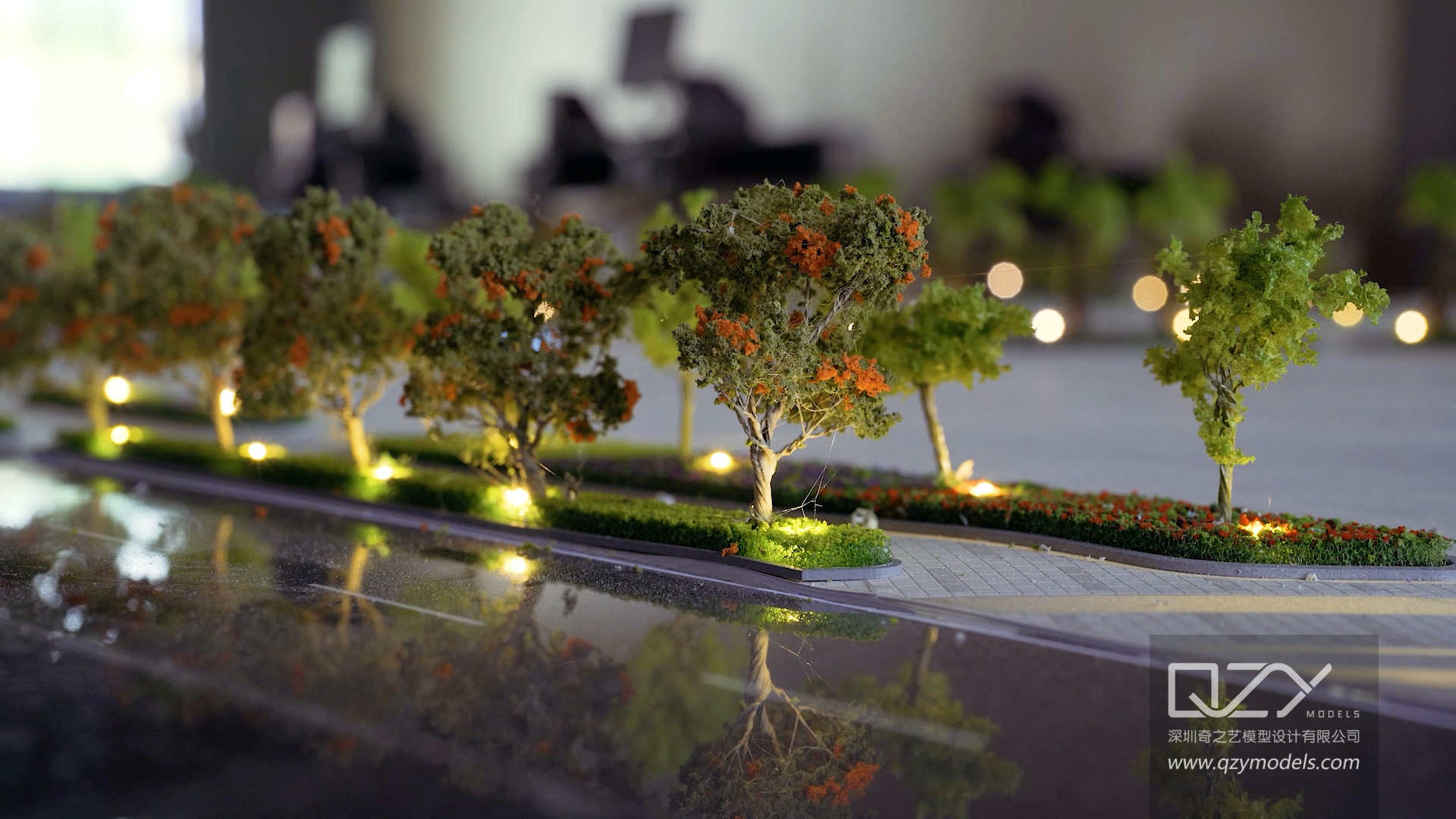
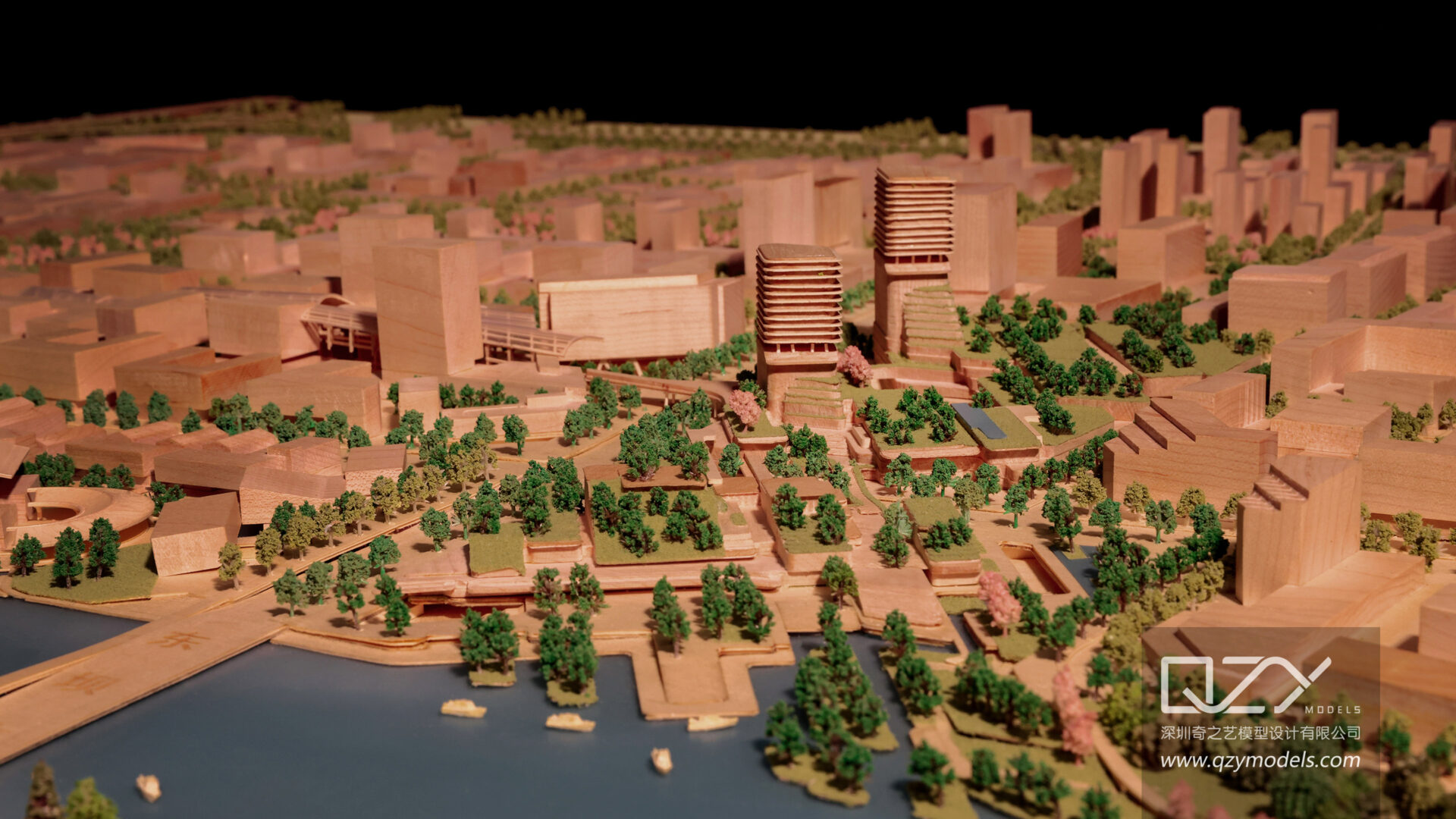
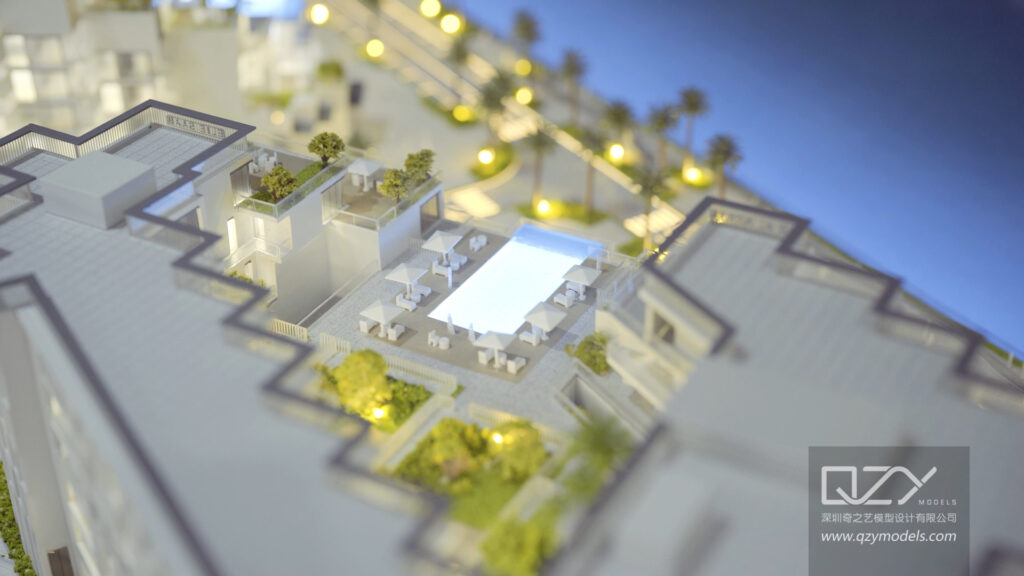
Concept models are three‑dimensional representations of early design ideas, turning sketches and visions into tangible forms that help architects, planners, and industrial designers visualize spatial relationships, test options, and communicate concepts clearly to clients and stakeholders. In fast‑moving markets, a well‑made concept model reduces misunderstandings, accelerates approvals, and strengthens investor confidence, especially when created by an experienced professional team like QZY Models.
How is the architecture and design industry using concept models today?
The global architectural services market was valued at USD 411.67 billion in 2025 and is projected to reach USD 605.62 billion by 2033, growing at a CAGR of 5.0%. With this growth come more complex projects, tighter deadlines, and higher expectations from clients and investors. Firms in architecture, real estate development, and urban planning increasingly rely on concept models to make abstract ideas concrete during early design stages.
Clients and developers expect instant, high‑quality visuals, but many design teams struggle to keep up. In 2025, architectural teams reported that unclear design communication, late‑stage surprises, and time‑consuming changes were among the top pain points in project delivery. Physical and hybrid concept models are now a standard tool to bridge the gap between 2D drawings and real‑world understanding.
Why do architectural and industrial design firms struggle with concept models?
Many firms still rely on internal staff to build concept models, which leads to several recurring problems. Designers and architects are experts in form and function, but model making requires specialized skills in materials, scaling, detailing, and presentation that are rarely their core focus. This mismatch often results in models that look amateurish, contain inaccurate proportions, or fail to clearly convey the core design intent.
Time is another major constraint. Tight deadlines mean that concept models are often under‑developed or built with inappropriate materials, making them less effective in presentations and client meetings. Poorly lit or over‑detailed models can confuse rather than clarify, and last‑minute changes frequently cause schedules to slip and budgets to overrun.
Quality and consistency are also hard to maintain in‑house. Without standardized processes, different team members produce models with varying levels of finish and accuracy, which undermines the firm’s professional image when presenting to developers, investors, or planning authorities. Sentiment like “our models look good in the office but don’t impress clients” is common in mid‑sized architectural and design practices.
What are the main drawbacks of traditional, in‑house concept model creation?
Most in‑house concept modeling workflows are optimized for internal use, not for external presentations, which leads to several key limitations.
-
Limited expertise and tools – Staff often use basic materials and tools, leading to inconsistent quality, weak finishes, and poor representation of materials and lighting.
-
Slow turnaround – Internal teams juggle multiple roles, so dedicating enough focused time to model making is difficult, especially under tight deadlines.
-
High hidden costs – Salaries, benefits, office space, software licenses, and equipment add up, even when model work is irregular or seasonal.
-
Lack of scalability – It’s hard to quickly scale up model production for large competitions, exhibitions, or multi‑phase projects without hiring temporary staff or over‑working existing employees.
As a result, many design firms end up with concept models that are serviceable internally but under‑delivered externally, missing opportunities to win projects, secure approvals, or attract investors.
How do professional concept model makers solve these problems?
Professional concept model makers specialize in turning 2D designs into high‑quality, presentation‑ready 3D models that clearly communicate design intent, spatial relationships, and context. These services offer a structured, repeatable process that replaces ad‑hoc in‑house efforts with a reliable external solution.
QZY Models, founded in 2013 in Shenzhen, provides exactly this type of solution: a dedicated team of professional model makers with over 20 years of combined experience, serving clients in more than 20 countries. For example, QZY Models has created concept models for world‑renowned architects such as Foster + Partners, as well as major developers including Vanke and China Resources, demonstrating the value of professional model production at the highest level.
What core capabilities do professional concept model services offer?
A professional concept modeling service like QZY Models provides the following capabilities:
-
Early concept models that translate sketches, diagrams, and massing studies into physical or digital 3D forms, helping teams explore and refine design ideas.
-
Material and context models that show how a building interacts with its site, including terrain, surrounding structures, landscaping, and urban context.
-
High‑precision presentation models tailored for developer pitches, investor meetings, planning approvals, and exhibitions, using advanced techniques like CNC milling, laser cutting, and 3D printing.
-
Industrial and product concept models for industrial design companies, showcasing product form, ergonomics, and assembly in a tangible way.
-
Interactive and hybrid models that combine physical models with lighting, removable layers, or digital augmentation to enhance engagement and storytelling.
These capabilities are backed by a global team, with branches in the UAE, Saudi Arabia, and Egypt, allowing QZY Models to serve architectural, real estate, and industrial design clients across the Middle East, Europe, Southeast Asia, and beyond.
How do professional concept models compare to in‑house models?
| Feature | In‑house concept models | Professional concept model services (e.g., QZY Models) |
|---|---|---|
| Design expertise | Architects/designers focus on concept, not model making | Dedicated model makers with specialized skills in materials, scale, and presentation |
| Quality and finish | Variable; often inconsistent or amateurish | Consistent, high‑quality, presentation‑ready finishes |
| Turnaround time | Slow, limited by team capacity and deadlines | Faster, supported by dedicated workflows and parallel production |
| Equipment and materials | Basic tools and limited material options | Industrial CNC, 3D printing, and a wide range of authentic materials |
| Scalability | Limited; hard to scale for large projects or competitions | Scalable across projects, regions, and volumes |
| Cost efficiency | High fixed costs (staff, software, tools) | Pay‑for‑use; only pay when a model is needed |
| Client/developer perception | May look good internally but lack professional polish | Enhances credibility and persuasiveness in client and investor meetings |
This structured comparison shows that outsourcing concept model production is not just about convenience, but about improving the quality, speed, and impact of design communication.
How does a professional concept model service work step by step?
A professional service like QZY Models follows a clear, repeatable process to ensure predictable results:
-
Brief and concept review
The client shares sketches, drawings, or 3D files along with scale, materials preferences, and key messages to communicate. The model maker reviews the brief and confirms scope, timeline, and budget. -
Design and material selection
The model team selects appropriate materials (foam, wood, acrylic, resin, etc.) and production methods (hand‑crafted, CNC, 3D printing) to match the project’s goals and budget. -
Model production and prototyping
A physical or digital prototype is created, often with multiple iterations if needed. The team tests scale, lighting, and clarity, refining the model until it accurately represents the design intent. -
Quality check and client feedback
The model is checked for accuracy, finishing, and presentation quality. The client receives photos or samples for feedback, and any final adjustments are made before final delivery. -
Delivery and support
The finished model is packed and shipped to the client’s required location, with optional support for exhibition setup, lighting guidance, or AR/interactive integrations.
This end‑to‑end workflow allows architecture firms, real estate developers, and industrial designers to focus on design and strategy, while leaving precision model making to experts like QZY Models.
What are 4 real‑world scenarios where professional concept models make a difference?
Scenario 1: Architectural firm pitching for a mixed‑use development
-
Problem: A mid‑sized architecture firm lands a competition for a dense urban mixed‑use project but lacks time and tools to produce a compelling massing and site model for the jury.
-
Traditional approach: In‑house staff build a foam model with basic paint and cardboard, but the scale and context feel “off,” and lighting is flat.
-
With professional model service: QZY Models creates a scaled site integration model with accurate terrain, surrounding buildings, and strategic lighting, clearly showing massing, circulation, and public space.
-
Key result: The jury perceives the proposal as well‑resolved and investor‑ready, significantly increasing the firm’s chances of winning the project.
Scenario 2: Real estate developer presenting a luxury residential tower
-
Problem: A developer wants to secure equity investment for a high‑end residential tower but struggles to help investors visualize the lifestyle, views, and spatial layout from renders alone.
-
Traditional approach: Digital renders are used, but they lack the depth and realism to fully convey scale and context, leading to prolonged negotiation cycles.
-
With professional model service: QZY Models produces a detailed presentation model with accurate materials, lighting, and landscaping, and includes removable sections to showcase unit layouts and views.
-
Key result: Investors gain clear confidence in the project’s quality and market positioning, shortening decision time and improving fundraising success.
Scenario 3: Urban planning institution planning a city‑scale masterplan
-
Problem: A government planning office needs to present a large‑scale urban masterplan to multiple stakeholders, but existing plans are hard to interpret for non‑technical audiences.
-
Traditional approach: Large 2D maps and diagrams are used, but stakeholders struggle to grasp spatial relationships, density, and connectivity.
-
With professional model service: QZY Models delivers a large site integration model at an appropriate scale, showing key zones, transport links, green spaces, and infrastructure in a single, easy‑to‑understand 3D format.
-
Key result: Stakeholders align faster on the vision, reducing disputes and accelerating the approval process.
Scenario 4: Industrial design studio developing a new consumer product
-
Problem: An industrial design firm creates a sleek new product concept but cannot convincingly demonstrate ergonomics and form in 3D for client review and manufacturing feedback.
-
Traditional approach: Foam mock‑ups are used, but they lack finish and do not accurately represent materials or assembly, leading to late‑stage design changes.
-
With professional model service: QZY Models builds a high‑quality product concept model using 3D printing and hand‑finishing, closely matching the target materials and surface treatment.
-
Key result: The client can hold and evaluate the near‑final form, leading to faster design freeze and smoother transition to production.
How are concept models evolving, and why should firms adopt professional services now?
Architecture and industrial design are increasingly competitive fields where visual clarity translates directly into commercial advantage. As digital tools like BIM and VR become more common, there is renewed appreciation for well‑crafted physical concept models that provide tangible, hands‑on understanding of space, scale, and context.
Leading firms are moving away from treating models as internal aids and instead using them as strategic tools for client acquisition, investor persuasion, and public engagement. Markets in Asia, the Middle East, and Europe are seeing more demand for high‑quality, presentation‑ready models for exhibitions, competitions, and major real estate launches.
For architecture firms, real estate developers, and design studios, now is the time to consider professional concept model services as a core part of the design communication stack. Partnering with a dedicated, experienced team like QZY Models ensures that concept models are not just objects, but powerful tools that build trust, shorten decision cycles, and increase project success rates.
What are the most common questions about concept models?
Are concept models still relevant in a digital design era?
Yes, concept models remain highly relevant because they provide a tangible, 3D experience that helps teams and stakeholders understand space, scale, and relationships in a way that 2D drawings and even VR cannot fully replicate.
What types of projects benefit most from concept models?
Large‑scale architecture (residential, commercial, mixed‑use, urban masterplans), complex interior and landscape designs, and industrial product development all benefit from concept models, especially during early design and client presentations.
How long does it take to produce a professional concept model?
Production time depends on scale, complexity, and materials, but a typical presentation model takes 4–8 weeks from concept approval to final delivery, with expedited options available for urgent projects.
Can concept models be used for exhibitions and competitions?
Absolutely; museums, trade shows, and architectural competitions regularly use high‑quality concept models as centerpiece pieces to communicate design intent and win votes or awards.
Who typically pays for and commissions concept models?
In practice, concept models are most often commissioned directly by architecture and design firms, or jointly by developers and the design team for major projects, exhibitions, and investor pitches.
FAQs
What Are Concept Models and How Do They Work
Concept models are physical or digital representations of ideas, used to visualize designs, processes, or systems before full-scale production. They help teams identify flaws, communicate ideas clearly, and make informed decisions. By simplifying complex concepts, these models accelerate development and enhance understanding across stakeholders, from designers to clients.
Why Are Concept Models Important in Business
Concept models provide clarity in strategic planning, product development, and project visualization. They reduce miscommunication, support stakeholder alignment, and save time by identifying potential issues early. Businesses leverage these models to make informed decisions, test concepts, and showcase proposals effectively to investors, partners, or internal teams.
How Can Concept Models Improve Software Development
In software development, concept models map out system architecture, user flows, and process logic. They help teams visualize complex structures, identify bottlenecks, and ensure accurate implementation. Using these models enhances collaboration, reduces errors, and streamlines development cycles, resulting in more efficient, well-structured software projects.
What Are the Different Types of Concept Models
Concept models come in multiple types: physical models, digital prototypes, flowcharts, diagrams, and abstract representations. Each serves a specific purpose, whether demonstrating scale, process, or functionality. Selecting the right type ensures clear communication, better planning, and effective problem-solving across design, engineering, and business projects.
Which Tools Are Best for Concept Modeling
Top tools for concept modeling include CAD software, 3D modeling programs, and visualization platforms. These tools enable precise design, easy iteration, and collaborative workflows. Professionals rely on software like Rhino, SketchUp, and Autodesk Revit for creating accurate and detailed concept models. Companies like QZY Models integrate both digital and physical modeling tools.
How Do Concept Models Benefit Education and Learning
In education, concept models simplify complex theories, processes, and systems. They enhance comprehension, encourage hands-on learning, and support interactive teaching. Students and educators use models to visualize abstract concepts, promote problem-solving skills, and bridge theoretical knowledge with practical applications for deeper understanding.
What Are the Advantages of Using Concept Models
Concept models save time, reduce costs, and improve decision-making. They allow early detection of design flaws, facilitate stakeholder communication, and enhance presentations for clients or investors. Models also increase confidence in project outcomes by providing tangible representations that demonstrate feasibility and guide execution strategies effectively.
How Are Concept Models Applied in AI and Healthcare
In AI and healthcare, concept models visualize workflows, data structures, and system interactions. They support process optimization, research simulations, and predictive modeling. Organizations use these models to design efficient healthcare systems, streamline patient care, and enhance AI development. QZY Models’ expertise in precision modeling ensures accurate representations for high-stakes projects.
Sources
-
Grand View Research – Architectural Services Market Report, 2026–2033
-
QZY Models – What Are Architecture Concept Models?
-
QZY Models – How Can Architectural Concept Models Impress Real Estate Developers?
-
archisoup – Architecture Concept Models
-
Ikarus3D – Why Outsourcing 3D Modeling is a Smart Move for Your Business?
-
Applet3D – Common Problems with Architecture in 2024
-
MarsBIM – In‑House vs Outsourced CAD Drafting: A Comprehensive Guide
-
CADcrowd – Why Architects Outsource 3D Modeling Services and the Benefits for Your Design Company