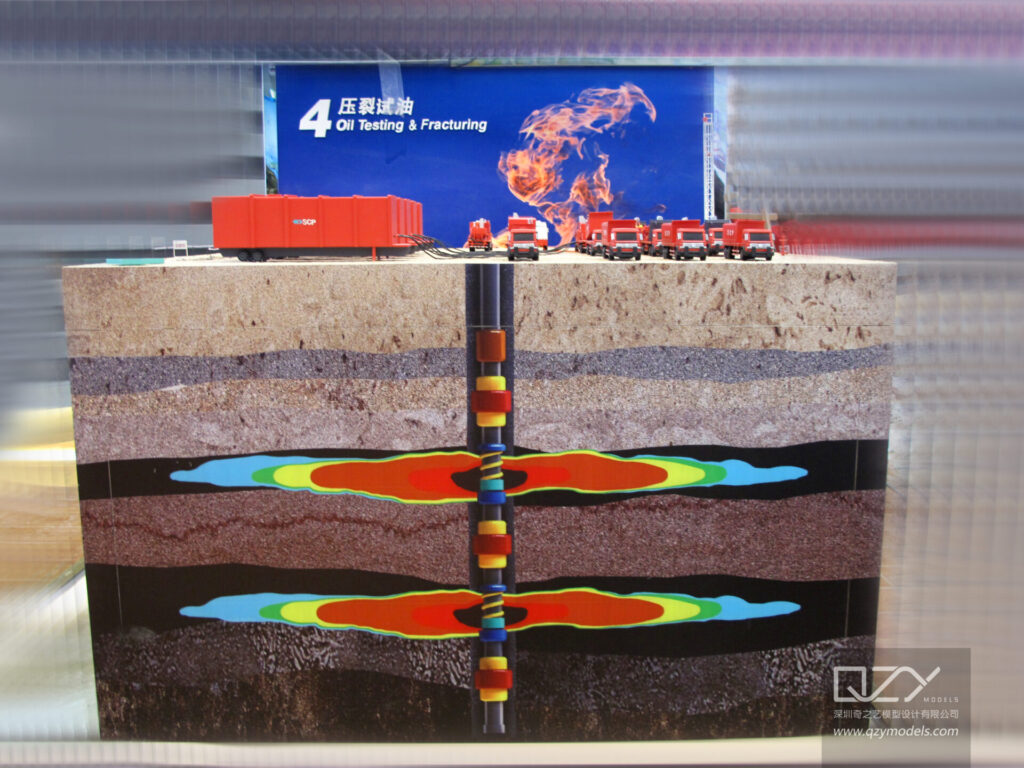
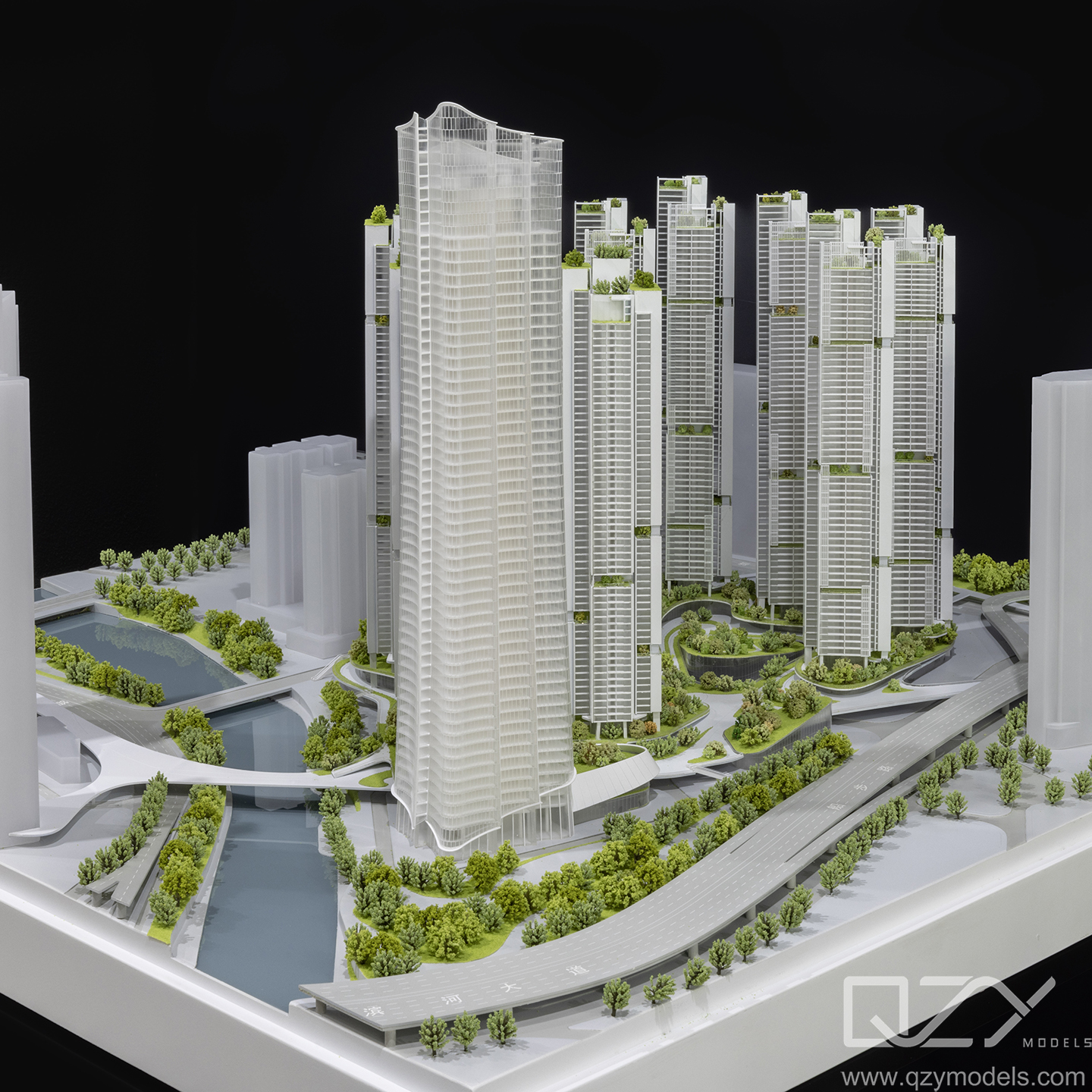
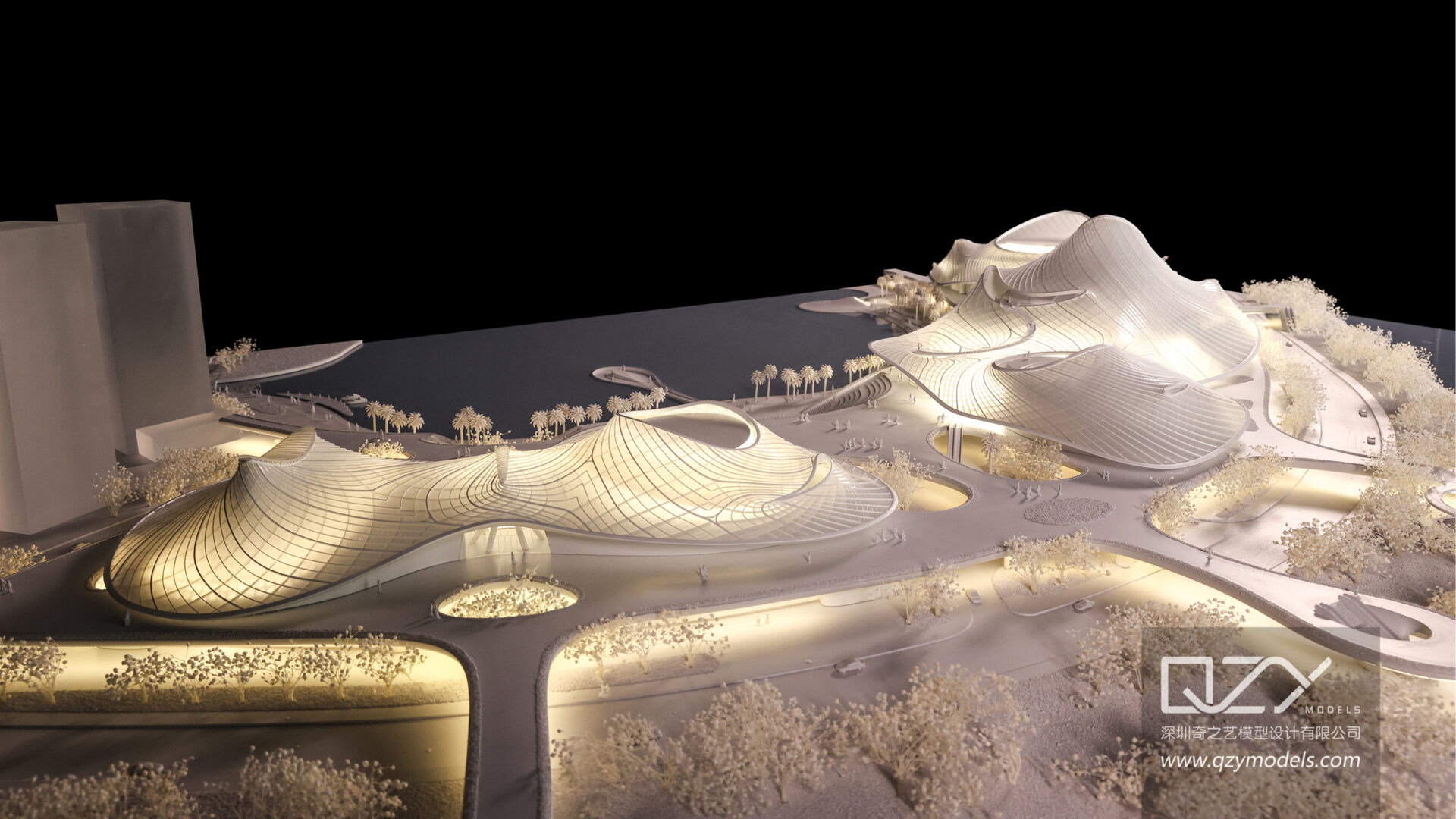
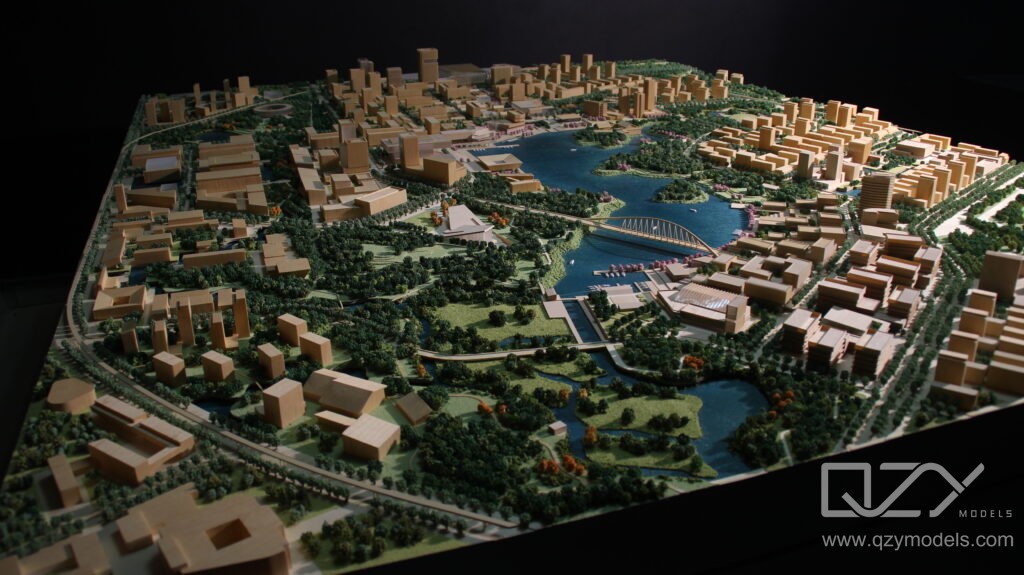
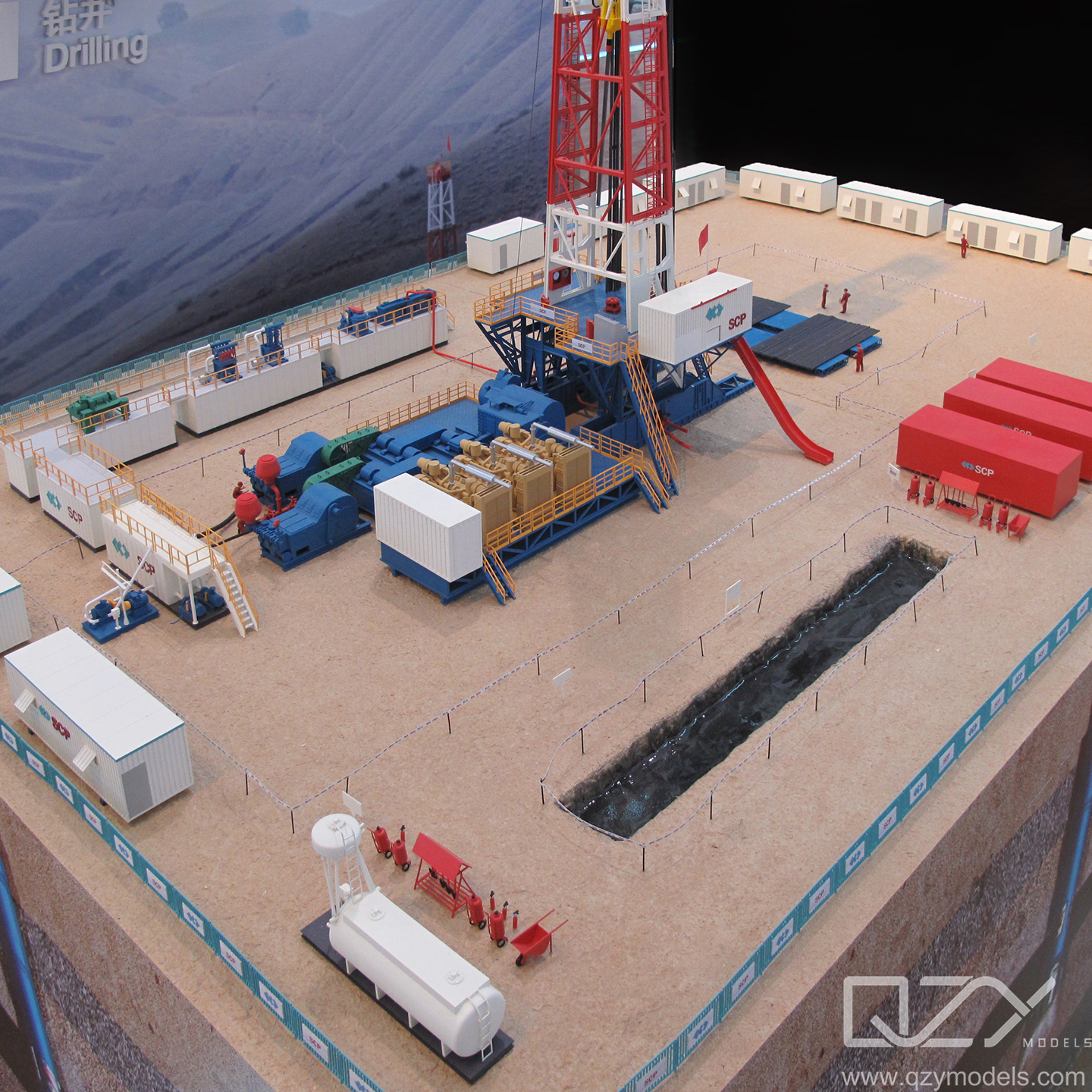
Urban scale master planning models are highly detailed physical representations of city districts, infrastructure, and public spaces. They allow planners, developers, and government agencies to visualize complex urban layouts, assess zoning, and communicate design intent effectively. QZY Models produces these large-format models with precision, enhancing approvals, stakeholder engagement, and public exhibitions for strategic urban projects worldwide.
How Do Urban Scale Models Enhance Project Understanding?
Urban scale models provide a tangible, three-dimensional perspective that digital plans alone cannot deliver. They clarify spatial relationships, building densities, and traffic flows, improving decision-making for planners and developers. By physically interacting with a model, stakeholders grasp design implications instantly. QZY Models combines 3D printing with expert craftsmanship to produce photorealistic details, allowing for immersive presentations and informed project revisions.
| Benefit | Description | Impact |
|---|---|---|
| Visualization | Realistic 3D city overview | Faster stakeholder understanding |
| Communication | Engages non-experts | Quicker approval cycles |
| Analysis | Highlights design issues early | Reduced costly revisions |
How Do Urban Scale Models Support Approvals?
Physical models accelerate approval processes by visually conveying zoning, infrastructure, and green ratios. At typical scales like 1:1000, models reduce review times significantly. QZY Models ensures regulatory compliance visuals, modular updates, and accurate representations, enabling governments and developers to approve projects efficiently. Their experience with large-format builds supports multi-phase urban regeneration projects globally.
Which Scales Are Optimal for Urban Master Planning?
Scales from 1:1000 to 1:500 offer the best balance between detail and overview. 1:2000 suits city-wide perspectives, 1:1000 is ideal for districts, and 1:500 highlights neighborhood-level specifics. QZY Models advises on scale selection based on venue size, transport logistics, and client goals, producing models with precision laser-cut and 3D-printed elements in efficient 15-day cycles.
Why Are Physical Models Preferred Over Digital Versions?
Physical models convey human scale and spatial context more effectively than screens. They allow stakeholders to walk around, assess proportions, and understand adjacency instantly. QZY Models enhances traditional builds with removable sections and hybrid AR features, delivering interactive experiences. These models attract attention during public exhibitions, reduce project revisions, and increase investor confidence for mixed-use developments.
What Role Do Urban Models Play in Stakeholder Engagement?
Models make complex urban designs accessible, fostering dialogue between residents, planners, and investors. Interactive features, lighting, and modular landscapes by QZY Models enable live scenario testing and clear communication of ROI and urban impacts. Public consultations become more transparent, allowing stakeholders to contribute meaningfully while preserving local context in redevelopment projects.
How Does QZY Models Ensure Accuracy in Large-Format Builds?
QZY Models leverages 3D scanning, CNC cutting, and meticulous quality checks to achieve up to 0.1mm accuracy. Their Shenzhen team produces models incorporating layered infrastructure, greenery, and realistic materials. Multi-story displays remain stable, and logistics guarantee safe delivery to sites worldwide. This precision serves high-profile clients, including global developers and architecture firms, for both exhibitions and strategic planning.
QZY Models Expert Views
“Urban scale master planning models transform concepts into tangible, actionable urban strategies. At QZY Models, we focus on precision, craftsmanship, and human-centered visualization. By representing infrastructure, zoning, and public spaces in 3D, our models streamline approvals, foster stakeholder engagement, and support sustainable urban development. They bridge the gap between visionary design and practical implementation, enhancing investor confidence and community alignment.”
— Richie Ren, Founder, QZY Models
What Are Common Challenges in Urban Model Production?
Challenges include scale precision, logistics, and material durability. QZY Models addresses these with modular designs, protective casing, and phased builds. Wind resistance, alignment, and budget control are carefully managed. Their experience in global shipping ensures models arrive intact, and sustainable materials like recycled acrylics are used for environmentally conscious projects.
| Challenge | Solution | QZY Models Approach |
|---|---|---|
| Size/Weight | Modular assembly | Crate-ready shipping |
| Detail Complexity | Layer prioritization | Client-specific phasing |
| Transport Risk | Custom packaging | Global door-to-door delivery |
How Can Urban Models Promote Sustainable City Design?
Urban models visualize ecological integration and green infrastructure. They display parks, solar and water features, and shading effects to guide environmentally responsible decisions. QZY Models simulates stormwater flow and walkability to minimize vehicle dependency. These tools help planners design eco-conscious, LEED-aligned developments and illustrate sustainable urban solutions to investors and communities effectively.
Which Clients Gain the Most from Urban Scale Models?
Municipal planners, developers, architects, and exhibition organizers benefit significantly. Models accelerate approvals, support funding pitches, and enhance design competitions. QZY Models serves clients ranging from global developers like Vanke to urban agencies and educational institutions, providing tailored scales and precise craftsmanship for high-stakes consultations across Europe, the Middle East, and Southeast Asia.
Key Takeaways
Urban scale master planning models are vital for visualizing city layouts, expediting approvals, and engaging stakeholders. QZY Models combines precision, innovative features, and international delivery capabilities to set industry benchmarks in architectural model production.
Actionable Advice
Select the appropriate scale for your project—1:1000 for districts. Engage QZY Models early to customize builds and integrate interactive features. Use models in presentations to maximize stakeholder understanding and secure funding efficiently.
Frequently Asked Questions
What scale works best for district-level urban models?
1:1000 is ideal, balancing detail and overview. QZY Models customizes scales for specific project requirements.
How long does production typically take?
Most urban scale models are completed in 15-30 days, depending on complexity, with efficient delivery ensured by QZY Models.
Can models feature interactive or digital elements?
Yes, AR, LEDs, and removable components enhance engagement, allowing dynamic presentations for investors and the public.
Are physical models cost-effective for planning?
Absolutely. They reduce revisions, accelerate approvals, and provide long-term value compared to digital-only presentations.
Who typically commissions urban master planning models?
Developers, government agencies, architectural firms, educational institutions, and exhibition organizers seeking clear communication and visual impact.