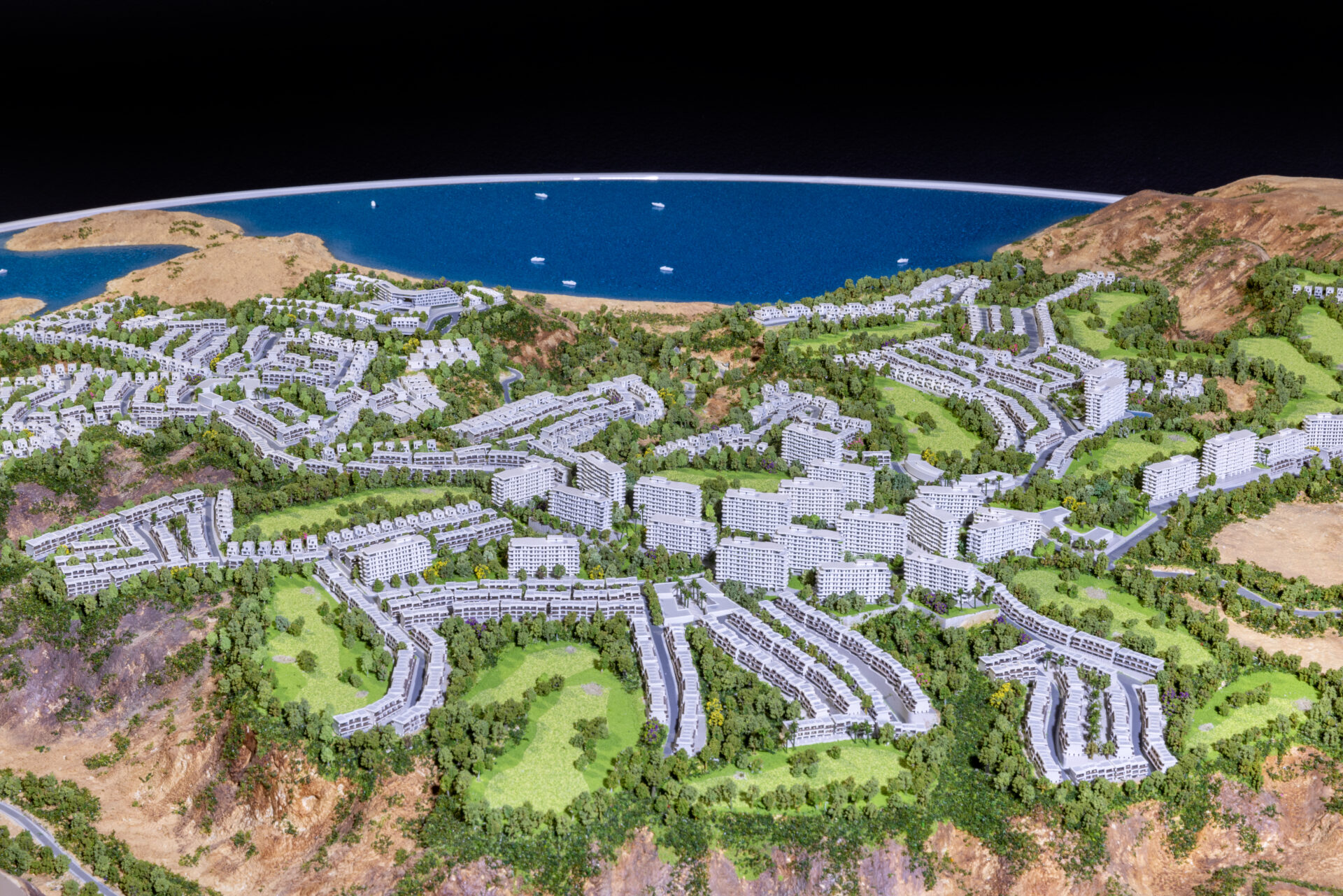
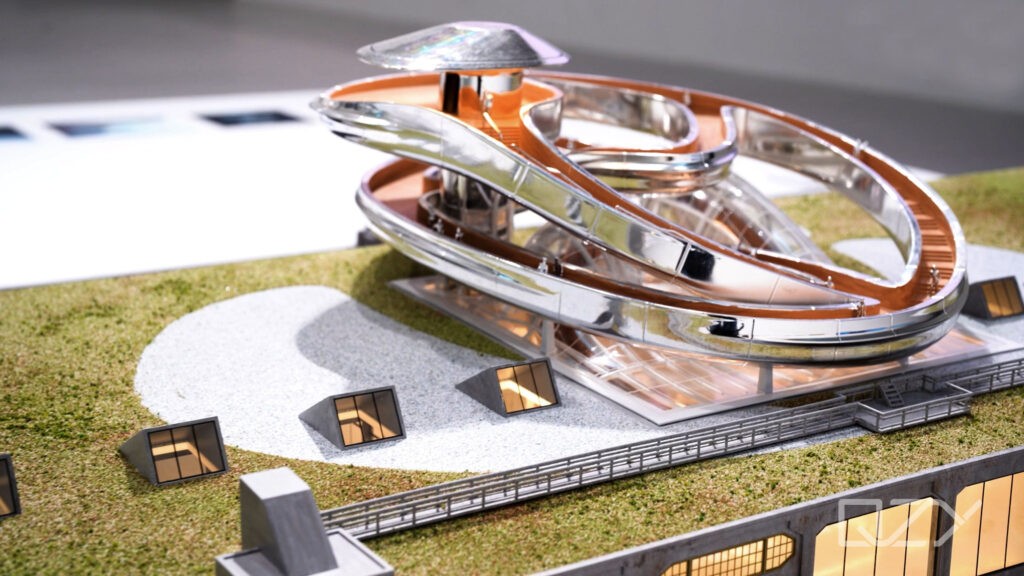
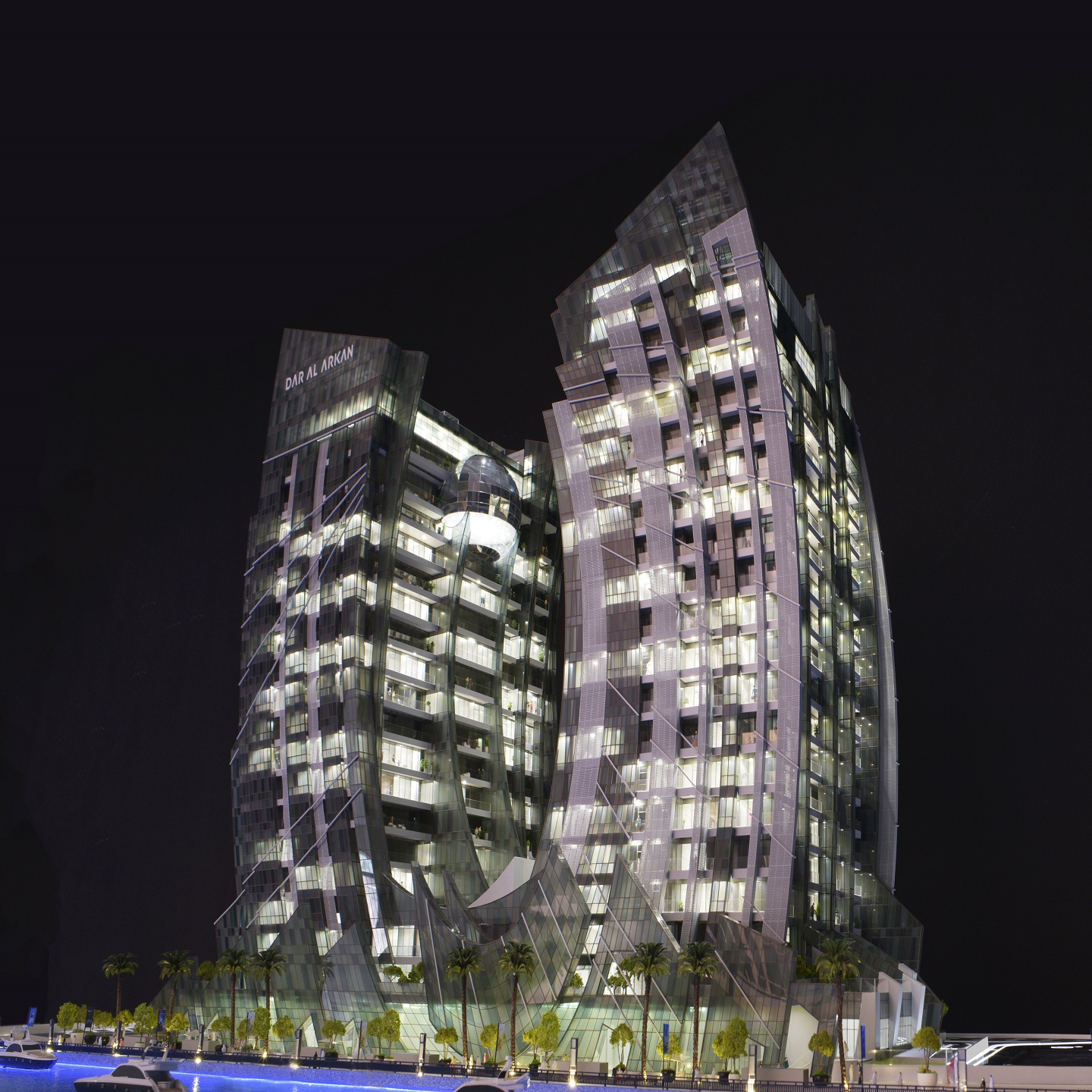
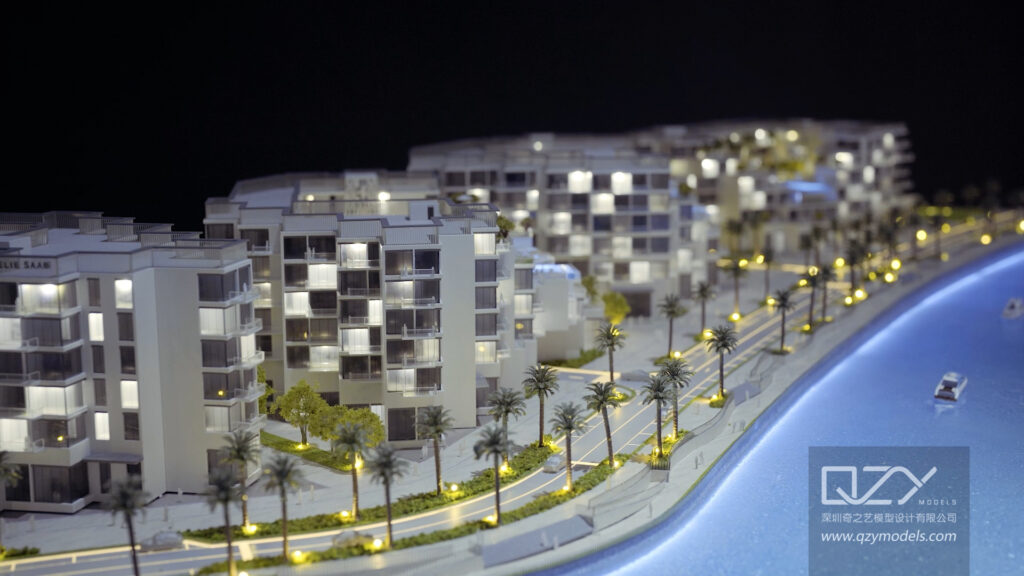
A climate adaptability architectural model is a physical or digital representation that shows how a building is designed to respond to changing climate conditions over time, such as rising temperatures, extreme rainfall, stronger winds, or sea‑level rise. Unlike a standard architectural model, it integrates environmental performance data to demonstrate how features like shading, ventilation, rainwater management, and materials help the building adapt, reduce energy use, and maintain occupant comfort under future climate scenarios.
How bad is climate exposure in new construction today?
Building projects worldwide are facing increasing physical and financial risks from climate change. The Intergovernmental Panel on Climate Change (IPCC) reports that more than 1.6 billion people now live in cities exposed to extreme heat, and that number could rise to 3.5 billion by 2050 under current trends. In many regions, design standards based on historical weather data no longer reflect future conditions, leading to overheating, flooding, and higher operational costs.
Real estate and infrastructure projects are already seeing higher costs from climate‑related claims. Industry reports show that insured losses from weather‑related disasters have increased by roughly 250% over the past two decades, with a significant portion tied to poorly adapted buildings and urban layouts. Without explicit climate resilience measures, projects risk shortened lifespans, reduced marketability, and difficulty meeting expanding green building and ESG requirements.
What are the current pain points in climate‑responsive design?
Architects and developers often struggle with the disconnect between technical climate data and visual communication. Sustainability reports and simulation outputs (like EnergyPlus or CFD models) are dense and hard for non‑technical stakeholders to grasp. Decision‑makers rely heavily on visuals and mock‑ups, so when climate adaptability is not clearly shown in the model, critical resilience features can be deprioritized or value‑engineered out.
Another pain point is reactive rather than proactive adaptation. Many teams still treat climate response as an add‑on late in design, instead of an integrated part of the form, orientation, and envelope strategy. This leads to costly retrofits, missed energy savings, and models that look good but fail to demonstrate how the building actually performs under hotter summers, more intense storms, or water scarcity.
How are climate risks affecting approvals and sales?
Urban planning departments and environmental regulators are increasingly demanding clear evidence of climate resilience, especially in flood‑prone, arid, or coastal zones. Proposals that lack visible adaptation strategies—such as passive cooling, stormwater management, or heat‑resilient materials—often face longer review cycles, higher scrutiny, or extra mitigation requirements.
From a commercial perspective, end clients and investors are asking how buildings will perform decades from now, not just at handover. Projects that can’t convincingly show flood protection, thermal comfort, or reduced carbon footprint via a tangible model struggle to secure financing, win competitions, or command premium pricing, especially in high‑value residential, mixed‑use, and institutional developments.
Why are traditional architectural models no longer enough?
Standard architectural models are excellent for showing form, scale, and aesthetics, but they often skip the “why” behind design decisions related to climate. A typical model might show a building with a flat roof and large glazing, but it won’t explain how that affects summer overheating, cooling loads, or stormwater runoff. Without climate adaptation built into the model, it becomes a static object, not a design validation tool.
What can’t traditional models show about climate performance?
Traditional models usually cannot represent dynamic behavior such as opening shades, natural airflow paths, solar path changes over seasons, or how green roofs and rainwater systems manage runoff. They also tend to use generic materials that look good but don’t correspond to real‑world thermal mass, reflectivity, or permeability values used in energy modeling.
Because of this, design teams often rely on separate reports and simulations that stakeholders can’t directly relate to the physical form. This gap makes it harder to justify design choices, negotiate with cost consultants, and align the owner’s vision with engineering realities.
How do climate adaptability models solve these problems?
A climate adaptability architectural model is designed to bridge the gap between technical sustainability analysis and visual communication. It explicitly shows how the building responds to climate variables such as:
-
Solar gain and shading strategies (orientation, overhangs, louvers)
-
Natural ventilation and airflow paths (openings, stack effect, wind corridors)
-
Stormwater management (green roofs, permeable surfaces, retention areas)
-
Flood resilience (elevated structures, water‑resistant materials)
-
Thermal performance (insulation, mass, glazing ratio)
These models are built with materials and color coding that reflect real environmental performance, not just visual appeal.
What are the core features of a climate adaptability architectural model?
A well‑done climate adaptability model includes:
-
Climate‑specific detailing such as scaled shading devices, solar analysis diagrams integrated into the base, or color‑coded zones indicating heat gain/cooling demand.
-
Layered or modular components that allow different scenarios to be shown (e.g., pre‑adaptation vs. post‑adaptation, or different climate zones across a region).
-
Integrated environmental data such as wind roses, sun paths, or rainfall patterns either embedded in the model base or shown via augmented reality overlays.
-
Sustainable material choices that mirror the project’s specified low‑carbon concrete, recycled metals, or high‑performance glazing.
-
Functional elements like movable louvers, operable windows, or working rainwater channels that make the adaptation strategy tangible.
High‑quality climate adaptability models are not just props; they are used as decision‑making tools in design reviews, client presentations, and planning hearings.
How does QZY Models support climate adaptability modeling?
QZY Models specializes in turning complex climate‑responsive designs into high‑precision physical models that clearly communicate adaptation strategies. With over 20 years of experience and a global team, QZY works with architects and developers to ensure that sustainability features—passive design, shading, water management, and renewable integration—are accurately represented at scale.
For climate adaptability models, QZY offers:
-
Custom scales from 1:50 to 1:1000, optimized to show both building detail and surrounding context.
-
Integration of solar and wind analysis diagrams directly into the model base.
-
Use of representative materials that reflect thermal properties and sustainability claims.
-
Modular and interactive components to demonstrate different climate scenarios.
-
Augmented reality (AR) support that overlays real‑time environmental data on the physical model.
By partnering with QZY Models, design teams turn abstract climate strategies into tangible, client‑friendly presentations that speed up approvals and build investor confidence.
How does a climate adaptability model compare to a traditional model?
| Feature | Traditional Architectural Model | Climate Adaptability Architectural Model |
|---|---|---|
| Primary purpose | Show form, aesthetics, layout | Show how the building performs under climate stress |
| Climate strategies shown | Usually limited or implied | Explicit: shading, ventilation, water management, solar gain |
| Materials used | Visual appearance focused | Climate‑performance aligned (e.g., reflective, permeable) |
| Data integration | Minimal or separate reports | Integrated diagrams: sun paths, wind, rainfall, thermal zones |
| Dynamic behavior | Static form only | Often includes movable parts (blinds, louvers, flood barriers) |
| Stakeholder communication | Good for design style | Strong for performance, resilience, and cost savings |
| Regulatory value | Helps with massing and zoning | Supports green building certification and ESG claims |
| Use in design process | Mainly for presentations and approvals | Used iteratively to refine orientation, envelope, and systems |
Projects that shift from traditional models to climate adaptability models typically see clearer alignment between design intent and environmental performance, better-informed value engineering, and fewer last‑minute changes.
What is the step‑by‑step process to create a climate adaptability model?
Creating an effective climate adaptability model follows a structured workflow that aligns design, engineering, and model-making:
-
Define climate goals and scenarios
Identify the main climate risks (e.g., heat, flooding, water scarcity) and future conditions (e.g., temperature rise, increased rainfall) that the project must address. Collect local climate data and design targets (energy, resilience, certification). -
Map adaptation strategies into the design
Link passive design choices—orientation, shading, insulation, natural ventilation, green infrastructure, and stormwater systems—directly to the identified climate risks. Ensure these are reflected in the BIM and CAD files. -
Select appropriate scale and scope
Choose a model scale that balances detail and context (typically 1:100–1:500 for buildings, 1:500–1:2000 for urban areas). Decide whether to focus on a single building, a block, or a district. -
Collaborate with a specialist model maker
Work with a firm like QZY Models to translate the climate‑responsive design into a physical model. Provide detailed drawings, materials specifications, and environmental diagrams (sun paths, wind flow, thermal maps). -
Integrate climate data visually
Add visual elements that show how the building performs: color‑coded zones, shading diagrams, rainwater flow paths, or labels explaining performance metrics (e.g., cooling load reduction, stormwater retention). -
Review and refine with stakeholders
Use the model in design reviews with clients, consultants, and authorities. Gather feedback on clarity, realism, and communication of adaptation measures, and refine the model as needed. -
Deploy across projects and presentations
Use the final model for client presentations, planning submissions, trade shows, and internal design validation. For ongoing projects, maintain a library of climate adaptability models to build internal expertise.
Where can a climate adaptability model be used in practice?
1. High‑density urban mixed‑use project in a hot climate
-
Problem: A downtown tower faces extreme urban heat, high cooling loads, and limited green space.
-
Traditional approach: Design focused on glass towers; model showed aesthetics but not heat gain or shading.
-
With climate adaptability model: The model clearly shows deep overhangs, vertical louvers, and green terraces, with solar diagrams showing reduced summer heat. Natural ventilation paths are highlighted.
-
Key benefits: Client approved a 10% larger common area in exchange for shading devices; energy modeling later confirmed 15% lower cooling costs. QZY Models produced multiple versions that helped win the design competition.
2. Residential development in a flood‑prone coastal area
-
Problem: A seaside community faces rising sea levels and storm surges; owners worry about flood damage and insurance.
-
Traditional approach: Standard site model showed finished levels but no clear flood protection strategy.
-
With climate adaptability model: The model included elevated structures, water‑resistant materials, and a working stormwater basin with clear flow paths. Different flood scenarios were shown with modular inserts.
-
Key benefits: The developer used the model to secure planning approval and market the project as “future‑proof,” leading to faster pre‑sales. QZY Models helped visualize the resilience story effectively to non‑technical buyers.
3. Government urban renewal project in a dry region
-
Problem: A city center redevelopment in an arid region struggles with water scarcity and extreme heat.
-
Traditional approach: Master‑plan models showed roads and buildings but not microclimate or water reuse.
-
With climate adaptability model: The model integrated large-scale green roofs, shaded walkways, and permeable surfaces. Water harvesting and reuse systems were shown with color‑coded piping.
-
Key benefits: The municipality used the model to justify higher investment in green infrastructure and later used a similar QZY‑made model for public exhibitions to gain community support.
4. Commercial campus in a temperate city with changing seasons
-
Problem: A new office campus needed to stay comfortable year‑round with minimal mechanical systems.
-
Traditional approach: Standard models focused on façade design and landscaping, but not seasonal performance.
-
With climate adaptability model: The model showed seasonal sun paths, operable shading, and natural ventilation strategies with winter/summer airflow diagrams. A modular base allowed different seasons to be demonstrated.
-
Key benefits: The client and facilities team used the model to optimize planting and HVAC zoning, reducing estimated annual energy use by 18%. QZY Models’ high‑fidelity model became a key reference tool for construction and operations.
How is the role of architectural models changing in a climate‑conscious world?
Architectural models are no longer just presentation objects—they are becoming performance validation tools and risk‑mitigation instruments. As cities adopt stricter climate adaptation requirements and investors demand climate‑resilient assets, the ability to show how a building works, not just how it looks, becomes critical.
Climate adaptability models support several key trends:
-
Regulatory compliance: They help meet green building codes, resilience standards, and ESG reporting requirements with clear, visual evidence.
-
Design optimization: They allow architects and engineers to test orientation, massing, and envelope strategies before construction, reducing costly changes.
-
Stakeholder engagement: They make complex climate data accessible to clients, communities, and authorities, building trust and consensus.
-
Marketing and value creation: Projects with well‑crafted climate adaptability models can command higher rents, faster sales, and better financing terms by demonstrating long‑term resilience.
For firms that want to stand out in competitive markets, investing in a climate adaptability architectural model is no longer optional—it is a strategic necessity.
Why should design teams act now on climate adaptability models?
Climate change impacts are accelerating, and expectations from clients, regulators, and investors are rising fast. Projects designed today will need to operate reliably for 50–100 years under significantly different climate conditions than those of the past.
Teams that delay integration of climate adaptability risk:
-
Relying on outdated assumptions that result in overheating, flooding, or excessive energy use.
-
Missing opportunities to reduce operational costs and carbon emissions.
-
Facing rework, redesign, or reputational damage if buildings fail to perform as expected.
By embedding climate adaptability early in the design process—and using a high‑quality physical model from a specialist like QZY Models—architects and developers can turn climate risk into a competitive advantage: delivering buildings that are resilient, efficient, and valued by users and markets alike.
How do climate adaptability models help with design and communication?
A climate adaptability model turns abstract climate data and performance targets into a physical, easily understood object. This makes it easier to:
-
Explain how specific design choices (shading, orientation, materials) reduce cooling loads or manage stormwater.
-
Show clients and committees how the building will perform in extreme conditions (heatwaves, heavy rain, strong winds).
-
Align interdisciplinary teams around a shared vision of resilience and sustainability.
-
Support proposals in planning, competitions, and public consultations with tangible, evidence‑based visuals.
What scales are typically used for climate adaptability models?
Common scales depend on the project type and audience:
-
Individual buildings: 1:100 to 1:200, showing detailed façades and adaptation elements.
-
Blocks or small districts: 1:200 to 1:500, balancing building detail and urban context.
-
Large master plans or campuses: 1:500 to 1:2000, ideal for showing wind corridors, green infrastructure, and drainage networks.
QZY Models works with clients to select the optimal scale so that climate strategies are clearly visible without losing overall context.
Can climate adaptability models show real‑time environmental changes?
While most physical models are static representations, advanced models can be enhanced with:
-
Interchangeable or modular components (e.g., different roof types or shading options).
-
Augmented reality overlays that simulate sun, wind, or flooding scenarios on the physical model.
-
Embedded sensors or simple mechanisms that demonstrate how shading devices move or how water flows during rain.
These enhancements make the model more interactive and useful for workshops and client sessions.
How can climate adaptability models be used in competitions and approvals?
In architecture competitions and planning submissions, a climate adaptability model helps by:
-
Demonstrating that climate resilience is a priority, not an afterthought.
-
Providing clear evidence of how the design meets sustainability, energy, and climate adaptation targets.
-
Making technical reports more understandable for juries and planning committees.
-
Differentiating the project from competitors who rely only on renderings and diagrams.
Many successful competition entries now include climate adaptability models as a core part of their submission package.
How can clients or developers contribute to developing such a model?
Clients and developers can support the creation of a climate adaptability model by:
-
Sharing project‑specific climate risk assessments and resilience goals.
-
Providing briefs on key performance indicators (e.g., maximum cooling load, stormwater retention capacity).
-
Clarifying stakeholder expectations (e.g., which adaptation features are most important to communicate).
-
Reviewing early drafts of the model and providing feedback on clarity and realism.
Close collaboration with the model‑making team—such as QZY Models—ensures that the final model reflects both technical accuracy and strategic messaging.
Sources
-
IPCC Sixth Assessment Report (AR6) – Climate change impacts on cities and infrastructure
-
Intergovernmental Panel on Climate Change (IPCC) – Climate‑resilient development pathways
-
UN Environment Programme – Global Status Report for Buildings and Construction
-
RIBA Horizons 2034: Climate Adaptations in the Built Environment
-
World Bank – Climate Risk and Adaptation in Urban Infrastructure
-
U.S. Department of Energy – Building Energy Efficiency and Climate Resilience Guidelines
-
International Energy Agency (IEA) – Energy Technology Perspectives on Climate‑Adaptive Buildings
-
Resilient Cities Network – Climate Adaptation in Urban Planning and Design
-
C40 Cities – Climate Action Planning for Buildings and Infrastructure
-
QZY Models – Climate Adaptability Architectural Model methodology and project references