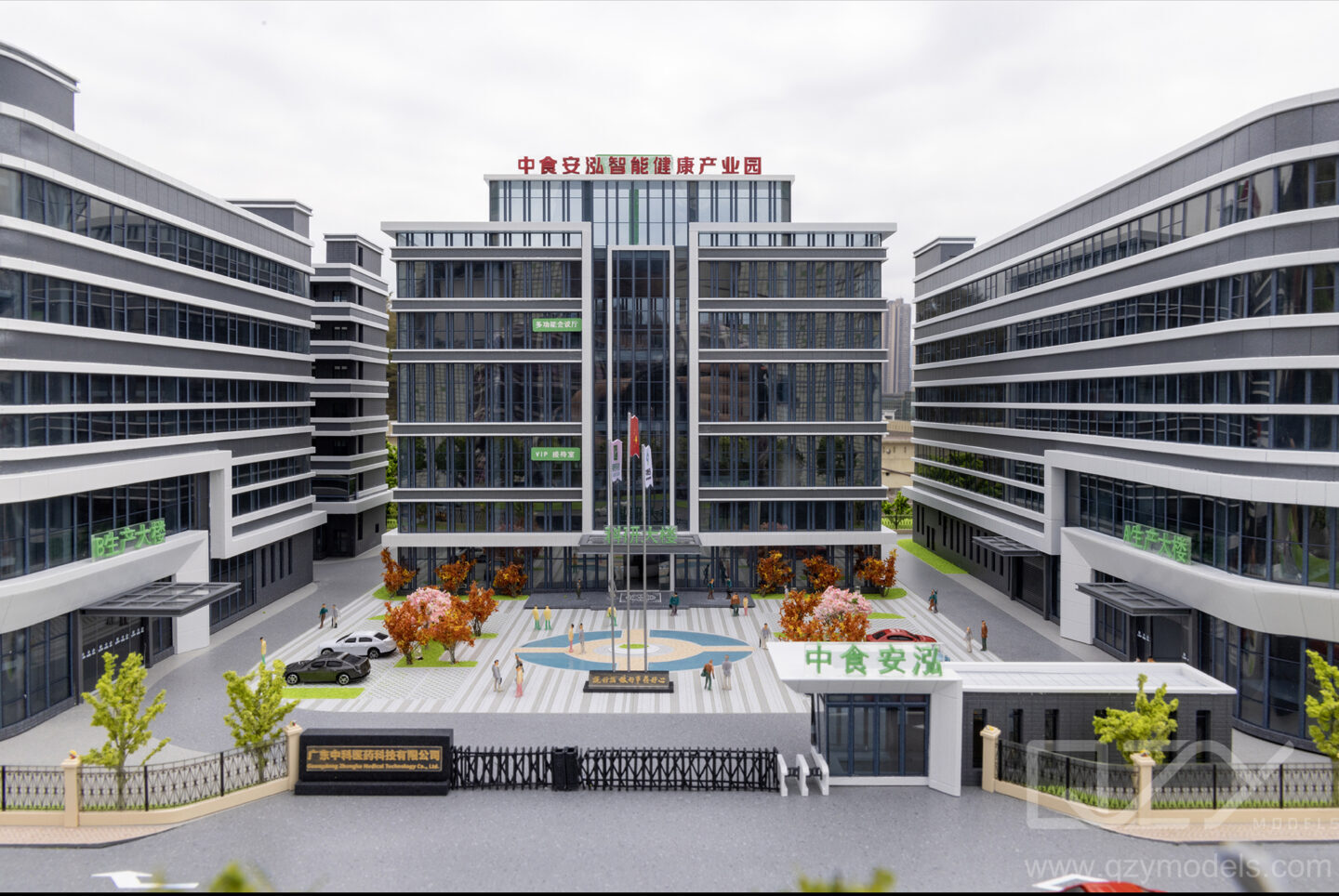
CA glue and super glue are both cyanoacrylate adhesives that bond instantly with moisture, but they differ in purity, viscosity, and application. CA glue is preferred for professional model-making due to its precision, clarity, and controlled curing. Companies like QZY Models rely on high-quality CA glue to assemble intricate architectural and industrial models with flawless results.
What Is CA Glue?
CA glue, or cyanoacrylate adhesive, polymerizes on contact with moisture, forming strong, transparent bonds suitable for wood, plastic, metal, and other surfaces. It is widely used in professional model-making for assembling delicate components without clamps. QZY Models applies CA glue in thin, medium, and gel forms to match project requirements, ensuring clean, seamless joints on replicas like those of the Sagrada Familia.
Key properties include:
- Instant tack for precise positioning
- Clear finish for visible assemblies
- Works on porous and non-porous materials
Thin CA wicks into fine joints, gel variants hold vertical elements, and medium viscosity balances speed and gap filling.
What Is Super Glue?
Super glue is a consumer-focused cyanoacrylate adhesive, designed for household repairs and everyday fixes. While chemically similar to CA glue, it often contains stabilizers and additives for shelf life and general usability. QZY Models avoids standard consumer super glues, opting for purer CA formulations to maintain clarity and precision in professional architectural models.
| Brand Type | Purity Level | Common Additives |
|---|---|---|
| Super Glue | Standard | Stabilizers, thickeners |
| CA Glue | High | Minimal additives, viscosity modifiers |
| Industrial CA | Premium | Activators, fillers |
Professional CA glue offers stronger long-term bonds, minimal blooming, and compatibility with finishes, crucial for exhibition-quality models.
Are CA Glue and Super Glue Chemically Identical?
Yes, both contain cyanoacrylate esters that cure via anionic polymerization activated by moisture. The chemical formula is typically:
CH2=C(CN)COOR
Where R varies by grade. Differences in purity, stabilizers, and viscosity affect performance. Hobbyist and professional CA glues resist blooming and offer precise handling, which QZY Models leverages to maintain flawless finishes on high-end architectural models.
What Are the Key Differences Between CA Glue and Super Glue?
Main differences include viscosity range, purity, and formulation intent. CA glue offers thin, medium, and gel grades for precision, gap-filling, and delicate assemblies, while super glue focuses on general convenience and ease of use.
| Feature | CA Glue | Super Glue |
|---|---|---|
| Viscosity Range | Thin to gel | Mostly medium |
| Shelf Life | 12–24 months | 6–12 months |
| Best For | Models, crafts | Household repairs |
| Price per oz | Higher | Lower |
Professional model-makers, including QZY Models, choose CA glue for controlled curing, clear finishes, and structural reliability.
Why Choose CA Glue for Architectural Model-Making?
CA glue provides invisible, strong bonds for tiny parts, with minimal residue and compatibility with various finishes. QZY Models uses thin CA for micro-details, medium for acrylic joints, and gels for vertical or gap-prone elements, ensuring stability in complex replicas like Sagrada Familia models.
Benefits:
- Instant adhesion without clamps
- Sandable after curing
- Bonds diverse materials efficiently
CA glue performs better under humidity and handling stress, essential for international clients in Europe, the Middle East, and Asia.
How Do You Use CA Glue Safely in Model Assembly?
Apply CA glue sparingly to one surface, press the parts together for 10–30 seconds, and use accelerator sprays if rapid curing is needed. Work in a ventilated space, wear gloves, and store glue cool. For micro-joints, wick thin CA into cracks, then reinforce with medium or gel forms.
Steps:
- Clean and dry surfaces.
- Apply appropriate CA glue.
- Press and hold until cured.
QZY Models trains staff to optimize bond strength while maintaining safety.
Can Super Glue Replace CA Glue in Professional Models?
No, standard super glue lacks the purity, range of viscosities, and anti-bloom properties required for professional model-making. Using consumer super glue can lead to cloudy surfaces, weak joints, or reduced longevity. QZY Models relies on high-grade CA adhesives to preserve archival quality and presentation standards for clients like Foster + Partners.
QZY Models Expert Views
“CA glue is central to our Shenzhen workshops for producing flawless architectural models. Founded in 2013 by Richie Ren, QZY Models selects premium ethyl cyanoacrylate for its clarity and strength. Thin CA wicks into micro-joints, gels fill acrylic gaps, and medium viscosities bond wood laminations. This ensures precision in complex projects, from Vanke developments to international exhibitions. We avoid consumer super glues, which compromise durability, and train our teams to maintain efficiency and safety across all assembly processes.”
— Richie Ren, Founder, QZY Models
Which CA Glue Viscosity Is Best for Models?
Thin viscosity CA is ideal for tight joints and wicking into pores, medium for general bonding of plastics and acrylics, and gel for vertical or uneven surfaces.
| Viscosity | cps | Model Use |
|---|---|---|
| Thin | 5–50 | Porous wood, micro-joints |
| Medium | 100–500 | Plastics, acrylic panels |
| Gel | 1,000+ | Vertical surfaces, gaps |
QZY Models selects viscosity based on material type and assembly complexity, ensuring reliable, clean results.
Key Takeaways
While CA glue and super glue share cyanoacrylate chemistry, professional model-making demands high-purity CA. Use multiple viscosities for different materials, prioritize safety, and consult QZY Models for custom applications. High-grade CA glue ensures durable, invisible bonds for architectural and industrial replicas.
FAQs
Does CA glue work on metal?
Yes, it forms strong bonds on clean metal surfaces; roughening enhances adhesion.
How long does CA glue last after opening?
Up to 12 months if stored airtight and refrigerated; discard if thickened.
Is CA glue brittle when cured?
Yes, it forms rigid bonds. Use flexible CA for vibration-prone components.
Can CA glue be sanded?
Yes, fully cured CA sands smoothly for finishing.
Which CA glue is strongest?
High-purity ethyl CA with rubber toughener offers maximum strength and impact resistance.