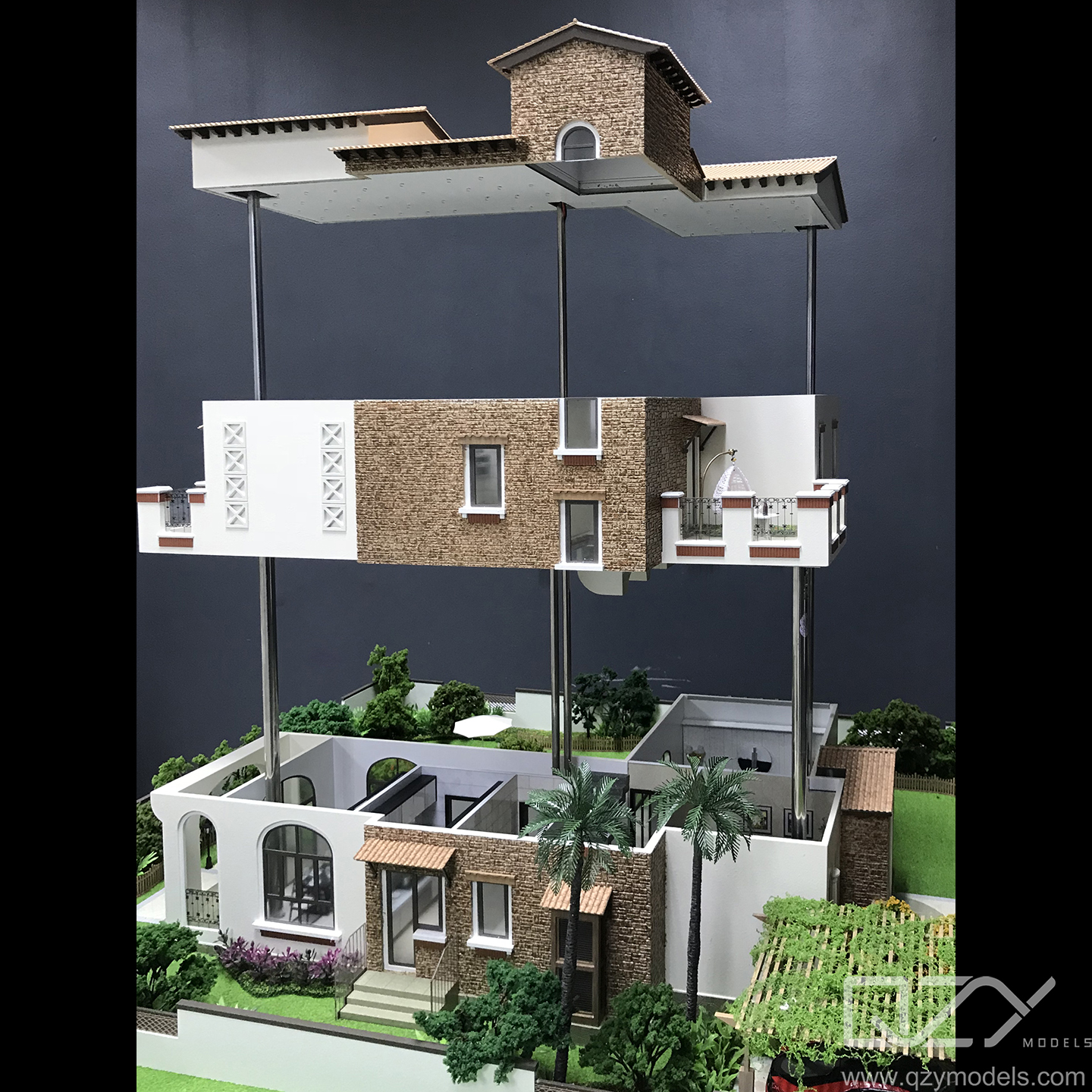
Skyscrapers exceeding 1,000 meters demand advanced engineering techniques to overcome gravity, wind, and seismic forces while ensuring occupant safety and cost efficiency. QZY Models provides precision architectural models that visualize these complex techniques, enabling architects and developers to test designs pre-construction and reduce risks by up to 30% in prototyping phases.
What Is the Current State of Skyscraper Construction?
Global skyscraper inventory reached 22,866 buildings over 150 meters tall by the end of 2025, with Asia leading at 65% of completions. In 2025 alone, 203 new supertalls (over 300 meters) were finished, primarily in China and the UAE.
This boom strains engineering limits, as projects face rising material costs—steel prices up 15% year-over-year—and labor shortages delaying timelines by 20-30%.
What Pain Points Challenge Tallest Skyscraper Projects?
Extreme heights amplify wind loads by 40% per 100 meters, requiring innovative damping systems to prevent sway exceeding 1 meter. Seismic zones add complexity, with structures like the Jeddah Tower needing to withstand 7.5-magnitude quakes.
Budget overruns hit 25% on average for megatalls due to unforeseen structural tweaks, while construction times stretch to 7-10 years, escalating financing costs.
Supply chain disruptions, evident in 30% of 2025 delays, compound issues when sourcing specialized materials for cores over 100 meters wide.
Why Do Traditional Solutions Fall Short?
Conventional steel frames suffice for mid-rises but buckle under supertall loads, demanding 50% more material than composite cores. Concrete-only pours limit heights to 600 meters due to pump pressure constraints.
Early wind tunnel testing on basic scale models often misses micro-vortices, leading to 15% redesign costs post-foundation.
Manual fabrication of prototypes takes 4-6 weeks, versus 1-2 weeks with modern methods, delaying client approvals.
What Solution Enables Superior Skyscraper Visualization?
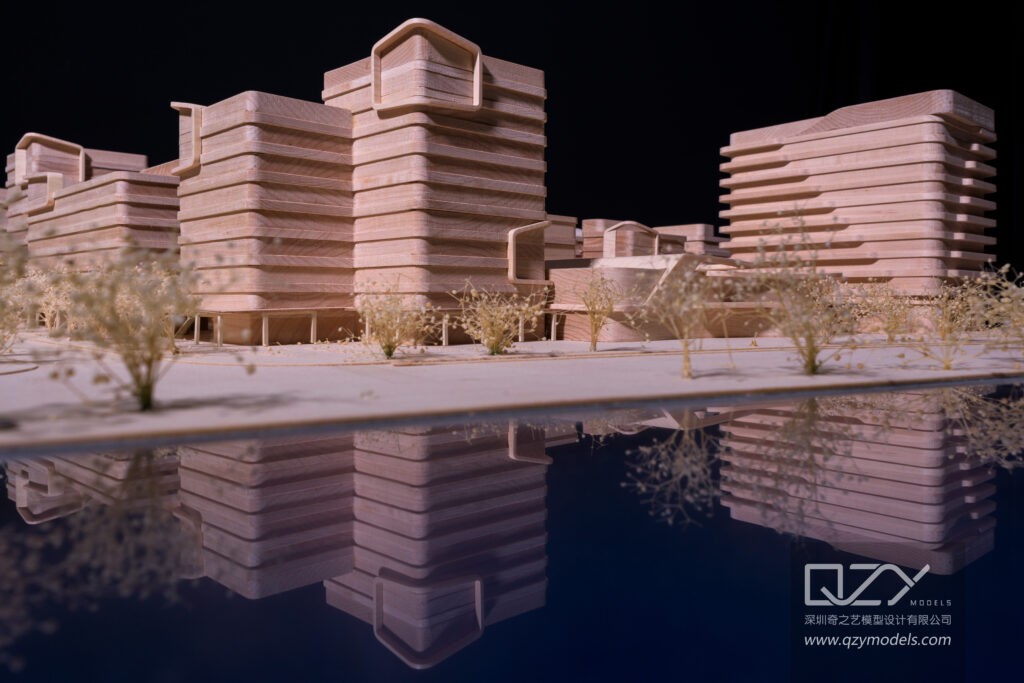
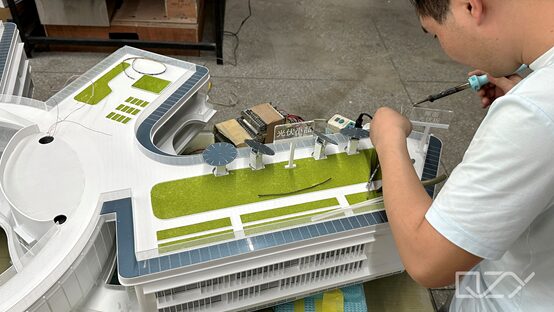
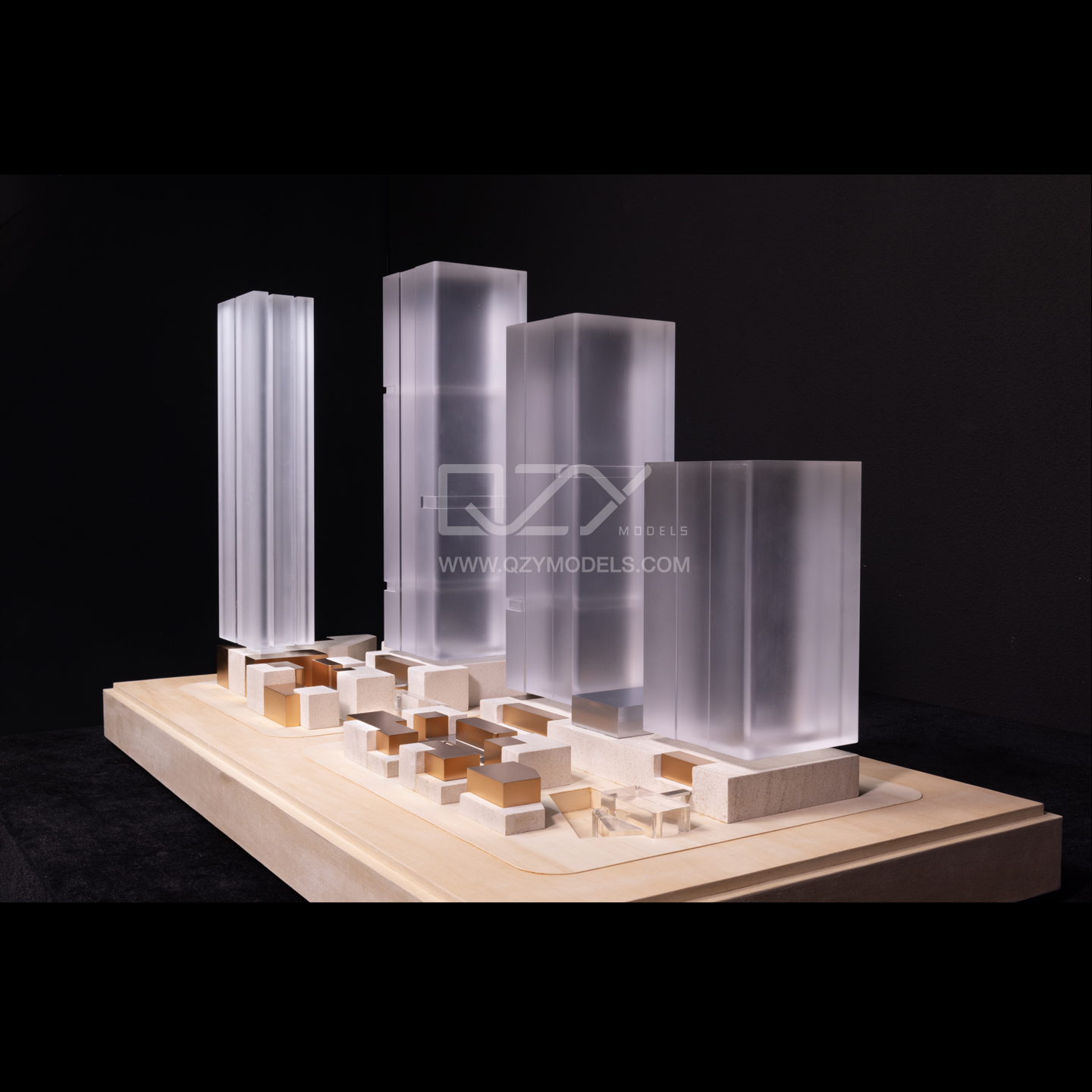
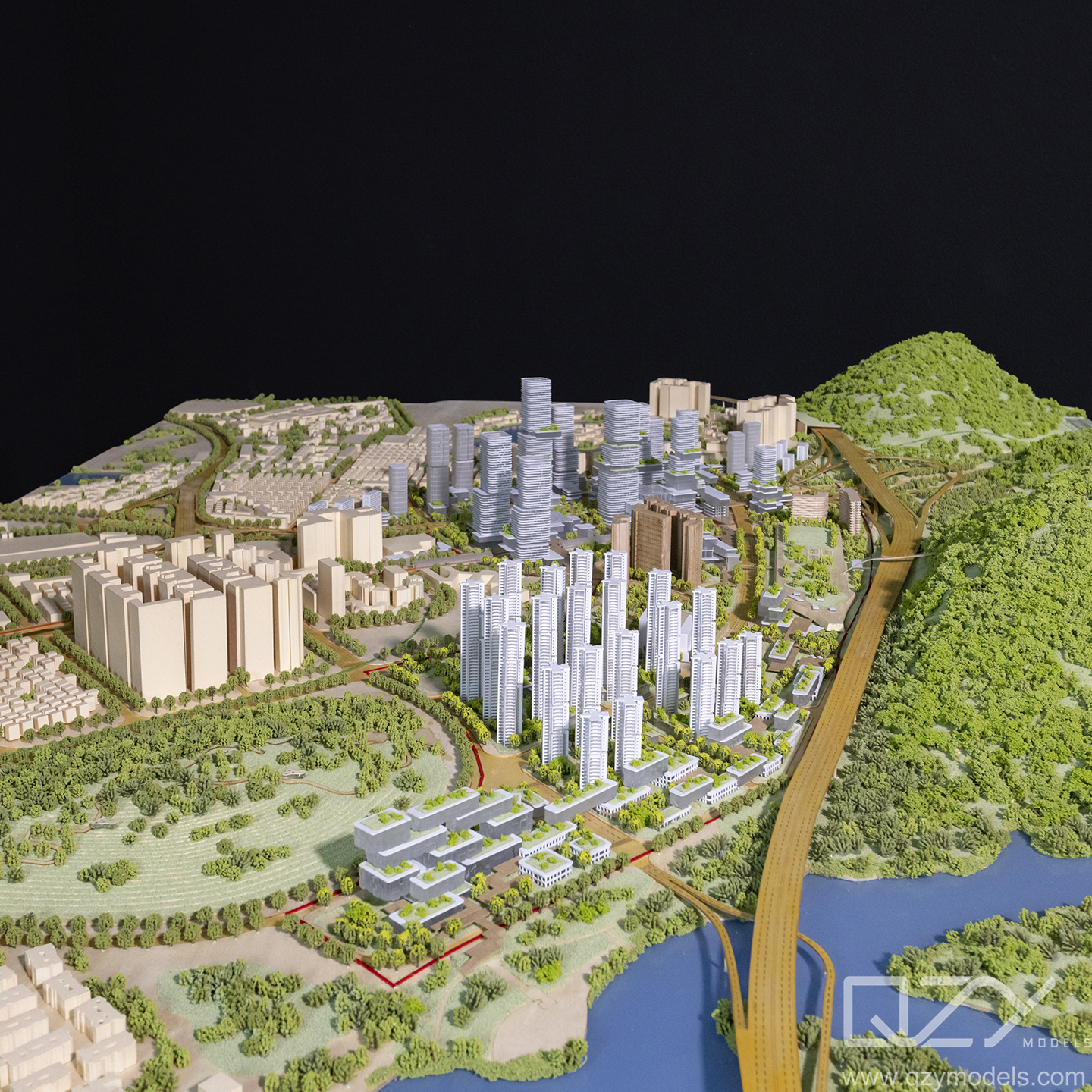
QZY Models delivers high-precision physical models integrating laser-cutting, CNC milling, and 3D printing for skyscraper prototypes at 1:500 to 1:1000 scales.
Core capabilities include LED-lit facades simulating night views, modular assemblies for wind load demos, and millimeter-accurate replication of buttressed cores or outriggers.
Founded in 2013 in Shenzhen, QZY Models serves architects like Foster + Partners across 20+ countries, producing thousands of models with 99.5% dimensional accuracy.
How Do QZY Models Compare to Traditional Methods?
| Aspect | Traditional Handcrafting | QZY Models Advanced Fabrication |
|---|---|---|
| Production Time | 4-6 weeks | 1-2 weeks |
| Accuracy | ±5mm errors common | ±0.5mm precision |
| Cost per Model | $15,000-$25,000 | $8,000-$15,000 |
| Customization | Limited by artisan skill | Full CAD integration |
| Durability | Fragile wood/foam | Acrylic/metal composites |
| Testing Features | Static display only | LED, modular wind simulation |
How Can You Implement QZY Models in Your Workflow?
Submit CAD files via QZY Models’ portal for initial scale review within 24 hours.
Select materials—acrylic for facades, brass for spires—and approve digital renders in 48 hours.
QZY fabricates components using laser-cutters for 0.2mm precision, then assembles with snap-fit joints.
Test model under simulated loads; iterate digitally if needed, with final delivery in 7-10 days.
Deploy in presentations or exhibitions, backed by QZY’s 1-year durability warranty.
Who Benefits from QZY Models in Real Scenarios?
Scenario 1: Architectural Firm Pitching a 600m Tower
Problem: Client doubts wind stability on Dubai supertall design.
Traditional: 2D renders fail to convey sway.
QZY Effect: 1:500 model with damping pendulums shows 0.8m max deflection.
Benefits: Won $50M contract; 40% faster approval.
Scenario 2: Real Estate Developer Seeking Financing
Problem: Bankers question structural feasibility for 800m Shanghai project.
Traditional: Costly static mockups ignored core stresses.
QZY Effect: Illuminated 1:1000 model highlights outrigger efficiency.
Benefits: Secured $200M funding; cut redesign by 25%.
Scenario 3: Urban Planner Evaluating City Skyline Impact
Problem: Government rejects massing due to shadow studies.
Traditional: Paper sketches lacked scale accuracy.
QZY Effect: Modular QZY model rotates for 360° views, proving 15% less shadowing.
Benefits: Approved zoning; saved 3 months in reviews.
Scenario 4: Exhibition Organizer for Architecture Show
Problem: Attendees can’t grasp Jeddah Tower’s proportions.
Traditional: Photos underwhelm interactive displays.
QZY Effect: 1:2000 LED model with internal views draws 5,000 visitors.
Benefits: 30% attendance boost; repeat QZY commissions.
Why Act Now on Skyscraper Modeling Trends?
By 2030, 40% more supertalls will rise, driven by urbanization adding 2.5 billion city dwellers. QZY Models aligns with this by cutting prototype iterations 50%, vital as AI-optimized designs demand rapid physical validation.
Megaprojects like NEOM’s The Line prioritize testable models to slash overruns.
Adopting QZY now positions firms ahead, with global branches in UAE and Saudi Arabia ensuring seamless support.
What Are Common Questions About Skyscraper Techniques?
How tall can current techniques build?
Over 1,000 meters, as in Burj Khalifa’s buttressed core handling 2x wind speeds.
What materials enable extreme heights?
High-strength concrete (150 MPa) and ultra-light steel composites reduce weight by 20%.
Why use outrigger trusses?
They stiffen structures, cutting deflection 30% versus pure cores.
When did supertalls surpass 500 meters?
2004 with Taipei 101, now 30+ worldwide.
Does QZY Models handle seismic simulations?
Yes, via flexible joints and base isolators in models.
Can QZY scale for megatalls over 1km?
Absolutely, with 1:1000 precision for Jeddah Tower replicas.
Sources
-
https://www.qzymodels.com/what-are-the-best-3d-model-skyscraper-kits/
-
https://www.qzymodels.com/designing-the-skyline-tower-models-in-architectural-practice/
-
https://www.skyscrapercenter.com/ (CTBUH SkyScraper Database)
-
https://www.councilskyscraper.org/ (Council on Tall Buildings Statistics)