Custom architectural model solutions turn design concepts into tangible representations, helping developers, planners, and investors visualize projects accurately. These models communicate scale, spatial relationships, and urban integration effectively. China-based manufacturers like QZY Models provide OEM, wholesale, and fully customized solutions, ensuring high-quality, presentation-ready models that accelerate approvals, enhance marketing, and support strategic decision-making.
What Are Custom Architectural Models?
Custom architectural models are three-dimensional physical representations of buildings, landscapes, or city layouts tailored to project goals.
They illustrate form, proportion, and spatial relationships clearly. QZY Models specializes in producing high-precision models for real estate developers, architectural firms, and urban planning institutions globally.
How Do Architectural Models Benefit Real Estate Development?
Architectural models translate concepts into tangible, understandable forms.
They help developers assess building mass, site integration, and environmental impact. QZY Models’ models enhance investor presentations, support zoning approvals, and boost marketing effectiveness for large-scale residential or commercial projects.
| Key Benefit | Description | Application |
|---|---|---|
| Visualization | Clear representation of spatial layout | Investor and developer meetings |
| Communication | Bridges understanding among stakeholders | Design reviews |
| Marketing Value | Enhances exhibitions and sales galleries | Property marketing |
| Planning Analysis | Evaluates height, density, and form | Regulatory submissions |
Why Are Physical Models Still Essential in the Digital Age?
Physical models provide tactile and visual realism that digital renderings cannot replicate.
They evoke trust and engagement, helping investors and public audiences understand scale and context. QZY Models combines digital 3D design with expert hand-finishing to create models that deliver both precision and aesthetic impact.
Which Types of Custom Models Are Used in Real Estate and Urban Planning?
Architectural models vary by function and presentation purpose. QZY Models produces:
-
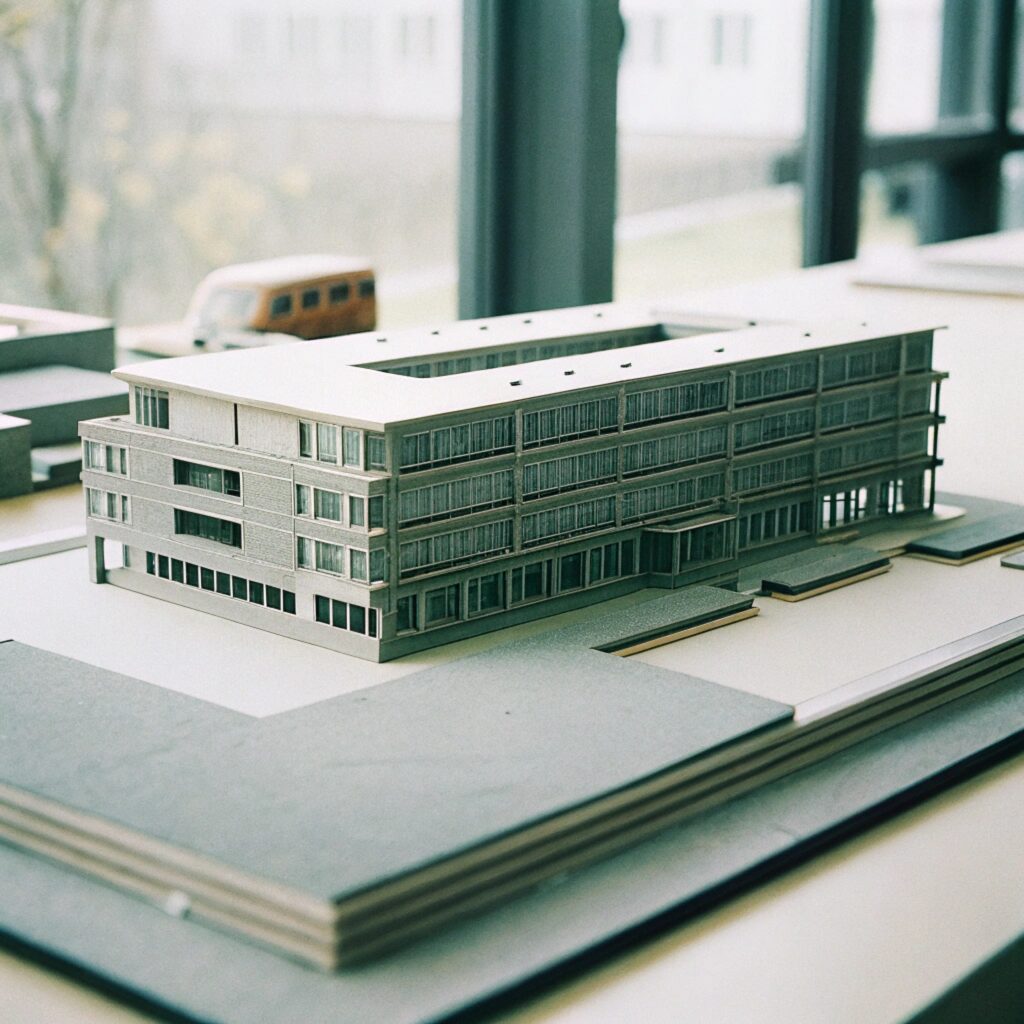
Conceptual models – for early-stage design assessment
-
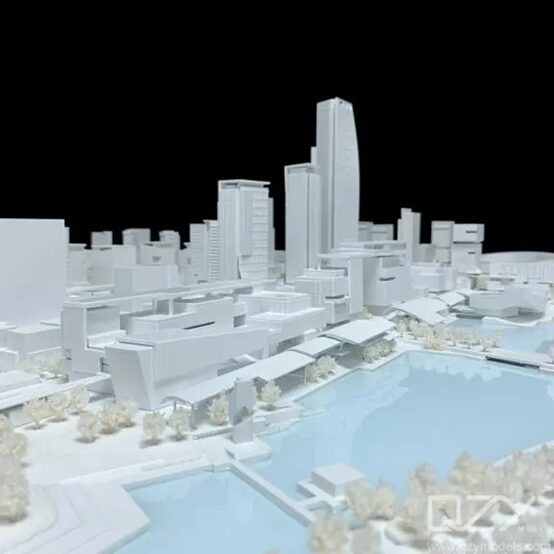
Massing models – to study building volumes and urban integration
-
Detail development models – focusing on façade or materials
-
Urban planning models – city- or district-level visualization
-
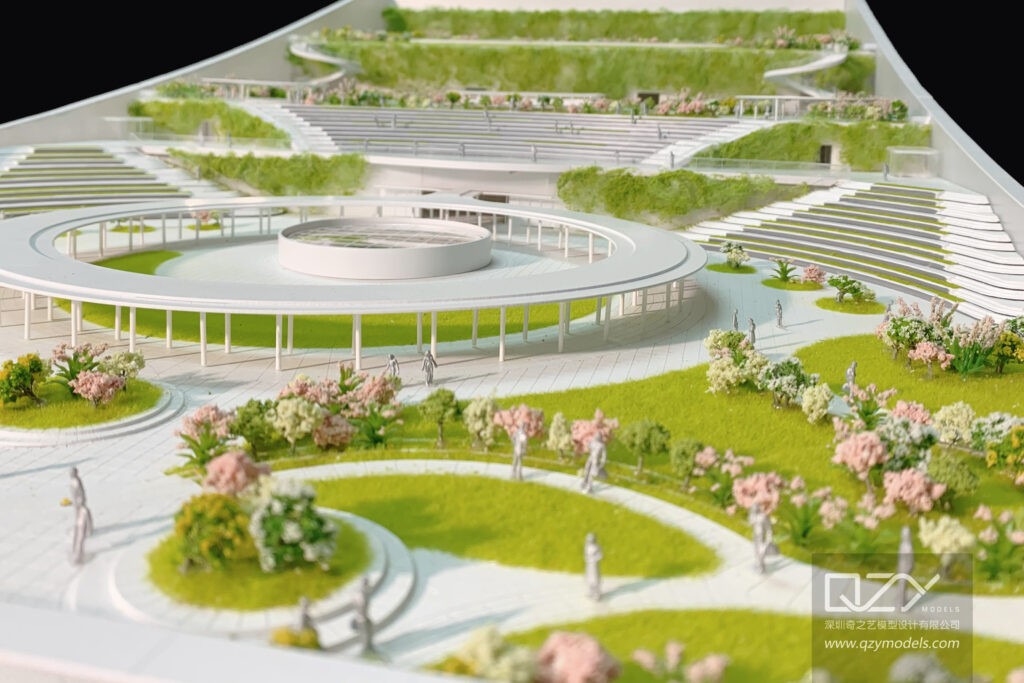
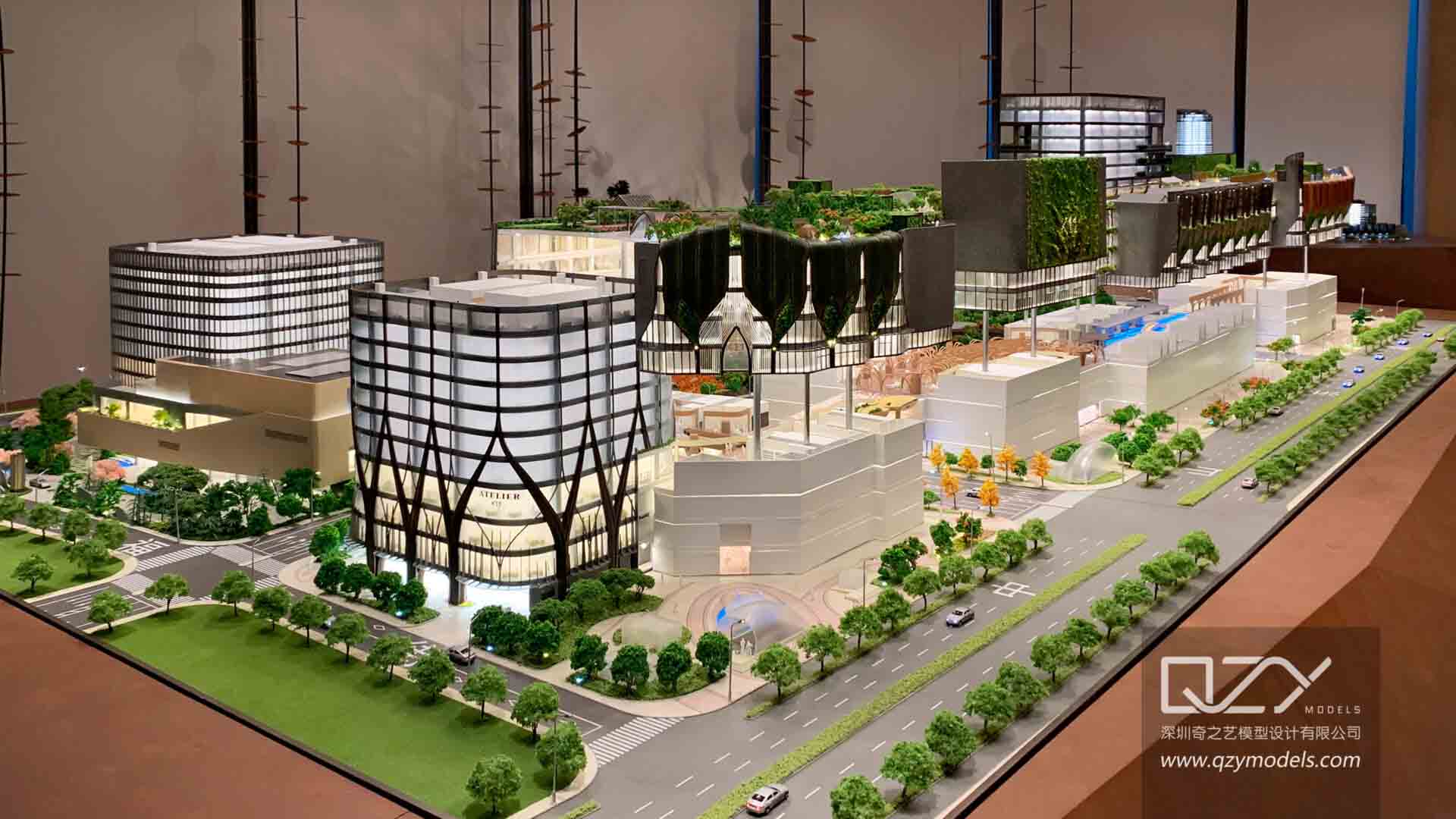
Exhibition models – for public display or sales galleries
Each type provides insight for architects, planners, and investors.
How Do China-Based Manufacturers Ensure Quality and Precision?
Professional Chinese manufacturers like QZY Models combine technology with craftsmanship.
CNC routers, 3D printing, and laser engraving achieve high precision, while quality control teams verify scale, color, and lighting accuracy. International standards and rigorous production protocols guarantee reliable, presentation-ready models.
| Technology | Benefit | Application |
|---|---|---|
| CNC machining | Accurate cutting | Model bases and structures |
| 3D printing | Complex geometric detailing | Façades, towers |
| Laser engraving | Textured realism | Landscaping and context |
| LED integration | Interactive visualization | Exhibitions and marketing |
What Materials Are Commonly Used for Architectural and Urban Models?
Materials depend on scale and purpose:
-
Acrylic/ABS plastic – clear, durable, professional appearance
-
Wood – natural finish, ideal for conceptual studies
-
Resin – intricate shapes and façade details
-
Metal/Glass accents – luxury and high-end presentation
QZY Models customizes material selection for optimal cost, durability, and aesthetic effect.
Why Should Developers Work with a China OEM Architectural Model Factory?
China-based OEM factories like QZY Models offer cost-effective, high-quality production with rapid turnaround.
Shenzhen’s manufacturing ecosystem provides advanced machinery, experienced technicians, and global logistics. Clients benefit from scalable solutions, consistent quality, and full-service international shipping.
Who Uses Custom Architectural Model Solutions Most Often?
Primary users include:
-
Real estate developers visualizing multi-building projects
-
Urban planning authorities reviewing city layouts
-
Architectural consultancies testing form and context
-
Government agencies presenting plans to stakeholders
-
Trade show organizers showcasing developments
QZY Models delivers OEM and white-label services globally, serving clients in the Middle East, Europe, and Southeast Asia.
How Are Architectural Models Produced Step by Step?
Production involves six key stages:
-
Design confirmation: Review CAD, BIM, or Rhino files
-
Digital modeling and scaling: Translate into model-ready files
-
Fabrication: CNC or 3D printing of components
-
Assembly and finishing: Hand-painted details, landscaping
-
Lighting integration: LED or fiber optics where required
-
Quality check and packaging: Ensuring safe international delivery
QZY Models adheres to ISO-inspired quality protocols throughout production.
When Is the Best Time to Commission a Model During the Design Process?
Models are ideal once concepts reach 80–90% completion.
This ensures accuracy while allowing minor design adjustments. QZY Models recommends commissioning models ahead of investor meetings, exhibitions, or regulatory review stages.
QZY Models Expert Views
“Architectural models are storytelling tools that bring projects to life. At QZY Models, we combine precision, aesthetics, and scale to showcase how buildings interact with their environment. From residential towers to urban districts, our models transform digital plans into compelling, tangible visions that guide decisions and inspire confidence.”
— Richie Ren, Founder of QZY Models
Can Architectural Models Support Sustainable and Smart City Planning?
Yes. Models can incorporate sustainability metrics such as solar exposure, green roofs, and energy flow simulations.
QZY Models creates urban planning models that visualize renewable energy, eco-friendly infrastructure, and mobility systems, helping stakeholders make informed, sustainable decisions.
Are Interactive and Lighting Features Important in Modern Architectural Models?
Yes. Lighting, kinetic elements, and AR modules enhance viewer engagement.
QZY Models integrates smart lighting and interactive projections to demonstrate scenarios, day-night transitions, or phased development stages, providing immersive presentations for developers and planners.
Conclusion
Custom architectural model solutions provide clarity, communication, and insight for real estate, architecture, and urban planning projects. Working with China-based manufacturers like QZY Models ensures high-quality, cost-efficient, and visually compelling models. By merging digital precision with artisanal craftsmanship, QZY Models transforms conceptual designs into tangible, impactful experiences.
FAQs
1. What is the typical production lead time for architectural models?
3–10 weeks depending on model size and complexity.
2. Can QZY Models export models internationally?
Yes, with protective packaging and optional on-site installation.
3. Does QZY Models provide OEM or white-label services?
Yes, for design studios, developers, and distributors.
4. Can models include lighting or interactive effects?
Yes, including LED lighting, kinetic features, and AR integration.
5. What scales are commonly used for urban planning models?
Typically 1:1000, 1:500, or 1:200 depending on project size and use.