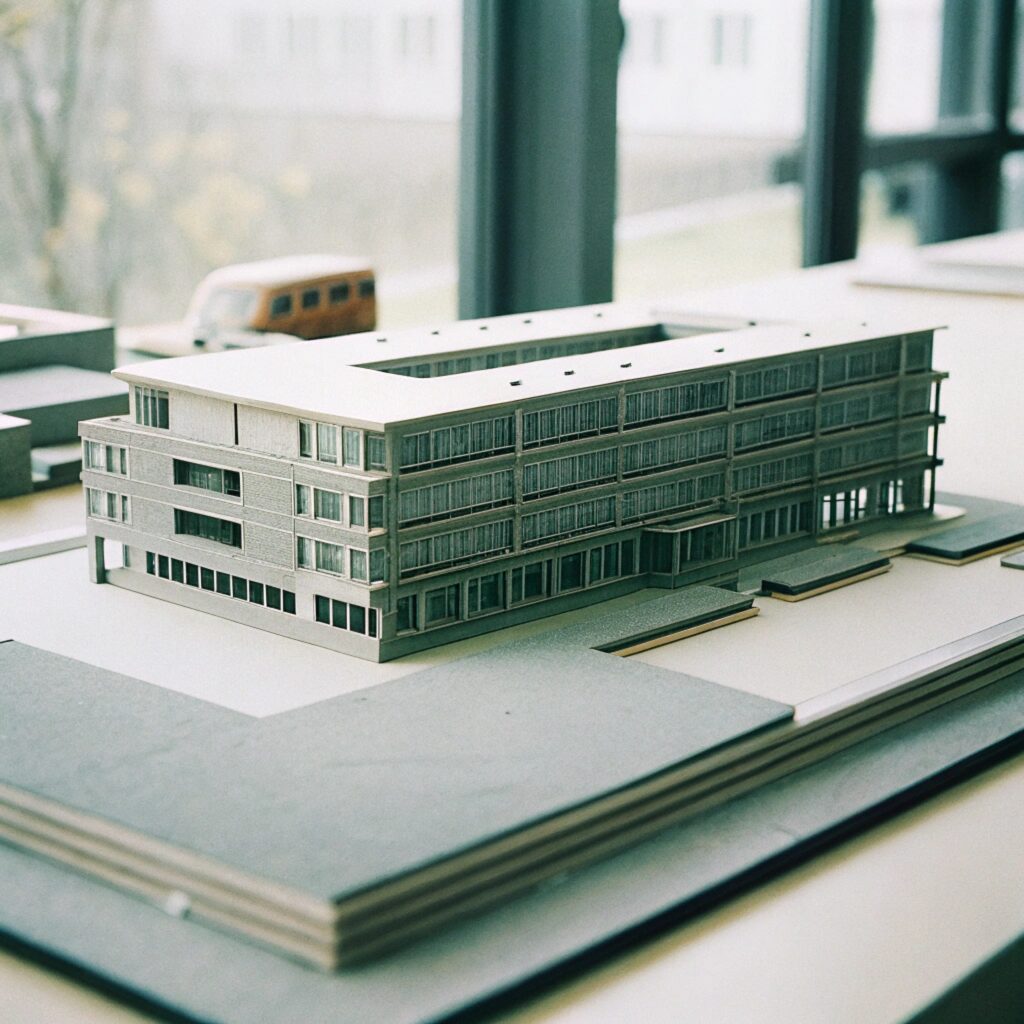
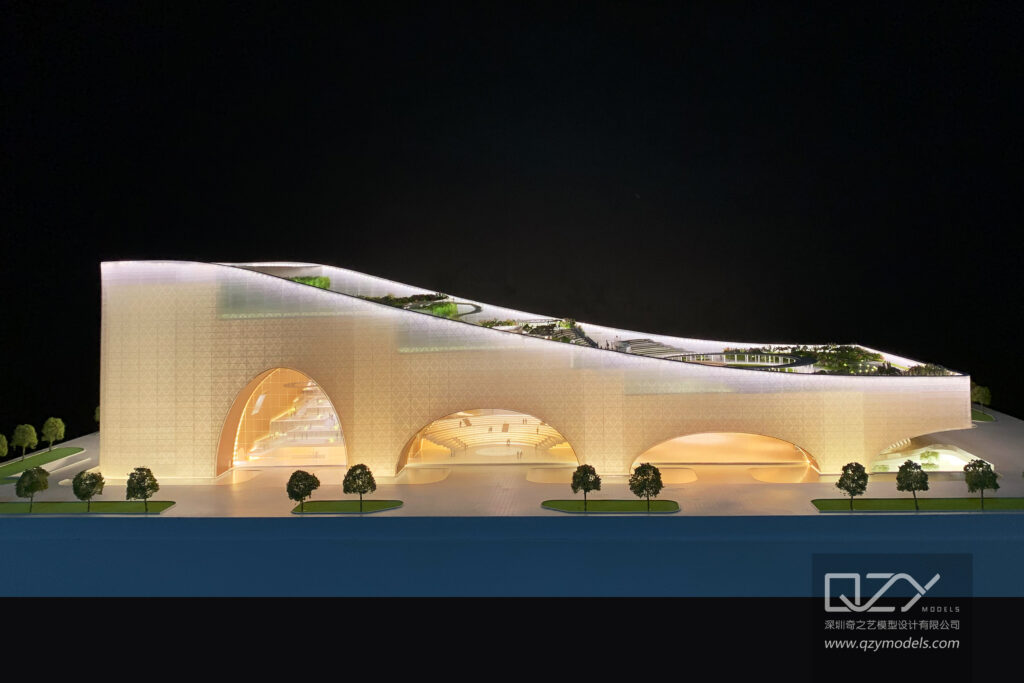
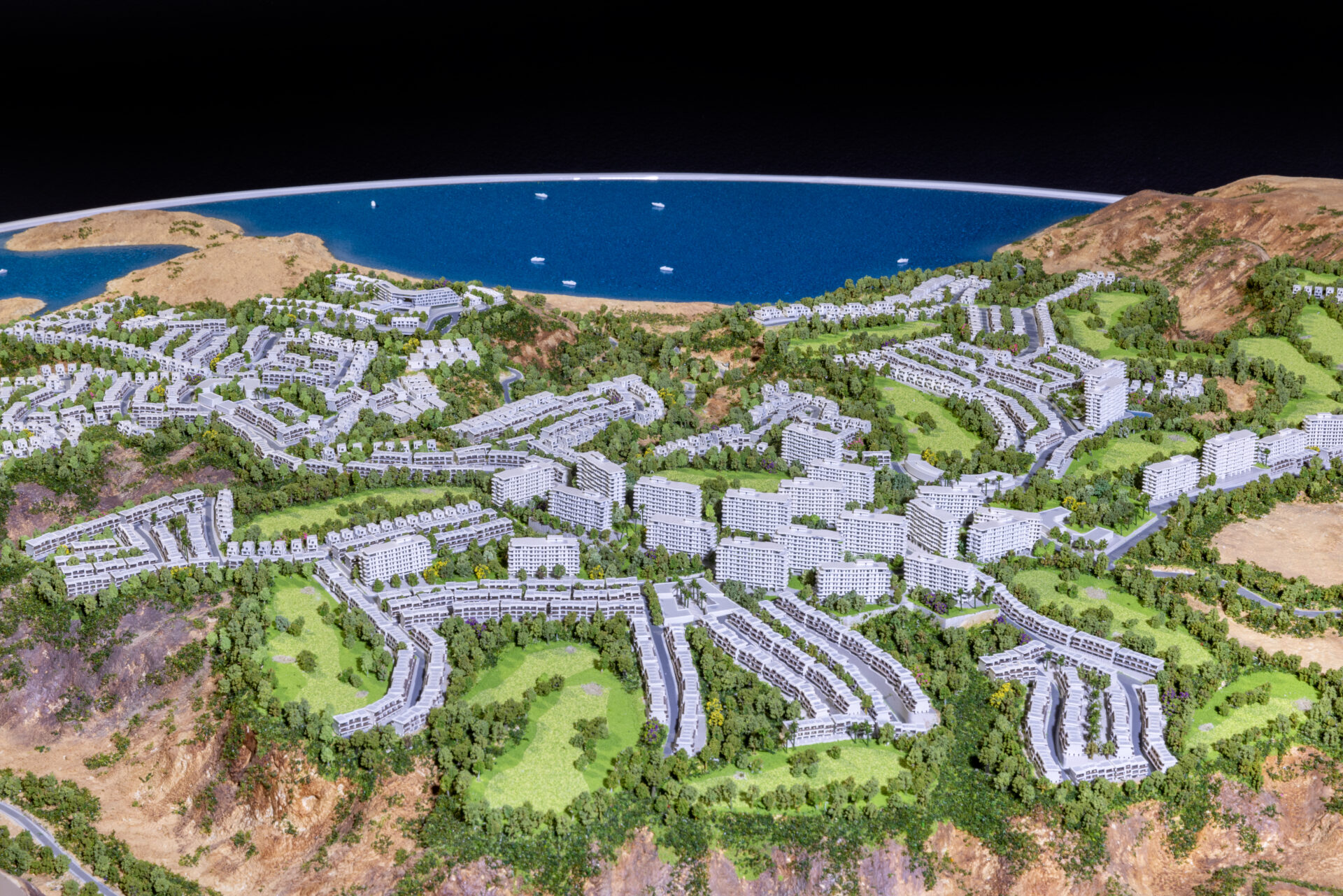
Architectural models have evolved from simple visualization tools into strategic decision-making assets that accelerate real estate development, reduce design risks, and create stronger investor confidence.
What Is the Current State of the Real Estate and Architecture Industry?
The global construction industry is undergoing rapid transformation, projected to reach $17.5 trillion by 2030 (Oxford Economics). Yet, over 85% of large construction projects exceed budget or face schedule delays (McKinsey & Company). Among developers, the most prominent pain points are inefficient project communication, lack of stakeholder alignment, and the inability to visualize complex architectural concepts early in planning. Developers increasingly seek accurate, physical models to bridge this communication gap and reduce turnaround time for investor approvals. However, traditional renderings and 3D digital tools often fail to deliver tactile realism and emotional impact during presentations.
Why Are Traditional Visualization Methods Falling Short?
For decades, developers have relied mainly on 2D drawings, digital simulations, and conceptual renderings to communicate project intent. Although cost-effective, these tools often lack spatial presence and scale realism, causing misalignment among design teams and investors. A 2D elevation might explain structure but struggles to evoke scale or convey spatial relationships. Virtual walkthroughs, while immersive, remain reliant on screen-based interpretation—reducing the sensory impact of materials, textures, and lighting.
In high-stakes urban development, missed understanding translates into costly design revisions. Studies show an average of 12% project rework costs come from inadequate communication between stakeholders. Clearly, the gap between vision and tangible understanding needs stronger, more precise tools.
How Does QZY Models Provide a Modern Solution?
QZY Models has become a global leader in producing precise, photorealistic architectural models that combine artistry and engineering accuracy. Founded in 2013 in Shenzhen, QZY Models integrates cutting-edge technologies—laser cutting, 3D printing, and customized lighting control systems—to produce large-scale models that capture design intent to the finest detail. Their process allows developers to visualize proportion, material contrast, and architectural harmony across residential, commercial, and infrastructure projects.
Each model from QZY Models is both a technical representation and a storytelling asset. For developers, it transforms presentations into immersive experiences that engage investors, regulators, and buyers. Whether for mega developments in the UAE or urban renewal projects in China, QZY Models ensures every detail aligns with design data and real-world context.
What Advantages Does QZY Models Offer Compared to Traditional Methods?
| Feature | Traditional Renderings & Digital Simulations | QZY Models Physical Model Solution |
|---|---|---|
| Visualization depth | 2D or screen-based representation | Full 3D tactile realism |
| Emotional impact | Limited engagement | High sensory engagement with materials and lighting |
| Accuracy | Prone to digital distortion | Millimeter precision with physical scale integration |
| Stakeholder communication | Abstract interpretation | Shared tangible vision |
| Durability | Temporary files | Long-term physical showcase asset |
How Can Developers Use QZY Models Step by Step?
-
Consultation & Briefing – Developers share design files, master plans, and presentation goals.
-
Technical Evaluation – QZY Models experts analyze scale, material selection, and illumination parameters.
-
Design & Fabrication – Advanced CNC cutting and 3D printing ensure top-quality structural integrity.
-
Quality Assurance – Each model undergoes fine detailing and mechanical calibration.
-
Delivery & Display – Models are securely shipped and installed at project sites, exhibitions, or investor roadshows.
This structured approach guarantees consistency, predictability, and on-time completion for every project.
Which Real-World Scenarios Prove the Value of Architectural Models?
Scenario 1: Luxury Residential Development
Problem: The investor lacked spatial understanding of interior flow and common areas.
Traditional Approach: Digital renderings and floor plans failed to create shared vision.
Solution with QZY Models: A 1:100 physical model illustrated layout, amenities, and lighting effects.
Result: Decision timeline shortened by 40%; pre-sales increased by 25%.
Scenario 2: Urban Regeneration Project
Problem: City authorities needed a visual tool to evaluate zoning impact.
Traditional Approach: GIS-based planning maps were too abstract.
Solution with QZY Models: A large-scale urban model integrated transport routes and green spaces.
Result: Regulation process approved in half the usual time.
Scenario 3: Commercial Complex Launch
Problem: Global investors struggled to grasp the project’s mixed-use composition.
Traditional Approach: 3D video tours failed to communicate proportion.
Solution with QZY Models: Interactive lighting system highlighted traffic flow and area distinctions.
Result: Secured two international investors within one month.
Scenario 4: Architecture Education Showcase
Problem: Design students needed to present advanced structures for exhibitions.
Traditional Approach: Digital renderings lacked presence for workshops.
Solution with QZY Models: Hybrid models combined resin and modular components.
Result: Enhanced learning impact, drawing over 5,000 visitors during the exhibition.
Why Is Now the Right Time to Adopt Physical Modeling Solutions?
The shift toward data-driven design and stakeholder collaboration demands tools that merge visual clarity with material precision. As sustainable and smart city initiatives expand, tangible architectural models act as powerful communication bridges between planners, developers, and communities. By partnering with QZY Models, developers achieve not only better project visualization but also stronger investor engagement and accelerated decision cycles. The years ahead will favor companies that bridge digital and physical design—those embracing precision craftsmanship as a strategic advantage.
FAQ
1. Are architectural models still relevant in the age of 3D digital visualization?
Yes. Physical models complement digital tools, providing tactile understanding and enhancing credibility during presentations.
2. Can QZY Models handle large-scale or complex projects?
Absolutely. With global experience across mega developments and infrastructure, QZY Models builds models up to several square meters in scale.
3. How long does production typically take?
Depending on complexity, from concept to delivery it usually ranges between three to eight weeks.
4. What materials does QZY Models use?
A mix of acrylic, resin, wood, metal, and high-precision 3D printed components to ensure durability and realism.
5. Can models be shipped internationally without damage?
Yes. QZY Models provides customized packaging and on-site installation support worldwide.
Sources
-
Oxford Economics: Global Construction 2030 Report
-
McKinsey & Company: Construction Productivity Study
-
Statista: Global Real Estate Development Trends 2025
-
World Bank: Urbanization Statistics Database