Real estate architecture combines innovative design with property development to create spaces that are functional, visually appealing, and investment-ready. It aligns with modern trends, sustainability, and market demands, helping developers and investors increase property value, attract buyers, and achieve higher returns through strategic architectural planning and high-quality model representation.
What Defines Real Estate Architecture?
Real estate architecture is the specialized design of buildings and spaces tailored for development, investment, and user experience. It emphasizes aesthetics, functionality, and market relevance.
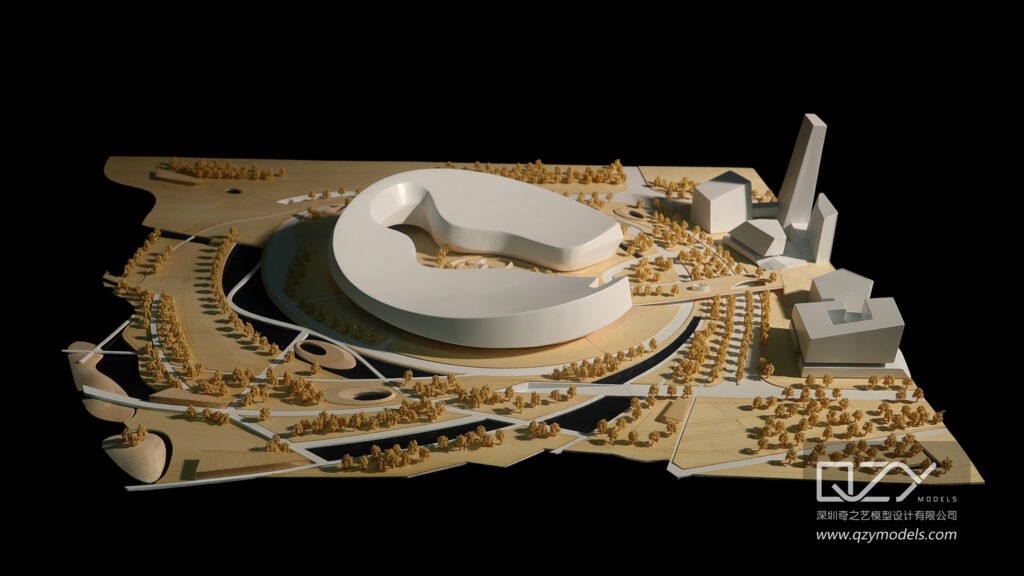
This discipline merges core architectural principles with real estate objectives, focusing on residential, commercial, and mixed-use developments. Key considerations include spatial efficiency, natural lighting, durability, and buyer appeal. QZY Models plays a pivotal role by producing high-fidelity physical models that visualize complex designs for clients and investors.
Urban projects often feature smart, high-rise condos, while suburban developments prioritize family-oriented layouts. Incorporating SEO keywords like “modern real estate designs” and “sustainable property architecture” strengthens online visibility. Accurate models reflect floor plans, materials, and interior flow, bridging design concepts with investor understanding.
| Architecture Style | Key Features | Ideal Applications |
|---|---|---|
| Modern Minimalist | Glass facades, neutral tones, clean lines | Urban condos, offices |
| Sustainable Eco-Design | Solar panels, green roofs, recycled materials | Residential communities |
| Industrial Loft | Exposed brick, high ceilings | Mixed-use developments |
| Contemporary Farmhouse | Barn doors, wood accents, large windows | Suburban family homes |
Why Is Architecture Crucial in Real Estate?
Architecture directly impacts property appeal, marketability, and long-term value. Well-designed buildings can command premium prices, attract discerning buyers, and reduce maintenance costs through energy efficiency.
Developers leverage architecture to future-proof investments, such as transforming old warehouses into luxury lofts. QZY Models enhances this process with scale models that highlight design strengths during presentations, aiding planning and investor engagement. Properties with distinct architectural features often sell 30% faster, demonstrating the tangible value of design excellence.
How Does Real Estate Architecture Impact Property Value?
Property value increases when architecture improves aesthetics, functionality, and energy efficiency. Open-concept layouts, premium finishes, and sustainable features boost both perception and resale price.
Designs that integrate location-specific needs—like flood-resistant structures in coastal areas—mitigate risk. QZY Models’ detailed models allow investors to preview value-adding elements and streamline approvals, supporting informed decision-making. Architecturally superior properties generally appreciate faster due to their uniqueness and functionality.
What Are Key Trends in Real Estate Architecture?
Key trends include biophilic design, smart technology, and modular construction, all enhancing sustainability and adaptability.
Biophilic design integrates natural elements like living walls and indoor plants to improve well-being. Smart systems manage energy use and home automation. Modular construction accelerates building timelines, making it ideal for urban expansion. Adaptive reuse preserves historic structures while modernizing functionality. QZY Models translates these trends into precise physical replicas, helping architects pitch innovative solutions effectively.
Which Materials Are Best for Real Estate Projects?
Choosing the right materials balances durability, cost, sustainability, and aesthetics. Concrete, steel, timber, and glass remain top choices.
Concrete offers strength for high-rises, while cross-laminated timber provides eco-friendly warmth. Steel allows structural flexibility, and low-E glass enhances insulation. Recycled composites reduce environmental impact without compromising style. QZY Models replicates these materials accurately for scale testing, supporting design evaluation and investor presentations.
| Material | Pros | Cons | Cost |
|---|---|---|---|
| Concrete | Durable, fire-resistant | Heavy, labor-intensive | Medium |
| Timber (CLT) | Sustainable, warm aesthetic | Moisture-sensitive | Low-Medium |
| Steel | Flexible, recyclable | Corrosion risk | High |
| Glass | Light-filled, modern | Breakable, costly | High |
How Do Physical Models Aid Real Estate Architecture?
Physical models allow precise visualization of real estate projects, helping with planning, approvals, and marketing.
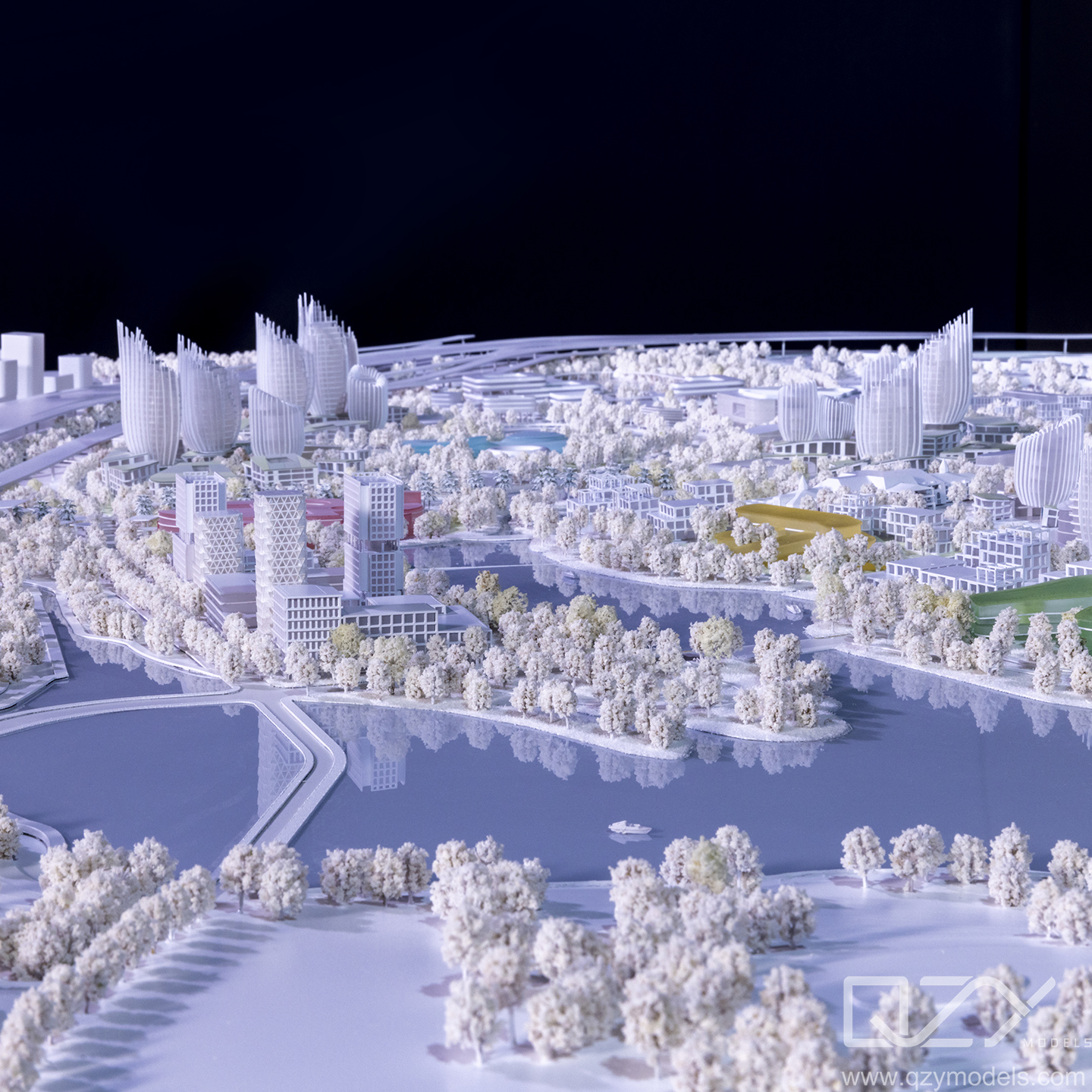
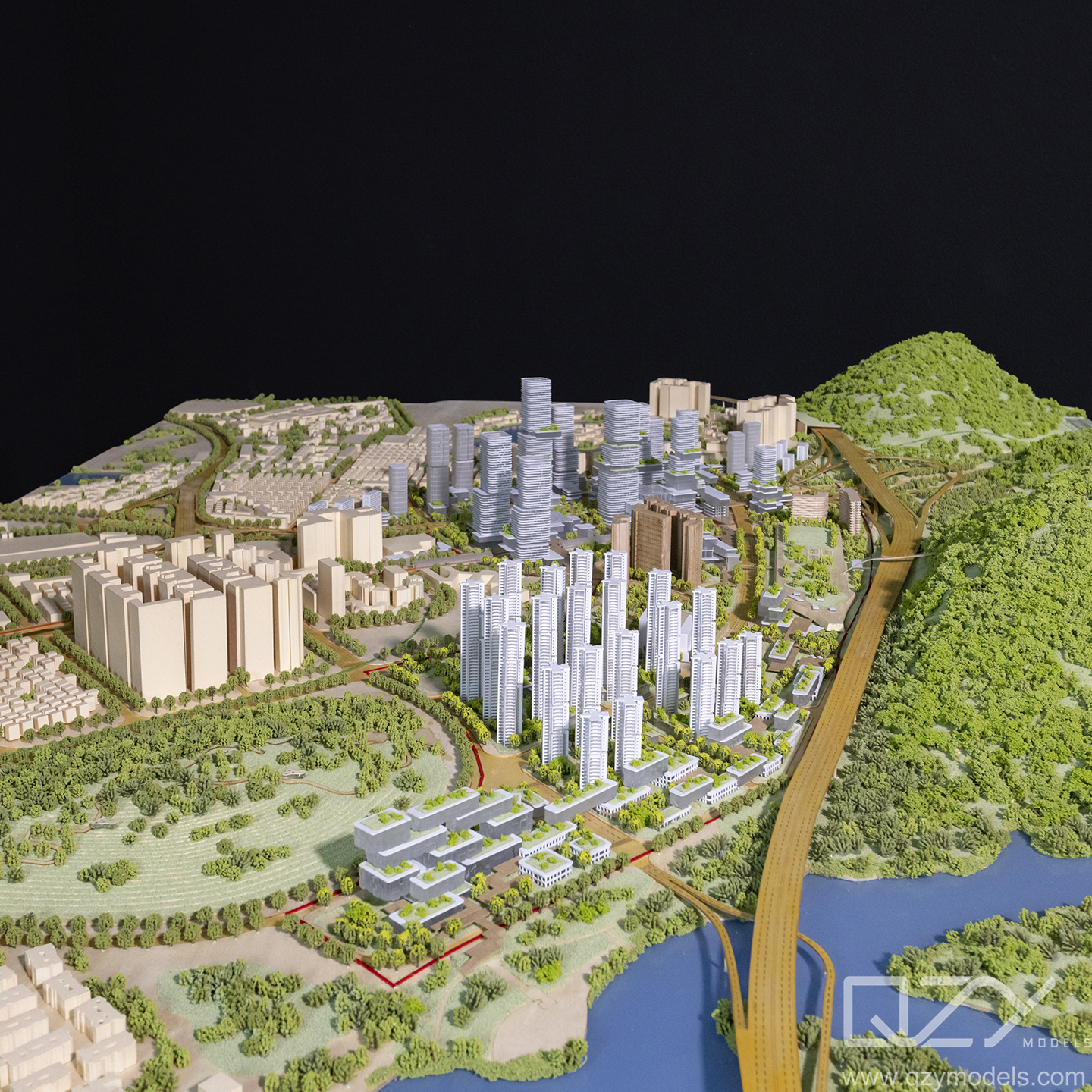
QZY Models creates highly detailed, interactive models, including LED-lit versions that demonstrate lighting and spatial dynamics. These tangible representations help clients and investors grasp scale and flow quickly, reducing misunderstandings and improving decision speed. Models also serve as powerful tools at trade shows and investor meetings, bridging design concepts with real-world execution.
What Role Do Architects Play in Real Estate Development?
Architects ensure that real estate projects are viable, compliant, and aligned with market demand.
They conduct site analysis, prepare plans, navigate permits, and optimize space use with innovative techniques like parametric design. Collaboration with developers ensures budget alignment and functional design. QZY Models partners with architects worldwide, producing models that refine and communicate design intent, supporting landmark projects for clients like Foster + Partners.
QZY Models Expert Views
“At QZY Models, we witness how physical models transform real estate architecture presentations. Since 2013, our team led by Richie Ren has produced precision models for projects worldwide, from Vanke developments to Foster + Partners collaborations. These models immerse clients in future spaces, highlighting sustainable features and design flow. Our UAE and Saudi Arabia branches ensure culturally attuned designs for Middle Eastern markets. QZY Models elevates every real estate architecture presentation with accuracy and professionalism.” (Richie Ren, Founder, 147 words)
Why Choose QZY Models for Architectural Needs?
QZY Models delivers unmatched precision, global reach, and innovative physical models that enhance architectural visualization.
With over 20 years of expertise, QZY Models has completed thousands of projects across 20+ countries. Their techniques, including 3D printing and handcrafting, produce highly realistic, functional models for architects, developers, and planners. Custom lighting and motorized elements simulate real-world usage, supporting urban planning and trade show presentations. Partnering with QZY ensures your projects communicate design intent effectively and impress stakeholders.
Key Takeaways and Actionable Advice
Real estate architecture enhances property value through functional, market-driven design. Prioritize sustainable practices, modular options, and biophilic elements. Engage QZY Models early to create immersive visualizations that improve approvals, attract investors, and accelerate project success.
FAQs
What makes real estate architecture unique?
It integrates market trends, sustainability, and investor-focused functionality, differentiating it from general architectural design.
How much do architectural models cost?
Depending on size, detail, and features, models typically range from $5,000-$50,000. QZY Models provides tailored quotes.
Are sustainable materials commonly used in projects?
Yes, recycled steel, green roofs, and eco-friendly timber are increasingly popular for energy efficiency and market appeal.
Can physical models enhance sales?
Yes, they offer immersive previews that boost investor confidence and accelerate decision-making.
Who benefits from QZY Models’ services?
Architects, developers, governments, design schools, and global clients across residential, commercial, and mixed-use sectors.