Protecting Quality, Consistency, and Confidence Across Borders
Introduction: The Hidden Risk in Global Presentations
Presenting a project internationally is rarely just about showing design—it is about delivering certainty in environments that are often unpredictable.
Different countries, different venues, tight timelines, unfamiliar teams, and high-value audiences all introduce variables that can affect how a project is perceived. In these situations, even small disruptions—damaged materials, delayed shipments, inconsistent visuals—can weaken confidence at the exact moment it matters most.
This is where portable architectural models become more than a presentation tool.
They become a risk management strategy.
By controlling how a project is transported, assembled, and presented, portable models reduce uncertainty and ensure that what is shown to stakeholders remains accurate, consistent, and reliable—regardless of location.
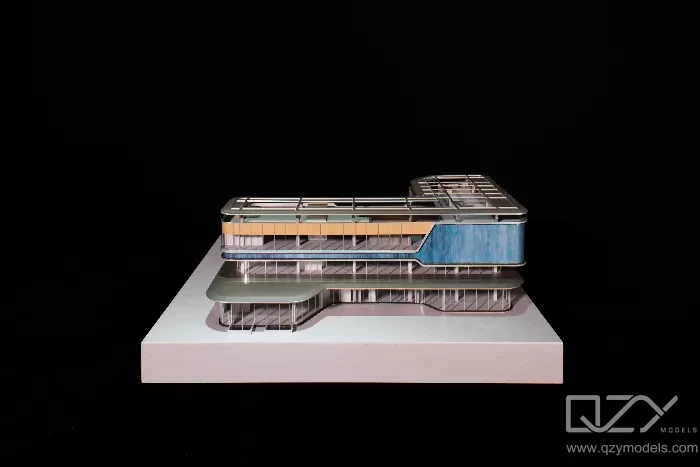
Eliminating Transport Uncertainty
One of the most immediate risks in international presentations is physical damage during transport. Standard models, particularly those built for fixed display, are highly vulnerable when exposed to handling, vibration, and long-distance shipping conditions.
Portable models address this risk through integrated protection systems.
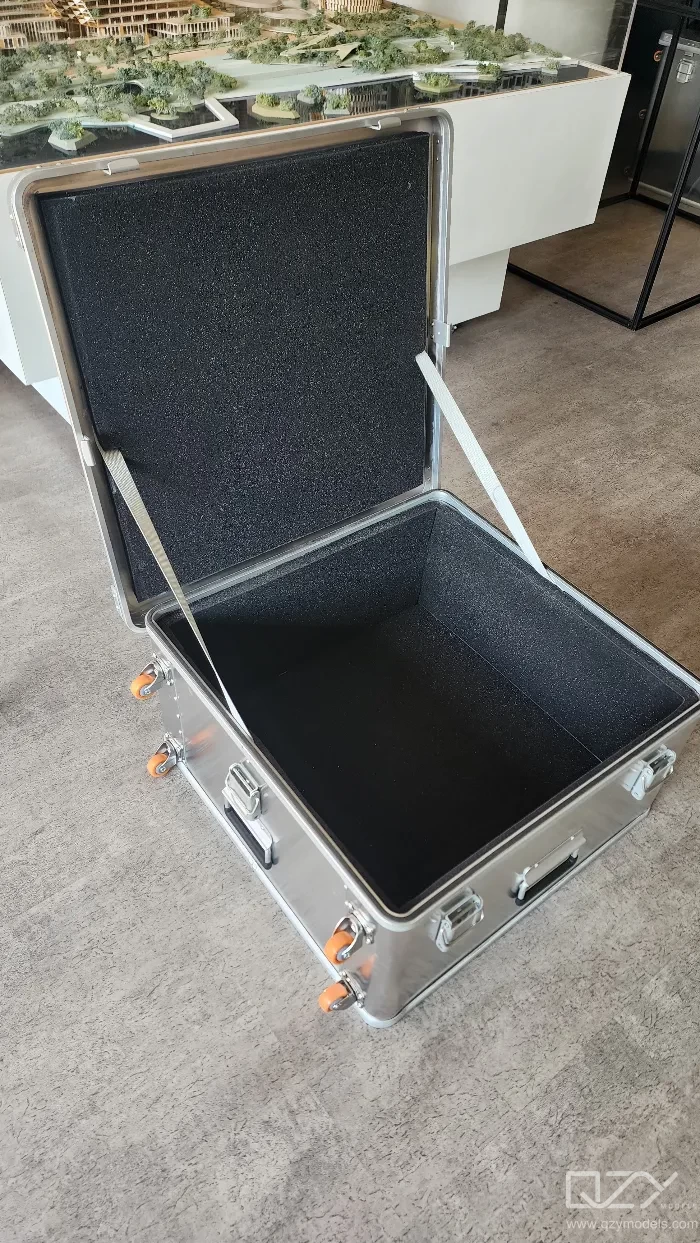
Instead of relying on external packaging solutions, they are designed alongside custom transport cases. Each component is housed within precision-cut foam, preventing movement and absorbing impact. Structural elements are reinforced where necessary, and fragile details are either protected or designed to be removable.
This level of control significantly reduces the likelihood of damage, ensuring that the model arrives in presentation-ready condition.
More importantly, it removes the need for last-minute repairs—something that is often impractical in a foreign location.
Reducing Dependency on Local Resources
A common but often underestimated risk in international presentations is reliance on local support.
Shipping a model separately and assembling it on-site may require:
Local technicians
Tools and equipment
Additional coordination time
These dependencies introduce uncertainty. Delays, miscommunication, or differences in technical standards can all affect the final presentation.
Portable models are designed to operate independently of these variables.
With modular construction and simplified connection systems, they can be assembled by the client’s own team without specialized expertise. Clear assembly guides and installation videos ensure that the process is repeatable and predictable.
This autonomy allows teams to maintain control over their presentation, regardless of location.
Maintaining Consistent Presentation Quality
In international projects, consistency is critical. Presenting the same development in different regions should not result in variations in quality or interpretation.
Without a portable model, teams may rely on:
Local fabrication in different countries
Printed materials of varying quality
Digital presentations that depend on equipment and setup
Each of these introduces inconsistency.
A portable model ensures that the exact same physical representation is used in every presentation. Scale, detailing, material finish, and lighting remain unchanged, creating a stable and reliable reference.
This consistency reinforces professionalism and builds trust, particularly when engaging with investors or stakeholders who may compare presentations across different locations.
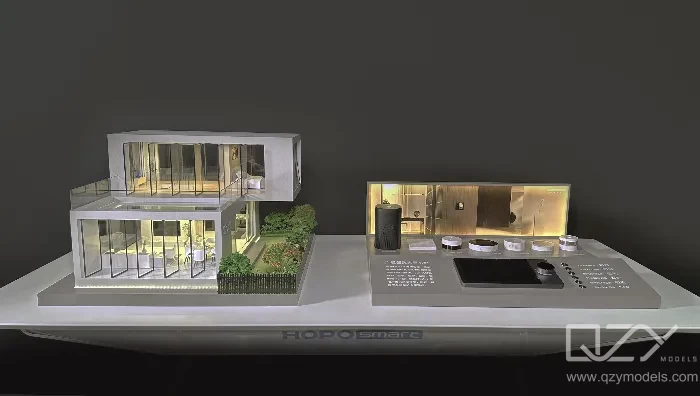
Minimizing Setup Time and On-Site Pressure
International presentations often operate under strict time constraints. Venues may only be accessible shortly before an event, and preparation windows are limited.
In these conditions, complex installation processes become a risk.
Portable models are designed to reduce setup time significantly. Modular sections are clearly defined, and assembly sequences are straightforward. Components align intuitively, minimizing the need for adjustments.
Lighting systems, when included, use simplified connections that eliminate complex wiring. This allows the model to be fully operational within a short timeframe.
Reducing setup complexity not only saves time—it reduces stress and the potential for errors in high-pressure situations.
Preventing Miscommunication Through Clarity
In international environments, communication is often affected by language differences and varying levels of technical familiarity.
Drawings and digital presentations can require explanation, increasing the risk of misunderstanding.
A physical model reduces this risk by providing a direct, visual reference. It allows stakeholders to understand the project without relying heavily on verbal explanation. Spatial relationships, scale, and layout become immediately clear.
This is particularly valuable when presenting to mixed audiences, where not all participants share the same technical background.
By reducing reliance on interpretation, the model ensures that the project is understood as intended.
Supporting Repeatable, High-Stakes Presentations
Portable models are often used in a sequence of presentations—investor meetings, exhibitions, and internal reviews—across different locations.
Each presentation carries its own level of importance, but the expectation remains the same: the model must perform reliably every time.
This repeatability is where portable models provide long-term value. They are built not just to survive transport, but to maintain their quality through multiple cycles of use.
This allows teams to approach each presentation with confidence, knowing that the physical representation of their project will remain consistent and effective.
Conclusion: Turning Uncertainty into Control
International project presentations involve many variables—location, timing, logistics, and audience expectations. While not all of these can be controlled, the way a project is presented can be.
Portable architectural models provide that control.
By integrating protection, modularity, simplified assembly, and transport-ready design, they reduce the risks associated with damage, delays, inconsistency, and miscommunication.
In doing so, they allow teams to focus on what matters most: presenting their project with clarity, confidence, and professionalism—anywhere in the world.
About QZY Models
QZY MODELS is a professional model-making company specializing in architectural scale models, industrial models, and urban planning models for global clients.
With more than 20 years of experience, the team provides complete services including:
architectural model design
model fabrication
international packaging and shipping
on-site installation support
These integrated services ensure that every model can be safely transported and efficiently presented anywhere in the world.
🌐 www.qzymodels.com
📧 [email protected]