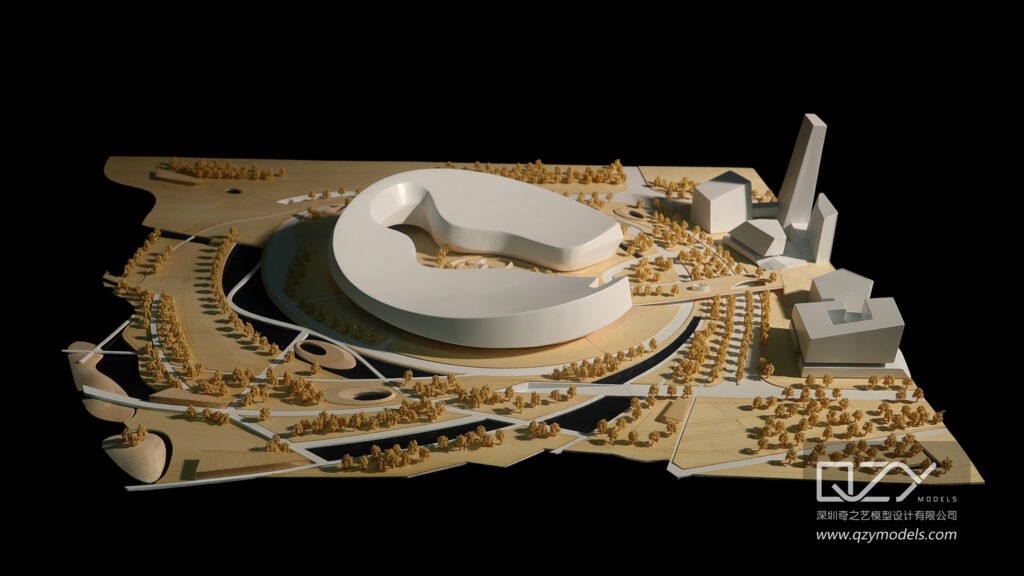
Why Smart Architecture Firms Still Invest in Physical Scale Models in 2026
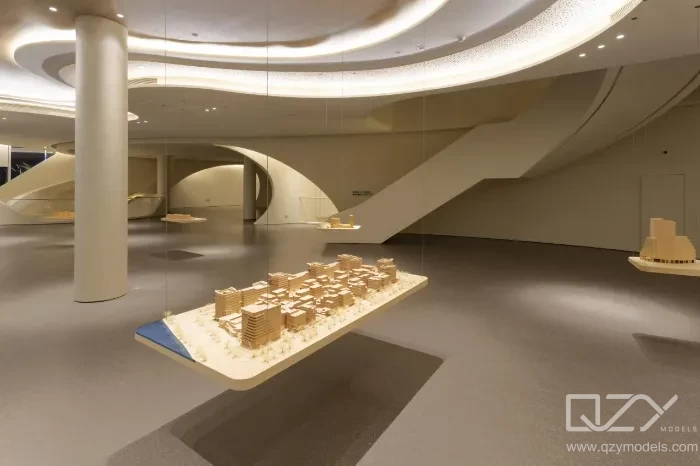
In an era where photorealistic digital renderings can be produced in hours, the architectural model making industry faces a persistent question: Is there still Return On Investment (ROI) in building physical scale models?
The answer, backed by project outcomes and client psychology, is a resounding yes—but not in the way many assume. Physical models and digital renderings aren’t competitors; they’re complementary investments with distinct returns. Understanding when and why to deploy each determines whether your presentation budget becomes a cost center or a revenue driver.
The Hidden Economics of Client Decision-Making
Digital Renderings: Efficiency at Scale
Digital renderings excel at speed and iteration. A single BIM file can generate infinite viewpoints, lighting scenarios, and material options. For early-stage design development and online marketing, their ROI is unmatched.
Where digital wins
Cost per iteration: Low marginal cost for design changes
Distribution: Instant sharing across global stakeholder teams
Visual impact: Photorealistic environments that sell lifestyle aspirations
Speed: Overnight turnaround for deadline-critical presentations
The ROI ceiling: Digital renderings plateau when decisions require spatial intuition. A screen-based image, however beautiful, remains abstract. Clients don’t walk around it. They don’t see how shadows move across a facade at 1:100 scale. They experience it passively.
Physical Models: The Conversion Multiplier
Physical models operate on different economics. Their upfront cost is higher. Their production timeline is longer. But their conversion impact—the rate at which presentations translate into approvals, funding, or sales—is measurably superior in specific contexts.
Where physical models dominate ROI:
| Scenario | Physical Model Advantage | Measurable Outcome |
| Planning approvals & community boards | Tangible proof of massing, scale, and neighborhood impact | Reduced objection cycles; faster municipal sign-off |
| Investor/boardroom presentations | Haptic engagement; “boardroom centerpiece” effect | Higher capital commitment rates; shorter deliberation |
| High-stakes competitions | Memorability; jurors physically interact with your design | Differentiation in crowded fields |
| Residential pre-sales | Emotional connection; buyers visualize their future home | Faster inventory turnover; reduced holding costs |
| Heritage/institutional projects | Trust-building through craft; demonstrates respect for permanence | Stakeholder confidence in long-term vision |
The Psychology Behind the Premium
Neuroscience and behavioral economics explain why physical models persist despite digital superiority in almost every technical metric.
- The Endowment Effect
People value what they can touch. A physical model creates psychological ownership before a single contract is signed. When a planning committee member rotates a site model to view the pedestrian approach, they begin to mentally inhabit the space. Digital navigation doesn’t trigger the same neural pathways.
- Cognitive Load Reduction
Complex developments overwhelm working memory. A physical model externalizes cognition—stakeholders don’t need to mentally construct spatial relationships from 2D images. The model thinks for them, allowing focus on design merits rather than spatial interpretation.
- Trust Signaling
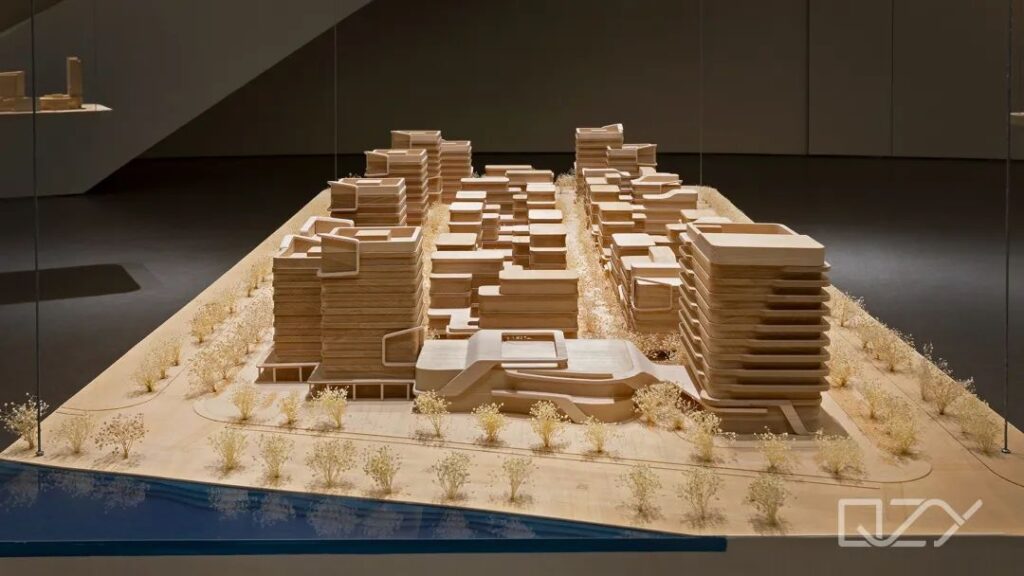
In an age of AI-generated imagery and easily manipulated renders, physical models carry authenticity premium. A meticulously crafted basswood and acrylic model signals investment, permanence, and confidence in the design. It says: “We believe in this enough to build it twice.”
Calculating True ROI: Beyond the Invoice
To evaluate ROI accurately, architecture firms and developers must account for downstream costs that presentations influence.
The Approval Cost Chain
A delayed planning approval doesn’t just push back groundbreaking. It triggers:
– Extended financing costs
– Inflation exposure on construction materials
– Opportunity cost of capital
– Team reallocation and morale impact

The Pre-Sale Velocity Factor
For residential developers, physical display models in sales galleries create dwell time. Prospective buyers spend 40-60% longer engaging with physical models than touchscreen displays, according to property marketing studies. Extended engagement correlates directly with conversion rates.
A Dubai-based luxury developer noted that units in towers with gallery display models sold 23% faster than comparable towers marketed with digital-only presentations, reducing presale risk and improving lender terms.
The Hybrid Strategy: Maximizing Combined ROI
The highest-performing firms in 2026 don’t choose between physical and digital—they sequence them strategically.
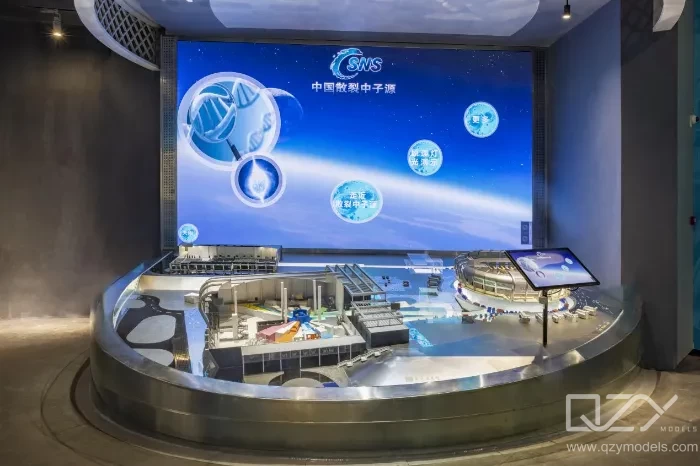
Phase 1: Digital Dominance (Design Development)
– Rapid iteration
– Internal team alignment
– Early client concept buy-in
– Marketing material generation
Phase 2: Physical Precision (Decision Points)
– Planning submissions
– Critical investor presentations
– Competition entries
– Sales gallery installations
– Community engagement events
Phase 3: Physical as Asset (Post-Approval)
– Permanent installation in sales centers
– Museum/archive documentation
– Press and award submission photography
– Legacy marketing for firm reputation
The model becomes a depreciating asset that generates returns across multiple project phases, not a single-use presentation expense.
When to Invest in Physical: A Decision Framework
Not every project warrants a physical model. Use this framework to protect ROI:
| Invest in Physical When... | Stick to Digital When… |
| The decision involves non-experts (planning boards, communities, investors) | The audience is purely technical (structural engineers, MEP consultants) |
| The project value is high | The project is early-stage conceptual or speculative |
| Competition or approval is high-stakes | Internal design exploration and team alignment |
| Sales velocity directly impacts project financing | Social media and broad marketing campaigns |
| The design relies on spatial experience (landscape, urban massing, interior flow) | The design is primarily aesthetic facade studies |
The Craftsmanship Multiplier
Not all physical models deliver equal ROI. The market distinguishes between presentation-grade and study-grade models.
Study models(foamcore, 3D-printed, monochromatic): Low cost, rapid production, internal use. ROI lies in design error detection before costly construction.
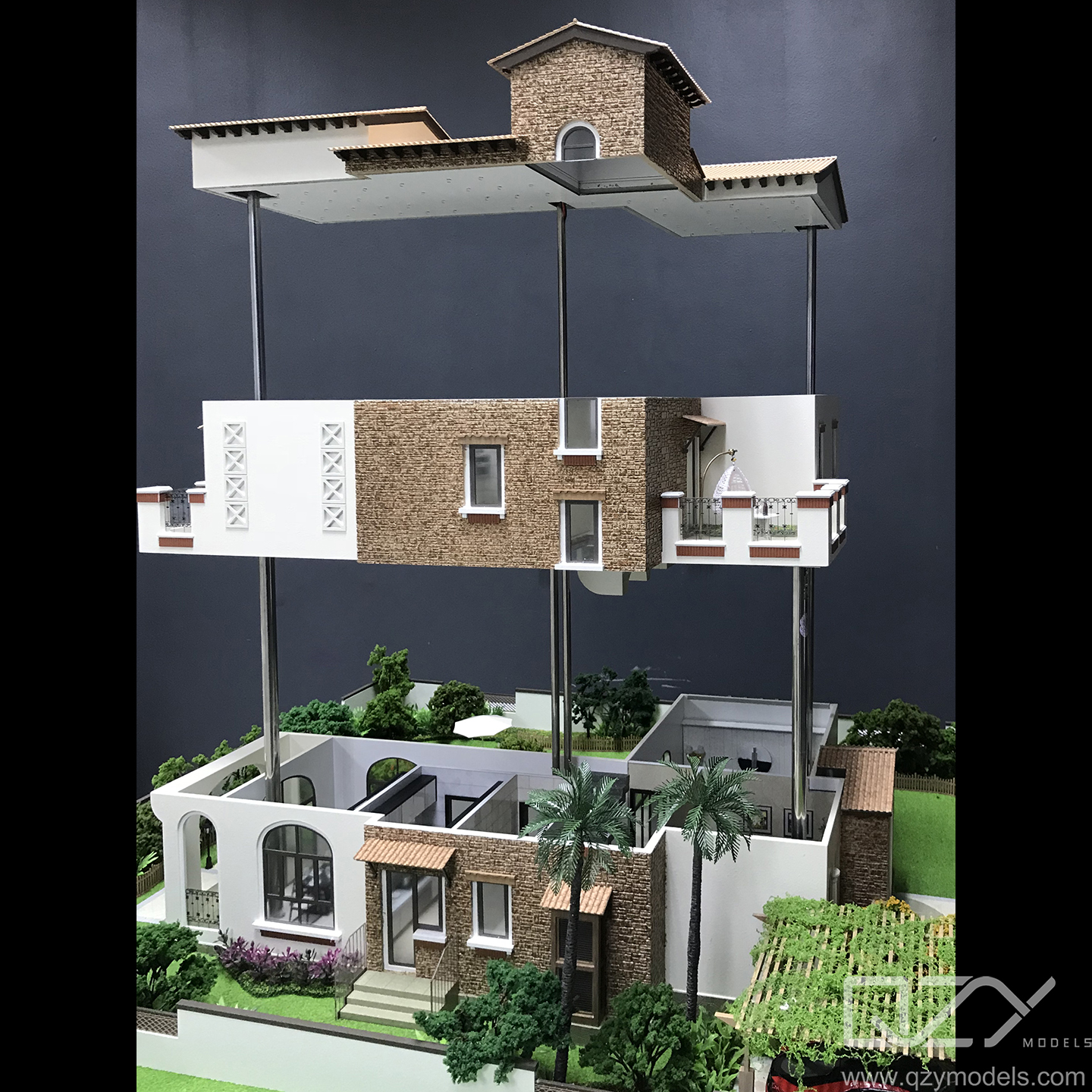
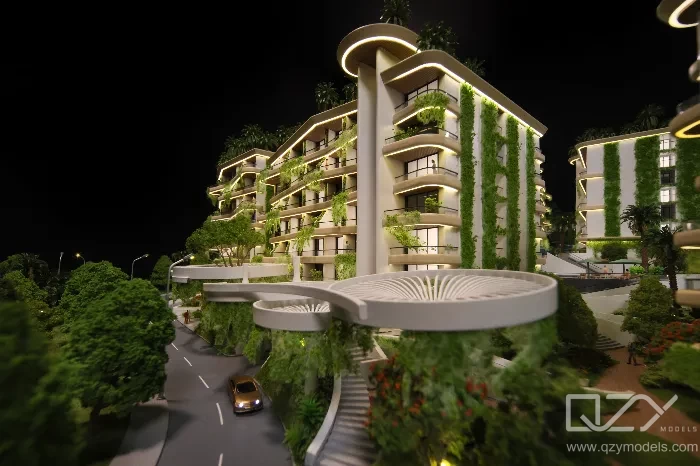
– Presentation models (laser-cut acrylics, hand-finished landscaping, integrated lighting): Higher cost, but the craftsmanship itself becomes a marketing asset. These models are photographed, shared, and remembered.
The firms seeing the strongest returns treat their presentation models as brand artifacts, not disposable presentation tools.
Conclusion: The ROI Is in the Outcome
Digital renderings optimize for efficiency. Physical models optimize for persuasion. The architecture firms and developers winning in 2026’s competitive landscape understand that persuasion—converting skeptics into advocates, observers into buyers, plans into permissions—often carries higher economic value than efficiency alone.
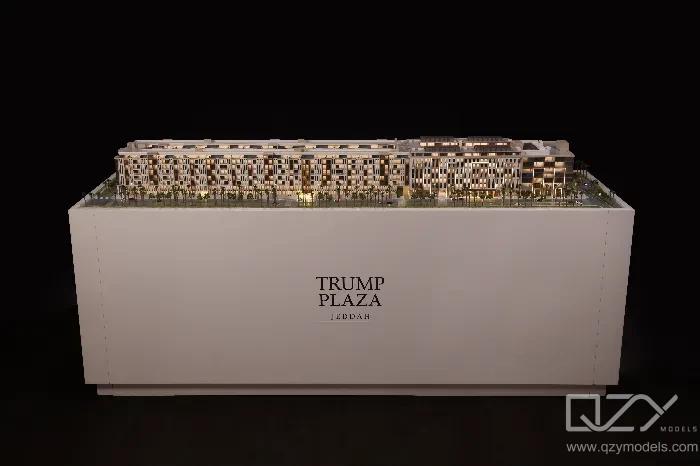
The question isn’t whether physical models can compete with digital renderings on cost. They can’t, and they don’t need to. The question is whether a 15,000 dollar model that secures a 50M approval six months faster outperforms a 2,000 dollar rendering package that leaves planning committees squinting at screens, debating scale, and requesting revisions.
In high-stakes architecture, the medium that reduces uncertainty fastest usually delivers the highest return. For decisions that matter, physical models remain that medium.
About QZY Models
QZY MODELS is a professional model-making company specializing in architectural scale models, industrial models, and urban planning models for global clients.
With more than 20 years of experience, the team provides complete services including:
architectural model design
model fabrication
international packaging and shipping
on-site installation support
These integrated services ensure that every model can be safely transported and efficiently presented anywhere in the world.
🌐 www.qzymodels.com
📧 [email protected]