Introduction: In a Competitive Pitch, the Developer Who Shows Always Beats the Developer Who Tells
Residential development is a competitive business. Whether you are bidding for a strategic land site, presenting to a housing association, pitching to a local authority on a regeneration opportunity, or competing for a joint venture partnership, the ability to communicate your vision convincingly — and quickly — is one of the most valuable commercial skills a developer can possess.
Most developers turn up to pitches with the same toolkit: a polished presentation deck, carefully prepared financial modelling, and CGI visuals produced by a visualisation studio. These are table stakes. Every serious competitor in the room has them.
The residential developers who consistently win the pitches that matter have learned something their competitors often overlook: the moment a physical architectural scale model is placed on the table, the conversation changes entirely. The room leans in. Questions become more engaged. The vision becomes real.
This article explores how residential developers are using physical scale models as a strategic pitch tool — and why, in a market where differentiation is everything, the model is increasingly the deciding factor.
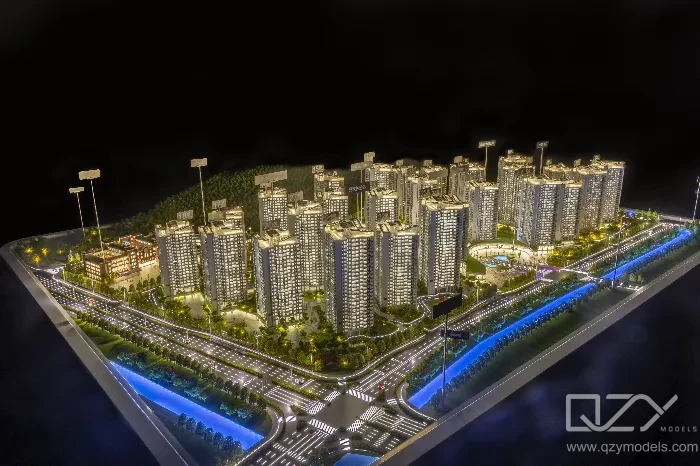
The Pitch Landscape Has Changed — Standing Out Is Harder Than Ever
A decade ago, a well-prepared developer with strong financial backing and a credible track record could win a residential land pitch on the strength of their reputation alone. That era has passed.
Today’s competitive pitches — particularly for strategic land, local authority partnerships, and large-scale regeneration opportunities — attract multiple well-funded, well-prepared bidders. Landowners, local authorities, and institutional partners have become more sophisticated in how they evaluate proposals. They are not simply choosing the highest price or the strongest balance sheet. They are choosing the developer they trust to deliver a scheme that works — for the site, for the community, and for the long term.
In this environment, the quality of a developer’s pitch communication has become a genuine differentiator. A developer who can make their vision tangible, immediate, and emotionally compelling has a structural advantage over one who cannot — regardless of how strong their underlying proposition may be.
Physical architectural scale models are one of the most powerful tools available for achieving exactly this.
Making Your Vision Impossible to Ignore
The fundamental challenge in any residential development pitch is converting abstract numbers and drawings into a shared vision that decision-makers can feel confident about. Landowners are being asked to trust a developer with their most significant asset. Local authority officers are being asked to recommend a partner who will deliver homes for their community. Joint venture partners are being asked to commit capital to a project they cannot yet see.
A physical scale model collapses this gap between abstraction and reality faster than any other medium.
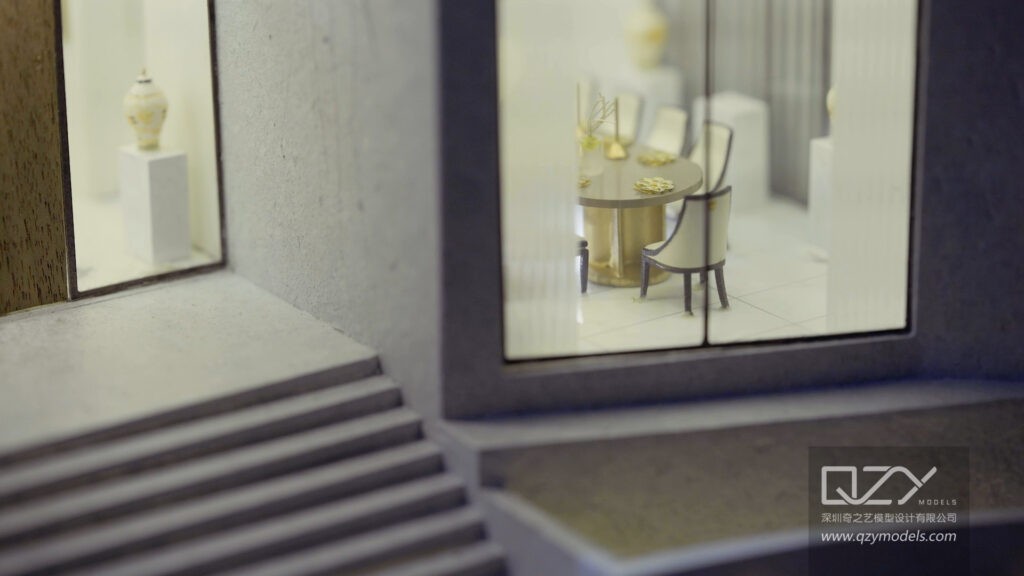
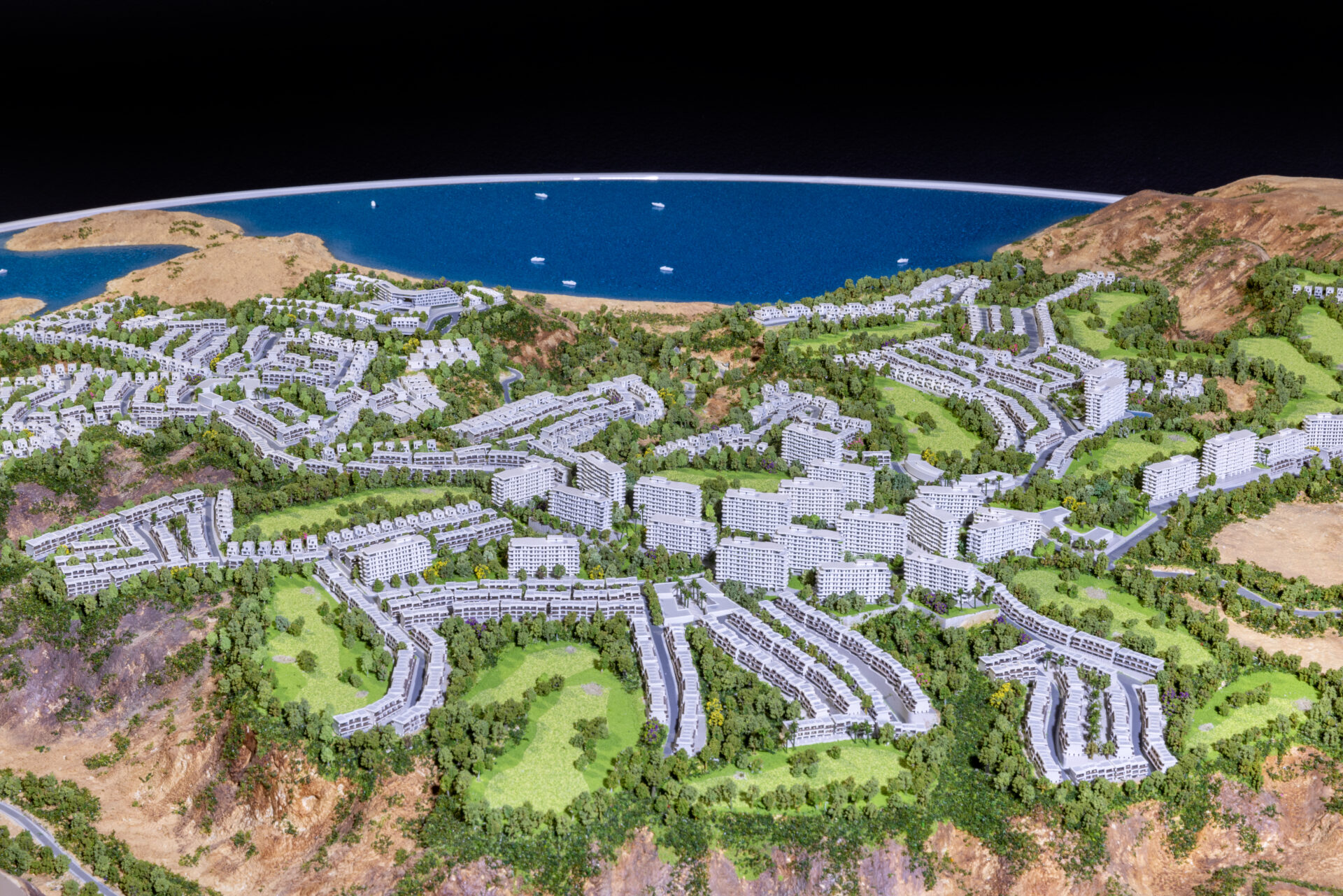
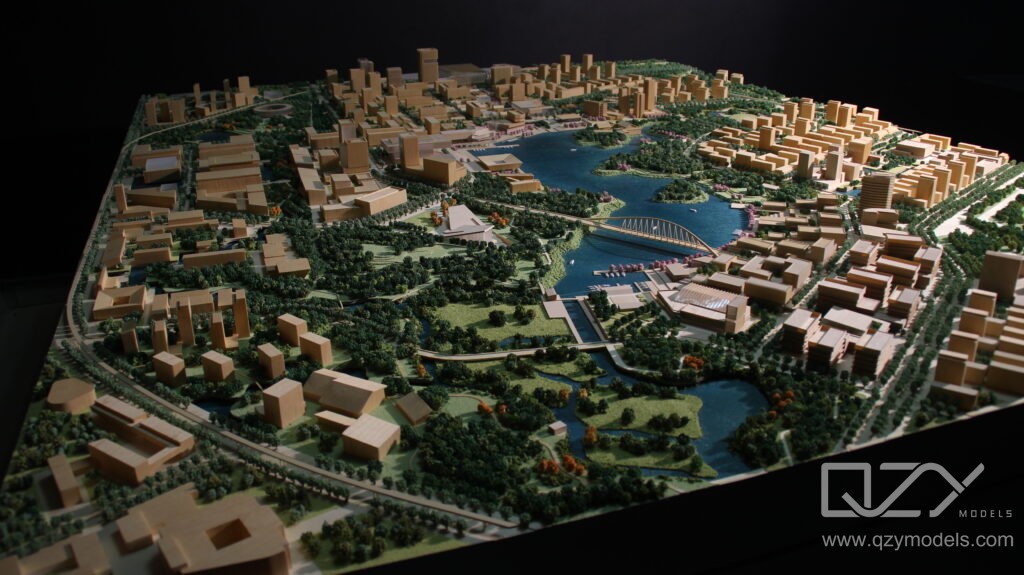
When a developer places a model of the proposed scheme on the table, several things happen simultaneously. Decision-makers immediately grasp the scale, layout, and character of the development. They can see how the buildings relate to each other, how the public realm flows through the scheme, and how the development sits within its surrounding context. Questions that would have taken three rounds of email exchanges to resolve are answered in seconds.
More importantly, the model generates an emotional response that drawings and presentations rarely achieve. It makes people feel the potential of the site. It transforms a land parcel into a place — and that shift in perception is enormously powerful in a pitch environment.
For residential developers competing on multiple fronts simultaneously, the ability to create this response consistently and reliably is a significant competitive advantage.
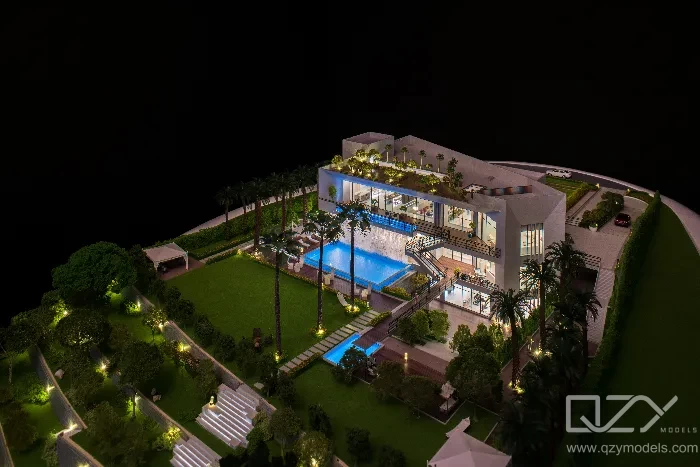
Winning Landowner Confidence at the Critical First Meeting
For residential developers working in the land market, the landowner meeting is often the most consequential pitch of all. Landowners are not always sophisticated property professionals — they may be farming families, estate owners, institutional trustees, or private individuals who have held land for generations. They are making one of the most significant financial decisions of their lives, often with limited experience of the development process.
These landowners are not evaluating financial models or planning strategies in the first instance. They are evaluating people and visions. They want to know: does this developer understand my land? Do they have a vision for it that I can believe in? Can I trust them to deliver?
A physical scale model answers these questions more compellingly than any presentation deck.
When a developer arrives at a landowner meeting with a scale model of what the site could become — showing the layout, the character, the relationship to the surrounding landscape — the message is clear: this developer has invested in understanding your land. They have thought carefully about what belongs here. They are serious.
This signal of investment and seriousness is often the deciding factor in a competitive landowner process. Many landowners will accept a lower land price from the developer whose vision they trust most. A physical model is one of the most effective ways of earning that trust at the earliest and most critical stage of the relationship.
Differentiating Your Pitch to Local Authorities and Housing Associations
Residential developers increasingly work in partnership with local authorities, Registered Providers, and housing associations — whether on Section 106 affordable housing obligations, direct commissioning arrangements, or full joint venture partnerships on council-owned land.
These public sector and third sector partners evaluate developer pitches differently from private landowners. They are accountable to communities, elected members, and regulatory bodies. They need to be able to demonstrate that their chosen development partner is credible, quality-focused, and capable of delivering homes that will genuinely serve their residents.
A physical scale model speaks directly to these priorities. It demonstrates design quality in a form that elected members and non-specialist board members can immediately engage with. It shows that the developer has thought carefully about how the scheme will work for future residents — not just how it will perform financially.
For public sector pitches that involve presentation to elected committee members or housing association boards, a physical model is particularly valuable. These audiences are often making decisions on complex development proposals without specialist property training. A model gives them something concrete to engage with, ask questions about, and ultimately feel confident approving.
Developers who bring a model to these presentations are consistently perceived as more serious, more quality-focused, and more trustworthy than those who do not — regardless of whether the underlying schemes are comparable in quality.
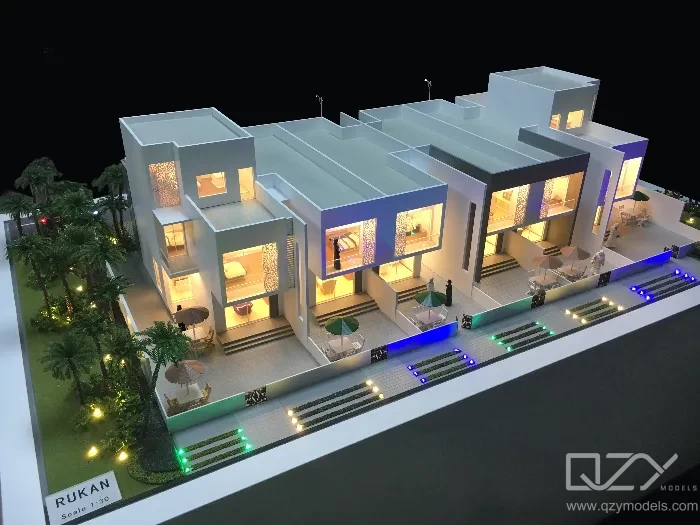
The Model as a Tool Throughout the Pitch Process — Not Just the Final Presentation
Many developers think of a pitch model as something that appears at the final presentation meeting — a reveal moment. In reality, the most effective use of a physical model in a pitch process begins much earlier and extends much further.
During internal design development, a model helps the developer’s own team stress-test the scheme before it is presented externally. Design decisions that seem logical on a plan can reveal unexpected problems — or unexpected opportunities — in three dimensions. Resolving these before the pitch ensures that the scheme presented is genuinely the strongest version of the proposal.
In early stakeholder conversations, a model can be used informally with planning officers, highways consultants, or community representatives before the formal pitch. These conversations generate valuable feedback that can be incorporated into the scheme — and build goodwill with stakeholders whose support will matter later.
At the formal pitch presentation, the model becomes the centrepiece of the meeting — driving the conversation, answering questions visually, and creating the emotional connection that turns a good pitch into a winning one.
After the pitch, the model can be left with the decision-maker as a physical reminder of the developer’s proposal — sitting on their desk or in their boardroom while they complete their evaluation. No CGI or presentation deck achieves this kind of persistent, physical presence.
For developers who are serious about their pitch win rate, treating the scale model as a strategic tool throughout the entire pitch process — rather than a one-time presentation prop — delivers consistently superior results.
What Your Model Says About You — Before You Say Anything
In a competitive pitch, every element of your presentation sends a signal about who you are as a developer and how you work. The quality of your materials, the clarity of your thinking, and the depth of your preparation all communicate something to the decision-maker before a word is spoken.
A physical architectural scale model sends one of the strongest signals available: that you invest in quality, that you take this opportunity seriously, and that you are the kind of developer who goes further than your competitors.
This matters because residential development pitches are ultimately decisions about trust. A landowner, local authority, or joint venture partner is choosing to enter a long-term relationship with a developer. They are betting that this developer will do what they say, deliver what they promise, and handle the inevitable challenges of a complex development project with professionalism and integrity.
The developer who arrives with a beautifully crafted physical model — who has clearly invested time, thought, and resource into communicating their vision — is communicating all of these things without making a single claim about themselves.
The model does the talking. And it is remarkably persuasive.
Conclusion: The Developers Who Win Pitches Invest in Being Understood
The residential developers who consistently win the pitches that matter — the strategic land deals, the local authority partnerships, the high-value joint ventures — are those who invest in making their vision impossible to misunderstand and impossible to ignore.
A physical architectural scale model is one of the highest-return investments available in a competitive pitch process. It accelerates understanding, builds trust, creates emotional connection, and signals the quality and seriousness of the developer behind it.
In a market where every serious competitor turns up with the same deck, the same CGIs, and the same financial model, the developer with a physical model in the room has already changed the dynamic before the meeting begins.
About QZY Models
QZY MODELS is a professional model-making company specializing in architectural scale models, industrial models, and urban planning models for global clients.
With more than 20 years of experience, the team provides complete services including:
architectural model design
model fabrication
international packaging and shipping
on-site installation support
These integrated services ensure that every model can be safely transported and efficiently presented anywhere in the world.
🌐 www.qzymodels.com
📧 [email protected]