Find out why physical architectural scale models are essential for mixed-use development — from accelerating sales and securing planning to aligning investors and managing design complexity across multiple uses.
Introduction: Mixed-Use Development Is Brilliant in Concept — and Notoriously Difficult to Sell
Mixed-use development is one of the most compelling propositions in the modern built environment. A well-designed scheme that combines residential, retail, leisure, workspace, and public realm creates places that people want to live in, work in, and visit. It generates multiple revenue streams, appeals to a broad investor base, and delivers the kind of placemaking that planners and communities actively champion.
It is also, without question, one of the hardest types of development to communicate.
Unlike a single-use residential tower or a standalone office building, a mixed-use scheme requires multiple audiences — residential buyers, retail tenants, commercial occupiers, investors, planners, and the public — to simultaneously understand a complex, layered proposition. Each audience has different priorities. Each needs to see something different in the development. And each needs to reach their own decision quickly if the project is to maintain momentum.
This is the fundamental challenge that physical architectural scale models solve for mixed-use developers — and why skipping the model stage is a false economy that costs far more than it saves.
This article makes the commercial and strategic case for physical scale models across every critical stage of a mixed-use development: from early sales and investor presentations through planning, leasing, and long-term place marketing.
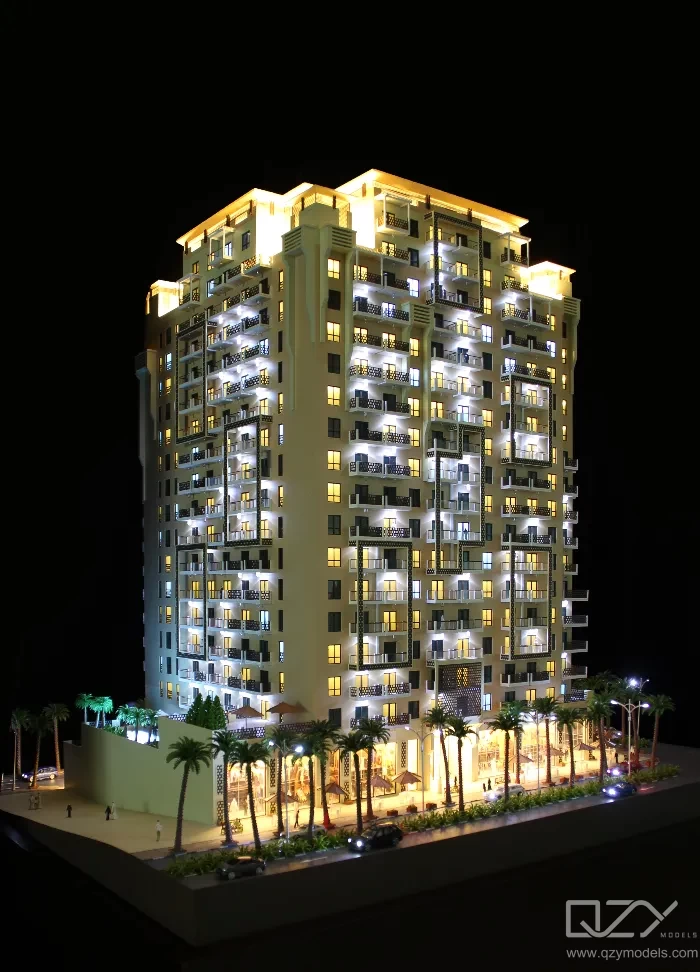
Selling the Vision Before the Spade Goes In
For most mixed-use schemes, commercial success depends on generating sales, pre-lets, and investment commitments well before construction begins. Off-plan residential sales fund early construction stages. Anchor retail and leisure pre-lets underpin the scheme’s valuation. Investor and funder confidence is built on demonstrable market demand.
All of this must happen during the period when the development exists only on paper — or on a screen.
This is where physical scale models deliver their most direct and measurable return.
A mixed-use scheme is, by definition, a place. It has streets, public spaces, ground-floor activity, views from residential floors, amenity spaces, and a character that is greater than the sum of its parts. No floor plan, CGI, or digital walkthrough fully conveys what it will feel like to live above a vibrant ground floor, to walk through a landscaped courtyard, or to work in a building surrounded by cafés and green space.
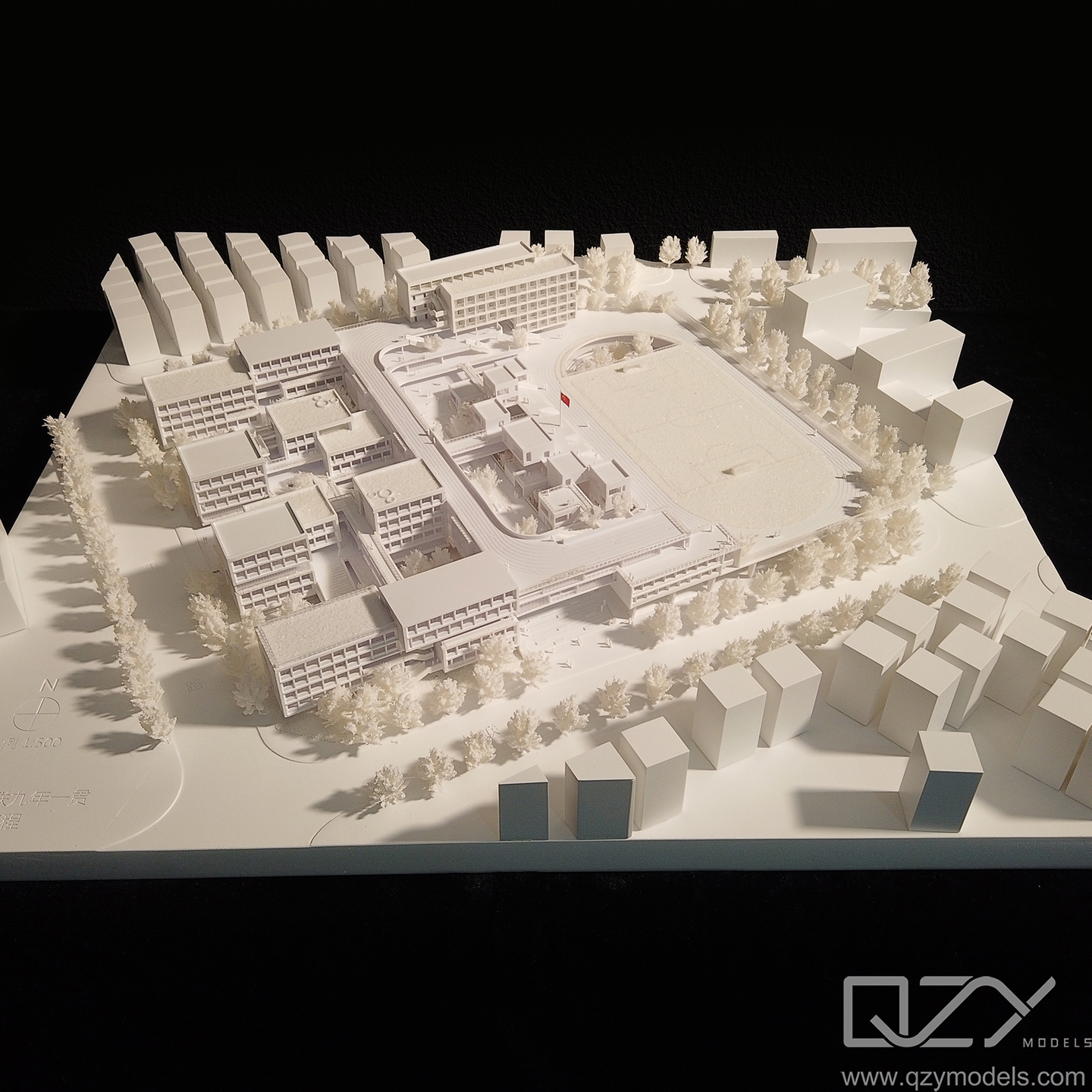
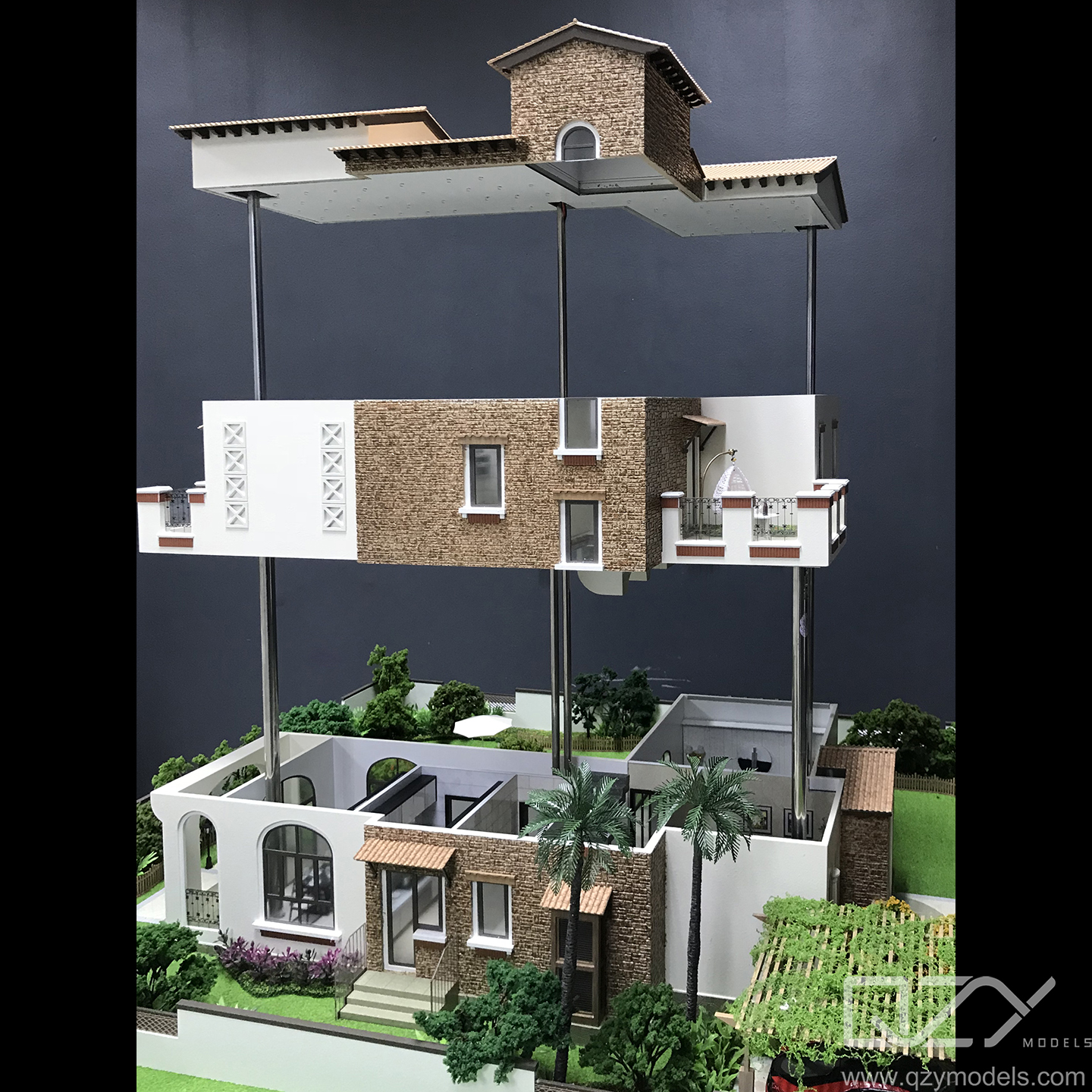
A physical model makes the place real. It allows buyers, occupiers, and investors to walk around the entire development — metaphorically and literally — before it exists. They can point to their apartment, identify their aspect and outlook, understand the relationship between their home and the amenities below, and visualise themselves in the finished development.
The commercial impact of this is significant. Sales teams working with a high-quality model in a sales suite consistently report shorter decision timelines, higher reservation rates per sales appointment, and reduced reliance on price incentives to close deals. When buyers feel confident about what they are buying, they move faster and negotiate less.
For mixed-use schemes where the residential element is being sold off-plan in a competitive market, the presence of a compelling physical model in the sales suite is not a marketing luxury — it is a sales infrastructure investment with a direct and measurable return.
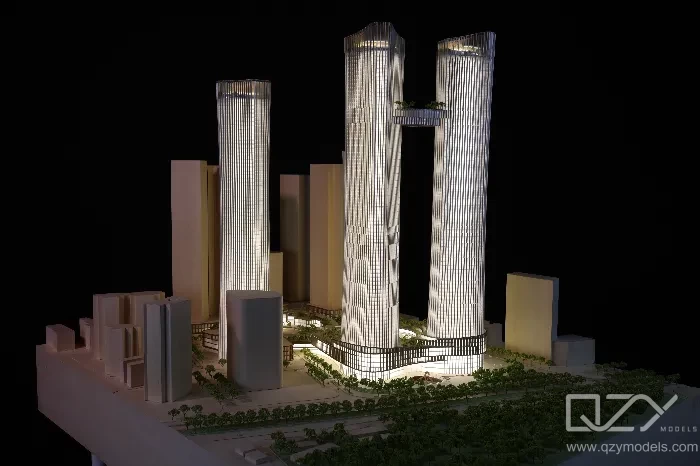
Communicating Complexity to Multiple Audiences Simultaneously
One of the defining challenges of mixed-use development is that the same scheme must speak to radically different audiences — often in the same week, and sometimes in the same room.
A residential buyer wants to understand their home. A retail tenant wants to understand footfall, frontage, and the quality of the surrounding environment. A leisure operator wants to understand the relationship between their unit and the public realm. An institutional investor wants to understand the overall value proposition and long-term income security. A planning authority wants to understand how the scheme contributes to the public good. A local community wants to understand what this new place will mean for their neighbourhood.
These audiences do not share a common language when it comes to architectural drawings, technical reports, or digital models. Many of them are not able to interpret plans and sections at all.
A physical scale model is the only tool that communicates effectively to all of these audiences without requiring translation. Every person who stands in front of a well-crafted model of a mixed-use scheme immediately understands what is being proposed. They may ask different questions and focus on different elements — but they are all working from the same shared understanding of the development as a whole.
For developers managing complex stakeholder landscapes across a mixed-use project, this universal comprehension is not merely convenient. It eliminates misunderstandings before they become objections, compresses consultation timelines, and keeps multiple workstreams moving simultaneously.
Unlocking Planning Consent for Complex Mixed-Use Schemes
Mixed-use schemes are typically among the more complex planning applications that local authorities process. They involve a wider range of land uses, more nuanced design considerations, more extensive viability assessments, and a greater number of interested parties than single-use developments.
They also tend to be higher-profile. A mixed-use development that includes residential, retail, leisure, and public realm is often proposing to create or transform a significant piece of the urban fabric. Planning authorities, design review panels, and local communities are all paying close attention.
In this environment, the quality of a developer’s communication with the planning system directly influences outcomes and timelines.
A physical scale model submitted with a planning application, or presented at pre-application meetings and public consultation events, does several things that accelerate the planning process:
It demonstrates seriousness and investment. A developer who commissions a professional scale model signals that they are committed to the scheme and have thought carefully about its design. This builds credibility with planning officers and committee members from the outset.
It makes the scheme legible to non-specialists. Planning committee members are elected councillors, not architects. Many are making decisions on complex urban schemes without specialist design training. A physical model allows them to understand and engage with a proposal in a way that written reports and drawings rarely achieve. Decisions made from genuine understanding are more likely to be well-reasoned, more defensible, and more positive.
It supports public consultation quality. When local residents can engage with a physical model at a consultation exhibition, the quality of their feedback improves dramatically. Rather than objecting to things they have misunderstood, they are able to ask specific, informed questions. The consultation record becomes richer and more useful — and less likely to contain the kind of fundamental misunderstandings that fuel objections and delays.
It provides a shared reference for design negotiations. Pre-application discussions for mixed-use schemes often involve iterative design evolution in response to planning officer feedback. A physical model that can be updated — or that clearly represents the current design iteration — gives these conversations a concrete focus. Changes are easier to discuss, visualise, and agree when there is a physical object in the room.
For mixed-use schemes where planning risk is significant and delays are measured in substantial cost, anything that smooths and accelerates the planning process represents genuine financial value. A well-timed model investment can return its cost many times over in planning time saved.
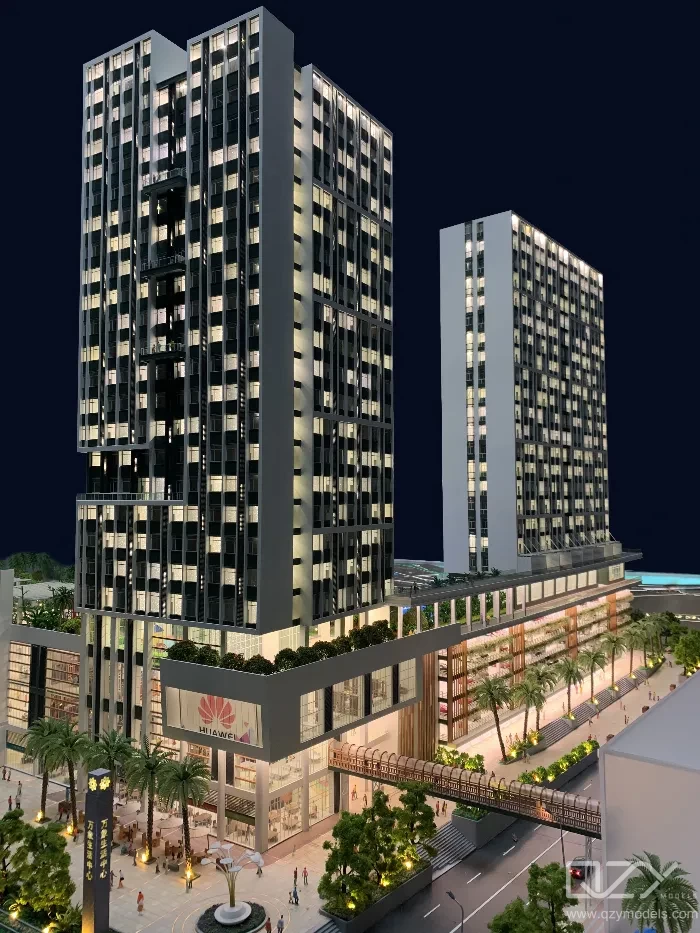
Securing Commercial Pre-Lets and Anchor Tenants
The commercial viability of many mixed-use schemes depends on securing anchor tenants — a major food and beverage operator, a gym, a cinema, a supermarket, or a workspace provider — before or shortly after planning consent. These pre-lets underpin scheme valuations, satisfy lender requirements, and often trigger the funding conditions that allow construction to begin.
Leasing negotiations for commercial space in a mixed-use development involve tenant representatives who are making significant long-term commitments. They need to understand not just the dimensions of a unit, but the quality of the environment it sits within: the footfall potential, the visibility from the street, the relationship to residential population above, the character of the public realm, and the overall quality of the development.
A physical scale model is one of the most effective tools for communicating this proposition to prospective tenants and their agents.
When a leisure or retail operator can see their proposed unit in the context of the whole development — understanding exactly where it sits, how it relates to pedestrian flows, what it looks like from the street, and what the surrounding development quality feels like — they can make a faster and more confident leasing decision.
For anchor tenants who are committing to long leases in a development that does not yet exist, the quality of the model is also a direct signal of the developer’s ambition and delivery capability. A meticulously crafted scale model communicates that this developer takes quality seriously — which is exactly what a premium leisure or retail operator needs to see before they sign.
Aligning the Design Team Across Multiple Use Classes
The design of a mixed-use scheme involves coordinating architects, structural engineers, MEP consultants, landscape architects, retail design specialists, and residential interior designers — often working to different briefs and different timelines, but all producing elements that must integrate seamlessly in the finished building.
Coordination failures in mixed-use design are common and costly. A residential lobby that conflicts with a retail servicing route. A leisure unit that loses natural light due to an unanticipated structural element. A landscape design that doesn’t account for retail servicing vehicle access. These are the kinds of problems that are far easier to identify in a physical model than in a set of drawings — and far cheaper to resolve before construction begins.
A physical model that is updated through design development serves as a three-dimensional coordination tool for the entire project team. It surfaces conflicts that would otherwise only be discovered on site, and it gives all consultants — regardless of their specialism — a shared spatial understanding of the scheme as a whole.
For mixed-use projects with large and complex design teams, this coordination function alone can justify the cost of the model. One significant design conflict identified and resolved at model stage, rather than on site, can save more than the entire model budget.
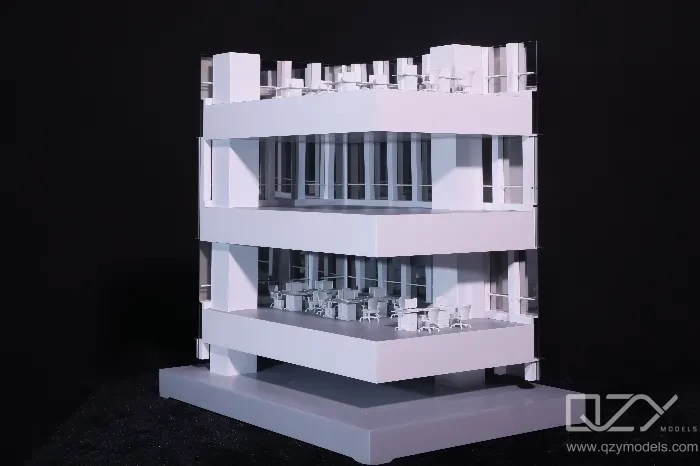
Building Investor and Funder Confidence at Every Stage
Mixed-use development typically involves a more complex funding structure than single-use schemes. Joint venture partners, development finance lenders, forward-funding investors, and equity partners all need to be kept aligned — not just at the point of initial commitment, but throughout design development, planning, and construction.
Physical scale models play a valuable role in investor and funder relationship management throughout the project lifecycle.
At the initial investment stage, a high-quality model in a board presentation communicates project quality, developer credibility, and scheme ambition in a way that no financial model or presentation deck can replicate. It makes the investment proposition tangible, and tangible propositions attract faster decisions.
At design development milestones, an updated model keeps investors visually connected to the evolving scheme. Rather than reviewing technical drawings or reading lengthy design reports, investors and funders can see the development progressing in physical form. This builds confidence, maintains engagement, and reduces the likelihood of late-stage concerns or changes of direction.
At construction commencement, the model transitions into its sales and marketing role — continuing to generate value as a centrepiece of the sales suite, leasing presentations, and public communications throughout the build programme.
For mixed-use schemes with multiple funding partners and long delivery timelines, the model is not a one-time expense but a long-term communication asset that earns its value at every stage of the project.
Creating a Placemaking Legacy That Outlasts the Sales Campaign
The best mixed-use developments don’t just deliver buildings — they create places that endure, evolve, and become embedded in the life of a city or neighbourhood. The physical scale model that was commissioned to sell apartments and secure planning consent often becomes something more: a record of the vision, ambition, and craft that brought a new piece of city into existence.
Many of the world’s most celebrated mixed-use developments — from regeneration masterplans to urban village schemes — display their original development models in lobbies, management offices, or public spaces long after the development is complete. These models serve as a connection between the development’s origin story and its ongoing life as a place.
For developers building a long-term portfolio and brand reputation in the mixed-use sector, the model is also a portfolio asset. It communicates to future investors, future planning authorities, and future joint venture partners the quality and ambition of the developer’s previous work — in a form that is far more compelling and credible than a photograph or a CGI.
Conclusion: The Model Stage Is Not Optional for Mixed-Use Development
The commercial, planning, and marketing complexity of mixed-use development demands tools that can communicate a layered proposition to multiple audiences — simultaneously, clearly, and compellingly. No other tool does this as effectively as a physical architectural scale model.
For mixed-use developers, the model stage is not an optional enhancement to the development process. It is the stage at which residential sales gain momentum, commercial pre-lets become achievable, planning risk is reduced, and investor confidence is built. Skipping it doesn’t save money — it defers costs and delays decisions that the model would have accelerated.
The developers who consistently deliver successful mixed-use schemes treat the physical model as a core project asset, commissioned early and used strategically throughout the project lifecycle. The return on that investment, measured in sales velocity, planning outcomes, leasing success, and investor confidence, is demonstrable at every stage.
About QZY Models
QZY MODELS is a professional model-making company specializing in architectural scale models, industrial models, and urban planning models for global clients.
With more than 20 years of experience, the team provides complete services including:
architectural model design
model fabrication
international packaging and shipping
on-site installation support
These integrated services ensure that every model can be safely transported and efficiently presented anywhere in the world.
🌐 www.qzymodels.com
📧 [email protected]