Should your architectural scale model show interior spaces or focus solely on the exterior? Discover when interior detailing adds value, when it doesn’t, and how developers can maximise ROI on architectural models.
Introduction: Does Your Audience Need to See Inside the Building?
When commissioning an architectural scale model, most developers naturally focus on the exterior. After all, the building’s form, façade, landscaping, and relationship to its surroundings are usually the first things people notice.
However, during the briefing process, another important question often arises:
Should the model reveal the interior spaces, or is an exterior-only model enough?
The answer depends entirely on what the model is designed to achieve.
For some projects, interior detailing can transform a model into a highly persuasive sales and marketing tool. For others, it adds cost and complexity without delivering any meaningful benefit.
Understanding when interior detail adds value—and when it doesn’t—can help developers, architects, and marketing teams invest their budget where it will have the greatest impact.
Why Most Architectural Models Focus on the Exterior
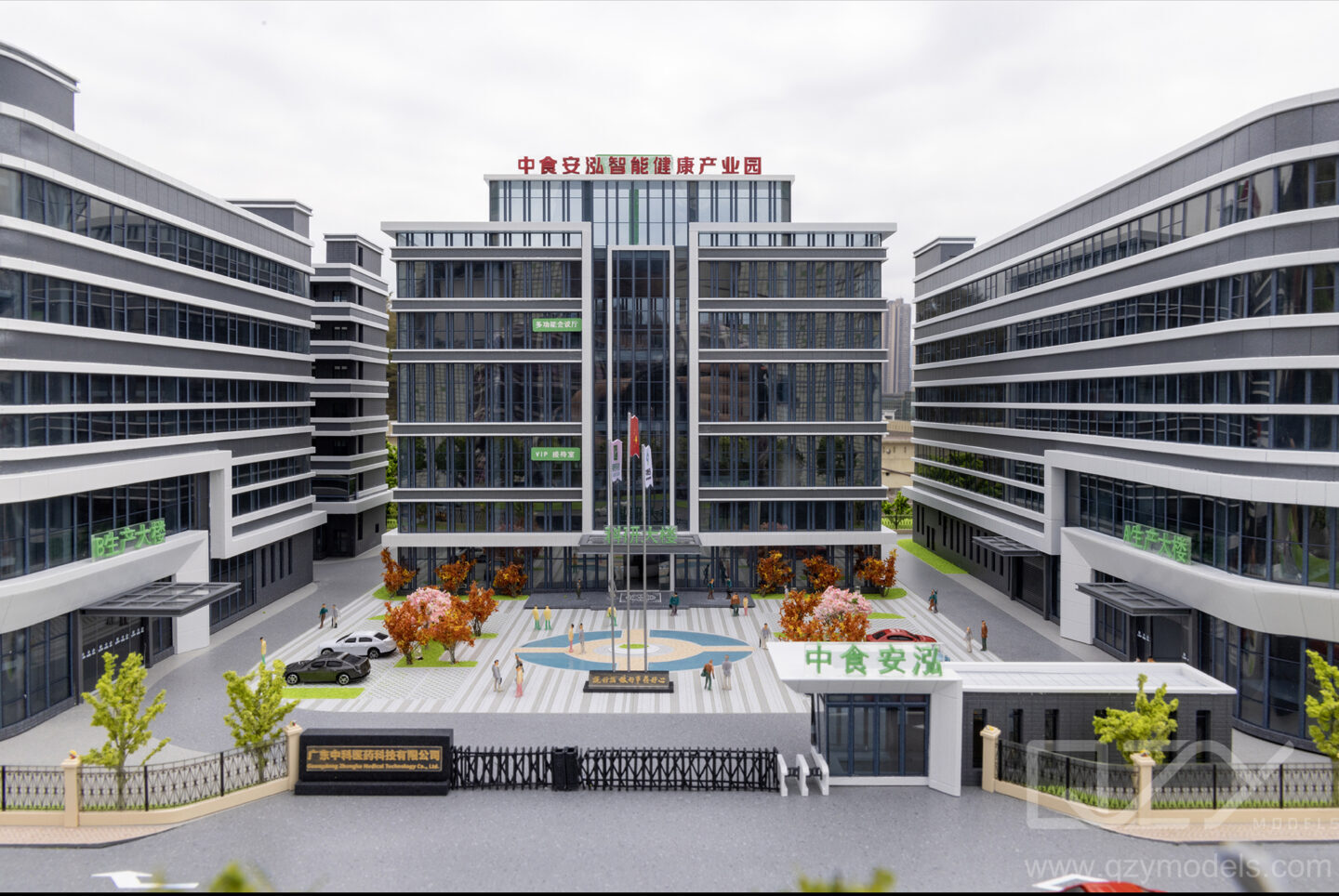
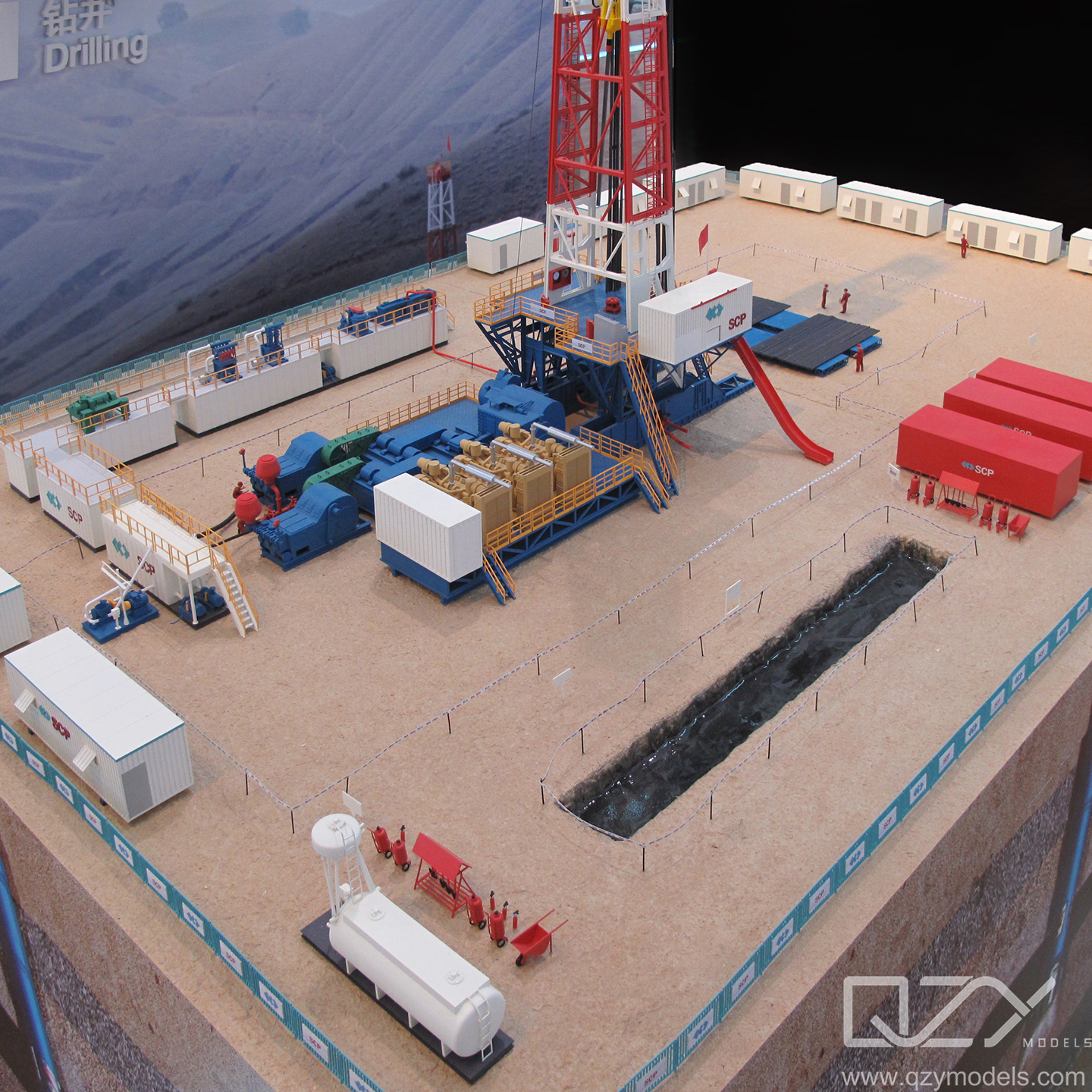
The majority of architectural scale models produced worldwide are exterior-focused.
This is not because interior spaces are unimportant. Rather, it reflects the primary purpose of most models.
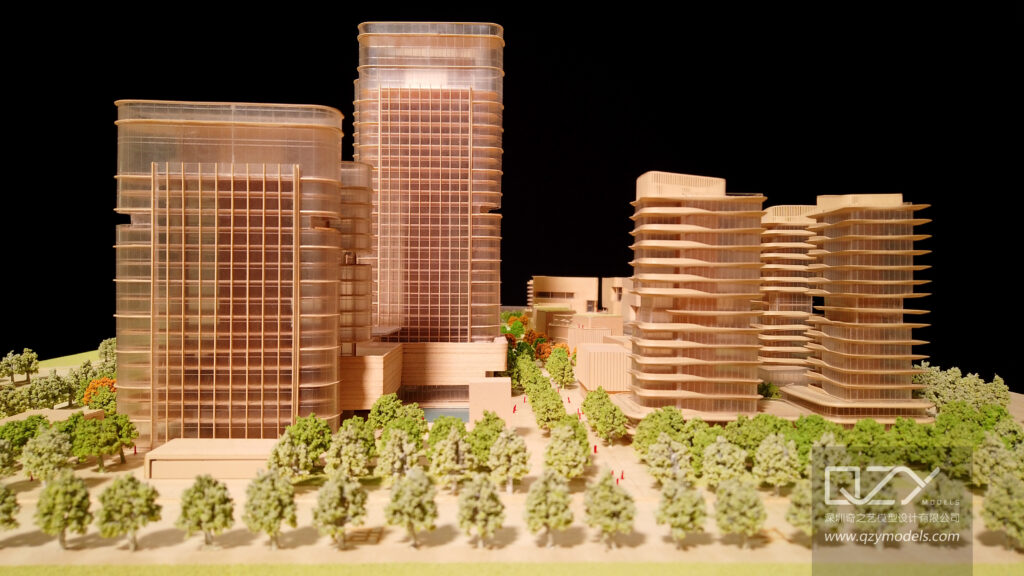
Planning models, masterplan models, urban design models, competition models, and stakeholder presentation models are typically created to answer questions about:
Building massing
Site relationships
Façade design
Urban context
Streetscape impact
Landscape integration
In these situations, the interior contributes very little to the decision-making process.
A planning committee, for example, is primarily concerned with how a development affects its surroundings. Likewise, investors often want to understand the scale of the opportunity, the overall design quality, and the project’s market positioning rather than the exact layout of individual rooms.
For this reason, an exterior-only model often delivers the greatest value while keeping production timelines and costs under control.
At QZY Models, many planning and masterplan models are intentionally designed with an exterior focus, allowing developers to communicate the overall vision of a scheme quickly and effectively while maintaining budget efficiency.
When Interior Detailing Makes a Real Difference
There are situations where the interior becomes one of the most persuasive parts of the model.
The key question is simple:
Is the interior experience central to the story you are trying to tell?
If the answer is yes, interior detailing may be worth the investment.
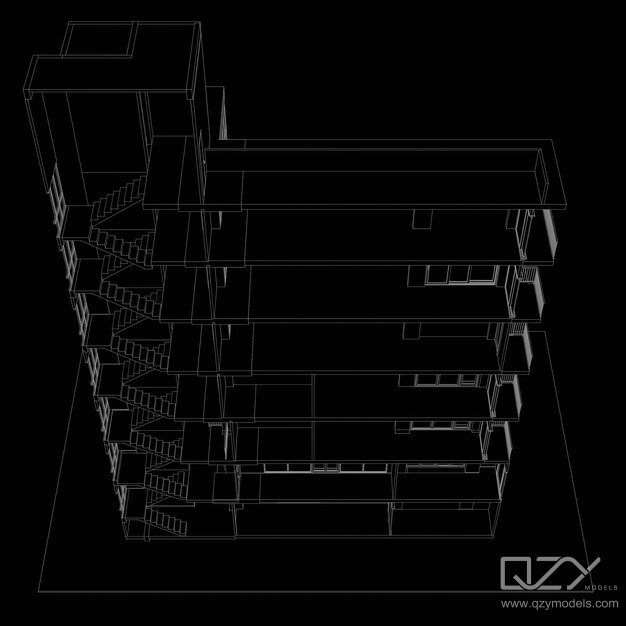
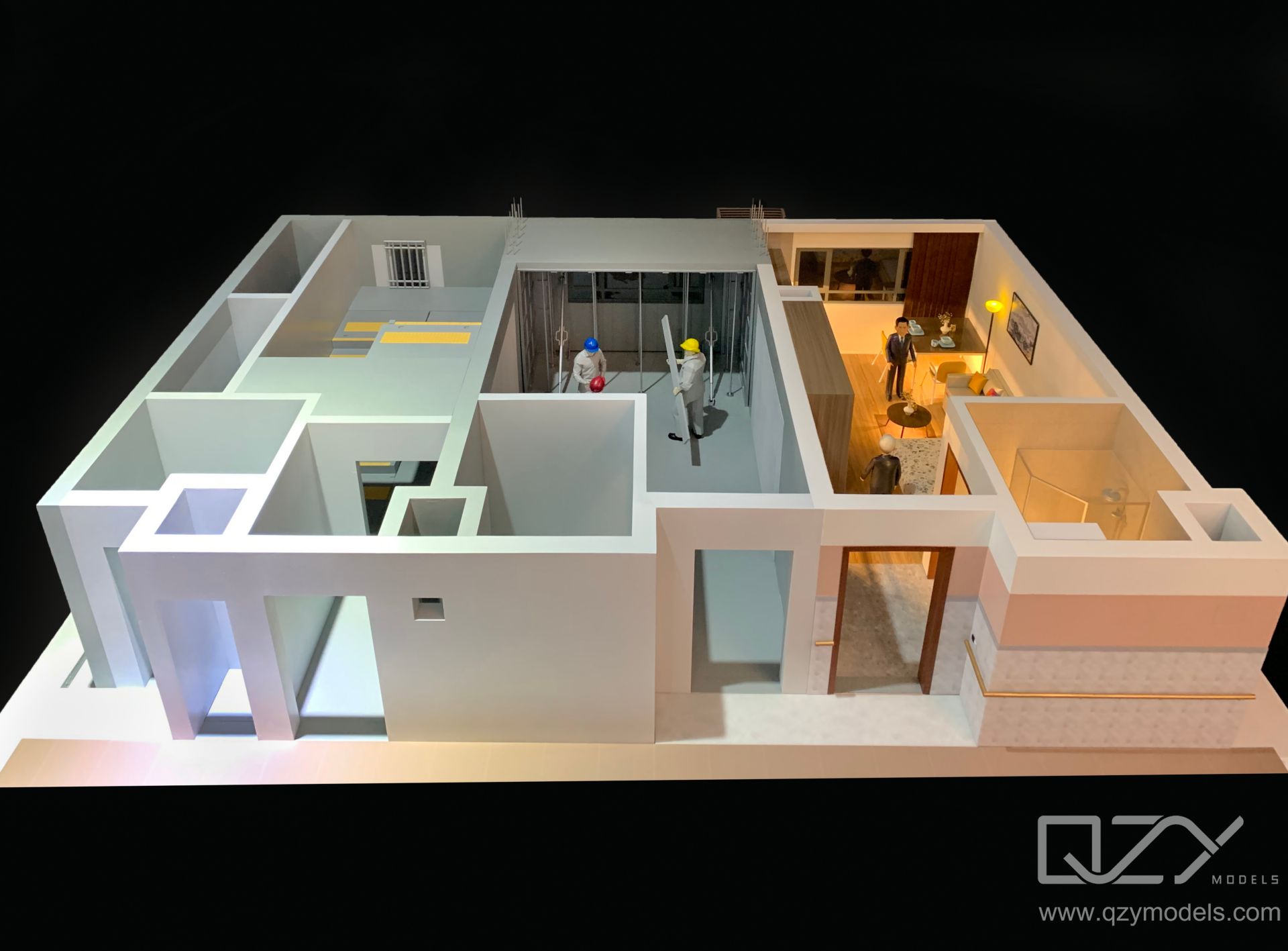
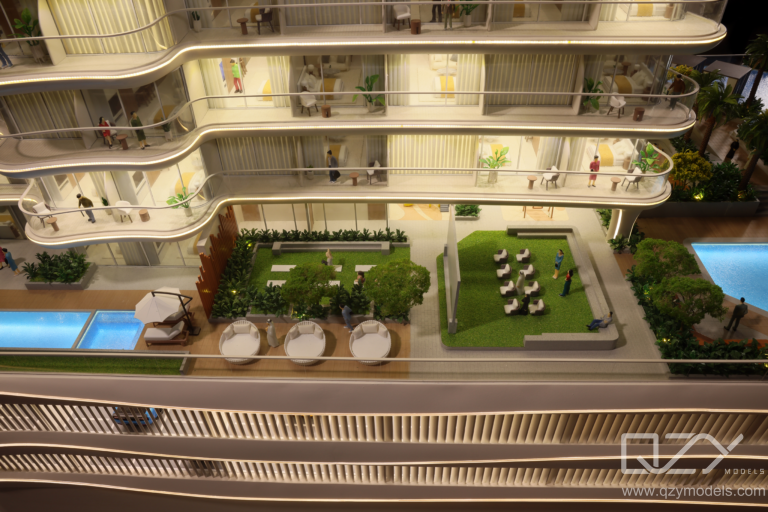
Residential developments marketed off-plan are a good example. Buyers often struggle to visualise room proportions from floor plans alone. A carefully designed cutaway model can help them understand how spaces connect, how natural light enters the home, and how the apartment functions as a whole.
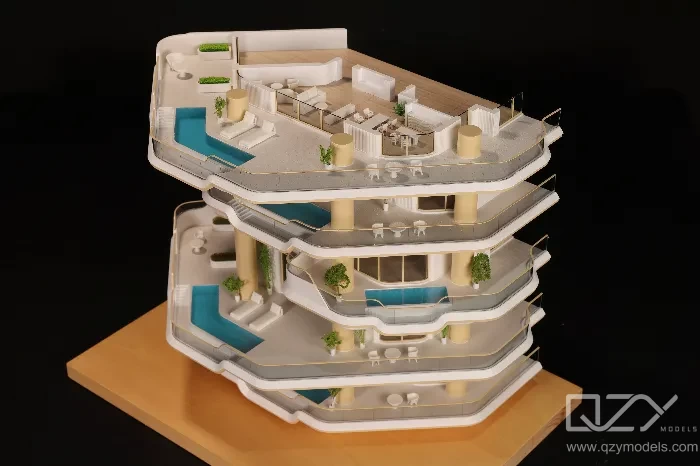
Similarly, luxury developments frequently use interior detailing to showcase premium finishes, amenity spaces, and lifestyle features that differentiate the project from competing schemes.
In these scenarios, the interior becomes part of the sales narrative rather than simply an architectural feature.
Interior Models Are Particularly Effective for Hospitality and Lifestyle Projects
Some developments are fundamentally defined by what happens inside the building.
Hotels, resorts, private members’ clubs, cultural venues, museums, and luxury residential schemes all rely heavily on the user experience.
For these projects, an exterior-only model can tell only part of the story.
Showing key interior spaces allows stakeholders to understand circulation, arrival experiences, communal facilities, and the atmosphere that the development intends to create.
At QZY Models, hospitality and mixed-use projects often incorporate selective interior detailing, helping clients communicate both architectural quality and guest experience within a single presentation model.
The Hidden Cost of Interior Detailing
While interior detailing can be impressive, it comes with significant implications for production.
Every miniature room, furniture element, partition wall, staircase, and lighting feature must be individually designed and fabricated.
As a result:
Production times increase
Model complexity increases
Revision costs increase
Transportation risks increase
Overall project costs increase
This is why experienced model makers rarely recommend full interior detailing unless it directly supports the model’s purpose. A beautifully detailed interior that remains unseen during presentations offers very little return on investment. The most successful architectural models focus attention where it matters most.
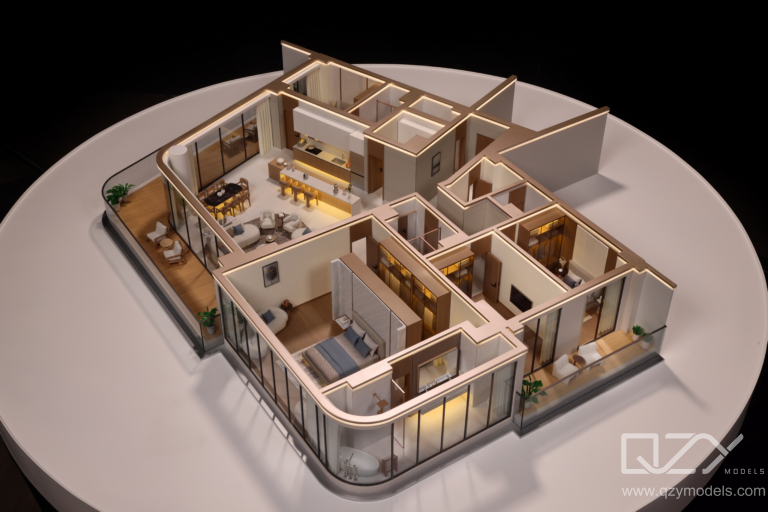
However, some developers will request separate interior architectural models for their developments. These focus on the furniture layout, realistic furnitures and interios and well as room setups. This is more common with real estate presentation models where clients are interested in the interior setup of their apartments.
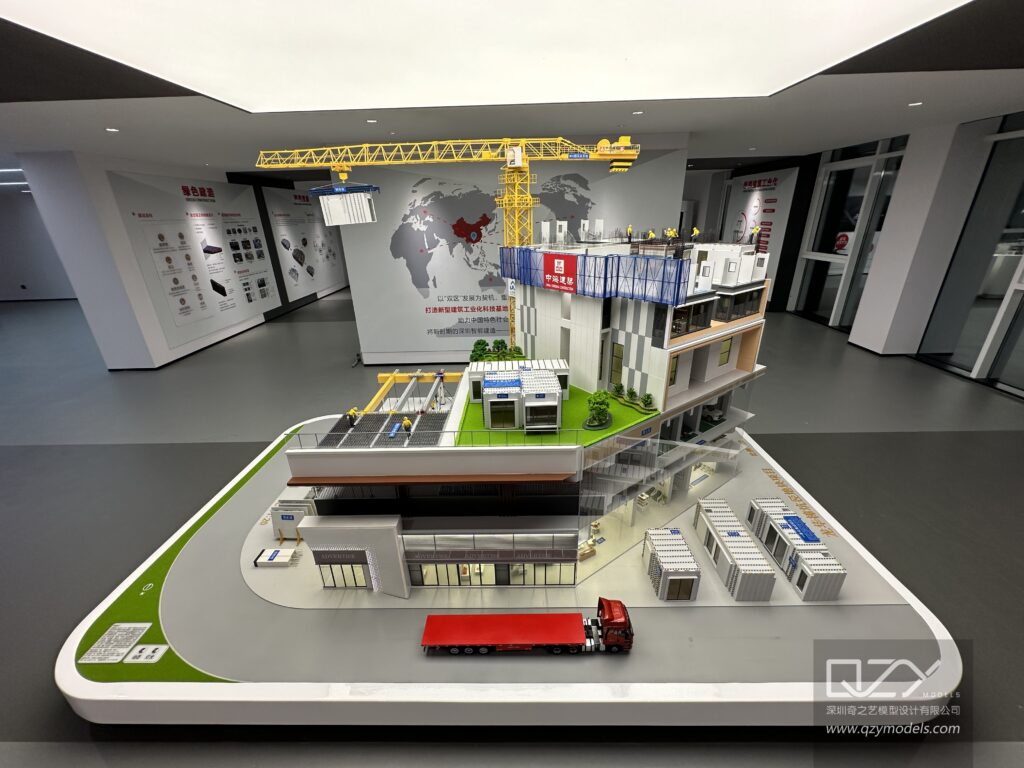
The Smart Alternative: Selective Interior Detailing
Many developers assume the choice is between showing every interior space or showing none at all.
In reality, the most effective solution is often somewhere in the middle.
Rather than detailing an entire building, selective interior detailing focuses only on the spaces that matter most.
Examples include:
A single show apartment
Ground-floor retail spaces
Hotel lobby areas
Resident amenity lounges
Rooftop facilities
Entrance and reception areas
This approach provides the visual impact of interior detailing while avoiding unnecessary costs.
Many of the most successful sales suite models produced by QZY Models use this strategy, combining detailed feature spaces with a highly refined exterior presentation.
How to Decide Which Option Is Right for Your Project
Before committing to interior detailing, ask yourself three simple questions:
Who will be viewing the model?
Planning officers, investors, buyers, design review panels, and community stakeholders all require different information.
What decision are they making?
If the decision is based on planning impact or urban design, exterior detail usually matters most. If the decision involves purchasing, leasing, or experiencing the space, interior detail may become far more important.
Will the interior genuinely help tell the story?
If the answer is no, your budget is often better invested in enhanced landscaping, lighting, contextual surroundings, or a larger presentation scale.
Conclusion: Detail Where It Creates the Greatest Impact
There is no universal answer to the interior-versus-exterior debate.
For most planning, urban design, and stakeholder engagement models, an exterior-focused approach remains the most effective solution.
However, when interior spaces are central to the project’s value proposition—particularly in residential sales, hospitality, and lifestyle developments—selective interior detailing can dramatically increase the model’s effectiveness.
The most successful architectural models are not necessarily the most detailed. They are the ones that communicate exactly what the audience needs to understand.
That is why experienced studios such as QZY Models begin every commission by understanding the project’s objectives first and then recommending the level of detail that delivers the greatest return on investment.
About QZY Models
QZY MODELS is a professional model-making company specializing in architectural scale models, industrial models, and urban planning models for global clients.
With more than 20 years of experience, the team provides complete services including:
architectural model design
model fabrication
international packaging and shipping
on-site installation support
These integrated services ensure that every model can be safely transported and efficiently presented anywhere in the world.
🌐 www.qzymodels.com
📧 [email protected]