Discover how physical architectural scale models are being used across Africa’s most ambitious development projects — from oil and gas facilities and national monuments to office towers, masterplans, and infrastructure schemes.
Introduction: A Continent Developing Across Every Sector at Once
Africa is one of the most dynamic development environments on earth — and one of the most diverse. In the same week, a national government in West Africa may be breaking ground on a new presidential complex, an oil major may be commissioning a facility model for a deepwater exploration project off the Angolan coast, a developer in Nairobi may be launching a new commercial office tower, and a city authority in Rwanda may be presenting a masterplan for a new urban district to international investors.
This breadth is what makes African development genuinely distinctive. It is not a single market with a single set of priorities — it is a continent of 54 nations, each at its own stage of development, each with its own mix of public and private investment, and each producing projects that span the full spectrum of the built and industrial environment.
What these projects share — from a gleaming new headquarters tower in Lagos to a deepwater oil production facility off Mozambique — is the need to communicate complex proposals clearly and compellingly to the people who need to understand, approve, fund, and deliver them. And across this extraordinary range of project types and contexts, physical scale models are proving to be one of the most versatile and powerful communication tools available.
Real Estate and Urban Development
Africa’s urban population is growing faster than any other region on earth — and the built environment infrastructure needed to house, connect, and serve this population is being delivered at extraordinary speed across the continent’s major cities.
From mixed-use masterplans in Lagos and Nairobi to luxury residential towers in Accra and Luanda, commercial office developments in Kigali and Addis Ababa, and new city districts from Senegal to South Africa, the scale and ambition of African real estate development has never been greater.
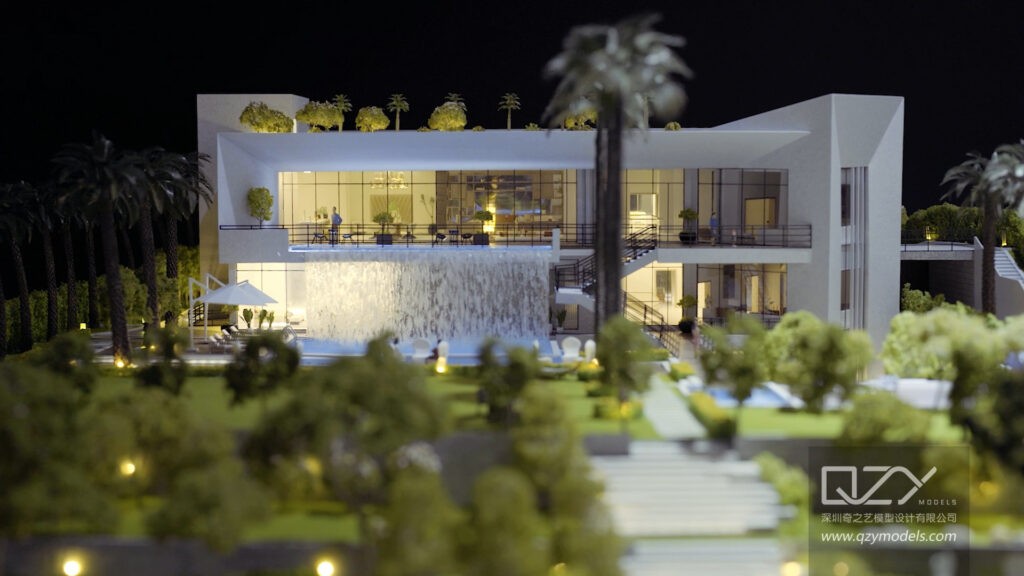
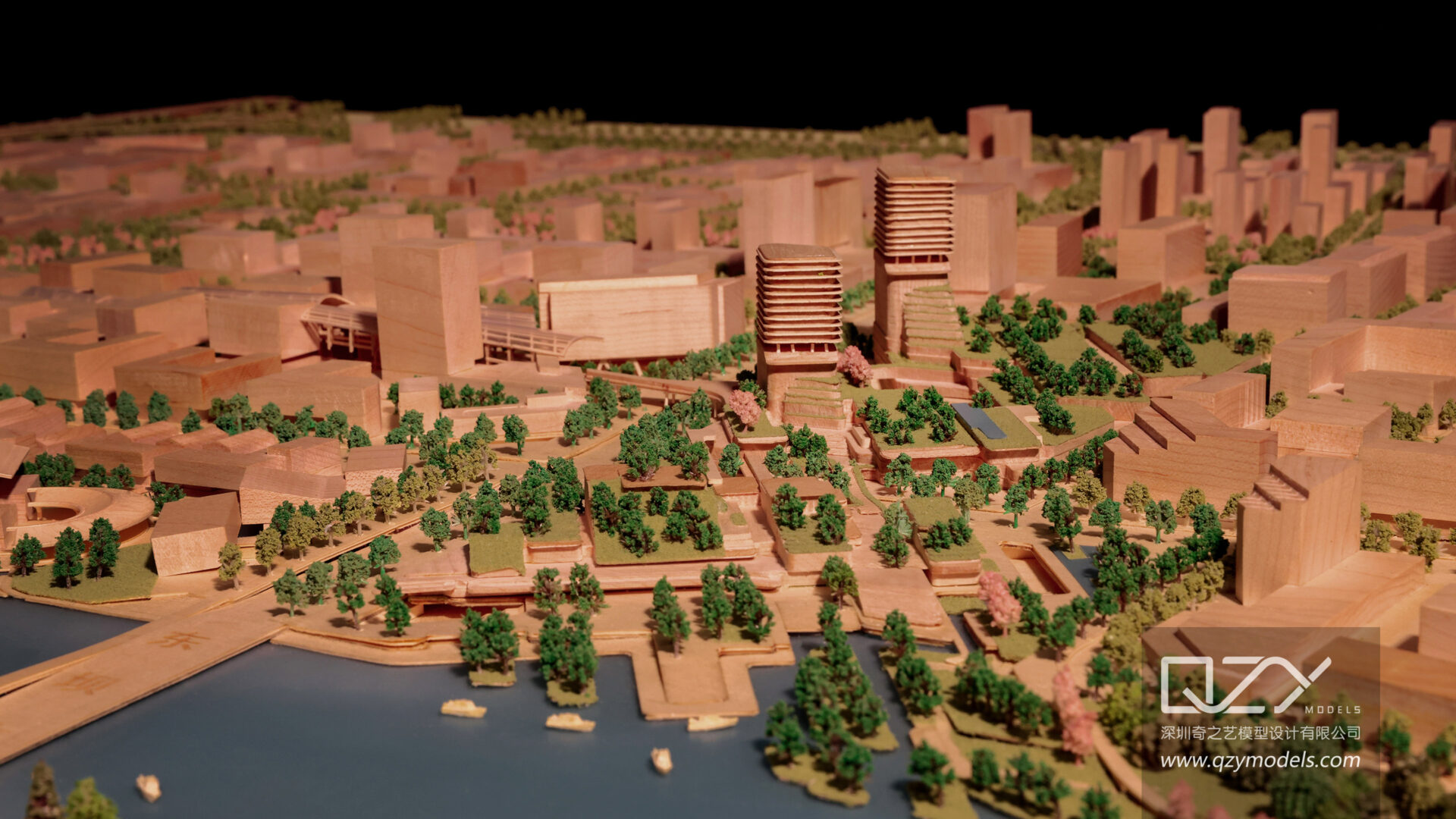
Physical scale models serve the full range of communication needs in this sector. Masterplan models make new urban districts legible to the international investors and government partners who need to commit to them. Residential development models drive off-plan sales to local, diaspora, and international buyers who need to visualise what they are purchasing. Commercial office models communicate design quality and specification to prospective tenants and institutional investors evaluating competing opportunities.
For African real estate developers managing complex, multi-stakeholder projects in fast-moving markets, the physical model is one of the most consistently effective tools for building the confidence and alignment that development projects depend on.
Oil, Gas, and Energy Infrastructure
Africa’s energy sector is one of the most significant development environments on the continent — and one of the least discussed in the context of physical scale models. From the deepwater oil fields of Nigeria, Angola, and Mozambique to natural gas facilities in Tanzania and Algeria, and the rapidly expanding renewable energy infrastructure across North and East Africa, the energy sector demands communication tools that can make complex industrial facilities legible to the full range of stakeholders involved in their development and operation.
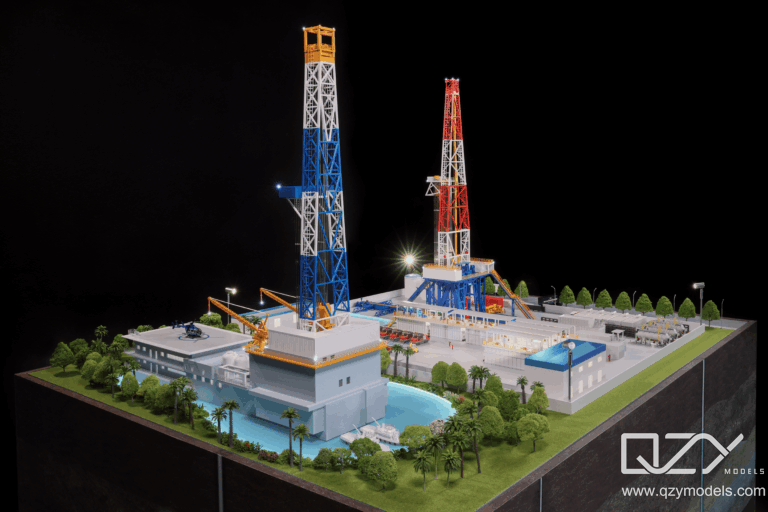
Physical scale models of oil and gas facilities serve several important functions. For engineering and project teams, a detailed facility model — showing the spatial organisation of processing equipment, pipelines, safety systems, and access routes across a production platform or onshore facility — provides a three-dimensional coordination tool that supports design development and operational planning.
For government and regulatory stakeholders — national oil companies, energy ministries, environmental regulators — a physical model communicates the scale, layout, and environmental footprint of a proposed facility with a clarity that technical drawings and reports rarely achieve. It supports the approval process by making complex industrial proposals accessible to non-specialist decision-makers.
For investors and financing partners — international oil companies, development finance institutions, and project finance lenders — a precision-crafted facility model communicates project credibility and technical resolution at the highest level. It signals that the project team is organised, competent, and operating to international standards — a signal that matters enormously in a sector where project risk is high and investor confidence is hard-won.
National Monuments and Civic Buildings
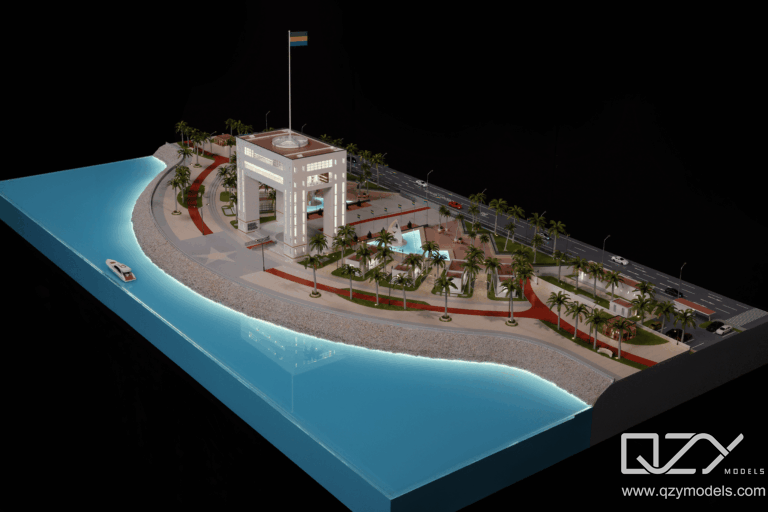
Across Africa, governments and national institutions are commissioning some of the continent’s most visually significant buildings — national assembly buildings, presidential palaces, cultural centres, museums, memorial complexes, and civic institutions that express national identity and ambition in built form.
These projects carry extraordinary symbolic weight. They are statements of nationhood, culture, and aspiration — and they are scrutinised by governments, international partners, and the public with a level of attention that few other project types attract.
Physical scale models are particularly valuable in the development of national monuments and civic buildings for several reasons. They allow heads of state, government ministers, and national commissions to engage directly with proposed designs — understanding spatial organisation, architectural character, and symbolic expression in three dimensions rather than from drawings or renderings. A model placed before a head of state or a national building commission communicates design intent with an authority and immediacy that no presentation deck can replicate.
For the architects and design teams behind these landmark projects — many of whom are international practices working in partnership with local architects — a physical model is also a crucial tool for communicating across cultural and professional boundaries. It provides a shared reference point that transcends language, professional convention, and cultural context — allowing diverse teams and diverse clients to discuss and align around a shared design vision.
Commercial Office and Business District Development
Africa’s commercial office market is expanding rapidly across the continent’s major business hubs — Johannesburg, Lagos, Nairobi, Casablanca, Cairo, Accra, and increasingly in second-tier cities that are emerging as regional commercial centres. International corporations, financial institutions, and professional services firms are establishing or expanding their African presence, driving demand for Grade A office space that meets international standards.
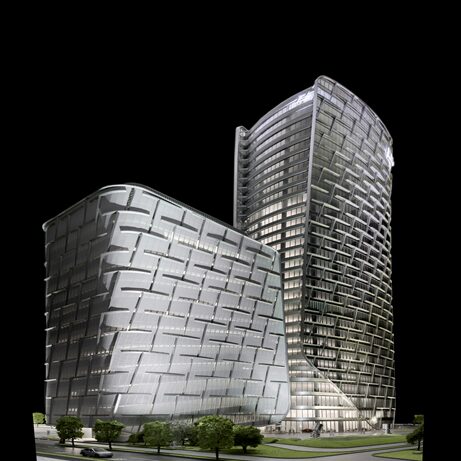
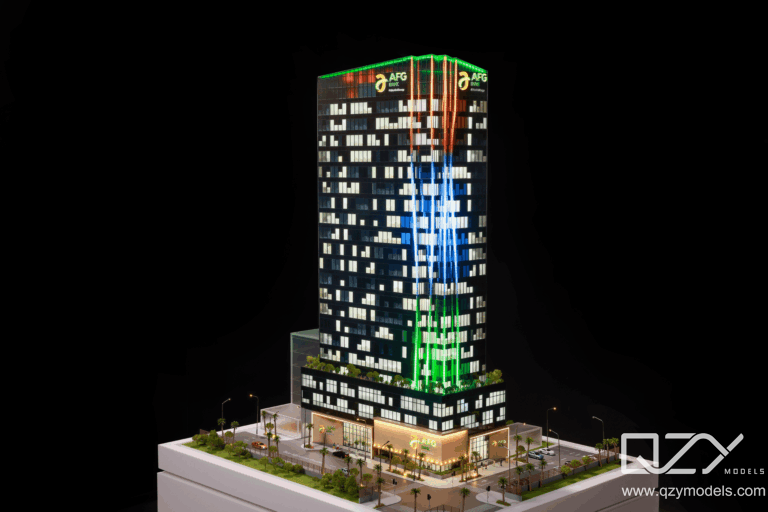
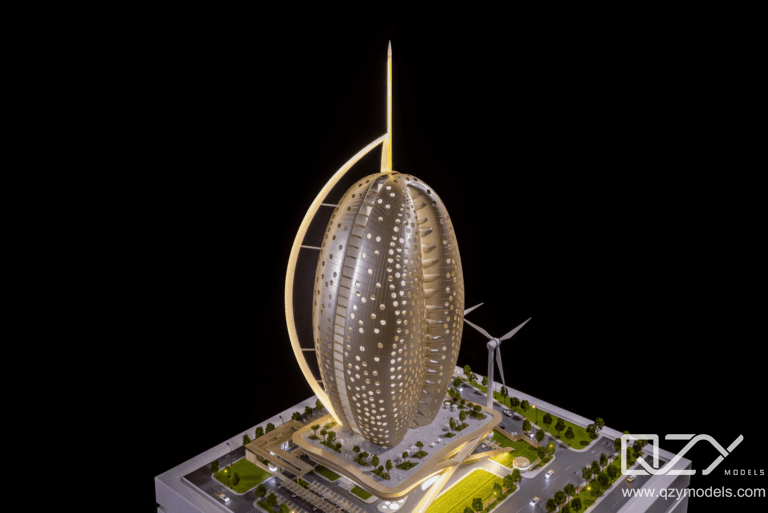
For commercial office developers competing for blue-chip tenants and institutional investors in these markets, the quality of the development communication is a direct proxy for the quality of the development itself. A physical scale model of a proposed office tower or business district — showing the building’s form, specification, and surrounding context — communicates design ambition and delivery credibility to sophisticated corporate and investment audiences.
For business district masterplans — the large-scale commercial developments that are creating entirely new office quarters in cities across the continent — a physical model is often the centrepiece of the international investor roadshow and government presentation that must precede and secure the development’s delivery. It makes the vision tangible, the investment real, and the commitment achievable.
Transport and Public Infrastructure
Africa’s infrastructure gap is one of the defining development challenges of the coming decades — and addressing it requires projects of enormous scale and complexity across transport, energy, water, and digital infrastructure. New airports, railway lines, port expansions, urban transit systems, and highway networks are being planned and delivered across the continent with increasing speed and ambition.
Physical scale models serve the full range of communication functions in infrastructure development — from early design coordination and public consultation through government approvals, investor presentations, and construction phase communications. Their role in African infrastructure contexts is further amplified by the diversity of stakeholder audiences involved in major projects, many of whom have limited familiarity with technical drawings or digital visualisation tools.
A physical model of a new airport terminal, a railway station, or a port facility makes the project legible to the government ministers, community leaders, and international partners whose support is essential to delivery — regardless of their technical background or familiarity with the development process.
Heritage, Culture, and Tourism Development
Africa’s cultural heritage — its archaeological sites, historic cities, traditional architecture, and natural landscapes — is one of its most significant assets, both as a source of national identity and as the foundation of a rapidly growing tourism economy. Across the continent, governments, cultural institutions, and private developers are investing in heritage conservation, museum development, cultural centres, and tourism infrastructure at an unprecedented scale.
Physical scale models play an important role in this sector. Heritage site models — showing the spatial organisation of archaeological sites, historic districts, or protected landscapes — are used in conservation planning, visitor centre displays, and international cultural partnership presentations. Museum and cultural centre models communicate complex spatial programmes to government clients and funding bodies who need to understand how a building will work before they commit to building it.
For tourism development — safari lodges, coastal resorts, heritage hotels, and eco-tourism infrastructure — a physical model communicates the character and quality of a proposed development to investors and operators who are evaluating the commercial potential of a project in a location they may never have visited.
Conclusion: One Tool Across a Continent of Possibilities
Africa’s development story is unlike any other in the world — broader in its scope, more varied in its contexts, and more consequential in its outcomes than almost any other development environment on earth. The projects being planned and delivered across the continent span every sector of the built and industrial environment, every scale of investment, and every category of stakeholder.
Physical architectural scale models serve all of these projects — not as a single solution to a single problem, but as a versatile, powerful communication tool that adapts to the specific needs of each project, each audience, and each context. From an offshore oil platform model presented to an energy ministry in Abuja to a national monument model reviewed by a head of state in Kigali, from a commercial office tower model in a Nairobi investor presentation to a heritage site model in a Johannesburg museum — the physical model communicates with a clarity, credibility, and authority that no other medium can match.
Commission Your African Development Model
Our studio works with governments, developers, architects, engineers, and investment teams on development projects across Africa — spanning real estate, energy, civic and institutional, infrastructure, and cultural sectors. We understand the specific communication demands of African development contexts and deliver models that perform at the highest level across the full range of project types the continent produces.
Talk to our team about your African development project →